Putin Visits India Amid Renewed Ukraine Peace Push — What’s on the Agenda?

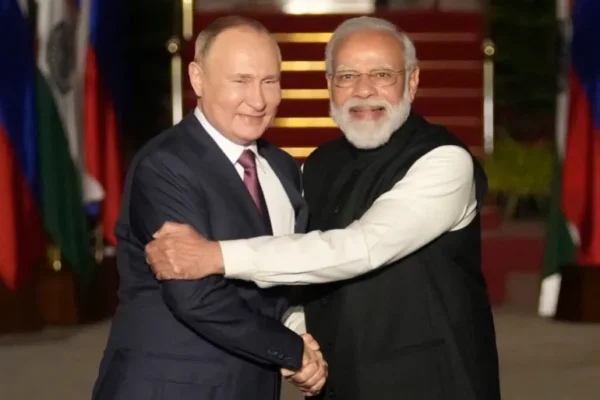
Russian President Vladimir Putin arrives in India on Thursday for a high-level diplomatic visit—his first trip to the country since Moscow launched its full-scale invasion of Ukraine nearly four years ago. The visit comes as the United States intensifies pressure on Russia to end the war, while also targeting India with tariffs and sanctions threats over its continued energy and defence ties with Moscow. Putin’s 30-hour working trip also coincides with rising tensions between Washington and New Delhi. The U.S. has recently imposed punitive tariffs on Indian goods and warned of sanctions because of India’s increased purchases of discounted Russian crude oil during the war. India’s Delicate Balancing Act India has long walked a tightrope between its deepening strategic partnership with the United States and its decades-old defence and diplomatic ties with Russia. Since independence in 1947, New Delhi has avoided formal alliances, leaning towards the Soviet Union during the Cold War before later strengthening ties with Washington in the post-Cold War era. But Russia’s invasion of Ukraine has placed enormous strain on that balancing act. Putin’s visit is now seen as a critical indicator of how Prime Minister Narendra Modi plans to manage these competing relationships without jeopardising crucial partnerships. Putin’s Schedule in New Delhi The Russian president will arrive Thursday evening and attend a private dinner with Modi at the Prime Minister’s residence. The Kremlin has described the visit as “of great importance,” noting that it provides an opportunity to review the “extensive agenda” of the Russia-India “special and privileged strategic partnership.” Putin is accompanied by Defence Minister Andrei Belousov, Rosoboronexport executives, and the heads of major sanctioned oil companies, including Rosneft and Gazprom Neft. Why the Timing Matters This year marks 25 years of the Russia-India Strategic Partnership, signed during Putin’s first year in office. But recent years have disrupted a previously consistent pattern of annual summits. 2022: Modi was scheduled to visit Russia, but the summit was cancelled following the Ukraine invasion. 2023: Putin skipped the G20 Summit in New Delhi amid the ICC arrest warrant. 2024: Modi travelled to Russia, reviving the summit tradition. 2025: Putin is now returning after a four-year gap. Defence and Trade Expected to Dominate Talks Analysts say Putin hopes to: Expand defence exports to India, including missile systems and fighter jets. Strengthen cooperation in pharmaceuticals, agriculture, machinery, and energy. Counter U.S. efforts to isolate Moscow. The visit offers significant political optics for Putin. “President Putin can send a message that Russia is not isolated,” said Rajan Kumar, professor at Jawaharlal Nehru University. However, discussions will unfold under the shadow of shifting global energy dynamics—and the growing assertiveness of U.S. President Donald Trump. The Trump Factor Following Russia’s invasion, India became the second-largest buyer of Russian crude, with imports surging by 2,250%. The U.S. initially tolerated the increase, arguing it helped stabilise global oil markets. But Trump now views India’s purchases as leverage over Moscow. He has: Imposed 50% tariffs on Indian goods as a penalty. Sanctioned Russia’s biggest oil firms, including Rosneft and Lukoil. Threatened sanctions on countries still trading with them. As a result: India’s imports of Russian crude are projected to fall to a three-year low. Reliance Industries, India’s largest refiner, has said it will stop exporting products made from Russian crude. India recently signed a major agreement to ramp up U.S. natural gas imports. Nevertheless, experts say India will not abandon Moscow entirely. Defence: The Strongest Pillar of India-Russia Ties Despite diversification into U.S. and European arms markets, Russia remains: India’s largest defence supplier (36% of imports) The source of over 60% of India’s military arsenal The partnership was further solidified during India’s four-day air conflict with Pakistan in May, when the Russian S-400 missile defence system played a crucial role. India is considering purchasing additional S-400 units. Russia is also keen to sell its Su-57 fifth-generation stealth fighter jets. “The SU-57 is the best plane in the world,” Putin’s spokesman Dmitry Peskov said before the visit. “And it will be on the agenda.”
Read More

Former UK Prime Minister Boris Johnson Says He Feels Safe In Nigeria, Commends Imo Governor’s 24-Hour Electricity Drive

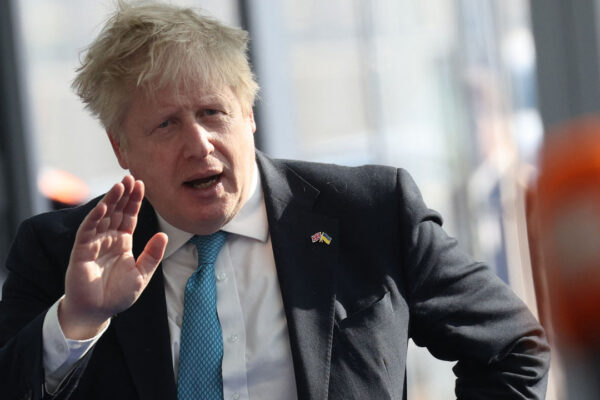
Former British Prime Minister Boris Johnson has declared that he feels completely safe in Nigeria, contradicting earlier reports warning of security concerns in the country. He made the comments on Thursday during the Imo State Economic Summit 2025 held in Owerri. “I read some reports before coming, and there were warnings about possible security issues in Nigeria. But I decided to come anyway,” Johnson said. “And let me ask you: do you feel safe here today in this conference? Yes, we all feel safe. And I feel perfectly safe. Thank you, Governor, for what you are doing.” Johnson also praised Governor Hope Uzodimma for his efforts to provide 24-hour electricity across Imo State, describing it as a significant step toward economic development. He further highlighted the role of artificial intelligence in supporting the governor’s vision, calling AI a key tool for shaping the state’s future and achieving sustainable growth.

Read More

APC Lawmaker Saheed Adewale Oriade Kidnapped In Ibadan

Saheed Adewale Oriade, a member of the All Progressives Congress (APC), has been abducted in Ibadan, the Oyo State capital. The lawmaker was reportedly kidnapped around 7 p.m. on Wednesday when three armed men forced him into a blue vehicle and drove off in an unknown direction, taking his mobile phone in the process. Confirming the incident, APC chieftain and former House of Assembly candidate for Ibadan Southwest Constituency 1, Hon. Tolani Adigun, described the abduction as “unacceptable” and a stark reminder of the worsening insecurity in the state and the nation at large. In a statement, Tolani called on security agencies at both state and federal levels to act swiftly, deploy all available resources, and ensure the safe release of Oriade. She stressed the need to strengthen Oyo State’s security framework, improve intelligence sharing, and safeguard the lives and property of residents. “My thoughts and prayers are with Hon. Oriade’s family during this difficult time,” she said, urging calm among residents and party members while security operatives intensify efforts to rescue him. Tolani reiterated that criminal activities must not be allowed to take root in the state, insisting that Oyo State “must not be surrendered to criminals,” and prayed for Oriade’s safe return.

Read More

Tinubu Swears In General Christopher Musa As New Defence Minister

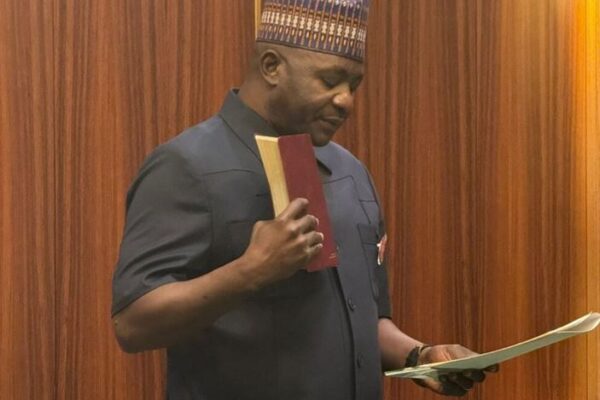
President Bola Tinubu has officially sworn in retired General Christopher Musa as Nigeria’s new Minister of Defence. Musa, who previously served as Chief of Defence Staff, took the oath of office on Thursday at the State House in Abuja. His appointment was confirmed by the Senate on Wednesday after a thorough five-hour screening. During his confirmation hearing, Musa faced tough questions from lawmakers on recent security lapses, including the controversial withdrawal of troops from Government Comprehensive Girls Secondary School, Maga, in Kebbi State, just days before schoolgirls were abducted on November 17. He assured the Senate that he would “immediately set up a full-scale investigation” into the troop withdrawal upon assuming office. The new Defence Minister also promised to investigate the killing of Brigade Commander Brig-Gen. Musa Uba in Borno State, along with other attacks targeting senior military officers. Musa succeeds Mohammed Badaru, who stepped down from the role reportedly due to health reasons.

Read More

Tinubu Appoints Ibas, Dambazau, Chioma Ohakim And Ita Enang As Ambassadors

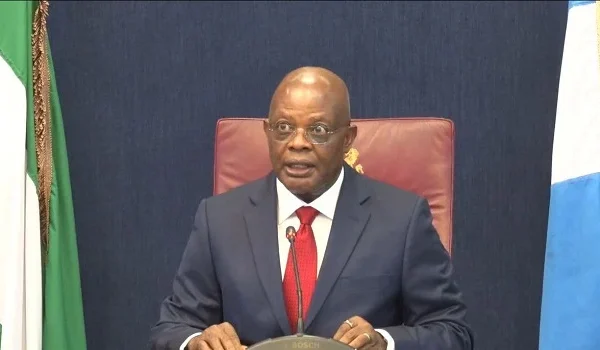
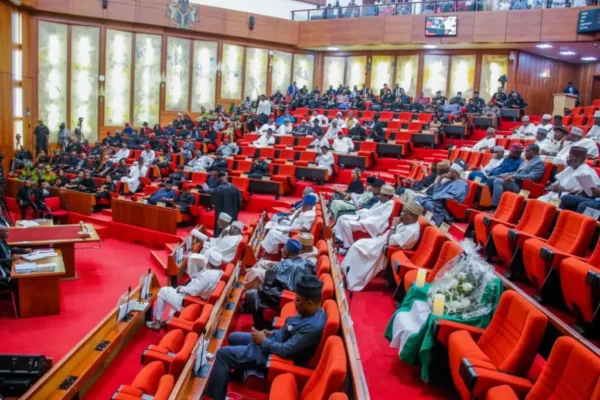
President Bola Tinubu has announced a new set of non-career ambassadorial nominees, including Ibok-Ete Ekwe Ibas, former Chief of Naval Staff and immediate past sole administrator of Rivers State. The list also features Ita Enang, former senator; Chioma Ohakim, ex-First Lady of Imo State; and Abdulrahman Dambazau, former Minister of Interior and former Chief of Army Staff. These names were not part of the earlier batch of ambassadorial nominees submitted by the presidency. The nominations were formally conveyed to the Senate in a letter read by Senate President Godswill Akpabio during Thursday’s plenary session. In the letter, President Tinubu urged lawmakers to expedite the screening process to ensure that critical diplomatic positions are promptly filled. Following the presentation, Akpabio referred the list to the Senate Committee on Foreign Affairs with instructions to complete the screening and report back within one week. This announcement follows previous nominations by Tinubu, which included Reno Omokri, former presidential aide; Femi Fani-Kayode, former Minister of Aviation; and Mahmood Yakubu, immediate past chairman of the Independent National Electoral Commission (INEC), for ambassadorial appointments.

Read More

US To Impose Visa Restrictions On Individuals Persecuting Christians In Nigeria

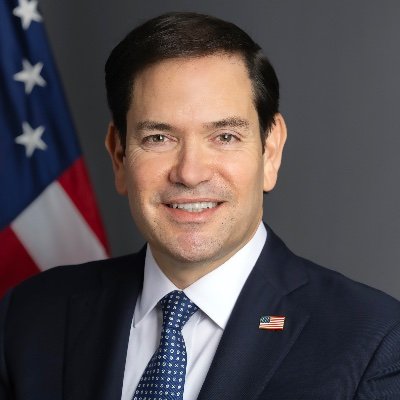
The United States has announced visa restrictions targeting individuals involved in the persecution of Christians in Nigeria. U.S. Secretary of State Marco Rubio disclosed the measures on X on Wednesday, saying they will apply to anyone who directs, authorizes, funds, or supports violations of religious freedom. “United States is taking decisive action in response to the atrocities and violence against Christians in Nigeria and around the world,” Rubio said. “The @StateDept will restrict U.S. visas for those who knowingly direct, authorize, fund, support, or carry out violations of religious freedom. This visa policy applies to Nigeria and other governments or individuals that persecute people for their religious beliefs.” The decision follows President Donald Trump’s designation of Nigeria as a Country of Particular Concern, citing what he described as “genocide against Christians” in the country. Trump announced the designation on October 30 via Truth Social and later highlighted it during a national address.

Read More

Badaru Abubakar Denies Resignation Rumours Claiming He Opposed US And Tinubu’s Military Actions

Former Defence Minister Mohammed Badaru Abubakar has refuted online reports suggesting he resigned from office because he “could not stand and watch the US and Tinubu government bombing our brothers in the forest.” In a statement on Wednesday, Badaru described the publication as false, malicious, and misleading. He stressed that neither he nor any authorised representative made such remarks. “The report aims to damage my reputation, create friction between me and President Bola Tinubu, and generate unnecessary controversy,” he said. Badaru clarified that the reasons for his resignation were formally communicated to the President and had already been made public through official channels. He reaffirmed his commitment to Nigeria’s peace and stability and expressed continued support for the All Progressives Congress (APC) ahead of the 2027 general elections. The former minister urged the public to disregard the viral claims, calling them the work of mischief makers.

Read More
Senate Steps In To End ASUU Strike, Sets Meeting With Education Minister And NUC

Senate Passes Bill To Classify Kidnapping And Hostage-Taking As Terrorism With Death Penalty

A bill seeking to classify all kidnapping and hostage-taking offences as acts of terrorism has passed its second reading at the Senate, presided over by Senate President Godswill Akpabio. The proposed legislation prescribes the death penalty for all kidnapping-related crimes, with no option for fines or alternative sentences. Lawmakers said the bill is part of ongoing efforts to strengthen Nigeria’s terrorism laws. Akpabio emphasized the urgency of the matter, noting that issues raised in plenary must first be discussed in public hearings before being formally prohibited to reflect current realities. “It’s something we fast-track to go for public hearing and thereafter concordance. Everything you are saying here, you must say at a public hearing and then prohibit it to suit today’s situation,” he said. The Senate President invited senators to voice their support, giving proponents and opponents an opportunity to respond. He instructed, “Those who support this bill say hi, and those against say nay the hi of it.” The bill aims to amend the Terrorism Prevention and Prohibition Act to designate kidnapping and related offences as acts of terrorism and prescribe the death penalty. Akpabio read the bill’s main proposal and formal title to clarify its contents. After the second reading, the bill was referred to the Senate Committee on Judicial, Human Rights, and Legal Matters as the lead committee, with support from the Committees on National Security and Interior, and a two-week deadline to report back. The bill had its first reading on 27 November 2025, sponsored by Senate Leader Opeyemi Bamidele, and passed after a voice vote. Currently, Nigeria’s Anti-Terrorism Act applies the death penalty only when a kidnapping results in the victim’s death. Other kidnapping offences carry varying penalties, including life imprisonment, while ransom payments attract a minimum of 15 years. Recent cases highlighting the threat include the rescue of 25 schoolgirls in Kebbi State and 38 church worshippers in Kwara State, though no arrests have been reported in either incident.

Read More