
Trump Issues Fresh Threat to Iran Over Nuclear Programme: We’ll Wipe It Out Faster

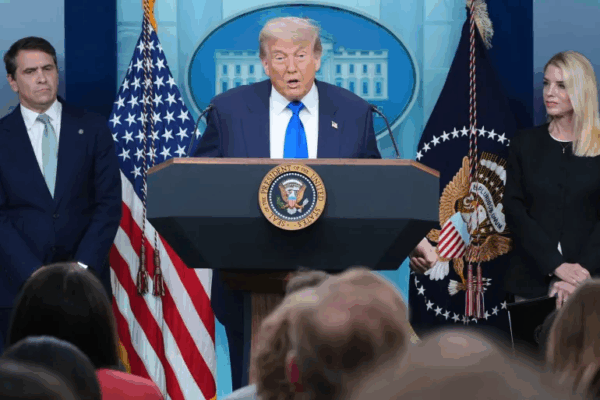
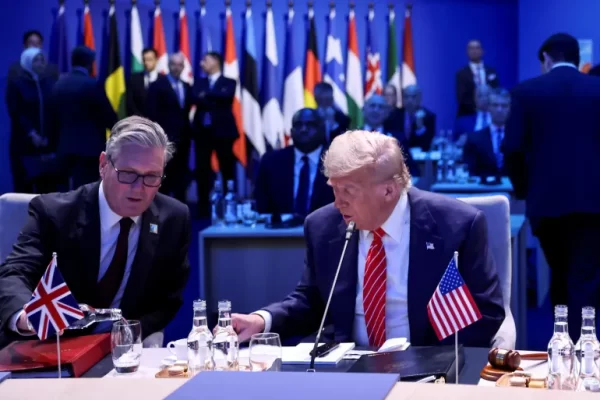
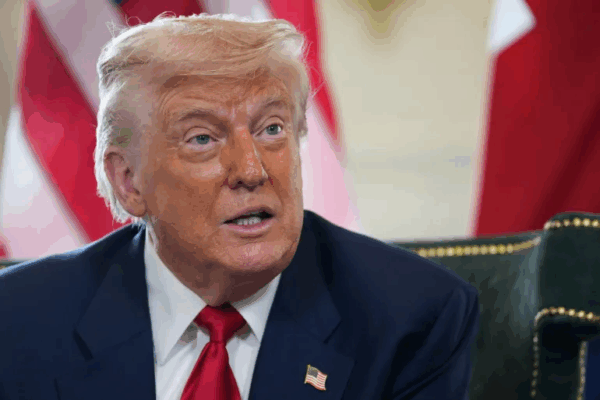
United States President Donald Trump has issued a stern new warning to Iran over its continued nuclear enrichment activities, declaring the U.S. would “wipe it out faster” than before if Tehran resumes nuclear development following recent strikes. The comments came during a joint press conference with UK Prime Minister Keir Starmer at Trump Turnberry golf resort in Scotland, where Trump accused Iran of sending “very bad, very nasty signals.” “We wiped out their nuclear possibilities. They can start again. If they do, we’ll wipe it out faster than you can wave your finger at it,” Trump warned.“We will do that gladly, openly and gladly,” he added. The remarks follow U.S. airstrikes earlier this month on three Iranian nuclear sites, which Washington claimed were part of efforts to halt Iran’s uranium enrichment. The attacks came shortly after Israel launched a military offensive against Tehran in June, an event that shattered previous diplomatic progress. Iran has since reaffirmed its intention to continue enrichment for what it insists are civilian energy purposes. Speaking ahead of recent talks with the UK, France, and Germany, Iranian Foreign Minister Abbas Araghchi defended Tehran’s right to maintain its nuclear programme under international law. The latest round of diplomatic talks—the first since the U.S.-Israel strikes—were described by Iranian officials as “serious, frank and detailed,” though no breakthroughs were announced. In an interview with Al Jazeera last week, Iranian President Masoud Pezeshkian reiterated his country’s stance: “We will not abandon our nuclear programme,” he said, while still expressing openness to negotiations.However, Pezeshkian also said he was “not very optimistic” about the ceasefire with Israel that ended the recent 12-day war. As global tensions remain high, European leaders are pushing for renewed diplomacy, but the Trump administration continues to take a hardline stance, insisting that Iran must fully dismantle its nuclear infrastructure or face further military action.
Read More

It’s a War: Volunteers Lead Resistance as Trump’s Deportation Raids Intensify Across LA

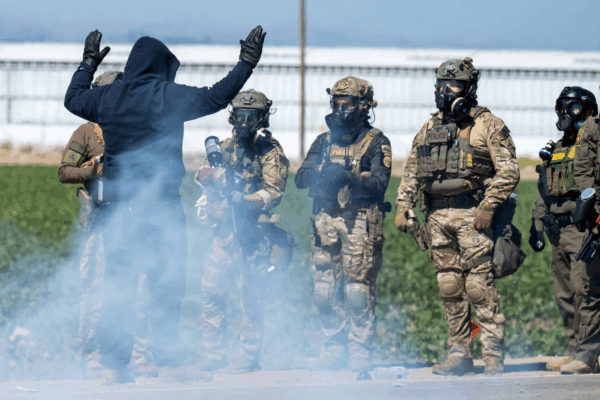
As immigration raids sweep across Los Angeles under orders from former President Donald Trump, a network of volunteer-led resistance groups is rising up to protect undocumented communities from what they call “warfare in the streets.” At 5:30 a.m. in South Central LA, a group of volunteers from Union del Barrio gather in a laundromat parking lot. Armed not with weapons, but with walkie-talkies, megaphones, and leaflets, their mission is to patrol immigrant-dense neighborhoods and warn residents about imminent Immigration and Customs Enforcement (ICE) raids. “This is like Vietnam,” says Ron, a high school history teacher and activist. “We’re taking losses, but in the end we’re going to win. It’s a war.” The group is led by Francisco “Chavo” Romero, who each morning rallies volunteers before dispatching them into the field. On this particular morning, the streets seem calm, but elsewhere in Los Angeles, ICE agents are already conducting dawn raids. ICE Arrests Surge, Communities in Fear Since the beginning of June, more than 2,800 undocumented immigrants have been arrested in Los Angeles alone, according to the Department of Homeland Security—a dramatic spike from the 850 arrests recorded in May. The raids have prompted chaos, street protests, and rising fear in immigrant communities. Videos of ICE agents tackling individuals at car washes, construction sites, and outside homes have gone viral, fueling public outrage. In Pomona, a Latino neighborhood east of LA, Maria recounts how her husband Javier, who has lived in the U.S. for nearly 40 years, was arrested at work by masked ICE agents. “I know they’re doing their job,” Maria says tearfully, “but they don’t have to do it like that—pushing people down like they’re animals.” Javier is now being held in a detention center two hours away. Their grandchildren, especially the eldest, are asking when “papa” is coming home. “I don’t know what to tell him,” Maria says. “He’s not a criminal.” Volunteers Counter ICE Tactics Union del Barrio’s resistance effort includes identifying suspicious vehicles—like white SUVs with tinted windows—suspected of being used by ICE for surveillance. Volunteers distribute flyers with legal advice and encourage people not to open their doors without a warrant. “People are scared,” says Ron, pointing at a fruit vendor who he says is the typical ICE target: vulnerable and easy to detain. Businesses Suffer, Owners Plan to Hide Workers The fear extends to the business community. Soledad, who runs a Mexican restaurant in Hollywood, says half of her undocumented staff are too afraid to show up for work. “I’ve told them: get inside the fridge, hide behind the stove—just don’t run.” Soledad works double shifts to keep her restaurant afloat amid plummeting sales and no way to cover wages. “Sometimes I cry,” she admits. “We’re desperate.” Trump’s Crackdown Fuels Tensions The White House defends the raids as targeting criminals, but activists argue the reality is far more indiscriminate. ICE agents have reportedly faced resistance—including being shot at—making their operations more perilous. Still, Trump has instructed ICE to intensify the crackdown further. Tensions have only escalated with the deployment of National Guard troops, prompting new waves of protests and confrontations on the streets. As deportation numbers climb, so too does the resolve of resistance groups like Union del Barrio. “We’re not backing down,” says Chavo. “We’re organized, we’re ready, and we’re fighting for our communities.”

Read More
U.S. Pressures West African Nations to Accept Deported Migrants Amid Trump Talks

U.S. Pressures West African Nations to Accept Deported Migrants Amid Trump Talks

As President Donald Trump hosted leaders from five West African nations at the White House, his administration was simultaneously pushing for those countries to accept more deported migrants from the United States, according to an internal U.S. government document. The proposal, aimed at nations that have historically resisted or delayed the repatriation of their nationals, was sent around the time of the high-level talks in Washington. Current and former U.S. officials confirmed that the initiative is part of a broader effort by the Trump administration to accelerate deportations and tighten immigration enforcement. The countries involved in the discussions reportedly included Nigeria, Niger, Burkina Faso, Ivory Coast, and Ghana — all of whom had bilateral meetings with Trump focused on security cooperation and trade. The push underscores the administration’s growing frustration with foreign governments that are seen as non-cooperative in taking back deported nationals. In recent years, the U.S. has threatened visa sanctions and other penalties to force compliance. While the outcome of the specific proposal remains unclear, it reflects the Trump administration’s use of diplomatic leverage to achieve immigration objectives — a strategy that continues to shape U.S. foreign policy engagement with developing nations, especially in Africa.

Read More
Brazil hosts BRICS summit; Russia’s Putin, China’s Xi skip Rio trip

Brazil hosts BRICS summit; Russia’s Putin China’s Xi skip Rio trip

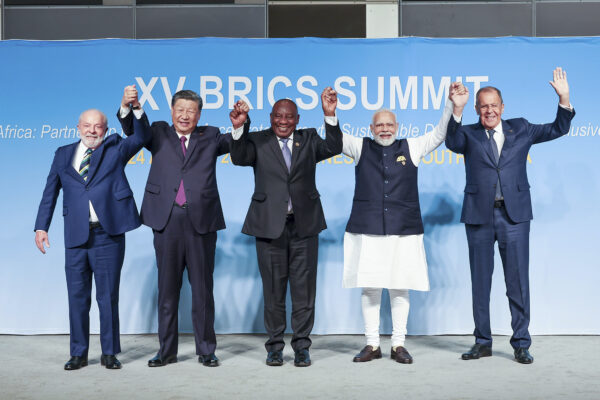
Leaders expected to decry US President Donald Trump’s trade tariffs while presenting the bloc as a defender of multilateralism. Brazilian President Luiz Inacio Lula da Silva, right, and Vietnamese Prime Minister Phạm Minh Chinh exchange gifts during a meeting at Fort Copacabana, in Rio deLeaders of the growing BRICS group are gathering in Brazil for a summit overshadowed by United States President Donald Trump’s new tariff policies while presenting the bloc as a defender of multilateralism. The leaders, mainly from the developing world, will be discussing ways to increase cooperation amid what they say are serious concerns over Western dominance at their two-day summit that begins in Rio de Janeiro on Sunday. The BRICS acronym is derived from the initial letters of the founding member countries: Brazil, Russia, India, China and South Africa. The bloc, which held its first summit in 2009, later added Egypt, Ethiopia, Indonesia, Iran, Saudi Arabia and the United Arab Emirates as full members. It also has 10 strategic partner countries, a category created last year, that includes Belarus, Cuba and Vietnam. But for the first time since taking power in 2012, Chinese President Xi Jinping will not be attending in person, instead sending Prime Minister Li Qiang. Russian President Vladimir Putin will also miss in-person attendance as he is wanted by the International Criminal Court (ICC) for his role in the 2022 invasion of Ukraine. Brazil, as a signatory to the Rome Statute, would be required to enforce the arrest warrant. The notable absences are raising questions over the group’s cohesion and global clout. Now chaired by Brazil, leaders at the BRICS summit are expected to decry the Trump administration’s “indiscriminate” trade tariffs, saying they are illegal and risk hurting the global economy. Global health policies, artificial intelligence and climate change will also be on the agenda. The BRICS countries say they represent almost half of the world’s population, 36 percent of global land area, and a quarter of the global economic output. The bloc sees itself as a forum for cooperation between countries of the Global South and a counterweight to the Group of Seven (G7), comprised of leading Western economic powers. However, behind the scenes, divisions are evident. According to a source quoted by The Associated Press news agency, some member states are calling for a firmer stance on Israel’s war in Gaza and its recent strikes on Iran. The source requested anonymity due to the sensitivity of the discussions. Iranian President Masoud Pezeshkian and Egypt’s Abdel Fattah el-Sisi will be attending the Rio summit. But Al Jazeera’s Lucia Newman, reporting from Rio, said the group’s aim remains clear. “The BRICS goal is to exert pressure for a multipolar world with inclusive global governance to give a meaningful voice to the Global South, especially in the trading system,” she said. “It’s not super organised, nor does it have a radical global impact,” Newman added. “The real question is, can an expanded BRICS whose members have very different political systems and priorities form a sufficiently unified bloc to have any significant impact?”

Read More

Texas Flood Disaster: 50 Dead, 27 Children Still Missing From Summer Camp

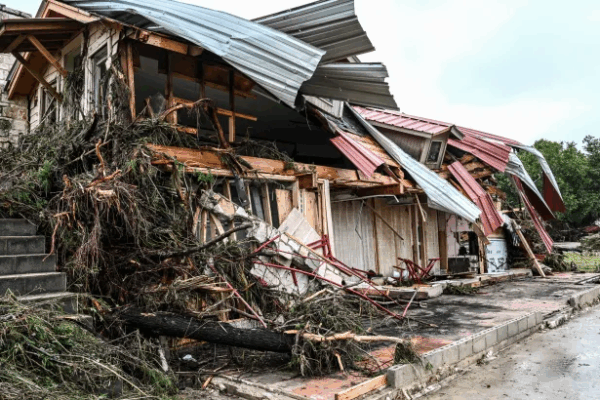
KERR COUNTY, TEXAS — The search for survivors continues after devastating flash floods swept through central Texas, leaving at least 50 people dead, including 15 children, and 27 children still missing from a Christian summer camp in Kerr County. The floods, fueled by torrential overnight rains, caused the Guadalupe River to rise a staggering 26 feet in just 45 minutes, washing away homes, campsites, and vehicles before dawn on Friday. Authorities say 850 people have been rescued so far. The majority of fatalities were reported in Kerr County, located about 85 miles northwest of San Antonio. Sheriff Larry Leitha confirmed that many of the victims were children, including those staying at Camp Mystic, which housed 700 girls at the time of the disaster. Officials say the floodwaters struck suddenly and ferociously while most people were asleep, leading to fears that many were caught unaware. Another girls’ camp in the area, Heart O’ the Hills, reported the death of its co-owner, Jane Ragsdale, though no campers were present at the time. With questions mounting over the adequacy of early warnings, residents and families are demanding answers. “They knew there might be rain, they just didn’t know when or where it would hit,” said Al Jazeera’s Heidi Zhou-Castro. “Evacuations didn’t happen in time.” Texas Lieutenant Governor Dan Patrick acknowledged the uncertainty surrounding the number of missing, especially among unregistered visitors who were camping near the river for the Independence Day weekend. President Donald Trump responded Saturday, promising federal support and announcing that Homeland Security Secretary Kristi Noem would be deployed to the disaster area. “Our brave first responders are doing what they do best,” Trump said on Truth Social. Emergency officials vow to continue air, ground, and water-based search efforts until every missing person is found. The tragedy draws haunting parallels to a 1987 flood in the same region, which claimed the lives of 10 teenagers from a church camp. As the floodwaters recede, Texas faces tough questions—not only about climate resilience but about how many more lives might have been saved with better preparation.

Read More

Trump Doubles Down on Iran Nuclear Claims Amid Doubts Over Strike Effectiveness

U.S. President Donald Trump has once again asserted that recent American and Israeli strikes on Iran’s nuclear facilities significantly crippled Tehran’s capabilities, despite growing skepticism from intelligence sources and the United Nations’ nuclear watchdog. Speaking on Fox News Sunday Morning Futures with Maria Bartiromo, Trump insisted that Iran was “weeks away” from acquiring nuclear weapons before the U.S. and Israel launched strikes beginning June 13, targeting key facilities at Fordow, Natanz, and Isfahan. He claimed the sites were “obliterated,” and that the operation had “set Iran’s nuclear ambitions back by decades.” However, this narrative clashes with multiple intelligence reports and assessments from the International Atomic Energy Agency (IAEA), which found no conclusive evidence that the facilities were permanently disabled. IAEA Director-General Rafael Grossi stated that Iran could resume uranium enrichment “within months,” raising doubts about the long-term impact of the strikes. An IAEA report last month indicated that Iran had stockpiled over 400kg of uranium enriched to 60% purity—close to weapons-grade—enough to produce multiple nuclear weapons if enriched further. Meanwhile, Tehran maintains that its nuclear programme is strictly for civilian use. Trump dismissed media reports contradicting his version of events as “fake news,” claiming the bomb strikes penetrated the heavily fortified Fordow site with ease. “The bomb went through it like butter,” he said. He also denied reports that Iran had evacuated its enriched uranium from the facility ahead of the attack. On the geopolitical front, Trump revealed that U.S. trade negotiations with Canada were paused over a controversial digital tax. He also confirmed that he had found a group of “very wealthy people” to acquire TikTok, promising to reveal the buyer in two weeks after extending the app’s ban for another 90 days. Trump’s continued defiance on the Iran issue comes as Washington attempts to balance military posturing with diplomatic efforts in the aftermath of the recent 12-day conflict involving Iran, Israel, and the U.S.

Read More

Why Trump’s U.S. Airstrikes in Somalia Have Surged Despite America First Pledges

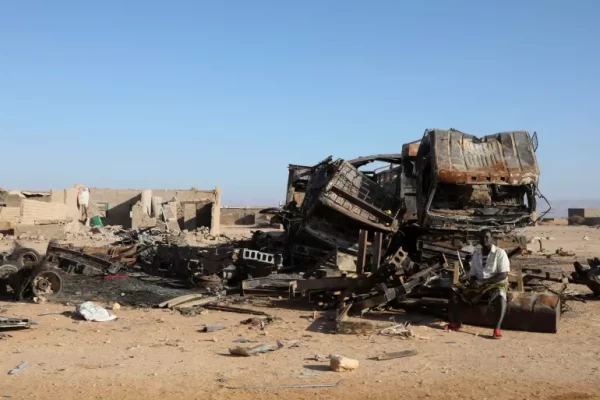
MOGADISHU, Somalia – Despite campaign promises to end America’s “forever wars,” President Donald Trump has sharply escalated U.S. military activity in Somalia since beginning his second term, with airstrikes more than doubling in 2025 compared to the previous year. According to data from the U.S. Africa Command (AFRICOM), at least 43 airstrikes have been carried out in Somalia this year—targeting both ISIL (ISIS) affiliates in Puntland and al-Shabab militants across southern regions. The figure represents a significant increase from 2024 and reflects a renewed military focus on the Horn of Africa. Trump’s first overseas military action this year came on February 1, just 10 days into office, when he announced airstrikes against what he described as “ISIS killers hiding in caves.” Since then, U.S. involvement in global conflict zones has expanded dramatically—from support for Israel in Gaza and Lebanon, to strikes in Yemen and attacks on Iran’s nuclear facilities. Analysts say the Somalia escalation is partly driven by intelligence assessments that IS-Somalia is becoming a growing threat, functioning as a regional financial and operational hub for global ISIL-linked networks. Concurrently, al-Shabab, an al-Qaeda affiliate, has made worrying territorial and strategic gains in recent months, prompting fears of a resurgence. While AFRICOM insists that these operations are conducted in partnership with Somalia’s federal government, human rights groups and security analysts warn that continued reliance on airstrikes risks inflaming anti-American sentiment and undermining long-term stability efforts in the fragile country. Critics argue that Trump’s sharp increase in drone strikes contrasts with his “America First” stance and raises questions about the sustainability of using force over diplomacy and development. “Airstrikes may disrupt militants temporarily, but they don’t build trust, reform institutions, or foster peace,” says Hawa Ahmed, a conflict analyst based in Nairobi. “Somalia needs long-term investment in governance, security reform, and economic development—not just bombs from above.” As the strikes continue and civilian casualties remain a concern, observers warn that the U.S. risks repeating the cycles of intervention that have defined its troubled legacy in Somalia for decades.Tools

Read More

NATO Commits to 5% Defence Spending Target Backed by Trump Amid Internal Division

NATO member states have agreed to a significant increase in defence spending, pledging to allocate up to 5 percent of their national GDP to military and security-related sectors by 2035 — a major shift largely aligned with the long-standing demands of former U.S. President Donald Trump. The agreement, reached at a summit in The Hague on Wednesday, was described in the summit communique as a “quantum leap” in the bloc’s collective security strategy. The document outlined that member countries would annually invest 5 percent of GDP on core defence requirements and broader security-related expenditures, with a review scheduled for 2029 — notably, after the next U.S. presidential election. NATO Secretary General Mark Rutte called the development “transformational,” although some alliance members expressed concerns about their ability to meet the target. Spain, Belgium, and Slovakia were among those that acknowledged the ambitious goal may be difficult to achieve due to economic constraints. Former President Trump, who had previously criticized NATO members for not meeting existing defence commitments, welcomed the decision. Speaking at the summit, he said, “They said, ‘You did it, sir. You did it.’ Well, I don’t know if I did it, but I think I did.” The renewed commitment is seen by analysts as an effort to shore up the alliance’s deterrence against Russia and prepare for the possibility of reduced U.S. military engagement depending on the outcome of the 2024 presidential election. UK Prime Minister Keir Starmer also signaled strong support, announcing that the United Kingdom expects to reach 4.1 percent defence and security spending by 2027. While the pledge underscores NATO’s unity in principle, the stark differences in economic capabilities among member states suggest that meeting the 5 percent benchmark will likely become a key issue of debate in the coming years.

Read More