Trump-Zelenskyy Meeting: US President Suggests No Need for Ceasefire

Trump-Zelenskyy Meeting: US President Suggests No Need for Ceasefire

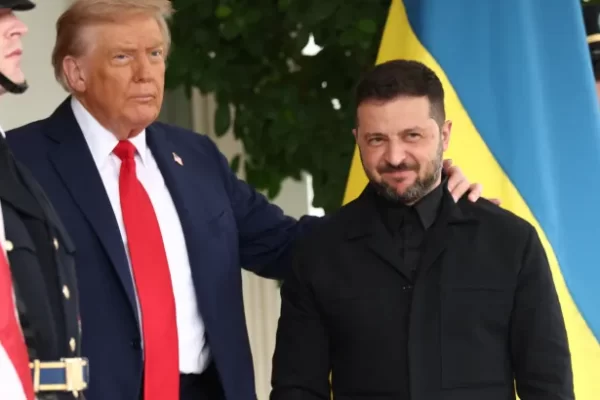
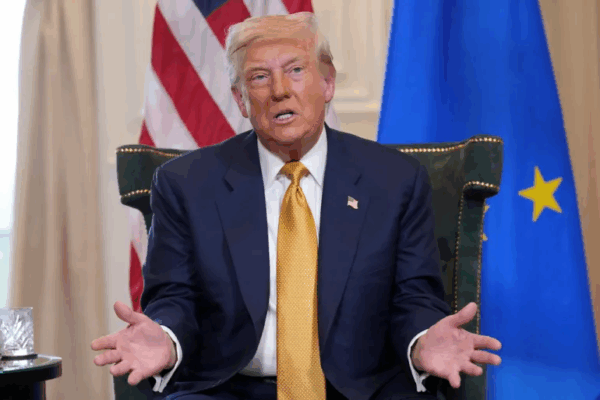
US President Donald Trump has hosted Ukrainian President Volodymyr Zelenskyy at the White House for high-stakes talks on the future of the war in Ukraine. The meeting, which lasted about 30 minutes before a press briefing, is expected to be followed by discussions with seven European leaders and a phone call with Russian President Vladimir Putin. Ahead of the summit, Trump urged Ukraine to abandon its NATO membership ambitions and its hopes of regaining Crimea, which Russia annexed in 2014. The United States and most of the international community still regard the annexation as illegal. Key developments from the White House meeting: The talks mark Trump’s most direct engagement on Ukraine since returning to office. Analysts say the emphasis on negotiations, rather than continued battlefield support, could signal a significant shift in US policy — one that places Trump at the center of a possible deal involving Kyiv and Moscow.

Read More

World Leaders Court Unpredictable Trump as White House Talks on Ukraine Begin

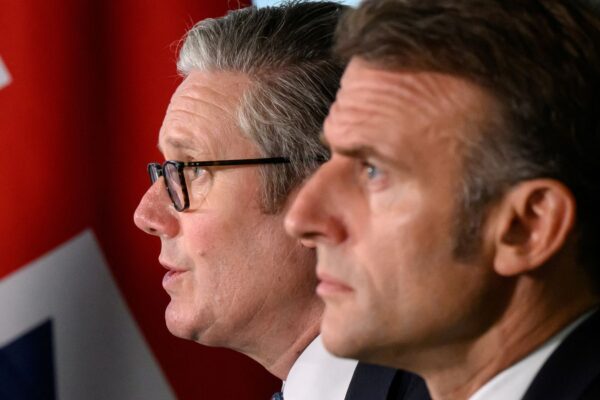
In an unprecedented show of urgency, world leaders including UK Prime Minister Sir Keir Starmer and French President Emmanuel Macron have gathered at the White House for hastily arranged talks on the war in Ukraine. The meeting, called just days after Donald Trump’s summit with Vladimir Putin in Alaska, underscores the pivotal role the U.S. president now plays in determining the future of the conflict. A High-Stakes Meeting Diplomatic sources described the gathering as an “organic” next step after Trump’s discussions with Putin. Unlike in Alaska, where Europeans were absent, today they will dominate the room. For Trump, often at ease in the spotlight, the gathering serves as a platform to showcase his influence as a global convener. For the Europeans, it is a critical opportunity to pin down exactly what Trump is willing to guarantee in terms of Ukraine’s security—and what, if anything, he may have already discussed with Putin on land or territorial control swaps. Lessons From February The urgency is shaped by the memory of a disastrous Oval Office meeting in February, when Trump and Vice President JD Vance publicly berated President Volodymyr Zelenskyy in a tense exchange that rattled European capitals. Since then, leaders across Europe have recalibrated—boosting their own defense spending and pursuing personal ties with Trump. Whether through Starmer’s state visit, Finland’s Alexander Stubb joining Trump on the golf course, or Italy’s Giorgia Meloni aligning her rhetoric with his, each leader has sought to stay on Trump’s good side for precisely this kind of moment. What’s at Stake European leaders are expected to flatter Trump while issuing subtle warnings. They will frame him as the architect of a potential peace deal—an achievement that could cement his legacy—while stressing the need for continued U.S. commitment to Europe and resistance against Russian demands. Central to the talks will be whether Trump is prepared to offer Ukraine binding security guarantees and whether Putin might accept a U.S.-European pact short of NATO membership. Yet ambiguity looms large: vague agreements might yield a quick fix but could prove unsustainable in the long run. Optics and Outcomes Much will hinge not only on the substance of discussions but also on optics. Analysts note Trump often blurs the line between detail and spectacle, with even minor gestures—such as Zelenskyy’s choice of attire—becoming symbolic flashpoints. Beyond the closed doors, the world will watch for signs of whether today’s meeting produces a genuine framework for peace or simply another dramatic episode in an unpredictable diplomatic process.

Read More

Ukraine War: Trump Says Zelenskyy Can End War as Russian Strike in Kharkiv Kills Seven

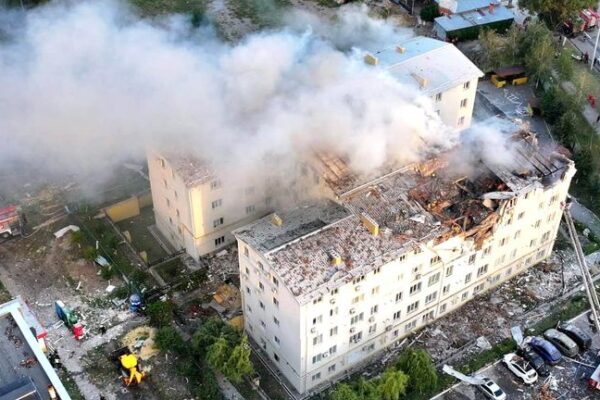
Ukrainian President Volodymyr Zelenskyy is set to meet Donald Trump at the White House today, with discussions expected to focus on possible ceasefire arrangements and the future of U.S. support for Ukraine. The talks come amid heightened tensions following a deadly overnight Russian missile strike on the eastern city of Kharkiv, which killed at least seven civilians and injured dozens more. Trump’s Remarks Ahead of Talks Speaking to reporters en route to Washington, Trump said he believed Zelenskyy had the ability to “end the war,” though he did not clarify whether he envisioned concessions to Russia as part of a potential settlement. He reiterated his stance that the U.S. would not pursue new business or diplomatic openings with Moscow until the conflict was “settled,” suggesting a possible shift in tone while maintaining pressure on the Kremlin. European Support for Zelenskyy Ahead of the White House meeting, several European leaders pledged continued backing for Ukraine. Officials in Brussels and Berlin emphasized that any negotiations should not compromise Ukraine’s territorial integrity. Zelenskyy is expected to present a renewed appeal for sustained U.S. military and financial aid, particularly as concerns grow over battlefield losses and Russia’s intensified air campaign. Kharkiv Under Fire In the early hours of this morning, Russian forces launched missile strikes on residential districts in Kharkiv, Ukraine’s second-largest city. Local authorities confirmed seven deaths and said rescue workers were still searching for survivors in the rubble. The strike is the latest in a series of escalations targeting civilian areas, which Kyiv has denounced as acts of terror designed to weaken public morale. What’s Next The outcome of today’s White House talks could prove pivotal. If Trump signals willingness to broker a ceasefire or peace talks, it may open a new phase in the nearly four-year conflict. However, Ukraine’s leadership continues to insist that any agreement must ensure sovereignty and security guarantees, while Russia shows no sign of backing down militarily.

Read More

Ukraine War Update: Zelenskyy Meets Starmer; Kremlin Confirms Trump-Putin Summit Plans

Ukrainian President Volodymyr Zelenskyy visited UK Prime Minister Keir Starmer at Downing Street on August 14, highlighting Britain’s continued support for Ukraine ahead of the upcoming U.S.–Russia summit in Alaska. Starmer reaffirmed the UK’s commitment to Ukraine’s territorial integrity and warned that further pressure could be applied to Russia if necessary. The meeting comes at a critical moment, as the Kremlin confirmed that Presidents Donald Trump and Vladimir Putin will hold a one-on-one meeting this Friday at Joint Base Elmendorf-Richardson in Anchorage, Alaska. Following the private discussion, their delegations will join for broader talks, concluding with a joint press conference. This will be the first in-person meeting between Trump and Putin since 2019. It has raised concerns among European leaders, who fear Ukraine’s interests could be sidelined during negotiations. Many have stressed that any resolution to the conflict must not undermine Ukraine’s sovereignty. Trump has described the summit as a “listening exercise,” with the aim of exploring possible ceasefire arrangements. He has also indicated that economic measures could be considered if diplomatic progress stalls, while Putin has framed the talks as an opportunity to address security concerns and “reset” strained relations.

Read More

Trump Orders Nuclear Submarines Closer to Russia Amid Escalating Tensions with Medvedev

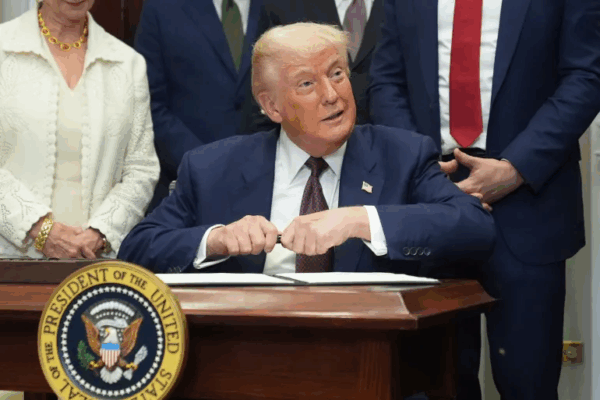
United States President Donald Trump has ordered the deployment of two nuclear submarines closer to Russian territory, marking a significant escalation in his ongoing war of words with Russian Security Council Deputy Chairman Dmitry Medvedev. In a post on his platform, Truth Social, Trump said the move was a direct response to what he described as “highly provocative statements” made by Medvedev earlier in the week, including warnings about Russia’s Cold War-era nuclear weapons system, commonly referred to as the “Dead Hand.” “I have ordered two nuclear submarines to be positioned in the appropriate regions, just in case these foolish and inflammatory statements are more than just that,” Trump wrote. “Words are very important, and can often lead to unintended consequences. I hope this will not be one of those instances.” This latest exchange follows a string of increasingly hostile remarks between both leaders in recent months. Medvedev, once Russia’s president and now a key Putin ally, has used social media to taunt Trump, while Trump has publicly lambasted Russia’s invasion of Ukraine and openly criticized Medvedev’s rhetoric. Earlier this week, Trump dismissed concerns over India-Russia trade relations, instead taking aim at Medvedev: “Russia and the USA do almost no business together. Let’s keep it that way, and tell Medvedev, the failed former President of Russia, who thinks he’s still President, to watch his words. He’s entering very dangerous territory!” Medvedev responded sarcastically on Telegram, invoking Trump’s apparent love for “The Walking Dead” and mocking the U.S. leader’s warnings. “If some words from the former president of Russia trigger such a nervous reaction from the high-and-mighty president of the United States, then Russia is doing everything right,” Medvedev wrote.“And as for ‘dead economies’ and ‘dangerous territory’ — well, let Trump remember his favourite films about the ‘Walking Dead.’” Rising Nuclear Rhetoric This isn’t the first time the two have exchanged nuclear threats. Back in June, Trump accused Medvedev of casually referencing nuclear weapons and offering warheads to Iran. He responded by highlighting America’s powerful nuclear submarine fleet, calling them “the most powerful and lethal weapons ever built.” The confrontation adds to concerns over global stability as nuclear rhetoric intensifies from both sides. Frustrations Over Ukraine The clash also reflects Trump’s growing frustration with the stalled efforts to end the Russia-Ukraine war, which has dragged on since Russia’s full-scale invasion in February 2022. Despite entering his second term promising to be a “global peacemaker,” Trump has faced criticism for appearing to favor concessions to Russia in earlier negotiations. In recent weeks, however, he has adopted a tougher stance—imposing deadlines on Moscow and warning of severe economic sanctions. “Russia — I think it’s disgusting what they’re doing,” Trump said on Thursday, following fresh Russian shelling of Kyiv. Medvedev has dismissed Trump’s threats as “theatrical,” warning that his confrontational approach risks triggering a wider conflict—possibly involving the U.S. “Each new ultimatum is a threat and a step towards war. Not between Russia and Ukraine, but with his own country,” Medvedev said. As tensions rise and military assets are repositioned, the world watches closely, with fears of further escalation between the world’s leading nuclear powers. Source: By Al Jazeera

Read More

Trump Gives Russia 10–12 Days to End Ukraine War: “No Reason in Waiting”

Turnberry, Scotland — July 28, 2025U.S. President Donald Trump has issued a sharp new ultimatum to Russian President Vladimir Putin, demanding an end to the ongoing war in Ukraine within 10 to 12 days — significantly reducing the 50-day deadline he initially set earlier this month. Speaking during a press conference alongside UK Prime Minister Keir Starmer, Trump expressed frustration with Russia’s continued military offensive in Ukraine and signaled growing impatience with the lack of progress toward a ceasefire. “I’m going to make a new deadline of about … 10 or 12 days from today,” Trump said. “There’s no reason in waiting. We just don’t see any progress being made.” The Kremlin has yet to issue a formal response. Trump’s warning comes as Moscow intensifies airstrikes across Ukraine, despite several diplomatic overtures from the U.S. and its European allies. A recent ceasefire deal remains in limbo, with Russian forces reportedly escalating attacks in key areas including Kyiv and eastern border regions. The U.S. president, who returned to office this year with a promise to end the conflict within 24 hours, continues to present himself as a peacemaker, but has faced criticism for his mixed signals. Though he has repeatedly threatened sanctions and tariffs on Russia and countries buying Russian exports, his administration has been cautious in implementing such measures. “I don’t want to do that to Russia. I love the Russian people,” Trump said Monday.“But if you know what the answer is going to be, why wait?” Trump also expressed disappointment with Ukrainian President Volodymyr Zelenskyy, whom he accused of stalling peace efforts. He referenced past conversations with Putin, saying: “We thought we had that settled numerous times, and then President Putin goes out and starts launching rockets into some city like Kyiv and kills a lot of people in a nursing home or whatever. And I say that’s not the way to do it.” With tensions rising and the international community watching closely, the next 10 days could prove critical for diplomatic relations — and for Ukraine’s war-ravaged future.

Read More

Trump Issues Fresh Threat to Iran Over Nuclear Programme: We’ll Wipe It Out Faster

United States President Donald Trump has issued a stern new warning to Iran over its continued nuclear enrichment activities, declaring the U.S. would “wipe it out faster” than before if Tehran resumes nuclear development following recent strikes. The comments came during a joint press conference with UK Prime Minister Keir Starmer at Trump Turnberry golf resort in Scotland, where Trump accused Iran of sending “very bad, very nasty signals.” “We wiped out their nuclear possibilities. They can start again. If they do, we’ll wipe it out faster than you can wave your finger at it,” Trump warned.“We will do that gladly, openly and gladly,” he added. The remarks follow U.S. airstrikes earlier this month on three Iranian nuclear sites, which Washington claimed were part of efforts to halt Iran’s uranium enrichment. The attacks came shortly after Israel launched a military offensive against Tehran in June, an event that shattered previous diplomatic progress. Iran has since reaffirmed its intention to continue enrichment for what it insists are civilian energy purposes. Speaking ahead of recent talks with the UK, France, and Germany, Iranian Foreign Minister Abbas Araghchi defended Tehran’s right to maintain its nuclear programme under international law. The latest round of diplomatic talks—the first since the U.S.-Israel strikes—were described by Iranian officials as “serious, frank and detailed,” though no breakthroughs were announced. In an interview with Al Jazeera last week, Iranian President Masoud Pezeshkian reiterated his country’s stance: “We will not abandon our nuclear programme,” he said, while still expressing openness to negotiations.However, Pezeshkian also said he was “not very optimistic” about the ceasefire with Israel that ended the recent 12-day war. As global tensions remain high, European leaders are pushing for renewed diplomacy, but the Trump administration continues to take a hardline stance, insisting that Iran must fully dismantle its nuclear infrastructure or face further military action.

Read More

It’s a War: Volunteers Lead Resistance as Trump’s Deportation Raids Intensify Across LA

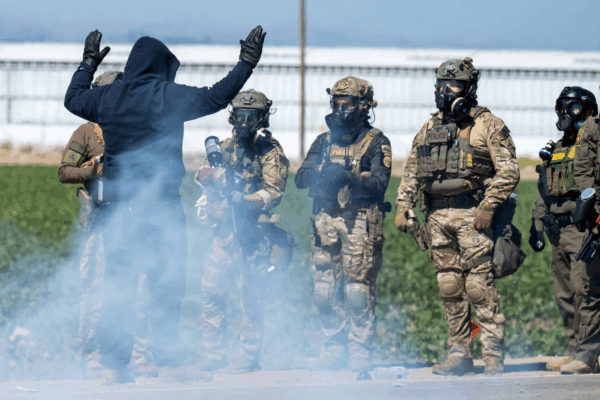
As immigration raids sweep across Los Angeles under orders from former President Donald Trump, a network of volunteer-led resistance groups is rising up to protect undocumented communities from what they call “warfare in the streets.” At 5:30 a.m. in South Central LA, a group of volunteers from Union del Barrio gather in a laundromat parking lot. Armed not with weapons, but with walkie-talkies, megaphones, and leaflets, their mission is to patrol immigrant-dense neighborhoods and warn residents about imminent Immigration and Customs Enforcement (ICE) raids. “This is like Vietnam,” says Ron, a high school history teacher and activist. “We’re taking losses, but in the end we’re going to win. It’s a war.” The group is led by Francisco “Chavo” Romero, who each morning rallies volunteers before dispatching them into the field. On this particular morning, the streets seem calm, but elsewhere in Los Angeles, ICE agents are already conducting dawn raids. ICE Arrests Surge, Communities in Fear Since the beginning of June, more than 2,800 undocumented immigrants have been arrested in Los Angeles alone, according to the Department of Homeland Security—a dramatic spike from the 850 arrests recorded in May. The raids have prompted chaos, street protests, and rising fear in immigrant communities. Videos of ICE agents tackling individuals at car washes, construction sites, and outside homes have gone viral, fueling public outrage. In Pomona, a Latino neighborhood east of LA, Maria recounts how her husband Javier, who has lived in the U.S. for nearly 40 years, was arrested at work by masked ICE agents. “I know they’re doing their job,” Maria says tearfully, “but they don’t have to do it like that—pushing people down like they’re animals.” Javier is now being held in a detention center two hours away. Their grandchildren, especially the eldest, are asking when “papa” is coming home. “I don’t know what to tell him,” Maria says. “He’s not a criminal.” Volunteers Counter ICE Tactics Union del Barrio’s resistance effort includes identifying suspicious vehicles—like white SUVs with tinted windows—suspected of being used by ICE for surveillance. Volunteers distribute flyers with legal advice and encourage people not to open their doors without a warrant. “People are scared,” says Ron, pointing at a fruit vendor who he says is the typical ICE target: vulnerable and easy to detain. Businesses Suffer, Owners Plan to Hide Workers The fear extends to the business community. Soledad, who runs a Mexican restaurant in Hollywood, says half of her undocumented staff are too afraid to show up for work. “I’ve told them: get inside the fridge, hide behind the stove—just don’t run.” Soledad works double shifts to keep her restaurant afloat amid plummeting sales and no way to cover wages. “Sometimes I cry,” she admits. “We’re desperate.” Trump’s Crackdown Fuels Tensions The White House defends the raids as targeting criminals, but activists argue the reality is far more indiscriminate. ICE agents have reportedly faced resistance—including being shot at—making their operations more perilous. Still, Trump has instructed ICE to intensify the crackdown further. Tensions have only escalated with the deployment of National Guard troops, prompting new waves of protests and confrontations on the streets. As deportation numbers climb, so too does the resolve of resistance groups like Union del Barrio. “We’re not backing down,” says Chavo. “We’re organized, we’re ready, and we’re fighting for our communities.”

Read More