
LIVE: Israel Kills 100 in Gaza as Trump Insists Ceasefire Remains Intact

LIVE: Israel Kills 100 in Gaza as Trump Insists Ceasefire Remains Intact

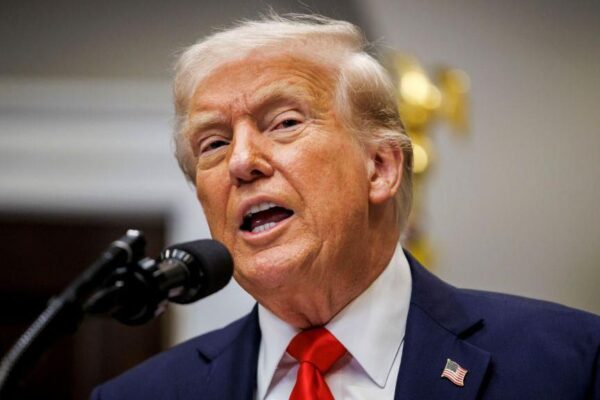
At least 100 Palestinians, including 35 children, have been killed in fresh Israeli air strikes across Gaza, according to medical sources, marking one of the deadliest incidents since the fragile truce took effect earlier this month. The attacks, which hit multiple residential areas, including Al-Mawasi in southern Gaza where displaced families had been sheltering, have left scores wounded. Emergency responders continue to pull victims from the rubble amid warnings of a humanitarian collapse. Images from the scene show injured children being treated in ambulances before being taken to Nasser Hospital. Despite the bloodshed, US President Donald Trump insisted the ceasefire “remains in place,” saying Israel had merely “hit back” after one of its soldiers was “taken out.” Trump told reporters that “nothing is going to jeopardise” the truce, though he added that “Hamas has to behave.” The Israeli military claimed it had “resumed enforcing the ceasefire,” even as witnesses described sustained aerial bombardments in Gaza City and Khan Younis. Meanwhile, tensions are also flaring in the occupied West Bank. Israeli settlers reportedly torched Palestinian vehicles in two separate attacks — one in the town of Surif near Hebron and another in Atara, north of Ramallah. In Gaza, Palestinian human rights defenders have condemned Israeli demolition work in the enclave’s ruins, accusing private contractors of “profiting from a crime.” Tahseen Elayyan of Al-Haq told Al Jazeera that contractors were being paid over $1,000 a day for demolition operations and even dumping Israeli construction waste onto Gaza’s rubble. “They are feasting on this crime. They are aiding and abetting genocide,” he said. The ongoing violence raises doubts about the sustainability of the US-brokered ceasefire, which was meant to usher in a second phase of the Trump administration’s Gaza plan — including prisoner exchanges and reconstruction efforts under international supervision.
Read More
Trump Bans Soyinka From US

Trump Bans Soyinka From US

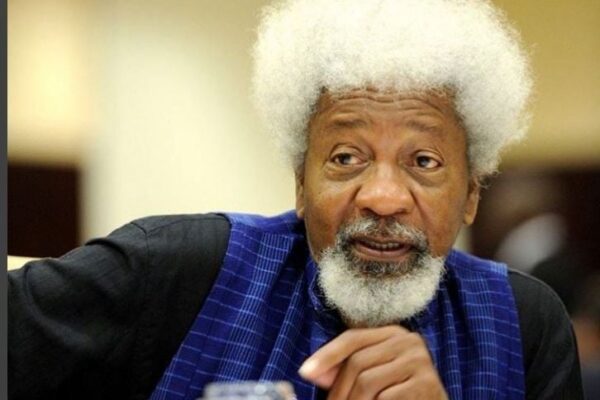
The United States under President Donald Trump has revoked the visa of globally renowned scholar, Nobel laureate, Professor Wole Soyinka. The scholar announced this at Kongi’s Harvest Gallery, Freedom Park, Lagos Island, on Tuesday. He said he was unaware of any wrongdoing that could have warranted the revocation. “It is necessary for me to hold this conference so that people in the United States who are expecting me for this event or that event do not waste their time.” “I have no visa; I am banned, obviously, from the United States. And if you want to see me, you know where to find me,” he said. According to Soyinka, the US Consulate informed him of the revocation via a letter. “I’m still looking into my past history… I don’t have any past criminal record or even a felony or misdemeanour to qualify for the revocation.” “I’ve started looking back—have I ever misbehaved toward the United States of America? Do I have a history? Have I been convicted? Have I gone against the law anywhere?” It can be recalled Soyinka in 2017 during the United States election in a viral video said he would tear his Green Card if Donald Trump becomes the President.

Read More
Trump Signals Openness to Meet Kim Jong Un During Asia Trip

Trump Signals Openness to Meet Kim Jong Un During Asia Trip

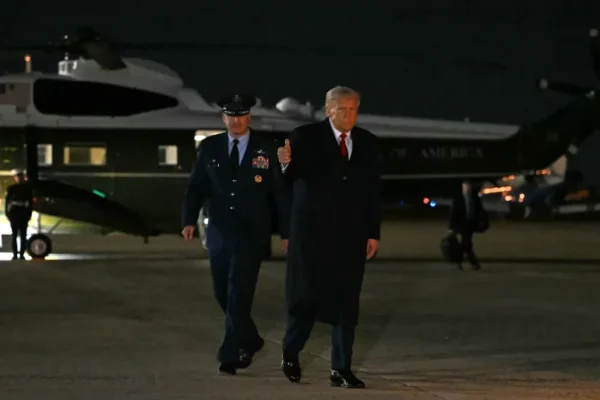
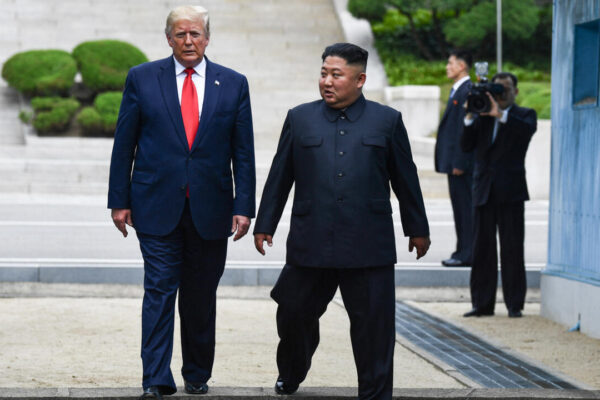
Donald Trump said he is willing to meet North Korean leader Kim Jong Un during his upcoming trip to Asia. “I would. If you want to put out the word, I’m open to it,” Trump told reporters on Air Force One as he left for the region, adding that he “had a great relationship” with Kim. Trump previously made history as the first sitting US president to step into North Korea when they last met in 2019. On this trip, he will visit Malaysia and Japan, where he is scheduled to meet several world leaders, including China’s Xi Jinping, amid ongoing trade discussions following the US’s tariff measures earlier this year. Trump’s approach to North Korea has been unconventional. He initially mocked Kim as a “little rocket man,” yet they held three meetings during Trump’s presidency, though no denuclearization agreement was reached. North Korea has since carried out multiple intercontinental missile tests. Asked whether he would recognize North Korea as a nuclear state, Trump said: “I think they are sort of a nuclear power… They got a lot of nuclear weapons, I’ll say that.” Kim has expressed willingness to meet Trump again if the US drops its demand for North Korea to give up its nuclear arsenal. “I still have a good memory of President Trump,” Kim said last month, according to state media. South Korea’s Unification Minister Chung Dong-young suggested there is a “considerable” chance the leaders could meet during the Asia-Pacific Economic Cooperation (Apec) forum in South Korea. A senior US official told reporters that a Trump-Kim meeting is not currently on the president’s schedule, though their last encounter at the Demilitarized Zone came after Trump extended an invitation via social media. Trump’s trip begins in Malaysia for the ASEAN summit before he travels to Busan, South Korea, for the Apec summit. He is expected to meet South Korean President Lee Jae Myung, who previously discussed peace on the Korean Peninsula and the possibility of a Trump-Kim meeting during a visit to the White House.

Read More

Trump to Visit Malaysia for ASEAN Summit Amid Rising Trade Tensions

United States President Donald Trump is set to arrive in Malaysia on Sunday for the first leg of a five-day trip across Asia, marking his first visit to the region since returning to office. The visit comes as senior US and Chinese officials meet in Kuala Lumpur to ease escalating trade frictions ahead of a high-stakes summit between Trump and Chinese President Xi Jinping at next week’s APEC meeting in Busan, South Korea. The talks aim to avert Trump’s threatened 100% tariffs on Chinese goods and China’s expanded export controls on rare earth materials. Trump has expressed optimism about his upcoming meeting with Xi, saying both leaders have “a lot to talk about.” During his trip, Trump will also meet Malaysian Prime Minister Anwar Ibrahim, who has played a key role in mediating the Thailand–Cambodia border conflict. The two leaders may witness the signing of a ceasefire agreement between the neighboring countries. Other leaders attending the ASEAN summit include Japan’s Prime Minister Sanae Takaichi, Brazil’s President Luiz Inácio Lula da Silva, and South Africa’s President Cyril Ramaphosa. Trump’s visit, his first to ASEAN since 2017, underscores renewed US engagement in Southeast Asia, even as his administration’s tariff policies continue to draw criticism across the region.

Read More

As US Gets Tough On Moscow, Has Putin’s Strategy Of Playing Trump Run Its Course?

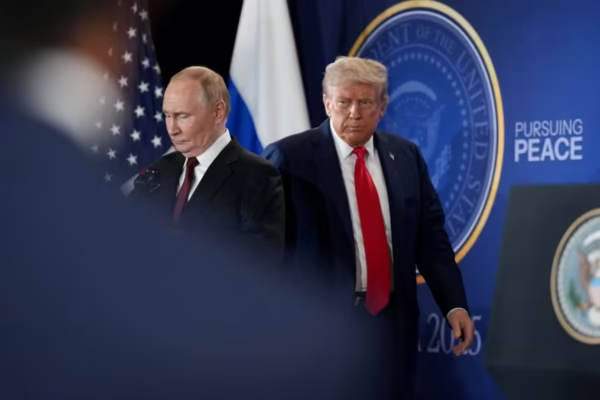
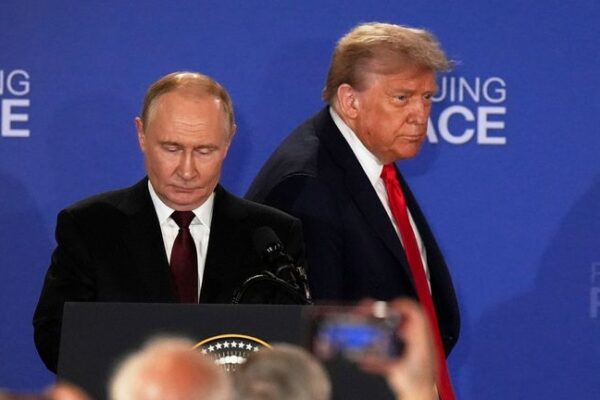
The Kremlin may have believed that US President Donald Trump lacked the resolve to exert real pressure on Moscow to end the war in Ukraine. For months, carefully timed calls from the Kremlin seemed to persuade the White House to pull back from decisive actions — including Trump’s recent reversal on supplying long-range Tomahawk missiles to Kyiv. But the latest US Treasury sanctions on Russia’s two largest oil companies — Rosneft and Lukoil — may now force President Vladimir Putin to reassess both his approach to Trump and his broader war strategy. Former Russian president and Putin ally Dmitry Medvedev lashed out at Trump, calling him a “talkative peacemaker who has now fully embarked on the war path against Russia,” adding pointedly, “This is his conflict now, not the senile Biden’s.” While the sanctions themselves may not devastate Russia’s economy, oil remains central to funding the Kremlin’s war in Ukraine. Despite years of Western restrictions, Moscow has developed methods to skirt sanctions, and Russian officials say they will adapt once again. “Our country has developed a strong immunity to Western restrictions,” foreign ministry spokesperson Maria Zakharova declared. The real challenge for the Kremlin lies in the erosion of its long-favored strategy of manipulating the Trump administration — offering gestures of peace and trade opportunities while continuing its military offensive. That tactic appears to have reached its limits. Trump, increasingly wary of being “played along” by Putin, has taken his first significant punitive step against Russia since returning to office. Alongside the sanctions, Trump abruptly canceled a planned summit with Putin in Budapest — a blow to the Kremlin’s hopes of another high-profile meeting showcasing Putin’s global relevance. Russian officials had claimed that preparations were underway, but the optimism now seems misplaced. Putin, facing war crimes charges and growing isolation, had relished August’s summit with Trump in Alaska — a rare diplomatic win that projected parity between Moscow and Washington. This time, however, the White House insists there will be no repeat unless Russia shows tangible progress on peace in Ukraine. The US Treasury has hinted at even tougher sanctions ahead, signaling what could be the start of a more assertive American approach toward Moscow. Ukraine’s President Volodymyr Zelensky hailed the move as “very important,” while European leaders expressed relief at Washington’s firmer stance. Still, uncertainty lingers. After nine turbulent months of Trump’s presidency, diplomats in Kyiv, Brussels, and even Moscow remain cautious — aware that, in Trump’s unpredictable world, a single well-timed phone call from Putin could shift the balance once again.

Read More

Trump Hits Russia’s Oil Giants With Sanctions as EU Bans Russian LNG

United States President Donald Trump has imposed sweeping sanctions on Russia’s largest oil companies, marking his first major punitive move against Moscow since returning to the White House. The decision comes amid growing frustration over Russia’s failure to make progress in ceasefire talks aimed at ending its war in Ukraine. On the same day, the European Union announced its 19th sanctions package, which includes a ban on Russian liquefied natural gas (LNG) imports. US Treasury Secretary Scott Bessent said the sanctions target Rosneft and Lukoil—Russia’s two biggest oil producers—along with dozens of their subsidiaries. He accused President Vladimir Putin of showing “a lack of serious commitment” to peace efforts and vowed to tighten restrictions further if Russia’s aggression continues. “Today’s actions increase pressure on Russia’s energy sector and degrade the Kremlin’s ability to raise revenue for its war machine,” Bessent said in a statement. The measures freeze US-based assets of the targeted firms and prohibit Americans from conducting business with them. However, China and India—Russia’s key oil customers—were notably excluded from the list. Trump told reporters he plans to raise concerns about China’s continued imports of Russian oil during his meeting with President Xi Jinping at the APEC summit in South Korea next week. “Every time I speak with Vladimir, I have good conversations, but they don’t go anywhere,” Trump said, expressing frustration over stalled truce negotiations. The Kremlin has yet to issue an official response to the sanctions. Rosneft, Russia’s state-controlled oil giant and its second-largest company by revenue, has been struggling under previous international restrictions and declining oil prices, reporting a 68 percent drop in net income for the first half of 2025. Lukoil, the country’s top private oil firm, also reported a 26.5 percent profit decline last year due to heavy taxation tied to Moscow’s war spending. The United Kingdom had already sanctioned both companies last week, with British officials declaring there was “no place for Russia in global markets” as long as it continues its war in Ukraine. Meanwhile, in Brussels, EU leaders formally approved a wide-ranging sanctions package that includes a phased ban on Russian LNG imports—ending short-term contracts within six months and long-term ones by January 2027. The decision followed last-minute negotiations to secure Slovakia’s support after its prime minister raised concerns about energy costs and climate policy impacts on heavy industries. The latest EU measures also impose travel restrictions on Russian diplomats, sanction 117 more ships from Moscow’s “shadow fleet” used to evade restrictions, and expand financial penalties to banks in Kazakhstan and Belarus. Welcoming the move, Andriy Yermak, chief of staff to Ukrainian President Volodymyr Zelenskyy, said the EU’s decision would further cut Moscow’s war funding. “The logic is simple – less money in Russia means fewer missiles in Ukraine,” he wrote on Telegram, adding that a 20th sanctions package was already being prepared.

Read More

Trump May Commute Diddy’s Prison Sentence Following Appeal From Rapper’s Legal Team

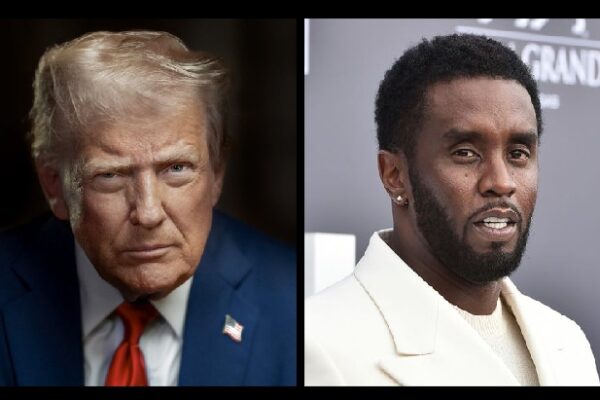
Former U.S. President Donald Trump is reportedly considering commuting rapper and music mogul Diddy’s prison sentence, with a decision possibly coming as early as this week, according to a senior White House source. The insider revealed that Trump has been “going back and forth” on the decision. While several members of his inner circle have advised against granting the commutation, the source noted that “Trump will do what he wants,” suggesting the move could still happen at any moment. Diddy, currently serving a 50-month sentence for violating the Mann Act, has completed about 13 months. With credit for good behavior, he could be released in roughly two years — though that would become irrelevant if Trump decides to intervene. Shortly after Diddy’s sentencing earlier this month, his legal team reportedly contacted a high-ranking White House official close to Trump to push for a possible commutation or pardon. Trump later confirmed to reporters that he was aware of the request. Despite their rocky history — particularly after Diddy endorsed Joe Biden during the 2020 presidential race — Trump has not ruled out granting him clemency.

Read More

Trump Confirms Planned Visit to China Early Next Year

United States President Donald Trump has announced plans to visit China early next year after receiving an official invitation from Beijing, marking what could be a pivotal moment in US-China relations amid ongoing trade and security tensions. “I’ve been invited to go to China, and I’ll be doing that sometime fairly early next year. We have it sort of set,” Trump told reporters at the White House on Monday. The announcement follows a period of cautious diplomacy between Washington and Beijing, as both sides seek to stabilize ties after years of tariff disputes and mutual suspicion over regional security issues. Trump also expressed optimism about finalizing a trade agreement with Chinese President Xi Jinping later this month, despite recent friction over new tariffs. “I think we’ll be just fine with China. China doesn’t want to do that,” he said, in apparent reference to U.S. intelligence claims that Beijing was preparing to seize Taiwan by 2027. The planned visit would be Trump’s first official trip to China since returning to the White House and comes as Washington pushes for renewed dialogue on trade, technology, and global security. This is a developing story. More updates to follow.

Read More