US Military Drafts Nigeria Intervention Plans After Trump Order

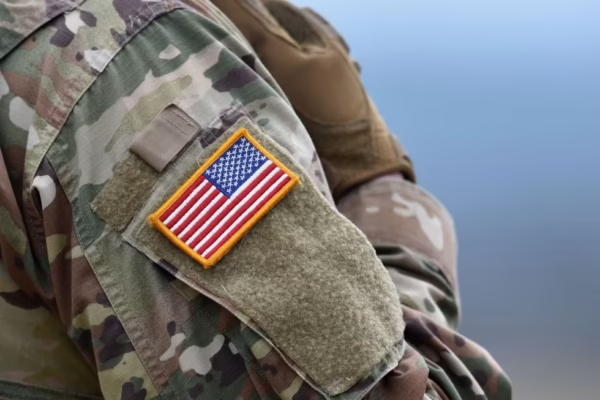
The US military has prepared options for a possible intervention in Nigeria after President Donald Trump ordered action to protect Christians from targeted attacks by terrorist groups, according to media reports. US defense officials said that US Africa Command (AFRICOM) has drawn up three escalatory plans for Nigeria, including light, medium, and heavy options, and submitted them to the Joint Staff at the Pentagon, The New York Times reported on Wednesday. The latest development came after Trump wrote on his Truth Social platform on Saturday that if the Nigerian government “continues to allow the killing of Christians,” Washington would immediately cut all aid. Trump said the US could “go into that now disgraced country, ‘guns-a-blazing,’” and ordered the Pentagon to “prepare for possible action.” According to the officials, the light option would involve “partner-enabled” operations, with the US military and State Department supporting Nigerian forces against Boko Haram and other militant groups. The medium option envisions drone strikes on militant camps and convoys, though US forces no longer have nearby bases in neighboring Niger and would face logistical and diplomatic challenges. The heavy option would deploy an aircraft carrier group and long-range strike assets, but officials said such a move is not currently a US national security priority. Military officials said US forces are unlikely to end the West African country’s decades-long insurgency and would have a limited impact without an Iraq- or Afghanistan-style campaign, which they say is not seriously being considered. “It would be a fiasco,” retired Maj. Gen. Paul D. Eaton said, adding that neither the public nor President Trump, beyond social media posts, appears interested in a large-scale ground war in Nigeria, and any US airstrikes would likely cause little more than shock, which he likened to “pounding a pillow.” In Nigeria, security is threatened by a mix of terrorist groups, including Boko Haram and ISWAP, as well as armed gangs, ethnic militias like the Indigenous People of Biafra (IPOB), and herder-farmer conflicts often rooted in economic and social tensions. According to the US-based Armed Conflict Location and Event Data Project (ACLED), there have been 1,923 attacks on civilian targets in Nigeria this year, with only 50 directly linked to Christian identity. ACLED noted that, while insurgent groups often frame their campaigns as “anti-Christian,” the violence frequently makes no distinction and harms all communities.
Read More

Spyro Urges Nigerians To Speak Out Against Foreign Intervention, Warns Of Danger

Nigerian singer Spyro has urged celebrities, religious leaders, business owners, and content creators to use their platforms to speak out against foreign intervention in Nigeria, warning that reliance on outsiders could worsen the country’s situation. Taking to Instagram, Spyro described the moment as critical, saying that conflict affects everyone and would leave citizens struggling to survive, with no time for music, movies, worship, or business. “I know it looks like a savior is coming, but the Devil always disguises as an angel of light; his actual aim is to STEAL, KILL & DESTROY. What better time to use our platforms than now to demand that the government do the necessary to avoid this DANGER LOOMING,” he wrote. He emphasized that Nigerians must hold their government accountable rather than waiting for external intervention. “No one is coming to save US; they are only coming to KILL, STEAL AND DESTROY. Remember, war takes the people, and without the people, there is no platform or influence. Use the PLATFORM now while it counts,” Spyro added. The singer’s message calls on influential Nigerians to act decisively, urging them to pressure authorities to protect the nation and prevent escalation, rather than depending on foreign powers for solutions.

Read More

Christians Are Killing Christians In South-East, Soludo Says Trump’s Genocide Claims Misleading

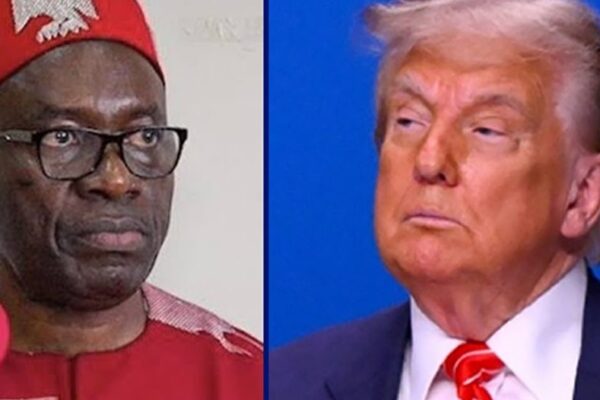
Anambra State Governor, Charles Chukwuma Soludo, has dismissed U.S. President Donald Trump’s claims that Christians in Nigeria’s South-East are victims of a religious genocide, calling the allegations false and misleading. Speaking during a live interview on Channels Television, Soludo said the ongoing violence in the region is driven by political, social, and economic grievances, not religious persecution. “The situation is more complex than it appears from outside,” he said. “In eastern Nigeria, people are killing themselves—Christians killing Christians. The people in the bushes are Emmanuel, Peter, and John—Christian names—and they have maimed and killed thousands of our youths. It has nothing to do with religion.” The former Central Bank governor emphasized that the South-East is overwhelmingly Christian, with both the perpetrators and victims sharing the same faith. “In this part of the country, we are 95 percent Christians, and the people in the bushes killing others bear Christian names,” Soludo said. “It is bigger than just Christians and Muslims. Nigeria will overcome, and it will end through conversation.” He added that while the United States is free to express its views, any actions it takes must comply with international law.

Read More
Trump Bans Soyinka From US

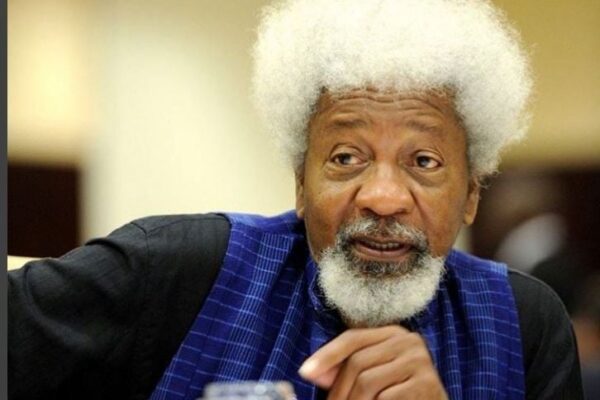
Wole Soyinka Says He Predicted US Mass Visa Revocation After Trump Took Office

Nobel laureate Professor Wole Soyinka has claimed he foresaw the mass revocation of visas and green cards by the United States, saying he had long predicted that such actions would follow once Donald Trump assumed office as President. Speaking in an interview with BBC News Pidgin published on Wednesday, the world-renowned writer — whose own U.S. visa was recently revoked — said his prediction was rooted in his understanding of Trump’s character. “This is a petty-minded dictator,” Soyinka said. “You see how he deals with his objects of hate. We saw that dark side of the American system — more killings, extrajudicial killings of black people, of minorities, during that build-up, during the campaign, and on account of hate rhetoric. I saw it and I said, listen carefully — when that man comes to power, the first thing he will do is cancel even the green cards.” His remarks come amid worsening diplomatic tension between Nigeria and the U.S. after President Trump designated Nigeria a “Country of Particular Concern,” alleging a “Christian genocide.” The U.S. leader further threatened military intervention if the Nigerian government failed to stop the killings, a statement that has stirred global criticism and fear. Soyinka, an outspoken critic of Trump, had famously vowed in 2016 to destroy his U.S. Green Card once Trump was sworn in — a promise he later fulfilled. “I have already done it. I have disengaged from the United States. I had a horror of what was to come with Trump,” he said at the time. The 91-year-old playwright recently revealed that the U.S. Embassy revoked his B1/B2 visa through a letter dated October 23, 2025. The Consulate directed him to bring in his passport for the “physical cancellation” of the visa — an instruction he described as “a joke.” According to the embassy letter, Soyinka must reapply if he wishes to travel to the United States again. But the laureate said he has no plans to do so. “I’m not going to wait to be told to come for a reinterview or simply told, ‘Get out!’ I don’t like to be kicked out; I like to kick myself out — it’s more dignified.” Soyinka disclosed that his visa issue followed an earlier notice from the U.S. Internal Revenue Service (IRS) informing him of a tax audit. “After he took office, I got a letter from the IRS telling me to report for an audit. The coincidence for me was very impressive,” he said. He explained that the audit covered a five-year period and that he had voluntarily informed the U.S. Embassy about it to avoid any misunderstanding. “I didn’t want to be advertised as a tax dodger owing the United States money,” Soyinka told journalists. The U.S. Mission in Nigeria, responding to inquiries, later clarified that visas are a privilege, not a right, and can be revoked at any time at the discretion of the U.S. government. Despite his criticisms of Trump’s policies, Soyinka maintained that his personal relationship with the American people remains cordial, saying he was always treated with respect whenever he visited the embassy.

Read More

Trump Warns Nigeria Again Over Christian Killings, Threatens To End U.S. Aid

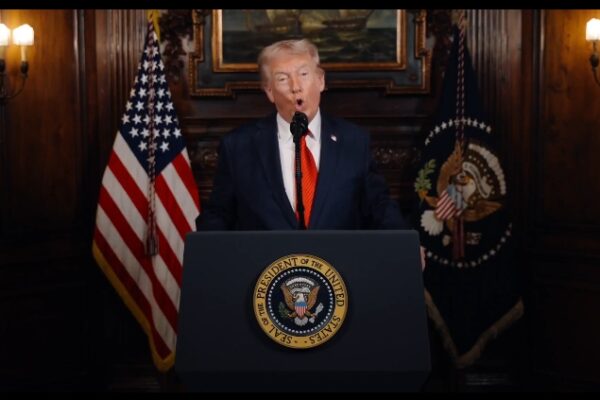
Donald Trump has issued another warning to Nigeria over the persistent killings of Christians, threatening to halt all forms of aid and impose tough measures if the violence continues. Speaking from his podium in Washington, Trump declared: “If the Nigerian government continues to allow the killings of Christians, the USA will immediately stop all aid and assistance to Nigeria. We are going to do things to Nigeria that Nigeria is not going to be happy about.” The U.S. President’s statement marks his second public warning in less than a week, following earlier remarks accusing the Nigerian government of failing to protect its Christian population. His administration has since placed Nigeria on the list of “Countries of Particular Concern” for alleged violations of religious freedom, a move that could lead to sanctions or suspension of development support. Sources in Washington revealed that Trump has directed the Department of Defense to be on standby for “possible actions,” signaling that the warning may not be limited to diplomatic pressure. In response, Nigeria’s Minister of Foreign Affairs, Yusuf Tuggar, dismissed the claims, saying, “State-backed religious persecution is impossible under Nigeria’s constitution.” He maintained that the violence often labeled as religious is, in most cases, rooted in ethnic rivalries, banditry, and terrorism. Trump’s renewed threat has drawn global attention, with international observers cautioning against rash decisions that could damage diplomatic ties between the two countries. However, others argue that the warning might compel the Nigerian government to intensify its efforts to address the ongoing insecurity and protect vulnerable communities. As tensions rise, both nations now face a critical moment that could redefine U.S.–Nigeria relations depending on how Abuja responds to Washington’s escalating stance. "If the Nigerian government continues to allow the killings of Christians, the USA will immediately stop all aid and assistance to Nigeria. We are going to do things to Nigeria that Nigeria is not going to be happy about." – Trump pic.twitter.com/IzSoJNOlpX — Imran Muhammad (@Imranmuhdz) November 5, 2025

Read More

Falana Accuses Trump Of Lying About ‘Christian Genocide’ In Nigeria

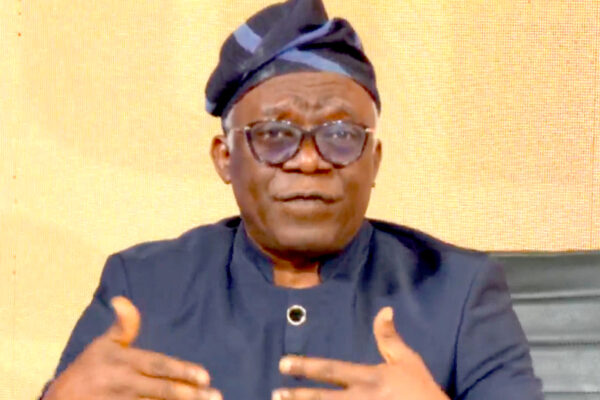
Human rights lawyer, Femi Falana (SAN), has accused U.S. President Donald Trump of fabricating claims about an alleged “Christian genocide” in Nigeria, describing him as a leader driven by hostility toward Africa. Speaking on Channels Television’s Politics Today on Wednesday, Falana dismissed Trump’s assertion that thousands of Christians were being systematically killed in Nigeria, calling it a baseless and misleading statement. “My position is that Mr. Trump has lied to the whole world by alleging Christian genocide in Nigeria without any evidence to back it up,” Falana said. He explained that the violence in Nigeria is not religiously motivated but rooted in criminality, insecurity, and economic struggles. “He said about 3,100 Christians have been killed in Nigeria. But when you look at the facts, those behind the killings — terrorists, bandits, kidnappers, or gunmen — do not care about religion. What they are after is ransom or control of territory. It’s not about religion,” he said. Falana highlighted that in states such as Benue and Plateau, most violent clashes are tied to land and grazing disputes. “Those who are killing there are either trying to take land or feed their animals,” he added. The senior lawyer urged the Federal Government not to be alarmed by Trump’s recent threat of military action against Nigeria but to focus on strengthening its internal security. “Instead of losing sleep over Trump’s statement, the government should look inward and identify its own failings,” he said. He further alleged that Trump’s comments form part of a broader geopolitical agenda targeting Africa’s natural resources and global alliances. “I know him, I know his antics, I know his hatred for Africa. This whole issue is about Nigeria’s resources. The same people pushing this agenda are also saying China must be cut down to size in Africa. We must understand the global politics behind it and the mistakes our own leaders have made,” Falana said. His remarks come amid rising diplomatic tension following Trump’s directive for U.S. forces to prepare for possible military intervention in Nigeria.

Read More

US Senator, Ted Cruz Pledges To Expose Nigerian Officials Behind Christian Persecution

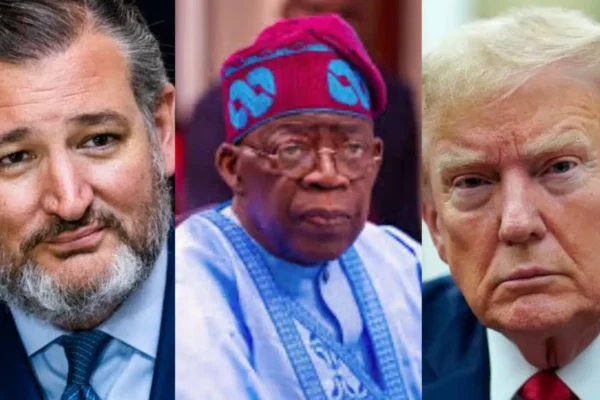
US Senator Ted Cruz has pledged to expose and sanction Nigerian officials allegedly responsible for persecuting Christians and other religious minorities. His remarks come after US President Donald Trump designated Nigeria as a Country of Particular Concern (CPC), a classification reserved for nations accused of severe violations of religious freedom. Cruz, the sponsor of the Nigeria Religious Freedom Accountability Act of 2025, said the next step following the designation is to ensure that those enabling or participating in religious persecution face direct consequences. In a post on his official X handle Tuesday, Cruz expressed gratitude to President Trump for his leadership and determination to end the killings of Christians in Nigeria. “I’ve been pushing legislation to designate Nigeria a CPC and to impose sanctions on the Nigerian officials responsible. Thank you to President Trump for his leadership in imposing the designation, and more broadly, for fighting to stop the murder of Christians in Nigeria. Now we should take the next step and hold Nigerian officials accountable. I intend to be very explicit about who they are in the coming days and weeks,” he wrote.  

Read More

Mamdani Wins: Can Trump Legally Cut Federal Funding to New York City?

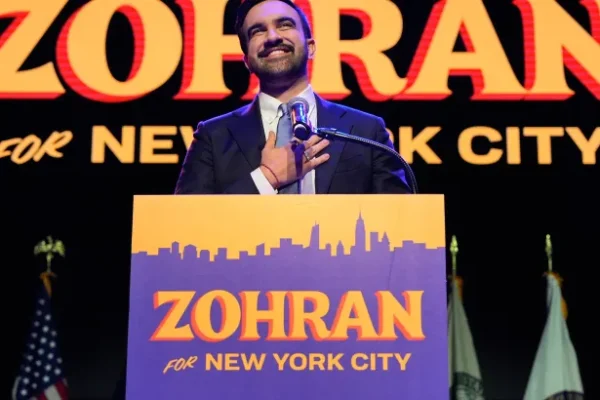
Experts say the president cannot unilaterally block federal funds despite political threats New York City’s mayoral race may have been between Zohran Mamdani and Andrew Cuomo, but President Donald Trump was a dominant force in the background — repeatedly attacking Mamdani as a “communist” and threatening to withhold federal funds from the city if he won. Now that Mamdani has emerged victorious, defeating Cuomo by a comfortable margin on Tuesday, questions are mounting over whether Trump can legally carry out his threat. In a post on his Truth Social platform, the president wrote: “If Communist Candidate Zohran Mamdani wins the Election for Mayor of New York City, it is highly unlikely that I will be contributing Federal Funds, other than the very minimum as required, to my beloved first home.” Trump added that the city would become a “complete and total disaster” under Mamdani’s leadership, urging voters to support Cuomo instead. The president also repeated his position during a 60 Minutes interview, saying it would be difficult to justify sending “a lot of money to New York” if a “communist” ran the city. Despite Trump’s rhetoric, Mamdani — a 34-year-old democratic socialist and former state assemblyman — has rejected accusations of being a communist. His campaign focused on making New York more affordable, promising rent freezes, free universal childcare, and reduced public transport costs. Political analysts and fact-checkers have also debunked the claims. PolitiFact cited academic experts explaining that Mamdani’s platform does not reflect communist ideology. “Communism involves a centrally planned economy with no market forces. He is not calling for that,” said Stanford University professor Anna Grzymala-Busse. But how much does New York City rely on federal money — and could Trump really withhold it? According to an April 2025 report from the New York State Comptroller’s Office, the city expects about $7.4 billion in federal funding for fiscal year 2026, roughly 6.4 percent of its total budget. Most of these funds go toward housing and social services, including the Temporary Assistance for Needy Families (TANF) program. However, legal experts say Trump’s threat holds little weight. Under the U.S. Constitution, only Congress has the authority to allocate federal funds. Article I, Section 9 states: “No money shall be drawn from the Treasury but in consequence of appropriations made by law.” That means a president cannot simply refuse to release funds already approved by Congress — an act known as “impoundment.” The Impoundment Control Act of 1974, passed after President Richard Nixon attempted a similar move, requires congressional approval for any withholding of funds beyond 45 days. Constitutional lawyer Bruce Fein told Al Jazeera that Trump “cannot legally halt funding to any state unless Congress has expressly conditioned that funding.” He added that any attempt to do so would likely trigger lawsuits. Trump’s administration has already attempted to limit funding to New York in recent months. Earlier this year, $12 million in federal counterterrorism grants earmarked for the New York Police Department were blocked as part of broader federal spending pauses. The city has since joined a legal challenge against the move, led by New York State. State Comptroller Thomas DiNapoli warned that the city faces “hundreds of millions of dollars in potential funding cuts or delays,” estimating a $400 million shortfall for the 2025 fiscal year and another $135 million for 2026. While political battles over federal funds are not new, experts stress that Trump’s threats — though headline-grabbing — are more political than practical. The U.S. Constitution, they say, gives him limited power to make them reality.

Read More