Saudi Arabia Breaks Execution Record Again With 340 Deaths in 2025

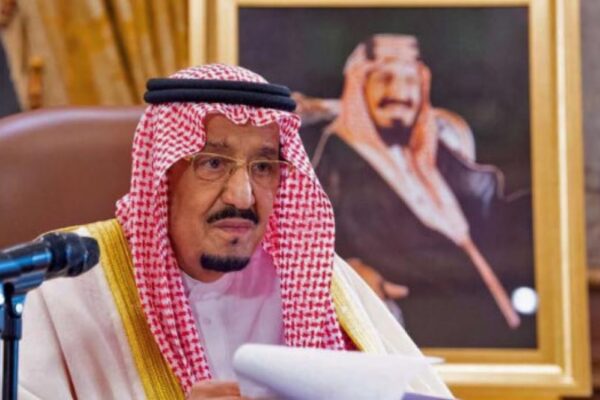
Saudi Arabia has set a new record for the most executions carried out in a single year, with 340 people put to death in 2025, following the execution of three individuals on Monday, according to AFP’s tally. The figure surpasses the previous record of 338 executions in 2024 and marks the second consecutive year the kingdom has broken its own record since rights groups began documenting executions in the 1990s. A statement from the Interior Ministry, carried by the Saudi Press Agency (SPA), confirmed that the three people executed in the Mecca region were convicted of murder. Of this year’s total, 232 executions involved drug-related offenses, accounting for the majority of the deaths. Analysts link the rise in executions to the kingdom’s “war on drugs” launched in 2023, with many of those previously arrested now facing capital punishment after completing legal proceedings. Saudi Arabia had temporarily suspended executions for drug offenses for around three years but resumed them at the end of 2022. The government has increased police checkpoints on highways and at border crossings, confiscated millions of captagon pills, and arrested numerous traffickers, with foreigners disproportionately affected. The kingdom, the world’s largest oil exporter, relies heavily on foreign labor in construction, domestic work, and hospitality. Critics have long condemned its use of the death penalty as excessive, noting it contrasts sharply with efforts to present a modern image internationally. Amnesty International has been tracking executions in Saudi Arabia since 1990, as data from earlier years remains largely unclear.

Read More

Recuse Yourself, Don’t Be Part of Witch-Hunt, Malami Warns EFCC Chairman

Former Attorney-General of the Federation and Minister of Justice, Abubakar Malami, SAN, has demanded that the Economic and Financial Crimes Commission (EFCC) Chairman recuse himself from an ongoing investigation and threatened prosecution, describing the probe as a politically motivated “witch-hunt.” In a press release on Monday, Malami described the probe as politically motivated, linking it to his recent defection to the African Democratic Congress (ADC). He alleged that the EFCC Chairman harbors a longstanding grudge stemming from the Justice Ayo Salami Judicial Commission of Inquiry, which investigated corruption allegations within the EFCC during Malami’s tenure as Attorney-General. “The present investigation—marked by illegal detentions, media harassment, and procedural abuses—bears all the hallmarks of retaliatory persecution motivated by personal vengeance,” Malami said, stressing that the current EFCC leadership cannot conduct a fair or impartial probe into his activities. Malami formally demanded that the EFCC Chairman step aside and that the matter be handed over to another government agency to ensure credibility, impartiality, and public confidence. He also urged the current Attorney-General of the Federation to intervene, warning that continued involvement by the EFCC Chairman could lead to further institutional damage and abuse of prosecutorial powers. He emphasized the need for judicial oversight, insisting on immediate arraignment before a competent court in line with Sections 35(3), (4), and (5) of the Nigerian Constitution. According to Malami, only a court—not a politically compromised agency—can lawfully adjudicate the matter. Malami further accused the EFCC of planning to rely on questionable witnesses, including individuals convicted abroad, calling such tactics “desperate, scandalous, and corrosive to the integrity of Nigeria’s criminal justice system.” His office has formally requested certified copies of the petitions and investigation reports underpinning the EFCC’s actions, citing complaints from Human and Environmental Agenda and Grassroot Advocacy for Peace and Good Governance. Malami concluded by underscoring his commitment to clearing his name through lawful judicial processes and warning against the politicization of anti-corruption agencies. “The law must remain supreme—above politics, above power, and above persons,” he said. The statement was issued by Mohammed Bello Doka, Special Assistant on Media to Abubakar Malami, SAN.

Read More

Ooni of Ife Confers Chieftaincy Title on Ghanaian President John Mahama

The Ooni of Ife, Oba Adeyeye Ogunwusi, has conferred the chieftaincy title of Aare Atayeto Oodua of the Source on Ghanaian President Dr. John Mahama. The ceremony, held on Monday in Ile-Ife, Osun State, was part of the Ooni’s 10th coronation anniversary celebrations. President Mahama was first received at the Samuel Ladoke Akintola Airport in Ibadan, Oyo State, before making his way to Ile-Ife, where he was warmly welcomed by a large crowd. Ghana’s national broadcaster, GTV, reported on X that the title, which translates to “A President who reorganises the global space for humanity,” was bestowed by Ooni Ogunwusi in recognition of Mahama’s contributions to leadership and global affairs. The event took place at the Palace Square and drew prominent attendees, including Dangote Group President Aliko Dangote and Ovation Magazine Publisher Dele Momodu. Earlier, the Ooni had also honored Nigeria’s First Lady, Senator Oluremi Tinubu, with the Yeye Asiwaju title, PUNCH Online reported.

Read More

Awoniyi Splashes Cash Rewards on Award Winners as Kwara Kiddies League Season IV Ends in Style

Kwara Football Academy (KFA) were celebrated as champions of the Kwara Kiddies League Season IV following a 1–0 victory over Gaa Akanbi Kids in the Grand Finale, bringing an exciting campaign to a colourful close. Although KFA had already secured the league title with five games to spare, the champions rounded off the season in emphatic fashion on the final matchday. A fine strike from Jimoh Kamaldeen in the 182nd match of the season separated both sides and capped a dominant campaign for the Ilorin-based academy, who finished the season on a record-equalling 66 points. The Grand Finale ceremony was highlighted by a lavish awards presentation, as Super Eagles forward Taiwo Awoniyi splashed cash rewards and scholarships on outstanding performers across the league, reinforcing the competition’s commitment to grassroots football development. In recognition of excellence throughout the season, each of the 15 players named in the Team of the Season received ₦100,000, while individual award winners in major categories—Goalkeeper, Defender, Midfielder, Top Striker, Young Player, Manager of the Season and Referee of the Year—were each rewarded with ₦150,000. Abubakar Solihu of Gaa Akanbi Kids emerged as Goalkeeper of the Season, while KFA defender Eko Martins enjoyed a remarkable campaign, winning both the Player of the Season and Defender of the Season awards. Afeez Azeez of Afrikan Kiddies FA was named Midfielder of the Season, with Ajibola Gidado of Unicorn FA claiming the Top Striker of the Season honour. Arisekola Faruq of Busari FA was recognised as the Soliu Sanusi Revelation of the Season in the U-13 category. The Team of the Season featured Abubakar Solihu (Gaa Akanbi Kids) in goal; defenders Eko Martins (KFA), Abdullahi Kamaldeen (Future Stars), Yunus Abdulmajeed (Achievers FA) and Soliu Kamaldeen (Barca Kiddies); midfielders Afeez Azeez (Afrikan Kiddies FA), Isiak Mustapha (KFA) and Jimoh Mubarak (Makamz FA); and forwards Adeoye Tobi (KFA), Gidado Ajibola (Unicorn FA) and Abdulhamid Yunus (Koller FA). The reserve list included Muritala Azeez (Barca Kiddies), Abdulwahab Abdulsamad (Koller FA), January Goodluck (Makamz FA) and Oluwaseyi Adeyemi (Unicorn FA). Other awards saw Emmanuel Ajewole named Referee of the Year, Oluwaseyi Ajayi of KFA honoured as Manager of the Season, while Unicorn FA clinched the Fair Play Award. The event attracted top sports stakeholders and dignitaries, including the Executive Chairman of the Kwara State Sports Commission, the Chairman of the Kwara State Football Association, the Chairperson of the Kwara State House of Assembly Committee on Sports, Mrs Shittu Rukayyat, and the Commissioner for Water Resources, Mr Yunusa Lade Usman, among others. The ceremony climaxed with the presentation of the championship trophy to Kwara Football Academy in a colourful celebration that fittingly marked the end of a successful and impactful Kwara Kiddies League Season IV.

Read More

House of Reps Passes Bill to Prohibit Contract and Casual Staff Employment in Nigerian Banks

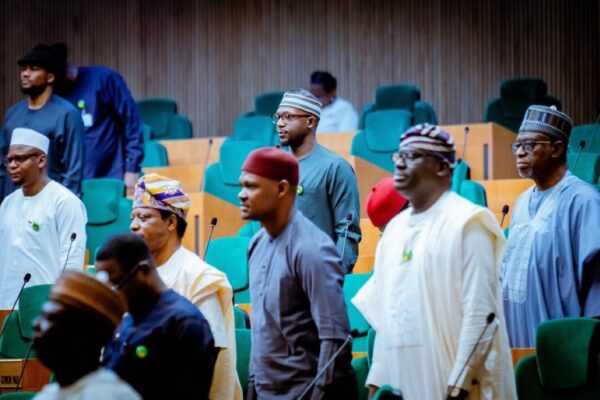
The House of Representatives has advanced a bill seeking to regulate employment practices in Nigerian banks, passing its second reading on Thursday. The legislation, sponsored by Fuad Laguda, an APC member representing Surulere I federal constituency in Lagos, aims to amend the Banks and Other Financial Institutions Act 2020 to “prohibit, criminalise and penalise” the hiring of casual or contract staff by banks. Speaking during plenary, Laguda said the bill is intended to address exploitative practices affecting millions of Nigerians employed on casual or contract terms in the banking sector. He noted that current laws, including the Labour Act 2004 and the Employees’ Compensation Act 2010, do not adequately protect these workers’ welfare. Laguda cited a 2023 report by the Chartered Institute of Bankers of Nigeria (CIBN), stating that banks rely on casual and contract workers to cut costs for pensions, minimum wages, health insurance, promotions, bonuses, study grants, and severance packages. He added that such workers constitute roughly 65 percent of the banking workforce. The bill also targets breaches of section 7(1) of the Labour Act 2004, which limits employment without formal recognition to three months. “I urge my colleagues to support this bill because it corresponds with the viewpoints of the governor of the Central Bank of Nigeria, Mr Olayemi Cardoso, who said casual and contract staff in Nigerian banks are exposed to poor working conditions,” Laguda said. He further explained that banks often hire casual and contract employees to avoid legal obligations, leaving them vulnerable to systemic inequalities, emotional abuse, and mental health challenges. Deputy Speaker Benjamin Kalu called for a voice vote, and lawmakers unanimously approved the bill, moving it forward in the legislative process.

Read More

Nigeria’s Inflation Slows to 14.45% in November 2025 as Food Prices Ease

Nigeria’s headline inflation slowed in November 2025 as consumer price pressures eased under the new base year, according to the National Bureau of Statistics (NBS). The latest Consumer Price Index (CPI) report, released on Monday, showed the CPI rising to 130.5 points in November from 128.9 points in October, a month-on-month increase of 1.6 points. Despite the rise in CPI, the year-on-year headline inflation rate fell to 14.45 per cent, down from 16.05 per cent in October. On a monthly basis, inflation stood at 1.22 per cent in November, higher than the 0.93 per cent recorded in October, indicating that prices still increased in the short term despite the moderation in annual inflation. Compared with November 2024, headline inflation was 20.15 percentage points lower, largely reflecting the effects of rebasing the CPI from 2009 to 2024. The twelve-month average CPI ending November 2025 increased by 20.41 per cent, a slowdown from the 32.77 per cent recorded over the same period in 2024. Food and non-alcoholic beverages remained the largest contributors to headline inflation, accounting for 5.78 percentage points, followed by restaurants and accommodation services (1.87 points) and transport (1.54 points). Housing, water, electricity, gas, and other fuels contributed 1.22 points, while education and health accounted for 0.90 and 0.88 points, respectively. Food and non-alcoholic beverages also drove month-on-month price increases, contributing 0.49 points, followed by restaurants and accommodation at 0.16 points and transport at 0.13 points. Regionally, urban inflation fell to 13.61 per cent year-on-year in November, down sharply from 37.10 per cent in November 2024. Rural inflation was higher at 15.15 per cent but still significantly lower than the 32.27 per cent recorded a year earlier. Month-on-month, urban inflation slowed to 0.95 per cent, while rural inflation rose to 1.88 per cent, showing stronger price pressures in rural areas. Food inflation moderated on an annual basis, falling to 11.08 per cent in November from 39.93 per cent in November 2024. However, month-on-month food prices rose by 1.13 per cent after contracting by 0.37 per cent in October, driven by increases in dried tomatoes, cassava tubers, shelled periwinkle, ground pepper, eggs, crayfish, egusi, oxtail, and fresh onions. The twelve-month average food inflation rate was 19.68 per cent, compared with 38.67 per cent in 2024. Core inflation, which excludes volatile food and energy prices, fell to 18.04 per cent year-on-year in November from 28.75 per cent in November 2024, while month-on-month core inflation eased slightly to 1.28 per cent. Other sub-indices showed farm produce inflation at 0.79 per cent, energy inflation at 1.08 per cent, services inflation at 1.82 per cent, and goods inflation at 0.79 per cent. At the state level, Rivers recorded the highest year-on-year all-items inflation at 17.78 per cent, followed by Ogun (17.65 per cent) and Ekiti (16.77 per cent), while Plateau had the lowest at 9.13 per cent. Month-on-month, Bayelsa led with a 6.58 per cent increase, followed by Gombe (5.11 per cent) and Edo (4.45 per cent), while Plateau, Delta, and Kaduna recorded declines. Food inflation by state showed Kogi with the highest year-on-year increase at 17.83 per cent, followed by Ogun (16.52 per cent) and Rivers (16.11 per cent). Month-on-month food price increases were highest in Yobe (9.52 per cent), Katsina (6.61 per cent), and Ondo (6.04 per cent), while Imo, Nasarawa, and Enugu saw declines. The NBS cautioned that comparisons between states should be interpreted carefully, as CPI weights vary according to local consumption patterns, making direct comparisons of inflation baskets potentially misleading.

Read More

FBI Charges Nigerian Damilola Bamigboye for Resisting Arrest, Abducting Federal Agent in Minnesota

The FBI has charged 24-year-old Nigerian Damilola Bamigboye with resisting arrest and abducting a federal agent, following a December 10 incident in Plymouth, Minnesota, according to court documents reviewed by Peoples Gazette. Bamigboye was under surveillance by Department of Homeland Security Investigations (HSI) agents for overstaying his student visa when the routine operation escalated into a hostage situation. He was charged alongside Rekeya Frazier, who allegedly assisted in the incident. According to the FBI, agents in an unmarked vehicle equipped with sirens and lights were monitoring Bamigboye’s Kia Optima outside his apartment when a Jeep parked beside it. Bamigboye, seated in the front passenger seat, masked his face and began moving items from the front to the back seat, while Frazier remained at the wheel. When the agents approached and identified themselves, Bamigboye allegedly grabbed the driver’s headrest and instructed Frazier to drive. FBI Special Agent Terry Getsch reported: “He yelled at Frazier, ‘Drive! Drive! Drive! Get in the car and drive now,’ or words to that effect.” During the struggle, one agent tried to prevent Frazier from starting the Jeep, while another attempted to remove Bamigboye from the back seat. Despite the efforts, Frazier started the vehicle, forcing an agent to jump out to avoid being hit, while another was involuntarily carried inside the moving Jeep. The agent repeatedly identified himself as a federal officer and urged Frazier to stop, but she threatened to crash the car and insisted on dropping him at a police station. The original HSI team pursued the Jeep with sirens and lights. The Jeep eventually stopped in front of the New Hope Police Department, approximately two miles from Bamigboye’s residence. Bamigboye fled into a nearby grocery store and was arrested there, while Frazier was taken into custody by uniformed police after initially resisting. Bamigboye later admitted to struggling with a federal agent and instructing Frazier to flee, attributing his actions to post-traumatic stress disorder caused by a previous kidnapping in Nigeria. The FBI said there is probable cause to believe Bamigboye and Frazier intended to abduct a federal officer, violating Title 18 of the U.S. Code, Section 111, which covers assaulting or resisting federal officers. Bamigboye has been formally charged following his arraignment before U.S. Magistrate Judge David Schultz in Hennepin County, Minnesota.

Read More

Supreme Court Upholds President’s Power to Declare State of Emergency

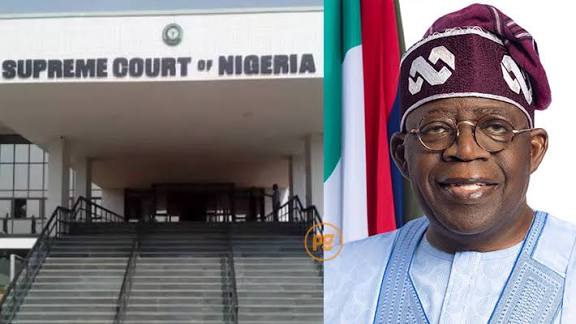
The Supreme Court has affirmed the President’s authority to declare a state of emergency in any part of the country in order to prevent a breakdown of law and order or a descent into chaos and anarchy. In a split six-to-one decision delivered on Monday, the apex court ruled that the President may suspend elected officials during a state of emergency, provided such suspensions are temporary and limited in duration. Justice Mohammed Idris, who delivered the lead majority judgment, held that Section 305 of the Constitution empowers the President to adopt extraordinary measures aimed at restoring normalcy whenever emergency rule is proclaimed. He explained that the section does not clearly define the scope of those extraordinary measures, thereby granting the President discretion on how best to act under such circumstances. The judgment arose from a suit filed by Adamawa State and 10 other states governed by the Peoples Democratic Party, which challenged the legality of the state of emergency declared by President Bola Tinubu in Rivers State. Under that declaration, elected state officials were suspended for six months. Justice Idris also upheld the preliminary objections raised by the defendants, ruling that the objections were valid and affected the competence of the suit before the court.

Read More