
China Condemns Trump’s 100% Tariff Threat, Defends Rare Earth Export Controls

China Condemns Trump’s 100% Tariff Threat, Defends Rare Earth Export Controls

By Trend Brio News  | October 12, 2025 BEIJING — China has lashed out at U.S. President Donald Trump’s decision to impose 100 percent tariffs on Chinese imports, calling the move “hypocritical” and warning Washington to resolve trade tensions through dialogue rather than confrontation. In a statement released on Sunday, China’s Ministry of Commerce defended its recent restrictions on rare earth exports and related technologies, saying the measures were taken in response to a series of “provocative and damaging” U.S. actions since bilateral trade talks in Madrid last month. “China’s stance is consistent. We do not want a tariff war but we are not afraid of one,” the ministry said, adding that Beijing would not back down in the face of “threats and coercion.” Beijing accused Washington of double standards after Trump announced the sweeping new tariffs on Friday, claiming China had weaponized its dominance in rare earth production. The tariffs, which take effect November 1, target a wide range of Chinese goods and include new restrictions on software exports. “These actions have severely harmed China’s interests and undermined the atmosphere for economic and trade talks,” the statement added. Rare earth elements—crucial for smartphones, electric vehicles, renewable energy systems, and military hardware—have become a central issue in the escalating economic rivalry between the two superpowers. China currently dominates global production and processing of these materials and on Thursday introduced tighter controls on the export of technologies used in mining and refining them. The new restrictions have rattled global markets, with tech stocks sliding amid fears of disruptions to the supply chain for critical minerals. The renewed trade tensions also threaten to derail a possible meeting between Trump and Chinese President Xi Jinping at the Asia-Pacific Economic Cooperation (APEC) Summit in South Korea later this month. The encounter would be their first face-to-face meeting since Trump’s return to office in January. Meanwhile, Taiwan’s Ministry of Economic Affairs downplayed concerns that China’s export controls would disrupt its semiconductor industry, saying the rare earth elements covered by the new rules differ from those used in chip manufacturing. “The expanded ban differs from materials required in Taiwan’s semiconductor processes, so no significant impact is expected,” the ministry said, noting that Taiwan sources most of its rare earth materials from Europe, the U.S., and Japan. Despite China’s restraint in not announcing countermeasures, observers expect Beijing to continue using targeted export restrictions and diplomatic pressure as leverage in the ongoing trade confrontation.

Read More

El-Sisi, Trump to Co-Chair Gaza Peace Summit in Egypt on Monday

By Trend Brio News | October 12, 2025 SHARM EL-SHEIKH, EGYPT — Egyptian President Abdel Fattah el-Sisi and U.S. President Donald Trump are set to co-chair an international peace summit in Egypt’s Sharm el-Sheikh on Monday, bringing together leaders from over 20 countries to discuss a comprehensive plan to end Israel’s devastating war on Gaza. According to a statement from the Egyptian presidency on Saturday, the summit aims “to end the war in the Gaza Strip, enhance efforts to achieve peace and stability in the Middle East, and usher in a new era of regional security and stability.” Among those confirmed to attend are United Nations Secretary-General António Guterres, UK Prime Minister Keir Starmer, French President Emmanuel Macron, Italy’s Giorgia Meloni, and Spain’s Pedro Sánchez. It remains unclear whether Israeli Prime Minister Benjamin Netanyahu or any representatives from Hamas will take part. The announcement follows the implementation of the first phase of a U.S.-brokered ceasefire between Israel and Hamas, which includes the release of Israeli hostages and Palestinian prisoners, the partial withdrawal of Israeli troops, and the resumption of humanitarian aid into Gaza. Palestinians Return to Rubble As the ceasefire holds, tens of thousands of displaced Palestinians have begun returning north along the Gaza coast to their homes — or what remains of them. Much of Gaza lies in ruins after two years of war that have killed more than 67,000 people, mostly civilians, and left the enclave on the brink of famine. Al Jazeera’s Hani Mahmoud, reporting from Gaza City, described scenes of resilience amid destruction. “People walk this exhausting journey back because they belong here,” he said. “But spending a night here is going to be very difficult. The struggle to survive continues each hour.” Recovery Efforts Underway Gaza’s Government Media Office said more than 5,000 recovery and relief operations have been conducted since the ceasefire began. Over 850 missions were carried out by civil defence and municipal teams to recover bodies and clear debris, while more than 900 efforts focused on restoring water and sewage infrastructure. Officials in Khan Younis reported that 85 percent of the city has been destroyed, with over 400,000 tonnes of rubble still blocking streets. Aid agencies say the work is being done with minimal resources due to Israel’s continued blockade restricting fuel and equipment imports. Push for Humanitarian Access Aid groups, including the World Food Programme (WFP) and UNICEF, have called on Israel to reopen border crossings to allow the delivery of food, medicine, and relief materials. WFP country director Antoine Renard said the agency was ready to reopen 145 food distribution points across Gaza once access is restored. UNICEF also announced plans to scale up food and hygiene supplies for children and families. Prisoner and Hostage Exchange As part of the ceasefire deal, 20 Israeli captives and the bodies of 28 others are set to be handed over on Monday, according to President Trump. In exchange, Israel will release 250 Palestinian prisoners and about 1,700 Gazans detained without charge since the war began. In Tel Aviv, tens of thousands gathered in Hostages Square to mark the expected return of captives. Trump’s son-in-law Jared Kushner, daughter Ivanka Trump, and U.S. envoy Steve Witkoff — who helped broker the agreement — joined the rally. “I dreamed of this night. It’s been a long journey,” Witkoff said to loud applause. “As you return to your families, know that all of Israel and the world stand ready to welcome you home.” Al Jazeera’s Hamdah Salhut reported that families of Israeli captives credited Trump and the U.S. team for the deal, accusing Prime Minister Netanyahu of prolonging the conflict for political reasons. With the summit in Sharm el-Sheikh set to convene on Monday, global leaders hope the talks can solidify the fragile ceasefire and pave the way for lasting peace in the region.

Read More
ASUU Set To Begin Two-Week Warning Strike As Ultimatum To Government Expires

ASUU Set To Begin Two-Week Warning Strike As Ultimatum To Government Expires

Members of the Academic Staff Union of Universities (ASUU) are poised to begin a two-week warning strike on Monday unless a last-minute resolution is reached with the Federal Government. The strike follows the expiration of a two-week ultimatum given to the government to address the union’s long-standing demands. By Sunday night, no official response had been issued regarding the imminent industrial action. ASUU had directed its branches across the country to prepare for the strike, highlighting growing frustration despite ongoing negotiations aimed at preventing disruptions in the nation’s tertiary institutions. On Wednesday in Abuja, the Minister of Education, Dr. Tunji Alausa, said the government was in the final stages of talks with ASUU and other university unions, focusing on welfare, funding, and the implementation of the 2009 ASUU-FGN Agreement. Alausa said significant progress had already been made, including the release of N50 billion for Earned Academic Allowances and the inclusion of N150 billion in the 2025 budget for needs assessment, to be disbursed in three tranches. “They deserve to be paid well, and our academic and non-academic staff deserve improved welfare,” Alausa said. “We can’t give everything at once, but we are committed to making substantial improvements in their conditions.” He added that promotion arrears and other pending allowances had been addressed, with remaining obligations expected to be cleared by 2026. The minister urged the unions to favor dialogue over strikes and reiterated the government’s commitment to sustainable peace in the education sector. For the first time, the negotiation process has included officials from the Ministry of Justice, including the Solicitor-General of the Federation, to ensure that agreements are legally binding and enforceable. ASUU president, Prof. Chris Piwuna, criticized the Education Ministry for repeatedly delaying action on critical issues affecting lecturers. “The ultimatum expires on Sunday, and if the government does not present something substantial, a warning strike will commence,” he said. “Within the next 48 hours, we expect a meaningful response. Then we will consult our members to determine the next step.” Preparations for the strike are already underway at several federal universities, including the University of Jos, Ahmadu Bello University, and the University of Abuja. At the University of Jos, ASUU leaders met with branch executives to secure support for the planned action. Folasade Boriowo, spokesperson for the Ministry of Education, declined to comment when contacted about the strike.  

Read More

Tinubu Travels To Rome For Aqaba Counter-Terrorism Meeting

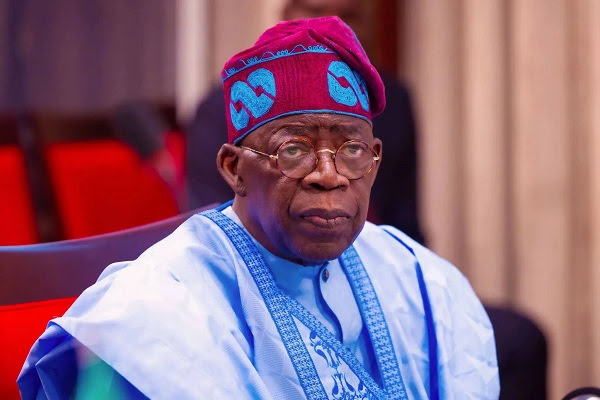
President Bola Tinubu will depart Abuja today for Rome, Italy, to participate in the Aqaba Process heads of state and government meeting — a global platform dedicated to counter-terrorism and regional security cooperation. The Aqaba Process was launched in 2015 by Jordan’s King Abdullah II and is co-chaired by Jordan and the Italian government. It brings together world leaders, defence chiefs, and security experts to strengthen coordination against terrorism and transnational crime. Bayo Onanuga, special adviser to the president on information and strategy, said the upcoming session will focus on the security crisis in West Africa. Opening on October 14, the meeting will gather presidents, top intelligence and military officials from African countries, as well as representatives from international and non-governmental organisations. Discussions will cover the expansion of terrorist networks, the growing connection between organised crime and terrorism, and the increasing link between land-based insurgencies in the Sahel and piracy in the Gulf of Guinea. Participants will exchange intelligence reports, assess the current security environment, and design strategies to improve cooperation in combating threats across borders. They will also explore new approaches to tackling online radicalisation and shutting down digital platforms that spread extremist propaganda and aid recruitment. Tinubu is also expected to hold bilateral meetings with other leaders on the sidelines of the summit to deepen regional partnerships and discuss joint responses to the rising insecurity across West Africa. He will be accompanied by Bianca Ojukwu, minister of state for foreign affairs; Mohammed Badaru, minister of defence; Nuhu Ribadu, national security adviser; Mohammed Mohammed, director-general of the National Intelligence Agency; and other senior government officials.  

Read More

Madagascar Soldiers Join Antigovernment Protests as Movement Gains Momentum

By Trend Brio News Desk | October 11, 2025 In a dramatic escalation of unrest in Madagascar, groups of soldiers have defied orders and joined thousands of antigovernment protesters in the capital, Antananarivo, as demonstrations demanding President Andry Rajoelina’s resignation intensify. The youth-led protesters entered the historic May 13 Square for the first time on Saturday, marking one of the largest rallies since demonstrations erupted on September 25. Inspired by youth-led “Gen Z” protest movements in Kenya and Nepal, the rallies have grown from anger over persistent power and water shortages into a broader movement against the government. Police fired stun grenades and tear gas in an attempt to disperse the crowds, but tensions shifted when members of the elite CAPSAT military unit arrived and were met with cheers from demonstrators. CAPSAT, which once played a key role in bringing Rajoelina to power during Madagascar’s 2009 political crisis, appeared to side with the protesters in defiance of military command. In a video message shared on social media, soldiers from the Soanierana barracks urged unity among the armed forces and called on colleagues to refuse orders to fire on civilians. “Let us join forces — military, gendarmes and police — and refuse to be paid to shoot our brothers and sisters,” the soldiers said. They also urged troops at the airport to halt flights and those in other camps to “close the gates” and “refuse orders from superiors.” Local footage showed soldiers escorting demonstrators into May 13 Square, a symbolic site for political uprisings in Madagascar that had been heavily guarded for weeks. The country’s armed forces minister, General Deramasinjaka Manantsoa Rakotoarivelo, appealed for calm, urging soldiers to “prioritise dialogue.” He reiterated that the army “remains a mediator and the nation’s last line of defence.” The United Nations condemned the use of excessive force after reports of police brutality went viral, including footage showing officers beating a protester unconscious. The UN said at least 22 people have been killed and 100 injured since the unrest began, though President Rajoelina disputes the figures, claiming only 12 “looters and vandals” died. Rajoelina initially responded to the protests by dissolving his government, but he has since taken a harder line, appointing military officer Ruphin Fortunat Zafisambo as prime minister and filling key cabinet posts with members of the security forces. Madagascar, one of the world’s poorest nations, has a long history of political instability. The island nation has seen several mass upris  

Read More
Tinubu Pardons Maryam Sanda Six Years After Conviction For Killing Husband

Tinubu Pardons Maryam Sanda Six Years After Conviction For Killing Husband

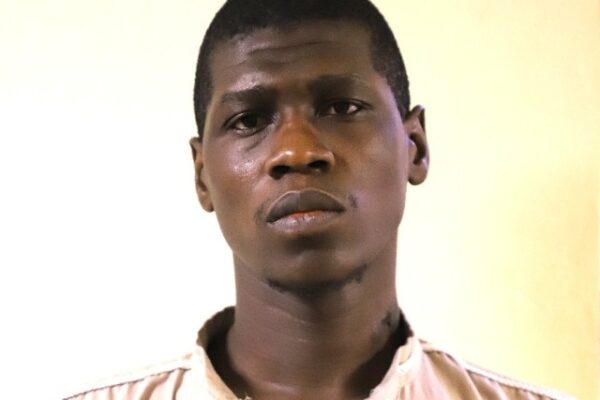
President Bola Tinubu has granted a state pardon to Maryam Sanda, who was sentenced to death in 2020 for killing her husband, Bilyaminu Bello, during a domestic dispute in Abuja. The president’s special adviser on information and strategy, Bayo Onanuga, announced the clemency on Saturday, revealing that Sanda, 37, had regained her freedom after serving six years and eight months at the Suleja Medium Security Custodial Centre. Onanuga explained that the decision followed appeals from her family, who said her release would allow her to properly care for her two young children. He added that her remorse and good conduct in custody also influenced the president’s decision. In January 2020, Justice Yusuf Halilu of the Federal Capital Territory High Court found Sanda guilty of culpable homicide, ruling that she fatally stabbed her husband during an argument at their home. The court concluded that the prosecution had proven its case beyond reasonable doubt. The victim, Bilyaminu Bello, was the son of former Peoples Democratic Party (PDP) national chairman, Haliru Bello. Sanda was first arraigned in November 2017 and granted bail on health grounds in 2018 after several failed attempts. Her trial lasted more than two years, marked by frequent adjournments and changes in her legal team. She is among 175 inmates who benefited from President Tinubu’s latest round of clemency and sentence reductions approved earlier this week.  

Read More

Dave Umahi Claps Back At Makinde Over Comments On Lagos-Calabar Highway Cost

Minister of Works David Umahi has responded strongly to Oyo State Governor Seyi Makinde’s criticism of the cost per kilometre of the Lagos-Calabar Coastal Highway, saying the governor misunderstood the technical and financial details behind the project. During an inspection of the Keffi Bridge and Nasarawa–Toto Road projects on Saturday with Nasarawa State Governor Abdullahi Sule, Umahi said the project’s cost was based on internationally accepted engineering standards and should not be turned into a political talking point. Governor Makinde had, in a viral video on Friday, accused Umahi of “dancing around” the figures, saying the Ministry of Works was not being transparent enough about the project’s cost structure. In his response, Umahi described Makinde as “a brother and friend” but said it was wrong to make such comments publicly without understanding the technical background. “I heard that my brother and friend, Governor Makinde, said something about the cost per kilometre. I don’t want to join issues with him,” he said. “He’s an engineer, while I’m an electrical engineer — and this road construction matter, ‘elect-elect no reach there’.” Umahi continued, “I’m his senior both in governance and in engineering practice. So, anything he doesn’t understand, he should call me and ask. I respect him a lot, but he should withdraw the statement that I’m dancing around. I never danced around anything. If he insists, he should come for a debate — that’s very important.” Clarifying the figures, the minister explained that the “cost per kilometre” can be expressed in two ways — as an estimated cost and as an average cost — both of which serve different purposes. “The estimated cost includes contingencies and variations that may not eventually be used. When the project is completed and you remove those, what remains is the actual cost,” he said. Umahi also mocked those who sought clarification from Artificial Intelligence on the issue, saying AI’s response backed his explanation. “When someone who doesn’t understand the topic goes to ask AI about the difference between estimated and average cost, I’m glad AI confirmed exactly what I said,” he remarked. He further noted that practical field experience in engineering qualifies as expertise, saying, “The National Universities Commission recognizes that a person can become a professor through practical experience. I believe God has made me one in field engineering — and that’s not something anyone can take away.”  

Read More
Crypto Investor Kostya Kudo Found Dead In Lamborghini Amid Market Meltdown

Ukrainian Crypto Blogger Kostya Kudo Found Dead In Lamborghini After Market Crash

Ukrainian crypto investor and popular blogger Konstantin Galish, better known by his online alias Kostya Kudo, was found dead in a Lamborghini in Kyiv on Saturday, shortly after a major crash hit the global cryptocurrency market. Reports from Ukrainian media stated that the 32-year-old’s body was discovered in the Obolon district of the capital. His death came just a day after Bitcoin, Ethereum, and several other digital currencies suffered severe losses following U.S. President Donald Trump’s decision to impose a 100 per cent tariff on “any and all critical software” imports from China. A post on Galish’s official Telegram channel confirmed his passing and said authorities are investigating the circumstances surrounding his death. Binance Square, a social platform for cryptocurrency enthusiasts, reported that Galish died by suicide. News of his death has sent shockwaves through the crypto community, with many users taking to social media to pay tribute and express sorrow over the loss of the influential investor.  

Read More