Trump Pushes Ahead With 250-Foot ‘Independence Arch’ Despite Preservation and Air Safety Concerns
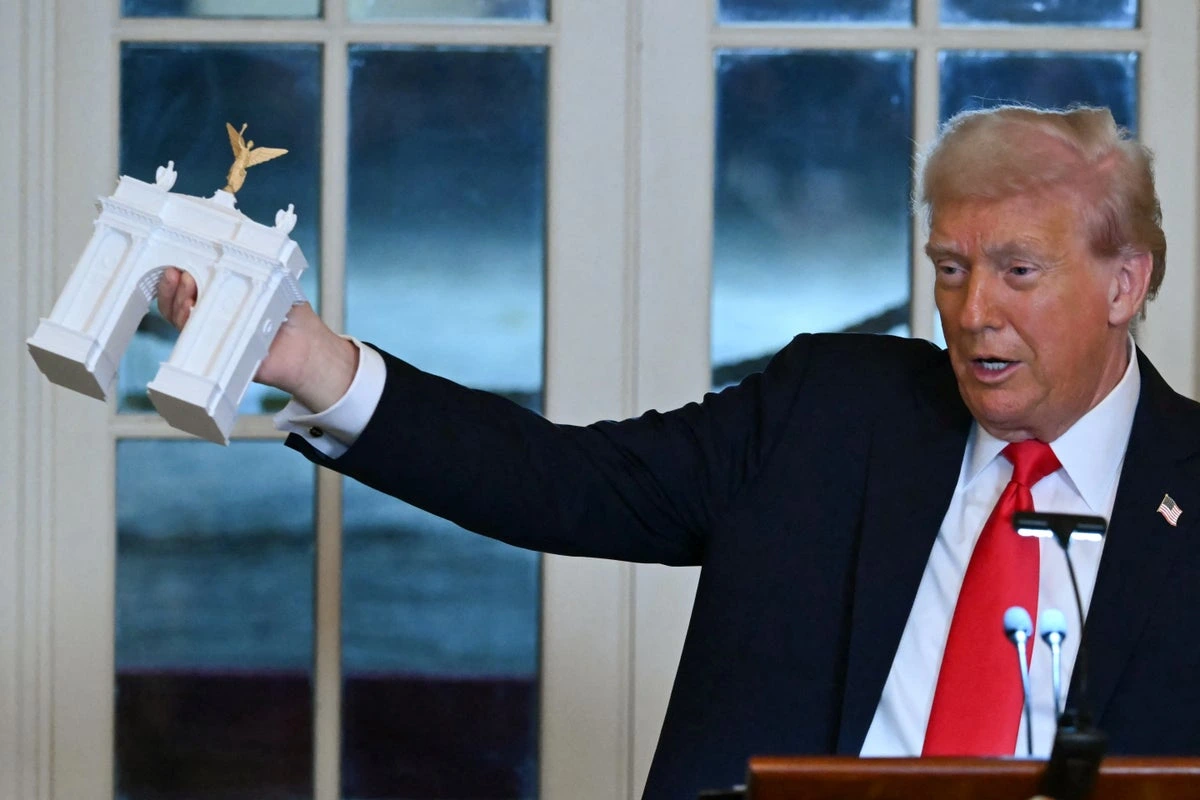
US President Donald Trump is advancing plans to construct a massive 250-foot monument in Washington, DC, even as preservationists and aviation experts warn that the project could face significant legal and safety hurdles.
The proposed structure, named the Independence Arch, is intended to commemorate the United States’ 250th anniversary. If completed as designed, it would surpass Paris’ Arc de Triomphe in height and become the largest monumental arch in the world — standing roughly as tall as a 16- to 20-storey building.
Trump has reportedly championed the project as a future global landmark. The design features a towering stone arch crowned with a 60-foot gilded Lady Liberty statue, alongside decorative columns, eagles and wreath motifs. Although smaller versions of the monument were considered during planning, the President is said to favor the largest and most ambitious option.
However, the proposed location — a traffic circle at the base of the Arlington Memorial Bridge — has sparked criticism from historians and preservation advocates. Opponents argue that the structure would obstruct the historic sightline between the Lincoln Memorial and Arlington House, a view widely regarded as symbolically significant in American history.
Architectural historian Bryan Clark Green noted that while he is not opposed to a monument at the site, the sheer scale of the arch is troubling. He warned that the project could dominate its surroundings and overwhelm nearby historic landmarks.
Beyond concerns about visual impact, aviation safety experts have also raised alarms. The site lies close to flight paths leading into Ronald Reagan Washington National Airport. Aircraft approaching from the north typically pass the area at relatively low altitudes, prompting fears that a structure of such height could reduce safety margins in an already congested airspace.
Although federal planning commissions are expected to review the proposal, the project would still be subject to environmental and historic preservation laws. As a result, additional assessments and public consultations are likely required — processes that could significantly delay construction.
Legal experts suggest that if the administration proceeds without adhering to established review procedures, lawsuits are almost certain. Critics maintain that the monument’s scale, location and potential impact on protected historic resources make it highly vulnerable to court challenges.
As debate intensifies, the future of the Independence Arch now hinges not only on political will but also on regulatory approvals and potential legal battles.