National Assembly To Create 156 New Seats For Women With Passage Of Reserved Seats Bill

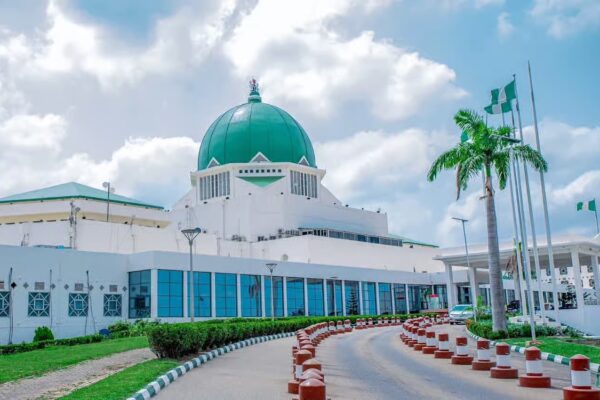
Nigerian women could secure up to 156 additional seats across federal and state legislatures if the Reserved Seats for Women Bill presently before the National Assembly is approved and signed into law by the President. The proposed legislation seeks to amend the 1999 Constitution to introduce special seats exclusively for women in the Senate, House of Representatives and state Houses of Assembly. Supporters of the bill describe it as a corrective, strategic and temporary intervention aimed at addressing the persistent underrepresentation of women in governance after decades of exclusion. Under the original framework of the proposal, each state would produce one reserved female seat in the Senate and one in the House of Representatives, in addition to three seats for women in every state assembly. However, developments indicate that the Senate is instead pressing for a modified arrangement that would allocate one reserved women’s seat per geopolitical zone in the upper chamber. Speaking during a training programme for members of the House of Representatives Press Corps organised by the House Committee on Media and Public Affairs in partnership with the TOS Foundation, the Special Adviser to the Deputy Speaker on Legislative Matters, Chidozie Aja, dismissed claims that the bill was designed to edge men out of existing elective offices. “For emphasis, these seats will not replace existing seats, but will expand representation to create room for women at the table of decision-making. It is important, also to note that political parties will field only female candidates for these seats.” He explained that the bill was initially structured to last for four election cycles, covering a period of 16 years, describing it as a temporary special measure. However, he disclosed that current proposals may lead to either an extension of the duration or the complete removal of the sunset clause. “It is meant to last for four election cycles of 16 years in all. It is a temporary special measure. However, adjustments being proposed so far may either completely remove the sunset clause or extend the duration. Summarily, the Bill seeks to alter Sections 48, 49, 71, 77, 91 and 117 of the Constitution of the Federal Republic of Nigeria, 1999; and more recently recommended alteration of Section 42.” Aja noted that while this form of gender-based legislative intervention is new in Nigeria’s political system, it has produced strong results in other African countries. “While this is novel in the Nigerian space, this approach has been used successfully by Rwanda, now the global leader with 61% women in Parliament. Other countries that have successfully implemented this approach, in various forms and mixes, include Tanzania, Uganda, Kenya, Burkina Faso and Senegal.” He acknowledged that even with the proposed expansion, Nigeria’s overall female representation would still remain relatively low, though it would mark a meaningful step forward. “It is important to note that even if additional 74 seats are granted in the Senate and House of Representatives, bringing the total number of seats to 543, it means that Nigeria will only secure 13.6% women representation in the national parliament. Not an outstanding progress, but significant.” According to him, global evidence supports structural gender quotas as an effective tool for improving governance. “The evidence is clear, countries that adopt structural gender quotas tend to experience stronger representation, better governance, and improved development outcomes.” Aja further stressed that the bill would strengthen Nigeria’s democracy, noting that democracy works best when all segments of society are represented. He explained that Nigeria’s democratic system is currently operating below its full potential because women remain largely excluded from political power. He added that women’s inclusion would make democracy deeper, more legitimate and more stable. He also pointed out that multiple global studies show that when women take active roles in governance, parliaments pass stronger health policies, more education-focused laws, improved social protection frameworks and more community-driven development policies. According to him, women’s presence directly enhances the quality of governance. Aja described women as critical players in peacebuilding, particularly at the grassroots level, noting that their involvement helps reduce conflict and strengthens community resilience. He further maintained that gender inclusion should also be seen as a powerful economic strategy. Citing a study by the McKinsey Global Institute, he revealed that Nigeria’s economy stands to benefit significantly from full inclusion of women in political and economic life. The institute projects a potential overall economic gain of $22.9 billion and up to 23 percent growth in GDP if Nigeria succeeds in substantially reducing gender inequality by 2025.

Read More

Chiwetalu Agu Advises Women To Prioritize Independence And Self-Development Before Marriage

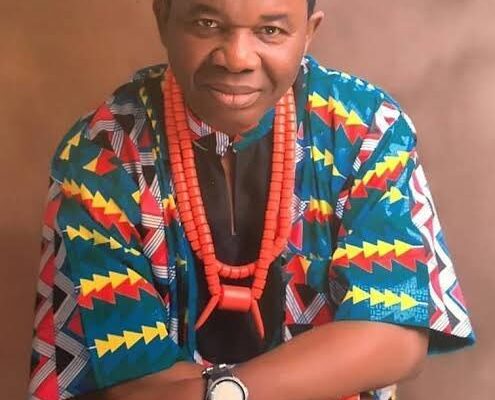
Veteran Nollywood actor Chiwetalu Agu has urged women to focus on personal growth and independence before getting married. In a video shared on his Instagram page, Agu emphasized that marriage should not define a woman’s identity or sense of fulfillment. He encouraged women to be mentally, spiritually, and financially stable before taking the step into matrimony. “The best advice I can give you as a lady before you embark on the journey of marriage is to be a complete woman. Establish yourself before you marry. Make sure you are mentally, physically, spiritually, and financially stable. Emphasis on being financially and spiritually stable,” Agu said. He added that a woman’s completeness should not depend on marriage. “It is not marriage that completes you as a woman. You don’t need marriage to feel whole, valuable, or fulfilled. Marriage should complement you, not complete you. It should be a beautiful addition, not a missing piece,” he explained. Agu also stressed the importance of self-reliance, advising women to invest in their skills, careers, and passions. “Before you marry, build yourself up. Even if you are not financially stable, at least have something to do—a skill, a business idea, or understanding of independence. Relying completely on a man can be risky,” he warned. He cautioned about potential challenges in marriage, saying, “God forbid you marry into a family where your in-laws don’t like you, or if your husband divorces you or passes away, and you have nothing of your own. You could end up starting life all over again.” Agu’s message highlights the importance of self-development and personal stability, presenting marriage as an addition to a woman’s life rather than the foundation of her worth.

Read More

13th Women AFCON: NFF Launches Mission X Campaign for Super Falcons

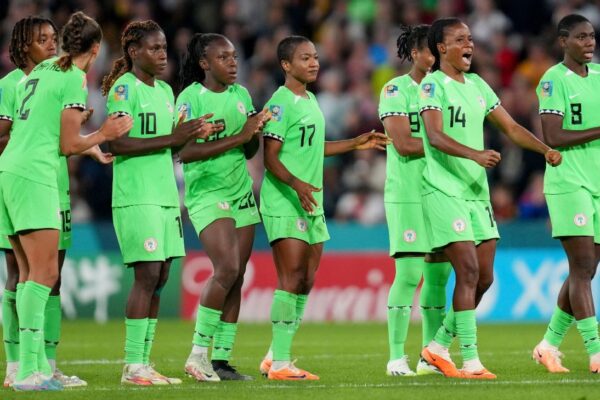
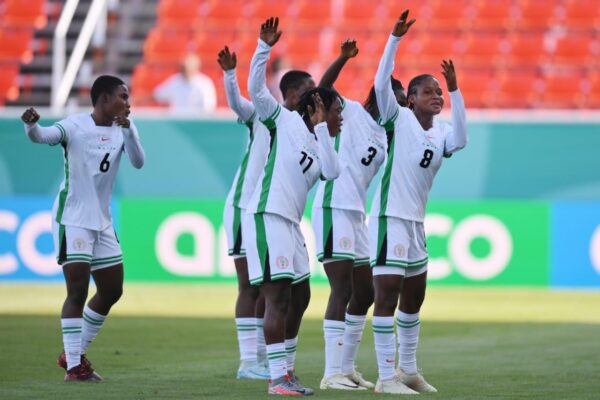
The Nigeria Football Federation has set in motion a media campaign, nicknamed Mission X, to mobilize and galvanize Nigerian ball fans at home and in the diaspora to support the Super Falcons’ quest for a 10th Africa Cup of Nations title in Morocco next month. With nine titles to their name, from 12 championships that have been contested since the Confederation of African Football launched the event as a tournament in 1998, Africa’s most-decorated women National Team heads to Morocco with one mission: to clinch an epic 10th title. “We are committed to fully supporting the Super Falcons’ campaign for a 10th continental title, and that is why we are launching the Mission X campaign to sensitize football-loving Nigerians at home and in the diaspora, young and old, in high and low places, and male and female, to also come out and support the team. “The Super Falcons remain the most decorated National Team in African football. We are proud of what they have achieved and what they intend to achieve in Morocco,” NFF General Secretary, Dr Mohammed Sanusi, said from the United States of America on Tuesday. Sanusi added: “We want the Super Falcons to feel the energy of our football-passionate fans everywhere they go, from Abuja to Casablanca, where they will play their group stage matches, and at any other venue they have to play their knockout games in Morocco.” The Super Falcons also won the lone ticket granted Africa for the FIFA Women’s World Cup finals in 1991 (China) and 1995 (Sweden), but there was no tournament-format Africa Cup of Nations competition in those years. This is Mission X. One Team. One Goal. One More Star. Kindly follow the link: https://youtu.be/shN97wVofDQ

Read More

FIFA U-17 World Cup: Nigeria Draws Canada, France and Samoa

Nigeria’s Flamingoes have been drawn in Group D with Canada, France and newcomer Samoa at the 2025 FIFA U-17 Women’s World Cup in Morocco. The expanded 24-country competition, up from 16 teams, runs Oct. 17 to Nov. 8 in Rabat. It will mark the first time an African country has hosted the women’s U-17 tournament. Nigeria is making its African-record eighth trip to the tournament, finishing third in 2022 and reaching the quarterfinals on four other occasions. France, which qualified by reaching the UEFA semifinals in qualifying play, won the U-17 World Cup in 2012 but has only qualified twice since. Samoa is making its first-ever appearance at a FIFA championship. Canada’s women are also headed to their eighth U-17 World Cup, missing out only in 2024 when CONCACAF only sent two teams to the FIFA championship, with the federation’s Dominican Republic hosting the tournament. Canada finished third in qualifying after losing 2-1 to Mexico after extra time in the semifinal. The U.S. also qualified, finished third at the 2024 FIFA tournament. Canada’s best showing at the FIFA U-17 World Cup was fourth in 2018. It made the quarterfinals in 2008, 2012 and 2014. FIFA U1-7 Women’s World Cup Draw Group A: Brazil, Costa Rica, Italy, Morocco Group B: Cameroon, North Korea, Mexico, Netherlands. Group C: China, Ecuador, Norway, U.S. Group D: Canada, France, Nigeria, Samoa. Group E: Colombia, Ivory Coast, South Korea, Spain. Group F: Japan, New Zealand, Paraguay, Zambia.

Read More
No Condom, No Conversation: A Silent Crisis in Our Communities

No Condom, No Conversation: A Silent Crisis in Our Communities

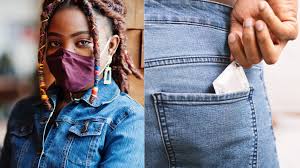
This is just a candid observation, not meant to judge or offend anyone. I recently had casual conversations with 40 women, and only about 10 confirmed they use condoms. The rest either smiled or admitted they don’t. This, to me, reflects part of the reason behind the increasing rate of single motherhood in society. I’m not blaming anyone—life happens, and things don’t always go as planned. But if I could offer any advice, it’s this: use protection. Not just to prevent unwanted pregnancies, but to avoid the emotional and financial strain that can come with raising a child alone. I’ve personally had situations where women were okay with unprotected sex if I didn’t bring it up—which honestly worries me. It’s not about being overly cautious, just responsible. Currently, I’m working in a slum area, and I see young single mothers with undernourished children. When asked about the fathers, many say they’re long gone. A simple condom might’ve changed that story. I’m not pointing fingers—just encouraging awareness. These days, some ladies are willing to go raw for quick money, ignoring the consequences. Let’s talk more openly about this. Protection is not just smart—it’s survival.

Read More
Anita Joseph: Women Have the Right to Scream During Lovemaking

Anita Joseph: Women Have the Right to Scream During Lovemaking

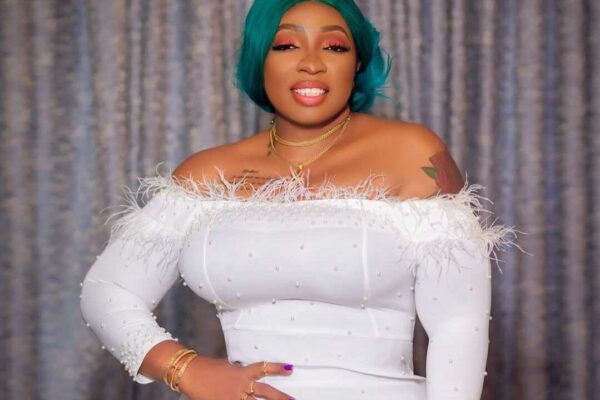
Nigerian actress Anita Joseph has sparked discussions on social media regarding women’s sexual expression within relationships. In a candid video shared on her Instagram, Joseph emphasized that women should feel empowered to express themselves during intimate moments. She stated, “It takes a good man to make a lady scream,” highlighting the importance of mutual satisfaction and communication in relationships.​Ghana Celebrities Joseph’s comments have garnered mixed reactions online. While some followers appreciate her openness and advocacy for women’s sexual agency, others have criticized her remarks, questioning the appropriateness of discussing such personal matters publicly. This isn’t the first time Joseph has made headlines for her views on relationships; previously, she addressed the topic of marital intimacy during fasting periods. She argued that women should not deprive their husbands of sex during fasting, stating, “Even the Bible didn’t instruct you to do that.” ​illuminaija+3Adomonline.com+3Glam Squad Magazine+3 The actress’s statements continue to fuel conversations about sexual expression and expectations within marriages. While some advocate for open dialogue and mutual understanding, others urge caution in public discussions about intimate topics. Joseph’s willingness to speak openly about her views reflects her commitment to challenging societal norms and encouraging empowerment through communication.​ As the discourse evolves, it remains clear that Joseph’s perspective has ignited a broader conversation about intimacy, consent, and the importance of mutual respect in relationships.​

Read More

#BringBackFubara: Women Demand End to Emergency Rule in Rivers

A group of women in Rivers State staged a protest on Friday morning in Port Harcourt, the state capital, demanding the reinstatement of Governor Siminalayi Fubara and an end to the emergency rule declared in the state. The protest, which began in the early hours of the day, saw the women chanting slogans and wielding placards with inscriptions such as ‘We need our democracy restored’, ‘#BringBackFubara’, ‘Obey the rule of law’, and ‘Save our democracy’. “We want Governor Fubara back,” one of the protesters was heard saying in videos circulating on X. PUNCH Online gathered that the demonstration culminated in a march to the Rivers State Government House in Port Harcourt, where the women called for a return to democratic governance and described the current political situation in the state as “unconstitutional”. The protest comes in response to the suspension of Fubara, his deputy, Ngozi Odu, and members of the Rivers State House of Assembly. President Bola Tinubu had declared a state of emergency in the oil-rich state on March 18, citing a prolonged political crisis. Following the declaration, Ibok-Ete Ibas, a retired naval chief, was appointed as the sole administrator of the state. Videos circulating on social media showed the women chanting solidarity songs and demanding an end to what they termed a “breach of democratic principles”.

Read More