Wole Soyinka Criticizes Seyi Tinubu’s Heavy Security Detail, Urges Review Of State Protection Allocation

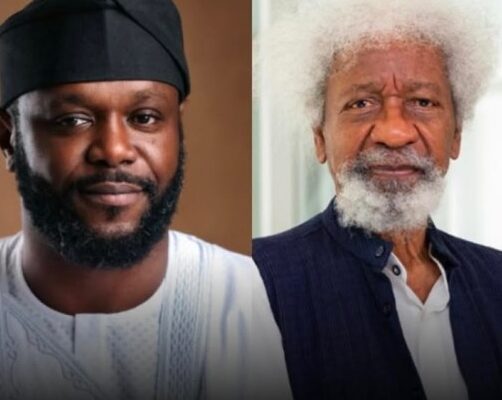
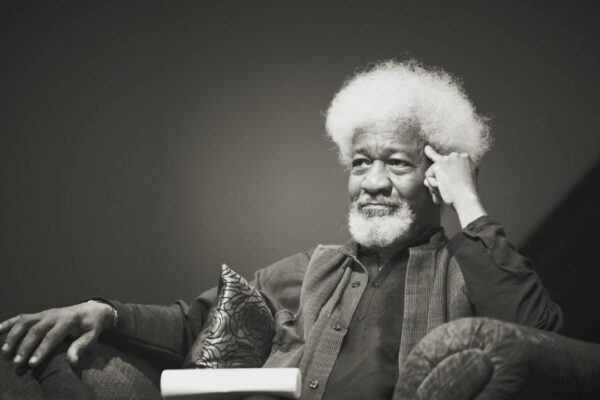
Professor Wole Soyinka has raised concerns over the extensive security detail assigned to Seyi Tinubu, the son of President Bola Tinubu, calling for a review of how state protection is allocated in Nigeria. Speaking at the 20th Wole Soyinka Centre for Investigative Journalism Awards in Lagos on Tuesday, the Nobel laureate recounted a recent encounter at his hotel in Ikoyi, Lagos, that left him shocked. He described witnessing “an excessively large security battalion assigned to a young individual close to the Presidency,” an entourage he said was “sufficient to take over a small country.” Soyinka revealed the young man was Seyi Tinubu. Disturbed by the display, he contacted National Security Adviser Nuhu Ribadu. “I was so astonished that I started looking for the national security adviser. I said track him down for me. I think they got him somewhere in Paris. But he was with the president; he was in a meeting. Then I said I’ve just seen something I can’t believe and I described the scene to him. I said, do you mean that a child of the head of state goes around with an army for his protection or whatever? I couldn’t believe it,” Soyinka said. After further investigation, Soyinka learned that Seyi Tinubu routinely moves with a battalion of heavily armed soldiers. He emphasized that “children must understand their place. They are not elected leaders, and they must not inherit the architecture of state power simply by proximity.” At the same event, which also honoured veteran poet Odia Ofeimum and others, Soyinka urged President Tinubu to reconsider the size of Seyi’s security detail, noting that such resources are urgently needed elsewhere. Humorously, he remarked that if a major insurgency were to occur, perhaps Seyi could “go and handle it,” given the size of his escort, but added, “beyond the humour lies a serious matter of priority and fairness.” Soyinka warned that concentrating a battalion of operatives around one individual is inconsistent with the country’s security needs, particularly as Nigeria grapples with kidnappings, rural attacks, insurgency, and other criminal violence. “Security deployments must reflect national realities, not privilege,” he stressed. He also addressed the media, praising journalists for their resilience while urging stronger editorial discipline in an era of rising misinformation. “The next great conflict may well be triggered by the misuse of social platforms,” Soyinka cautioned, calling for renewed commitment to truth and verification, and describing credible journalism as one of Nigeria’s strongest defenses against chaos. The four-minute, 25-second video of Soyinka’s remarks, shared on X by #Nigeriastories on Tuesday night, has gone viral, sparking widespread discussion about privilege, state security, and the responsibilities of children of public officials.
Read More
Trump Bans Soyinka From US

Wole Soyinka Says He Predicted US Mass Visa Revocation After Trump Took Office

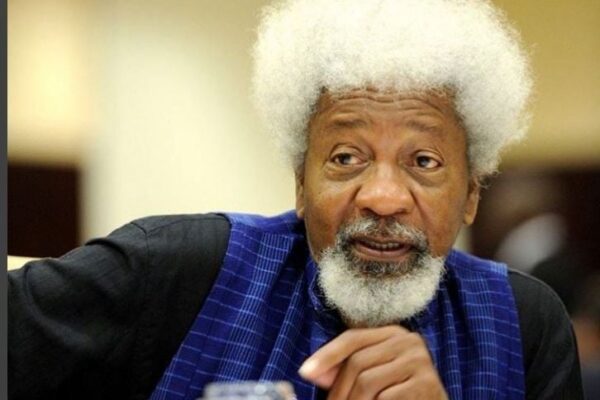
Nobel laureate Professor Wole Soyinka has claimed he foresaw the mass revocation of visas and green cards by the United States, saying he had long predicted that such actions would follow once Donald Trump assumed office as President. Speaking in an interview with BBC News Pidgin published on Wednesday, the world-renowned writer — whose own U.S. visa was recently revoked — said his prediction was rooted in his understanding of Trump’s character. “This is a petty-minded dictator,” Soyinka said. “You see how he deals with his objects of hate. We saw that dark side of the American system — more killings, extrajudicial killings of black people, of minorities, during that build-up, during the campaign, and on account of hate rhetoric. I saw it and I said, listen carefully — when that man comes to power, the first thing he will do is cancel even the green cards.” His remarks come amid worsening diplomatic tension between Nigeria and the U.S. after President Trump designated Nigeria a “Country of Particular Concern,” alleging a “Christian genocide.” The U.S. leader further threatened military intervention if the Nigerian government failed to stop the killings, a statement that has stirred global criticism and fear. Soyinka, an outspoken critic of Trump, had famously vowed in 2016 to destroy his U.S. Green Card once Trump was sworn in — a promise he later fulfilled. “I have already done it. I have disengaged from the United States. I had a horror of what was to come with Trump,” he said at the time. The 91-year-old playwright recently revealed that the U.S. Embassy revoked his B1/B2 visa through a letter dated October 23, 2025. The Consulate directed him to bring in his passport for the “physical cancellation” of the visa — an instruction he described as “a joke.” According to the embassy letter, Soyinka must reapply if he wishes to travel to the United States again. But the laureate said he has no plans to do so. “I’m not going to wait to be told to come for a reinterview or simply told, ‘Get out!’ I don’t like to be kicked out; I like to kick myself out — it’s more dignified.” Soyinka disclosed that his visa issue followed an earlier notice from the U.S. Internal Revenue Service (IRS) informing him of a tax audit. “After he took office, I got a letter from the IRS telling me to report for an audit. The coincidence for me was very impressive,” he said. He explained that the audit covered a five-year period and that he had voluntarily informed the U.S. Embassy about it to avoid any misunderstanding. “I didn’t want to be advertised as a tax dodger owing the United States money,” Soyinka told journalists. The U.S. Mission in Nigeria, responding to inquiries, later clarified that visas are a privilege, not a right, and can be revoked at any time at the discretion of the U.S. government. Despite his criticisms of Trump’s policies, Soyinka maintained that his personal relationship with the American people remains cordial, saying he was always treated with respect whenever he visited the embassy.

Read More

Trump Administration Revokes US Visa of Nigerian Nobel Laureate Wole Soyinka

The United States government has revoked the visa of Nigerian Nobel Laureate Wole Soyinka, the first African to win the Nobel Prize for Literature, amid a widening crackdown on figures critical of President Donald Trump’s administration. Soyinka revealed the development on Tuesday at Kongi’s Harvest Gallery in Lagos, reading aloud from a letter issued by the US Consulate on October 23. The notice requested that he submit his passport for “physical cancellation” of his visa — a move he described humorously as “a rather curious love letter.” “I like people who have a sense of humour, and this is one of the most humorous requests I’ve had in all my life,” Soyinka joked, telling the audience he was too busy to comply with the consulate’s invitation. “Would any of you like to volunteer in my place?” he added with characteristic wit. The visa in question had been issued during Joe Biden’s presidency. However, Trump’s return to the White House earlier this year ushered in a series of immigration restrictions, including the revocation of visas and green cards from individuals deemed out of alignment with his administration’s views. Despite taking the news lightly, the 91-year-old playwright admitted the revocation would limit his ability to attend literary and cultural events in the United States. “I am very content with the revocation of my visa,” he quipped, later suggesting it might be time to write a play about Trump. Soyinka, known for his sharp criticism of global leaders, has long championed free expression and human rights. He famously tore up his US green card in 2017 following Trump’s first election, saying he would no longer associate himself with a country that “brutalised immigrants.” He reiterated during Tuesday’s event that the act had been deliberate, joking that the document “fell between the fingers of a pair of scissors.” The Nigerian author joins a growing list of Nobel laureates affected by Washington’s new visa policy. In April, former Costa Rican President and 1987 Nobel Peace Prize winner Oscar Arias had his visa revoked, reportedly over his ties to China. Arias later suggested that his criticism of Trump may also have played a role. Human rights groups have condemned the US government’s sweeping visa cancellations, warning that the policy could be used to suppress dissent. Critics say the administration’s criteria — targeting those with “hostile attitudes toward US culture or institutions” — are vague and open to abuse. Responding to the controversy, Soyinka questioned whether such actions truly served US interests. “Governments have a way of papering things for their own survival,” he said. “The revocation of one visa, 10 visas, or even a thousand visas will not affect the national interests of any astute leader.”

Read More
Trump Bans Soyinka From US

Trump Bans Soyinka From US

The United States under President Donald Trump has revoked the visa of globally renowned scholar, Nobel laureate, Professor Wole Soyinka. The scholar announced this at Kongi’s Harvest Gallery, Freedom Park, Lagos Island, on Tuesday. He said he was unaware of any wrongdoing that could have warranted the revocation. “It is necessary for me to hold this conference so that people in the United States who are expecting me for this event or that event do not waste their time.” “I have no visa; I am banned, obviously, from the United States. And if you want to see me, you know where to find me,” he said. According to Soyinka, the US Consulate informed him of the revocation via a letter. “I’m still looking into my past history… I don’t have any past criminal record or even a felony or misdemeanour to qualify for the revocation.” “I’ve started looking back—have I ever misbehaved toward the United States of America? Do I have a history? Have I been convicted? Have I gone against the law anywhere?” It can be recalled Soyinka in 2017 during the United States election in a viral video said he would tear his Green Card if Donald Trump becomes the President.

Read More

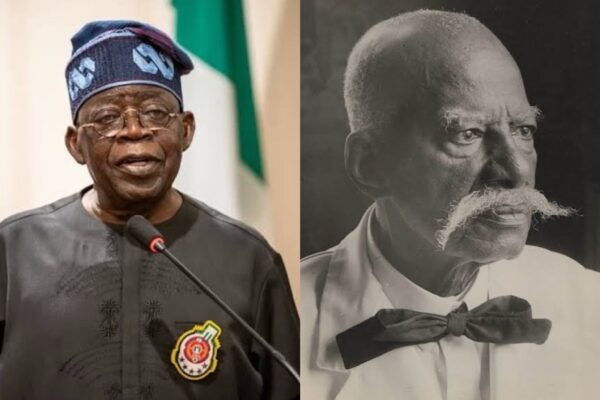
Tinubu Grants Presidential Pardon to 175, Including Herbert Macaulay, Wole Soyinka and Ken Saro Wiwa

The Council of State on Thursday approved the presidential exercise of mercy for 175 individuals across different categories. The decision followed a presentation by Attorney-General and Minister of Justice, Lateef Fagbemi (SAN), who conveyed President Bola Tinubu’s recommendations based on the report of the Advisory Committee on the Prerogative of Mercy during the Council’s meeting at the State House, Abuja. While the full list of beneficiaries is yet to be released, sources confirmed that posthumous pardons were granted to one of Nigeria’s founding fathers, Herbert Macaulay, and former FCT minister under the Babangida regime, Maj-Gen. Mamman Vatsa (retd). Members of the Ogoni Nine and Ogoni Four were also included. “Herbert Macaulay and Vatsa are among the major names on that list,” a source present at the meeting told reporters. Macaulay, known as the “father of Nigerian nationalism,” was twice convicted by colonial authorities in Lagos. In 1913, he was imprisoned for alleged misappropriation of funds from an estate he administered, and in 1928, he was jailed for six months with hard labour following a sedition conviction over publications in his Lagos Daily News during the Eleko (Oba of Lagos) agitation. Historians have long debated the fairness of both prosecutions. Vatsa, a poet, former FCT minister, and member of the Supreme Military Council, was executed on March 5, 1986, after a secret military tribunal convicted him of treason over an alleged coup against then-military ruler Ibrahim Babangida, his childhood friend. His case has remained controversial, with calls for a posthumous pardon resurfacing over the decades. Of the 175 beneficiaries, 82 inmates received full presidential pardons, 65 had their sentences reduced, and seven death sentences were commuted to life imprisonment. Kaduna State Governor Uba Sani, briefing State House correspondents after the meeting, said, “82 of the inmates were granted full pardon, 65 had their sentences reduced, while seven death sentences were commuted to life imprisonment. The decision underscores the President’s commitment to justice and correctional reform.” The meeting, chaired by President Tinubu, also ratified key appointments, including Dr. Aminu Yusuf from Niger State as Chairman of the National Population Commission and Tonge Bularafa as Federal Commissioner representing Yobe State, both of which received unanimous approval.  

Read More