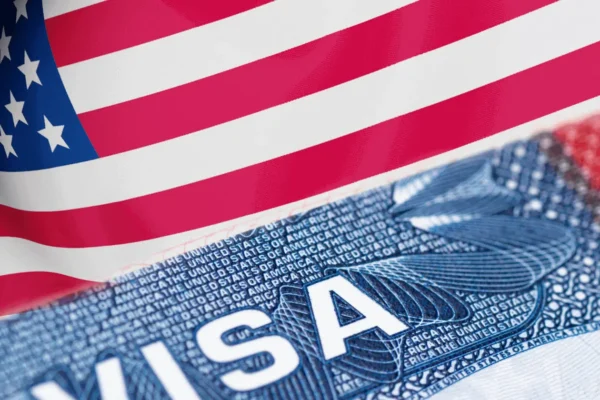
US Suspends Visa Processing For Nigeria And 74 Other Countries

The United States has suspended visa processing for Nigeria and 74 other countries as part of a review aimed at tightening immigration screening and blocking applicants deemed likely to become a public charge. A U.S. State Department memo obtained by Fox News Digital instructs consular officers to refuse visas under existing law while the department reassesses its vetting and screening procedures. The countries affected include Nigeria, Somalia, Russia, Afghanistan, Brazil, Iran, Iraq, Egypt, Thailand, Yemen, and several others. The suspension, which takes effect on January 21, will remain in place indefinitely until the review of visa processing is complete. Somalia has received particular attention following a large-scale fraud case in Minnesota, where prosecutors uncovered extensive abuse of taxpayer-funded benefit programs. Federal officials noted that many of those implicated were Somali nationals or Somali-Americans.
Read More

US Mission Introduces Visa Navigator To Guide Nigerians Through Visa Applications

The United States Mission in Nigeria has launched the Mission Nigeria Visa Navigator, a new online platform designed to assist visa applicants by providing answers to frequently asked questions about U.S. visas. The Mission announced on its official X account on Tuesday that the tool offers guidance on various visa types, application procedures, required documents, interview steps, and common challenges faced by applicants. The platform aims to reduce misinformation and make the visa application process clearer and more accessible for Nigerians. “The Visa Navigator is part of ongoing efforts to improve transparency and provide accurate, accessible information to Nigerians seeking to travel to the United States for study, work, tourism, or other purposes,” the U.S. Mission said. Applicants are encouraged to consult the Visa Navigator as a first point of reference before submitting applications or contacting consular offices. The Mission emphasized that the tool is designed to make the visa process more efficient and user-friendly.

Read More

US To Enforce Visa Bond Of Up To $15,000 For Nigerians From January 2026

The United States has unveiled new travel rules that may require Nigerians applying for B1/B2 business and tourist visas to pay visa bonds of up to $15,000. Information released by the US Department of State on Travel.State.Gov makes it clear that paying the bond does not guarantee visa approval. It also stressed that any fees paid without a consular officer’s instruction will not be refunded. The policy affects 38 countries, with African nations making up 24 of those listed, including Nigeria. The visa bond is a financial guarantee imposed on applicants from countries the US classifies as high-risk and applies strictly to B1/B2 visa categories. For Nigeria, the bond requirement is scheduled to take effect on January 21, 2026, although implementation dates vary for other affected countries between August 2025 and January 2026. Under the directive, eligible applicants travelling on passports from the listed countries will be required to post a bond of $5,000, $10,000, or $15,000. The specific amount will be determined during the visa interview. Applicants must also submit the Department of Homeland Security’s Form I-352 and formally agree to the bond conditions through the US Treasury’s Pay.gov online payment platform. This requirement applies regardless of where the visa application is filed. The State Department added that visa holders who post bonds must enter the United States through designated airports, including Boston Logan International Airport, John F. Kennedy International Airport in New York, and Washington Dulles International Airport in Virginia. Refunds will only be issued if the Department of Homeland Security confirms that the traveller left the United States on or before the end of their authorised stay, if the applicant does not travel before the visa expires, or if entry is denied at a US port of entry.

Read More

Mali and Burkina Faso Impose Retaliatory Travel Restrictions on US Citizens

Mali and Burkina Faso have responded to the US travel ban by imposing restrictions on American citizens. In statements released separately and reviewed by AFP on Wednesday, both countries’ foreign ministries said they would apply “equivalent measures” after President Donald Trump expanded the US travel ban this month to nearly 40 nations based solely on nationality. The US restrictions targeted Syrian citizens, Palestinian Authority passport holders, and nationals from several of Africa’s poorest countries, including Niger, Sierra Leone, and South Sudan. The White House said the ban aimed to block foreigners who “intend to threaten” Americans. Burkina Faso’s foreign ministry confirmed it was introducing “equivalent visa measures” for US citizens. Mali announced that, “with immediate effect,” American nationals would face the same entry conditions and requirements that the US imposes on Malian citizens. Mali also expressed regret that the US implemented the decision without prior consultation. Both countries are ruled by military juntas and belong to a regional confederation that includes Niger. While Niger has not formally announced countermeasures, its news agency reported that such actions had been decided. Trump’s December 17 announcement also included partial travel restrictions on other African countries such as Nigeria, Ivory Coast, and Senegal, as well as Canada and Mexico. Some of these nations are set to participate in next year’s football World Cup in the US.

Read More

US Announces Partial Visa Ban On Nigerians Effective January 1, 2026

The United States has announced a partial halt to visa issuance for Nigerian citizens, with the new restriction set to take effect from January 1, 2026, under Presidential Proclamation 10998. The U.S. Department of State said the measure affects several nonimmigrant visa categories, including B-1/B-2 visitor visas as well as F, M and J visas issued to students and exchange programme participants. In addition, most immigrant visa categories are covered by the suspension, though a number of exemptions have been outlined. Nigeria is one of 19 countries named in the directive. Others on the list include Angola, Antigua and Barbuda, Benin, Burundi, Côte d’Ivoire, Cuba, Dominica, Gabon, The Gambia, Malawi, Mauritania, Senegal, Tanzania, Togo, Tonga, Venezuela, Zambia and Zimbabwe. The proclamation, titled “Restricting and Limiting the Entry of Foreign Nationals to Protect the Security of the United States,” allows exceptions for certain groups. These include immigrant visas for ethnic and religious minorities facing persecution in Iran, dual nationals applying with passports from countries not affected by the policy, Special Immigrant Visa applicants linked to U.S. government service, selected international sports participants, and lawful permanent residents. U.S. authorities clarified that the suspension applies only to individuals who are outside the United States on the effective date and who do not already have a valid visa as of January 1, 2026. Visas issued before that date will remain valid and will not be cancelled under the new rule. The State Department also noted that applicants from affected countries can still submit visa applications and attend scheduled interviews, but final approval may be denied under the new entry restrictions.

Read More

US Stops Immigration And Citizenship Processing For 19 Countries Over Security Concerns

The US government has suspended the processing of immigration and citizenship applications for nationals of 19 countries, including Afghanistan, Yemen and Haiti, according to an internal memo made public on Tuesday, in what officials describe as a major escalation of its migration crackdown. The decision affects both green card and naturalisation applications for countries already facing travel restrictions announced by President Donald Trump in June. Other nations impacted include Venezuela, Sudan and Somalia. The memo pointed to growing security concerns following last week’s shooting that left one National Guard soldier dead and another injured. The prime suspect, identified as an Afghan national who entered the US during the 2021 evacuation after the Taliban takeover, pleaded not guilty to murder charges on Tuesday. US authorities said the pause is aimed at strengthening vetting procedures. The document stressed the role of the US Citizenship and Immigration Services in blocking potential security threats and ensuring that screening processes place American safety first, citing the recent attack as an example of the risks linked to rushed approvals. On November 26, Trump announced plans to “permanently pause migration from all Third World Countries to allow the US system to fully recover.” Homeland Security Secretary Kristi Noem also pushed for tougher action, calling for broader bans on more countries. “I just met with the President. I am recommending a full travel ban on every damn country that’s been flooding our nation with killers, leeches, and entitlement junkies.” In addition to the newly affected countries, existing travel restrictions already cover Burundi, Chad, the Republic of Congo, Cuba, Equatorial Guinea, Eritrea, Iran, Laos, Libya, Myanmar, Sierra Leone, Togo and Turkmenistan. Meanwhile, reports emerged of a planned large-scale immigration enforcement operation in Minnesota targeting Somali immigrants, a move that has sparked strong opposition from local leaders. Minneapolis Mayor Jacob Frey insisted that the city’s support for the Somali community and all immigrants remains “rock solid and unwavering,” adding that state police would not cooperate with the operation.

Read More

Nigeria Grants Visa-Free Access to St. Kitts and Nevis Citizens

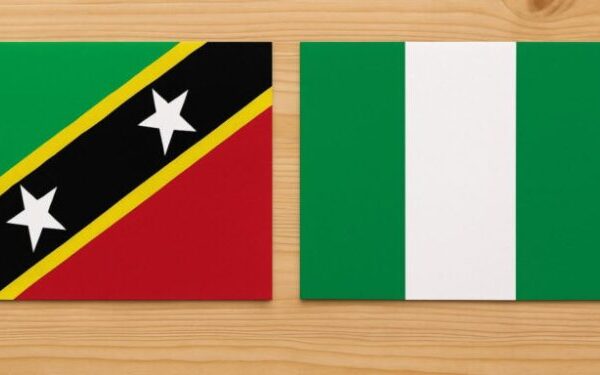
Nigeria has taken a major step in reshaping its foreign, trading, and investment relations by granting visa-free access to citizens of St. Kitts and Nevis (SKN), effective from September 26, 2025. This decision marks a historic milestone, as SKN becomes the first country outside the Economic Community of West African States (ECOWAS) and beyond the African continent to enjoy such privileges. This policy shift signifies the creation of a new trade and mobility corridor between Africa and the Caribbean. Until now, Nigeria’s visa-free regime was largely limited to ECOWAS states, with Cameroon and Chad being rare exceptions outside the bloc. The visa exemption for SKN — covering ordinary, official, and diplomatic passports — is aimed at deepening trade, investment, cultural exchange, and people-to-people ties across the Atlantic. The development follows the Afri-Caribbean Investment Summit (AACIS ’25), hosted earlier this year in Abuja by Aquarian Consult Limited (ACL), where SKN was the country of focus. The summit helped build the momentum that has now led to concrete policy action. Aisha Maina, Managing Director of ACL, described the move as a milestone in strategic facilitation:“This visa waiver is more than diplomacy; it is about opening doors for trade, investment, and cultural exchange. At ACL, we are proud to have played a role in turning dialogue into action,” she said. Bilateral ties between Nigeria and SKN began strengthening in March 2025, when President Bola Ahmed Tinubu hosted SKN Prime Minister Terrance Drew in Abuja. That same month, a historic non-stop Abuja–Basseterre charter flight carried 120 Nigerian delegates — the first direct air link between West Africa and the Caribbean. Since then, relations have expanded across multiple sectors. The Afri-Caribbean Business Expo in Basseterre, co-hosted by ACL, provided a platform to showcase opportunities in agribusiness, technology, and the creative economy.

Read More

US Warns Nigerian Students of Visa Revocation Over Academic Violations

The United States government has issued a strong warning to Nigerian students and other international students in the country, cautioning them against violating the conditions of their student visas. In an advisory shared on Monday via its official X (formerly Twitter) account, the US Mission in Nigeria emphasized that students who drop out, miss classes, or abandon their academic programmes without formally notifying their institutions risk having their visas revoked. The mission further warned that such violations could jeopardize eligibility for future US visas, regardless of the visa category. “If you drop out, skip classes, or leave your programmes of study without informing your school, your student visa may be revoked, and you may lose eligibility for future US visas,” the advisory stated. Students were strongly advised to adhere strictly to the terms of their visa and maintain active academic status throughout their stay in the United States to avoid immigration-related issues. The warning serves as a reminder to thousands of Nigerian students currently enrolled in US institutions to remain compliant with visa regulations, especially as the new academic year approaches.

Read More