Burkina Faso Refuses US Proposal to Accept Deported Citizens

Burkina Faso Refuses US Proposal to Accept Deported Citizens

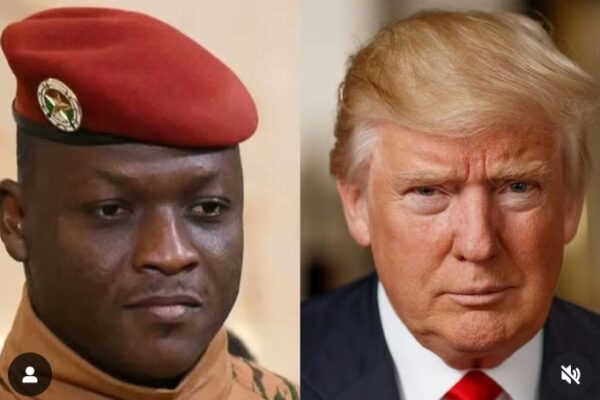
Burkina Faso has rejected a US request to take in deported individuals, pushing back against a key migration policy under President Donald Trump. The West African nation, governed by a junta critical of Western influence, refused to accept people sent to third countries with whom they have little or no connection. In contrast, several African countries, including Eswatini, Ghana, Rwanda, and South Sudan, have recently agreed to accept individuals expelled from the United States. Burkina Faso’s Foreign Affairs Minister, Karamoko Jean-Marie Traore, called the proposal “indecent” and said it went against the country’s principles of dignity. Earlier on Thursday, the US embassy in Ouagadougou announced the suspension of most visa services for Burkinabe citizens, directing them instead to apply in Lome, Togo. “Is this a way to put pressure on us? Is this blackmail? Whatever it is… Burkina Faso is a place of dignity, a destination, not a place of expulsion,” Traore said. Since taking power in a September 2022 coup, Captain Ibrahim Traore has positioned himself as an anti-imperialist, Pan-African leader, reducing ties with France and the West while strengthening relations with Russia.  

Read More
Tems Becomes First Female Nigerian Artist To Sell 10 Million Singles In US

Tems Becomes First Female Nigerian Artist To Sell 10 Million Singles In US

Nigerian singer and songwriter Tems, born Temilade Openiyi, has made history as the first female Nigerian artist to sell over 10 million units of a single in the United States. On September 30, 2025, Chart Data on X (formerly Twitter) confirmed that “WAIT FOR U,” her collaboration with Future and Drake, had officially surpassed the 10 million sales milestone in the US. The song, which also won Tems a Grammy Award for Best Melodic Rap Performance, represents a major leap in her international career. Tems is also the first African female artist to reach one billion streams on Spotify, cementing her influence on the global music scene. She gained worldwide recognition in 2020 after featuring on Wizkid’s hit single “Essence,” which entered the Billboard Hot 100 and earned multiple Grammy nominations. Her career began in 2018 with the release of her debut single “Mr Rebel.” After her performance in Kenya, Tems took to X to express her gratitude: “Kenya! The love has been insane! I love you so much. Till next time.” She is currently on her 2025–2026 world tour, which started on September 28 and will run through November 15, with stops in Nairobi, Salvador (Brazil), and Los Angeles, where she will perform at Dodger Stadium. In comparison, Wizkid remains the first Nigerian male artist to reach 10 million sales, with his feature on Drake’s “One Dance” certified Diamond by the RIAA in 2022. Tems’ latest milestone reinforces her role as a trailblazer for African female artists on the global stage, adding to her growing list of accolades, including BET Awards, NAACP Image Awards, and a Soul Train Music Award.  

Read More

Barrack Obama: Is the U.S. Government Crossing a First Amendment Line?

After years of railing against so-called “cancel culture,” the current U.S. administration appears to be engaging in a far more troubling version of it — leveraging its power to pressure media organizations into silencing voices it disapproves of. According to recent reports, officials have repeatedly hinted at or directly threatened regulatory action against networks unless certain commentators or journalists are fired. This escalation marks a potentially dangerous shift: from cultural backlash to alleged government coercion. The First Amendment was explicitly designed to prevent this kind of state interference in the free press. If media outlets continue to cave to these threats, the precedent set could have chilling effects far beyond partisan politics. Now more than ever, media organizations must defend their independence — not just for themselves, but for the integrity of democratic discourse. Read more here →

Read More
Plans unveiled for 2025 peace achievers international conference

2025 Peace Achievers International Awards Set for November 8 at Transcorp Hilton Abuja, with Honorary Doctorate and Peace Icon Awards

Plans are underway for the highly anticipated 2025 edition of the Peace Achievers International Conference and Awards, scheduled for November 8, 2025, at the prestigious Transcorp Hilton Hotel in Abuja. The event, organized by the Davdan Peace and Advocacy Foundation and Peace Ambassador Agency, marks the 15th edition of the annual celebration of peace and social development. This year’s theme, “Peace Building Through Sectoral Partnerships: Public and Private Sector Collaboration”, reflects the ongoing importance of fostering unity and cooperation between both sectors to drive peace-building efforts. The event will also feature the conferment of the Honorary Doctorate Degree from the American Management University, California, USA, and the coveted Peace Icon Award. The Peace Icon Award categories include Brand Company of the Year, Most Influential Personality of the Year, Peace Advocate of the Year, and several other prestigious accolades. In addition, Peace Builders, Emerging Leaders, Community Developers, and Humanitarians will be recognized for their significant contributions to societal change. Ambassador Kingsley Amafibe, Project Director of the Davdan Peace and Advocacy Foundation/Peace Ambassador Agency, addressed journalists in Abuja on Wednesday, emphasizing that the 2025 edition is not only a celebration of peace but also a reflection on the past 15 years of promoting national unity and fostering positive change in Nigeria. “This event offers us the opportunity to honor those who have made lasting impacts in Nigeria, irrespective of their ethnic or religious affiliations. We are committed to ensuring that the recipients have made tangible contributions to peace and development in the country,” said Ambassador Amafibe. He further highlighted that the Peace Achievers Awards operate as a non-profit initiative, with a focus on channeling support received from partners into projects that benefit the less privileged. These include initiatives such as the Peace Education Campaign, Health Outreach Schemes, Back to School Campaign, and various capacity enhancement programs designed to aid underserved communities and complement government efforts at all levels. The event will also feature music, comedy, fashion exhibitions, and other exciting attractions, making it an occasion for celebration and reflection. Nominations for the 2025 Peace Achievers International Awards are now open.

Read More

Trump’s 50% Tariff on India: Impact, Exemptions, and Future Relations

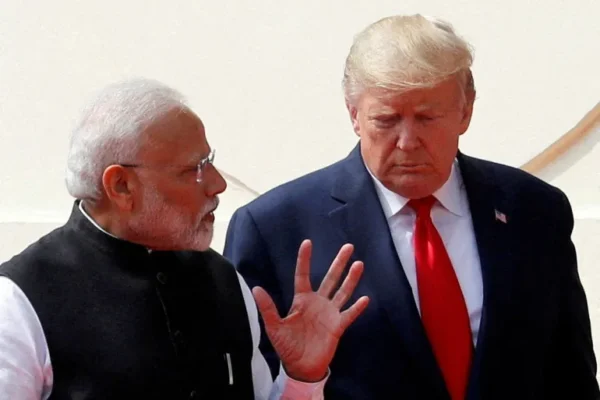
U.S. President Donald Trump’s new 50 percent tariff on Indian imports, which officially took effect on Wednesday, is poised to disrupt trade worth billions of dollars and could strain relations between Washington and New Delhi. The tariff escalation began in late July, with the U.S. initially imposing a 25 percent tariff on Indian goods. A week later, an additional 25 percent was added, citing India’s continued purchase of Russian oil. This move is seen as part of the ongoing trade tension between the two nations. Which Sectors Will Be Affected? The new 50 percent tariff will apply to a wide range of Indian exports, including gems, jewelry, textiles, footwear, furniture, and industrial chemicals. According to the Global Trade Research Initiative (GTRI), Indian exports to the U.S. could drop from $86.5 billion this year to an estimated $50 billion by 2026 due to these tariff hikes. Several key sectors, such as textiles, garments, gems and jewelry, shrimp, and carpets, are expected to bear the brunt of this tariff. The GTRI warns of a potential 70 percent drop in exports from these industries, which could jeopardize hundreds of thousands of jobs. “These sectors are labor-intensive, with many small companies that may not survive the hit,” said MK Venu, founding editor of The Wire news outlet. He also noted that businesses could relocate to countries like Vietnam, Bangladesh, and Pakistan, which offer more competitive export conditions. Which Industries Are Exempt? The Indian pharmaceutical industry has been granted an exemption from the new tariffs, as U.S. consumers rely heavily on affordable generic drugs, with India supplying nearly half of the U.S.’s generic medication imports. In 2024, Indian pharmaceutical exports to the U.S. amounted to approximately $8.7 billion. Additionally, products like semiconductors, consumer electronics, aluminum, steel, and passenger vehicles will be subject to separate tariffs, outside the blanket 50 percent rate. India’s Response and Mitigation Plans In response to the new tariffs, Indian Prime Minister Narendra Modi has called for greater self-reliance, emphasizing India’s need to increase its domestic productive capacity. In his Independence Day speech, Modi stressed that India should strive for self-sufficiency “not out of desperation, but out of pride,” particularly as global economic tensions rise. To offset the potential economic damage, the Indian government is offering financial assistance to exporters affected by the tariffs, encouraging them to diversify into new markets, including Latin America and the Middle East. Modi’s government has also promised tax cuts, subsidies, and a simplification of the Goods and Services Tax (GST) to support domestic businesses. Faisal Ahmed, professor of geopolitics at the Fore School of Management, pointed out that India’s push for economic self-sufficiency isn’t new. The tariff situation is expected to accelerate this process. However, critics, including Venu, argue that the government lacks clarity on how to fund these subsidies, which may not be enough to cushion the blow to affected industries. Impact on Bilateral Relations The imposition of these tariffs is likely to strain U.S.-India relations, which were already under pressure due to disagreements over trade imbalances and India’s Russian oil imports. U.S. Treasury Secretary Scott Bessent and other Trump officials have accused India of indirectly funding Russia’s war against Ukraine by purchasing Russian oil, a claim India denies. In response, New Delhi emphasized that its oil imports are driven by market forces and the energy needs of its 1.4 billion people. The U.S. has also expressed dissatisfaction with India’s high tariffs on American agricultural goods, with Trump previously criticizing India’s 39 percent average tariff on agricultural imports. However, New Delhi has refused to open its agriculture sector to cheap U.S. imports, citing the need to protect local farmers. The Path Ahead The tariff dispute has prompted India to reconsider its overreliance on the U.S. market, with New Delhi exploring alternatives such as joining multilateral trade pacts and strengthening ties with countries like China and Russia. The Indian government is also negotiating a trade deal with the European Union, aiming to conclude it by the end of the year. While some analysts predict that the tariffs may only cause a modest impact on India’s GDP, estimates suggest a potential loss of about $36 billion, or 0.9 percent of GDP. Despite the challenges, India is expected to continue growing, with the International Monetary Fund forecasting a 6.4 percent GDP growth in 2026. Trump’s Justification for Tariffs President Trump has repeatedly criticized India’s high tariffs on U.S. goods, arguing that India has been one of the highest-tariffed nations globally. His administration has sought to push India to reduce these trade barriers, particularly in sectors like agriculture and dairy, though India has resisted such demands. With the ongoing geopolitical rivalry between Russia and the West, India’s continued purchase of Russian crude oil remains a significant point of contention. U.S. officials have accused India of “profiteering” from discounted Russian oil, further fueling tensions. As the trade conflict escalates, India is likely to reevaluate its foreign policy and economic strategy, seeking new alliances and trade partners in the face of shifting global dynamics.

Read More

Israel is killing doctors so Gaza can never heal from genocide

Medicide is a central part of Israel’s goal of making Palestinian life in Gaza impossible. Palestinians react over bodies as they mourn doctor Marwan al-Sultan, director of the Indonesian Hospital in northern Gaza Strip, his wife, his daughter and and his sister, who were killed in an Israeli strike on Wednesday, according to Gaza’s health ministry, at Al-Shifa hospital in Gaza City, July 2, 2025.Lubnah al-Sultan mourns her father Marwan al-Sultan, director of the Indonesian Hospital, killed by the Israeli army, in Gaza City, on July 2, 2025After her parents, sister and husband were killed in a bombing, Lubnah prayed they would be the last victims of the war. Her father, Dr Marwan al-Sultan, was one of Gaza’s most respected medics, director of the Indonesian Hospital, and one of only two surviving cardiologists in the Strip. On July 2, an Israeli bomb killed him, alongside his wife Dhikra, their daughter Lamees, his sister Amneh, and his son-in-law Mohammed, Lubnah’s husband. The family had been sheltering in an apartment, in an area designated by Israel as “safe”, having evacuated their home in Jabalia in compliance with orders from the Israeli occupation forces (IOF). The so-called “Chalet area” of western Gaza City was once a place where families spent time at the beach, enjoying themselves, despite the daily trials of Israeli occupation. The bomb targeted directly the room Dr Marwan was sitting in; no other part of the building was destroyed. Lubnah survived because she had gone downstairs to prepare food. Her brothers, Omar, Ahmad and Nimr also survived because they were outside the home. The day before his death, upon hearing the news of a possible ceasefire, Dr Marwan shared a hopeful vision with his son, Omar. “The first thing we’ll do [once a ceasefire is reached] is go back home. With everyone’s effort, in a month or two, we can make it as before. Then we’ll rebuild the hospital,” he said. Omar felt inspired by his father. His daughter Lubnah’s prayers were not answered. The genocide continued taking victims. On July 4, another doctor was murdered: Dr Musa Hamdan Khafaja – a consultant in obstetrics and gynecology in Nasser Hospital. The attack was eerily similar. Dr Musa had also followed the orders of the IOF, fled his home in Khan Younis, and sought refuge in al-Mawasi, another “safe zone”. There, he pitched a tent to shelter his family. That tent became their grave. His wife and three young children – daughters Shaza and Judi, and son Adel, all died. The only survivor was his son Amr. Both men had dedicated their careers to saving the lives of others, staying with their patients through bombings and sieges on their hospitals. Dr Marwan was the 70th healthcare worker killed in the previous 50 days; Dr Musa became the 71st. Their deaths bring the total number of medical personnel killed since October 2023 to at least 1,580, according to the Government Media Office in Gaza. Every two days since the war began, Israel has killed five medical personnel, that is 16 doctors, nurses, ambulance technicians or other healthcare workers, per week. Among those murdered since the genocide began are Gaza’s most distinguished medical minds. They include Dr Omar Farwana, former dean of the Faculty of Medicine at the Islamic University of Gaza; Dr Rafat Lubbad, director of Hamad Hospital for Artificial Limbs; Dr Soma Baroud, prominent obstetrician-gynaecologist; Dr Ahmed al-Maqadma, a prominent reconstructive surgeon; Dr Sayeed Joudeh, the last orthopaedic surgeon in northern Gaza; Dr Adnan al-Bursh, head of orthopaedic surgery in al-Shifa Hospital; and Dr Iyad al-Rantisi, head of a women’s hospital in Beit Lahiya. Dr Soma and Dr Sayeed were killed on their way to work. Dr Adnan and Dr Iyad died under torture in Israeli detention. More than 180 are in Israeli detention centres, including Dr Hussam Abu Safia, the director of Kamal Adwan Hospital, who has been detained since December 2024. Medical infrastructure – protected under international humanitarian law – continues to be a primary target. The World Health Organization has documented 734 such attacks since the war began. Hospitals have been turned into graveyards. This is not collateral damage; this is medicide – the deliberate destruction of Gaza’s capacity to live. Each murdered doctor represents the loss of years of training, commitment and the potential to save lives. Each bombed hospital is the dismantling of Gaza’s capacity to heal itself, to survive, to endure. These are not just lives lost; they are futures destroyed. This is the reality in Gaza right now. It has little to do with Israel’s declared military objectives of eliminating the Islamic resistance movement – Hamas – or securing the return of the captives taken on October 7, 2023. Rather, it is what I termed al-Ibādah – the Destruction. Al-Ibādah is the comprehensive annihilation of a people’s social, cultural, intellectual and biological continuity – a process of total erasure. And exterminating medical workers is a key element of it. Before he was killed, alongside her father, Lubnah’s husband, Mohammed – a journalist for Palestine Magazine – endured one and a half years’ imprisonment in Israel. Upon his release, he confided to Lubnah that death would have been preferable to the horrors he had witnessed behind bars. His confession shook her deeply. Today, Lubnah’s prayer is heartbreakingly simple: “Enough. Enough, stop this war.” But so far, like her other prayers, this one is also going unanswered.

Read More

Why Trump’s U.S. Airstrikes in Somalia Have Surged Despite America First Pledges

MOGADISHU, Somalia – Despite campaign promises to end America’s “forever wars,” President Donald Trump has sharply escalated U.S. military activity in Somalia since beginning his second term, with airstrikes more than doubling in 2025 compared to the previous year. According to data from the U.S. Africa Command (AFRICOM), at least 43 airstrikes have been carried out in Somalia this year—targeting both ISIL (ISIS) affiliates in Puntland and al-Shabab militants across southern regions. The figure represents a significant increase from 2024 and reflects a renewed military focus on the Horn of Africa. Trump’s first overseas military action this year came on February 1, just 10 days into office, when he announced airstrikes against what he described as “ISIS killers hiding in caves.” Since then, U.S. involvement in global conflict zones has expanded dramatically—from support for Israel in Gaza and Lebanon, to strikes in Yemen and attacks on Iran’s nuclear facilities. Analysts say the Somalia escalation is partly driven by intelligence assessments that IS-Somalia is becoming a growing threat, functioning as a regional financial and operational hub for global ISIL-linked networks. Concurrently, al-Shabab, an al-Qaeda affiliate, has made worrying territorial and strategic gains in recent months, prompting fears of a resurgence. While AFRICOM insists that these operations are conducted in partnership with Somalia’s federal government, human rights groups and security analysts warn that continued reliance on airstrikes risks inflaming anti-American sentiment and undermining long-term stability efforts in the fragile country. Critics argue that Trump’s sharp increase in drone strikes contrasts with his “America First” stance and raises questions about the sustainability of using force over diplomacy and development. “Airstrikes may disrupt militants temporarily, but they don’t build trust, reform institutions, or foster peace,” says Hawa Ahmed, a conflict analyst based in Nairobi. “Somalia needs long-term investment in governance, security reform, and economic development—not just bombs from above.” As the strikes continue and civilian casualties remain a concern, observers warn that the U.S. risks repeating the cycles of intervention that have defined its troubled legacy in Somalia for decades.Tools

Read More

Tiger Woods dating Donald Trump Jr’s ex-wife

Tiger Woods has confirmed that he is dating the ex-wife of Donald Trump Jr. Golf legend Woods, 49, also shared photos of himself with Vanessa Trump, 47, who split from the US president’s oldest son in 2018 after 13 years. The photos include one image of Woods and Trump embracing on a hammock. “Love is in the air and life is better with you by my side!” Woods said on his social media channels. “We look forward to our journey through life together. At this time, we would appreciate privacy to all those close to our hearts.” Trump has five children with Don Jr, and her eldest daughter Kai is said to attend the same school as Woods’ children Charlie and Sam. Woods has played golf with the president and the two are said to have been negotiating between the PGA Tour and the owners of LIV, the Saudi breakaway circuit. Woods has been involved in several high-profile relationships, after his marriage to Elin, the mother of his children fell apart because of a sex scandal. Other girlfriends include Lindsey Vonn, the world champion skier, with whom he split in 2015, and Erica Herman. That relationship ended badly when she took him to court after he evicted her from his home. Woods is considered among the greatest golfers of all time. He is ranked joint-first for PGA Tour wins and is second for major championship victories.

Read More