Trump’s Big, Beautiful Bill Passes Senate by Razor-Thin Margin, Heads to House Amid Healthcare and Debt Concerns

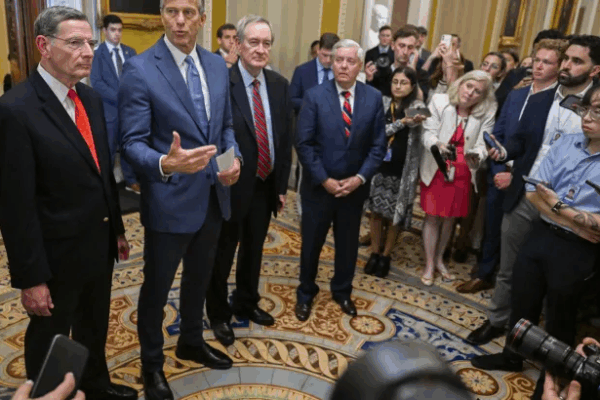
In a dramatic late-night session, the U.S. Senate has narrowly passed what President Donald Trump has dubbed the “Big, Beautiful Bill” — a sweeping tax and spending reform package that has stirred intense political debate. The legislation now moves to the House of Representatives, where a heated showdown is expected. The bill scraped through the Senate in a 50-50 tie, broken by Vice President JD Vance’s deciding vote after more than 27 hours of intense floor debate and behind-the-scenes negotiations. At least three Republican senators — Rand Paul, Susan Collins, and Tom Tillis — initially voiced opposition, citing concerns ranging from ballooning national debt to drastic cuts in healthcare coverage. In the end, only Collins held her ground, while Murkowski and others yielded under growing pressure from party leadership. Paolo von Schirach, president of the Global Policy Institute, told Al Jazeera that Trump’s firm grip on the Republican Party played a major role in securing the bill’s passage. “He essentially threatens anybody who votes against anything he wants with a primary challenge,” von Schirach said. “That’s how he keeps people in line.” The bill’s passage has drawn fierce criticism from progressive Democrats. Representative Pramila Jayapal, chair of the House Progressive Caucus, condemned the legislation in a post on social media: “A victory lap for ripping health care away from 17 million poor Americans. There are no words.” Senator Rand Paul, a vocal critic, warned that the bill could add up to \$3 trillion to the national debt over the next decade. Meanwhile, Senator Tillis raised concerns about millions of Americans potentially losing access to various forms of health coverage. Despite the opposition, Republican leaders celebrated the bill as a legislative win for the Trump administration and a key piece of the president’s economic agenda. With the House vote expected soon, the political stakes remain high as both parties prepare for what could be one of the most consequential legislative battles ahead of the 2026 midterms.
Read More

NATO Commits to 5% Defence Spending Target Backed by Trump Amid Internal Division

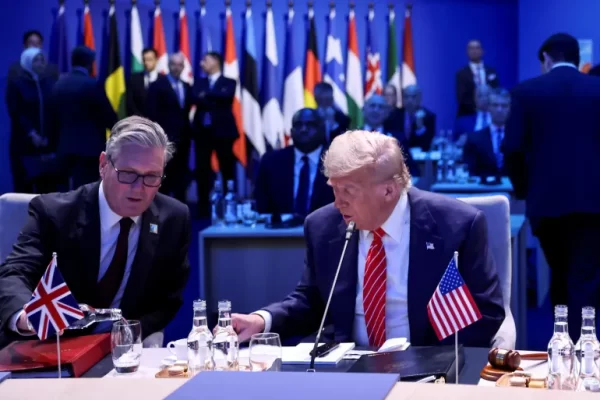
NATO member states have agreed to a significant increase in defence spending, pledging to allocate up to 5 percent of their national GDP to military and security-related sectors by 2035 — a major shift largely aligned with the long-standing demands of former U.S. President Donald Trump. The agreement, reached at a summit in The Hague on Wednesday, was described in the summit communique as a “quantum leap” in the bloc’s collective security strategy. The document outlined that member countries would annually invest 5 percent of GDP on core defence requirements and broader security-related expenditures, with a review scheduled for 2029 — notably, after the next U.S. presidential election. NATO Secretary General Mark Rutte called the development “transformational,” although some alliance members expressed concerns about their ability to meet the target. Spain, Belgium, and Slovakia were among those that acknowledged the ambitious goal may be difficult to achieve due to economic constraints. Former President Trump, who had previously criticized NATO members for not meeting existing defence commitments, welcomed the decision. Speaking at the summit, he said, “They said, ‘You did it, sir. You did it.’ Well, I don’t know if I did it, but I think I did.” The renewed commitment is seen by analysts as an effort to shore up the alliance’s deterrence against Russia and prepare for the possibility of reduced U.S. military engagement depending on the outcome of the 2024 presidential election. UK Prime Minister Keir Starmer also signaled strong support, announcing that the United Kingdom expects to reach 4.1 percent defence and security spending by 2027. While the pledge underscores NATO’s unity in principle, the stark differences in economic capabilities among member states suggest that meeting the 5 percent benchmark will likely become a key issue of debate in the coming years.

Read More

Khamenei: US Will Suffer Irreparable Harm if It Enters Conflict Militarily

In a series of strongly worded remarks posted on the official X account of Iran’s Supreme Leader, Ayatollah Ali Khamenei, the Zionist regime’s recent attack on Iranian territory was condemned as a malicious act, allegedly carried out with increasing suspicion of US involvement. “The Zionist regime’s malicious attack on our country took place at a time when Iranian officials were indirectly engaged in negotiations with the US. There was no indication on the part of Iran that signaled a military move,” one post read. Khamenei’s office warned that any direct military involvement by the United States in the unfolding crisis would lead to consequences beyond repair: “The harm the US will suffer will definitely be irreparable if they enter this conflict militarily.” The posts also implied growing certainty about Washington’s role in the offensive, suggesting that: “It was already suspected that the US was involved in the malicious move carried out by the Zionist regime, but considering their recent remarks, this suspicion is growing stronger day by day.” The rhetoric underscores escalating regional tensions and comes amid stalled backchannel diplomacy between Tehran and Washington.

Read More
Trump administration officials accidentally text a reporter Yemen ‘war plans’

Trump administration officials accidentally text a reporter Yemen ‘war plans’

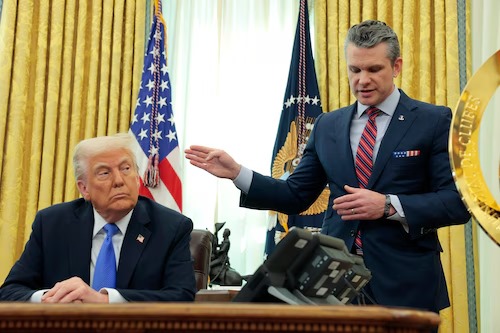
The White House has confirmed a report by The Atlantic’s editor-in-chief Jeffrey Goldberg, who says senior Trump administration officials accidentally included him in a Signal chat group in which they discussed plans to conduct strikes in Yemen Goldberg was included in a group chat in which US Defense Secretary Pete Hegseth and other top officials discussed upcoming strikes against Yemen’s Houthis. Trump announced strikes on March 15, but in a shocking security breach, Goldberg wrote that he had hours of advance notice via the group chat. “The message thread that was reported appears to be authentic, and we are reviewing how an inadvertent number was added to the chain,” National Security Council spokesman Brian Hughes told reporters. The security breach provoked outrage among Democratic lawmakers, including Senator Chris Coons, who wrote on X that “every single one of the government officials on this text chain have now committed a crime.” Signal, an open-source, encrypted messaging application, is not approved by the US government for sharing sensitive information.

Read More
US-Russia Talks On Ukraine Begin In Saudi Arabia

US-Russia Talks On Ukraine Begin In Saudi Arabia

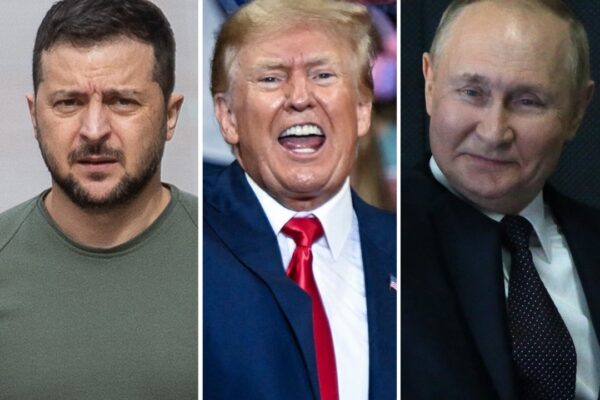
US and Russian officials opened talks in Saudi Arabia on Monday on a partial ceasefire in the Ukraine war, a day after delegates from Washington and Kyiv had their own discussions. US President Donald Trump is pushing for a rapid end to the three-year war and hopes talks in Riyadh could pave the way for a breakthrough. Both sides have proposed different plans for temporary ceasefires, but cross-border attacks have meanwhile continued unabated. Originally planned to take place simultaneously to enable shuttle diplomacy — with the United States going back and forth between the delegations — the talks are now taking place one after the other. Russia’s TASS news agency said at around 0730 GMT that the US-Russian talks had begun. The meeting between the Ukrainian team, led by defence minister Rustem Umerov, and the Americans finished up late Sunday night. “The discussion was productive and focused — we addressed key points including energy,” Umerov said on social media, adding Ukraine was working to make its goal of a “just and lasting peace” a reality. Valentyna Guk searches for pieces of glass for mosaic fragments among debris of a heavily damaged building in Kharkiv on March 7, 2025, amid the Russia invasion of Ukraine. (Photo by Ivan SAMOILOV / AFP)Trump envoy Steve Witkoff voiced optimism that any agreement struck would pave the way for a “full-on” ceasefire. “I think you’re going to see in Saudi Arabia on Monday some real progress, particularly as it affects a Black Sea ceasefire on ships between both countries. And from that you’ll naturally gravitate to a full-on shooting ceasefire,” he told Fox News. But the Kremlin on Sunday downplayed expectations of a rapid resolution. “We are only at the beginning of this path,” Kremlin spokesman Dmitry Peskov told Russian state TV. He said there were many outstanding questions over how a potential ceasefire might be implemented. Russian President Vladimir Putin has rejected a joint US-Ukrainian call for a full and immediate 30-day pause, proposing instead a halt in attacks only on energy facilities. Local resident walk among the debris near a damaged house, a day after a Russian strike on a suburb of Odesa, southern Ukraine on March 7, 2025, amid the Russian invasion of Ukraine. (Photo by Oleksandr GIMANOV / AFP) Peskov said the “main” focus in its talks with the United States would be a possible resumption of a 2022 Black Sea grain deal that ensured safe navigation for Ukrainian farm exports via the Black Sea. “On Monday, we mainly intend to discuss President Putin’s agreement to resume the so-called Black Sea initiative, and our negotiators will be ready to discuss the nuances around this problem,” Peskov said. Moscow pulled out of the deal — brokered by Turkey and the United Nations — in 2023, accusing the West of failing to uphold its commitments to ease sanctions on Russia’s own exports of farm produce and fertilisers. A senior Ukrainian official previously told AFP that Kyiv would propose a broader ceasefire, covering attacks on energy facilities, infrastructure and naval strikes. Both sides launched fresh drone attacks on the eve of the negotiations. Ukrainian officials said a Russian drone attack overnight Saturday killed three civilians in Kyiv, including a five-year-old girl and her father. AFP reporters in the capital saw emergency workers treating the wounded early Sunday in front of damaged residential buildings hit in the strike. Deadly strikes on the well-protected city are rarer than elsewhere in the country. Ukrainian President Volodymyr Zelensky urged his country’s allies to put fresh pressure on Russia. “New decisions and new pressure on Moscow are needed to bring an end to these strikes and this war,” he posted on social media on Sunday. Moscow heads into the Saudi talks after a rapprochement with Washington under Trump that has boosted confidence in the Kremlin. Peskov said Sunday that the “potential for mutually beneficial cooperation in a wide variety of spheres between our countries cannot be overstated”. “We may disagree on some things but that does not mean we should deprive ourselves of mutual benefit,” he added.

Read More

Donald Trump wins 2024 US Presidential Election 

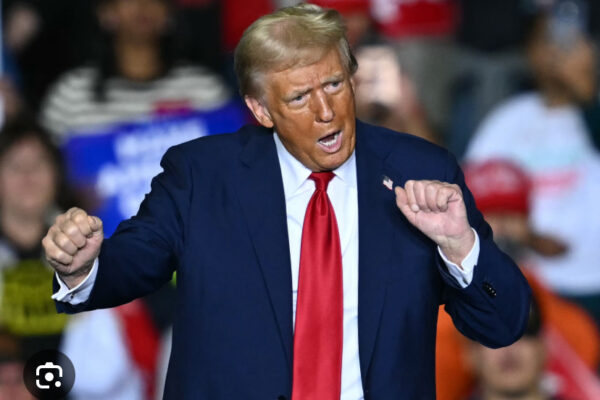
Donald Trump won the presidential election in a landslide on Tuesday night, with a realigned GOP coalition that, according to early exit polls, successfully drew young, male, and minority voters. “We’ve achieved the most incredible political thing,” Trump said to reporters at his campaign’s headquarters, “Political victory, that our country has never seen before — nothing like this.” In the end, Trump won at least 270 electoral college votes, winning in the key swing states of Pennsylvania, North Carolina, and Georgia, and defying Democratic hopes that Kamala Harris would carry Pennsylvania and Georgia as Joe Biden did in 2020. Trump also looked set to win the popular vote, becoming the first Republican presidential candidate to do so in 20 years.  Trump clinched the White House around 2 a.m. ET by winning Pennsylvania by 3% and cracking the so-called Democratic “blue wall,” of Pennsylvania, Michigan, and Wisconsin. The latter two states had yet to be called at the time of this writing, but Trump maintained solid leads in both.  Polling places in several states were targeted with bomb threats. In DeKalb and Fulton, Georgia, two counties that would have been key to a Democratic win of the swing state, threats caused five polling places to be closed in the final hours of voting, and the FBI uncovered that they appeared to be sent from Russian email domains.  She may have bet too big on one issue: democracy, which came in third – after the economy and immigration – on the list of voter’s concerns heading into the election. Harris’ closing campaign message focused on Trump’s anti-democratic rhetoric – and perhaps not enough on pocketbook issues. Harris also struggled with young Democratic voters, who may have wanted a platform that promised greater policy change – especially on issues like the war in Gaza and climate change – which led to her underperforming in some cities and swing-state college towns.  Meanwhile, Trump’s efforts to appeal to young men – who typically vote at the lowest rates – were highly successful. Another surprise of the night was early exit polling that showed Trump gaining substantially among Latino and Black voters, particularly men.  Trump has a strong mandate and will face few constraints. Republicans won back the Senate and could also win the House in the coming days. Taken together with a conservative majority on the Supreme Court, Trump will come into office in an immensely powerful position to implement his vision for America.

Read More

79th UNGA: US Chamber Of Commerce commits $320m to Mortgage Financing, SMEs, Others in Nigeria

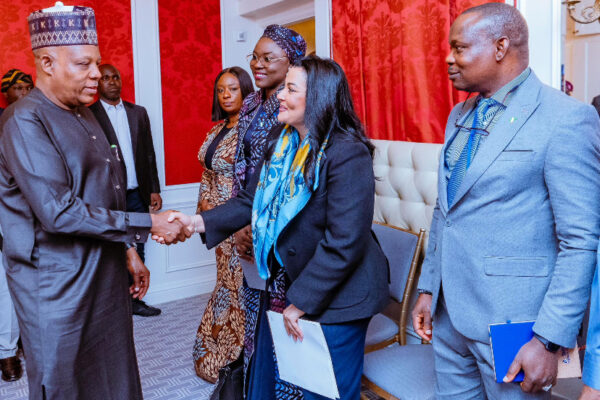
Nigeria’s participation at the 79th Session of the ongoing United Nations General Assembly  (#UNGA79) recorded the first success on Monday, as the President Bola Ahmed Tinubu administration’s commitment towards mortgage refinancing and women empowerment received the support of the United States Chamber of Commerce @USChamber with a commitment of about $320 million. This is just as Vice President Kashim Shettima, who is leading the federal government delegation and representing President Tinubu at this year’s UNGA, has met with other members of Nigeria’s delegation to strategise on Nigeria’s engagements in New York.  At a US-Nigeria Executive Business Roundtable hosted by the US Chamber of Commerce, Nisha Biswal of the American International Development Finance Corporation announced that with a portfolio of  $1 billion, it was investing $200 million in mortgage refinancing in Nigeria. The sum of $100 million has been earmarked for FCMB to finance SMEs in Nigeria, with particular interest in women empowerment.  The US Chamber of Commerce also announced that $20 million has been approved for a firm, Robust International, for processing of cashew nuts in Nigeria. Biswal said the American Chamber remained committed to working with Nigerians in the development and pursuit of sustainable economic policies.  Appreciating the gesture of the group, Vice President Shettima reiterated President Tinubu’s commitment to investor-friendly policies. He stated: “I urge you to give Nigeria the benefit of the doubt. The current administration led by President Bola Ahmed Tinubu is the most investor-friendly administration in the history of Nigeria. When fuel subsidy was an albatross around Nigeria’s neck, President Tinubu, from day one, hit the ground running by withdrawing the fuel subsidy and unifying the multiple opaque foreign exchange markets.” Earlier on Monday, Nigeria’s Minister of Foreign Affairs, Ambassador Yusuf Tuggar @YusufTuggar, led other members to brief the Vice President on the activities and itinerary lined up for him in New York. Tuggar outlined the programmes and activities, saying the Vice President is expected to deliver President Bola Ahmed Tinubu’s national statement at the General Debate of the UN General Assembly.  Apart from President Tinubu’s national statement delivery, Vice President Kashim Shettima is also expected to meet with the Secretary General of the United Nations.  Aside other heads of states lined up to meet with the Vice President, there are also scheduled meetings with the head of the African, Caribbean and Pacific States; the President of the World Trade Organization (WTO), Dr. Ngozi Okonjo-Iweala; Director General of the International Atomic Agency, and multinational companies, among others. Also on the itinerary of the Vice President is a meeting with the Bill and Melinda Gates Foundation and a host of other international partners.  Top Nigerian officials present at the meeting included the Minister of Communications, Innovation & Digital Economy, Dr. ‘Bosun Tijani; Minister of Women Affairs, Uju Kennedy-Ohanenye; Minister of Innovation, Science and Technology, Chief Uche Geoffrey Nnaji; Coordinating Minister of Health and Social Welfare, Professor Muhammad Ali Pate, and Minister of Industry, Trade and Investment, Doris Nkiruka Uzoka-Anite. Others are Minister of Solid Mineral Development, Dele Alake; Minister of State for Environment, Dr. Iziaq Kunle Salako; Minister of Defence, Alhaji Mohammed Badaru Abubakar and Director-General of the National Intelligence Agency, Mohammed Mohammed, among many others.

Read More