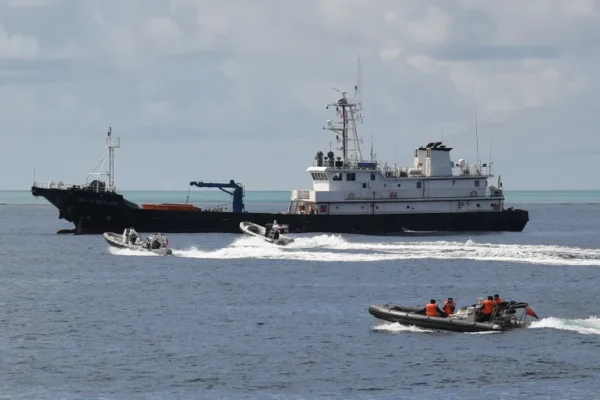
US condemns Beijing’s South China Sea ‘nature reserve’ plan

US Condemns Beijing’s South China Sea Nature Reserve Plan at Scarborough Shoal

The United States has condemned China’s plan to establish a so-called “nature reserve” at the disputed Scarborough Shoal, backing the Philippines in what Washington described as yet another act of regional coercion by Beijing. US Secretary of State Marco Rubio issued a strong statement on Friday, saying the proposal was “yet another coercive attempt” by China to assert sweeping maritime claims in the South China Sea. “The US stands with our Philippine ally in rejecting China’s destabilising plans to establish a ‘national nature reserve’ at Scarborough Reef,” Rubio posted on X. “This is another example of Beijing using pressure tactics to push expansive territorial claims, disregarding the rights of neighbouring countries.” China’s State Council announced earlier this week that it intends to create a protected ecological zone of 3,500 hectares at Scarborough Shoal, describing the move as essential for “biodiversity and sustainability”. But the announcement has triggered sharp responses from Manila. The Philippines’ Department of Foreign Affairs said it would file a formal diplomatic protest, calling China’s move “illegitimate and unlawful”. National Security Adviser Eduardo Año described the plan as a violation of multiple international agreements, including: “This is not about environmental protection,” Año said, “but about reinforcing China’s illegal control of a maritime feature that lies within the Philippines’ exclusive economic zone.” Ongoing Tensions and Regional Pushback Scarborough Shoal, also known as Huangyan Island in China, lies just 240km off the coast of Luzon. Though it falls within the Philippines’ EEZ, it has been effectively under Chinese control since a 2012 standoff. Beijing has since deployed coastguard and militia vessels to monitor the area, frequently blocking Filipino fishermen from accessing the shoal’s rich fishing grounds — a traditional livelihood for generations of coastal communities in Luzon. Analysts in Manila suggest China is using the “nature reserve” designation as a pretext for occupation. “Beijing is testing the Philippines’ resolve,” said Julio Amador III of Amador Research Services. “If there is no strong pushback, we can expect similar tactics to be used elsewhere.” In recent weeks, the Philippines has held joint naval exercises near the shoal with allies including Australia and Canada, simulating responses to aerial and maritime threats in disputed waters. Meanwhile, China has reiterated its claim to “sovereignty” over the shoal, saying it would “resolutely defend” the area. Beijing continues to assert control over almost the entire South China Sea, despite competing claims from Vietnam, Brunei, Malaysia, and the Philippines. The disputed waterway remains one of the world’s most strategically vital corridors, with over $3 trillion in annual trade transiting through it. The latest escalation adds further strain to the already fraught US-China relationship and highlights the growing strategic alignment between Washington and Manila in countering China’s influence in the region.

Read More

The Whole Scheme Stinks: Ugandans Question Secretive Deal to Accept U.S. Deportees

A controversial agreement between Uganda and the Trump administration to receive deportees from the United States—potentially including high-profile detainee Kilmar Abrego Garcia—has sparked a wave of criticism in Uganda, with opposition lawmakers and civil society figures denouncing the deal as opaque and politically motivated. Ugandan lawmakers have voiced outrage over the lack of parliamentary oversight and transparency, raising concerns that the East African nation is being used as a political bargaining chip amid President Donald Trump’s aggressive anti-immigration campaign. Controversy Over Deportee Deal Few details about the agreement have been officially released. Ugandan authorities have stated they prefer to receive deportees of African origin and not individuals with serious criminal records. However, leaked information suggests that the U.S. is pushing to deport Kilmar Abrego Garcia—a Salvadoran national and Maryland resident—to Uganda. Abrego Garcia, who has an American wife and children, was granted protected legal status in 2019 after a U.S. judge ruled he could face harm if returned to El Salvador. Despite that, he was mistakenly deported earlier this year as part of Trump’s immigration crackdown. His lawyers say he was severely beaten and psychologically tortured while held in El Salvador’s notorious CECOT mega-prison. U.S. officials later admitted his removal was due to an “administrative error.” This week, Abrego Garcia was again detained by immigration authorities in Baltimore. The Department of Homeland Security stated he is now being “processed for removal to Uganda.” Political Motives Suspected “This whole scheme stinks,” said Mathias Mpuuga, former leader of the opposition in Uganda’s Parliament. “Uganda is already struggling to support refugees from neighboring conflicts. How are we now becoming a dumping ground for U.S. deportees?” Critics allege that President Yoweri Museveni’s administration entered the deal without public consultation or parliamentary approval. Some see it as a move to curry favor with the Trump administration amid rising international pressure over Uganda’s deteriorating human rights record. “This makes sense only as economic expediency,” said Ibrahim Ssemujju, a prominent opposition MP. “Museveni will be happy to oblige, especially with the U.S. sanctions hanging over his government.” Uganda’s Ministry of Foreign Affairs initially dismissed reports of a deal as “complete rubbish.” But just a day later, the ministry’s permanent secretary confirmed that an agreement was in place to accept deportees who are “reluctant to or may have concerns about returning to their countries of origin.” Uganda’s Deteriorating Rights Record Human rights organizations have long accused Museveni’s government of authoritarianism, corruption, and abuse of power. The 79-year-old leader, who has ruled Uganda for nearly 40 years, faces mounting criticism for unlawful killings, arrests of opposition leaders, and media suppression. Relations with Washington have grown tense in recent years. Under former President Joe Biden, the U.S. imposed sanctions on several high-ranking Ugandan officials over corruption, election interference, and LGBTQ rights violations—sanctions that remain in place under Trump’s administration. Uganda drew international condemnation in 2023 after passing one of the world’s harshest anti-LGBTQ laws, prompting widespread human rights concerns. A May 2025 Human Rights Watch report accused the government of fueling “discrimination, violence, and misinformation” against LGBTQ communities. Among those sanctioned by the U.S. are Speaker of Parliament Anita Among, a close ally of Museveni, as well as the country’s prisons chief and several former security and military officials. What Uganda Stands to Gain Despite domestic backlash, some analysts believe Museveni sees strategic advantages in the deportation deal. “Museveni is looking for a way back into Washington’s good graces,” said Marlon Agaba, Executive Director of the Anti-Corruption Coalition Uganda. “He sees this as a political opportunity—and potentially an economic one, if it leads to better trade terms.” “The Trump administration is all about transactional diplomacy,” Agaba added. “And any strongman understands that kind of deal-making.” Similar deportation arrangements are reportedly underway with other African countries. In July, the U.S. deported five individuals to Eswatini and eight to South Sudan. Rwanda has also agreed to receive up to 250 deportees under similar terms. Still, many Ugandans remain skeptical. “We deserve answers,” Mpuuga said. “We cannot sell our sovereignty behind closed doors.”

Read More

Lula Condemns U.S. Revocation of Brazilian Minister’s Visa Calls It Irresponsible

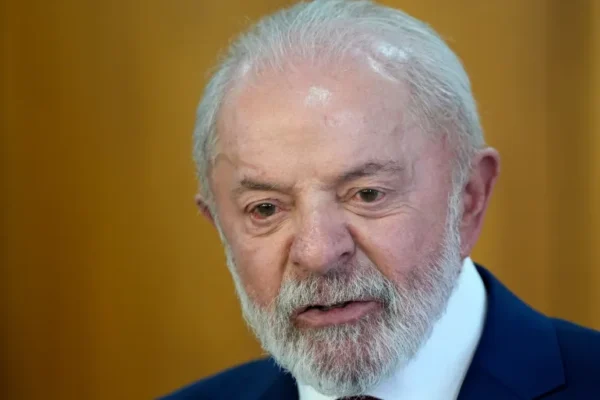
Brazilian President Luiz Inácio Lula da Silva has denounced the United States’ decision to revoke the visa of Justice Minister Ricardo Lewandowski, calling the move “irresponsible” and “unacceptable” amid growing diplomatic tensions between Brasília and Washington. Speaking during a cabinet meeting on Tuesday, Lula said the visa revocation is part of a wider pattern of attacks against Brazilian institutions and officials by the Trump administration, as former President Jair Bolsonaro’s coup trial moves toward a verdict. “I wanted to express my solidarity, and the government’s solidarity, with Minister Lewandowski in light of the irresponsible gesture by the United States in revoking his visa,” Lula said. “We are willing to sit at the table on equal terms. What we are not willing to do is be treated as subordinates. We will not accept that from anyone.” Mounting Tensions Amid Bolsonaro Trial Relations between Brazil and the U.S.—longstanding allies and economic partners—have significantly deteriorated since Donald Trump returned to office earlier this year. The former U.S. president has openly criticized Lula’s government for pursuing legal action against Bolsonaro, a close political ally of Trump. Bolsonaro, who served as Brazil’s president from 2019 to 2023, is currently under house arrest as he faces trial for allegedly attempting to orchestrate a coup following his defeat in the 2022 election. Prosecutors allege he explored declaring a state of siege, mobilizing the military, and calling for new elections. Trump has repeatedly called the trial a “witch hunt.” On July 7, he posted a message on Truth Social defending Bolsonaro as a leader who “fought for THE PEOPLE.” Days later, he announced sweeping 50% tariffs on all Brazilian exports to the U.S., citing the trial as the rationale. U.S. Sanctions Target Brazilian Judiciary The visa revocation for Lewandowski follows similar punitive actions against other Brazilian officials. On July 18, the U.S. State Department revoked visas for Supreme Court Justice Alexandre de Moraes and his immediate family, citing alleged censorship and political bias in the Bolsonaro investigation. “Justice Alexandre de Moraes’s political witch hunt against Jair Bolsonaro created a persecution and censorship complex so sweeping that it violates the rights of Brazilians and extends beyond Brazil’s borders,” said U.S. Secretary of State Marco Rubio at the time. The U.S. further escalated its measures by freezing any U.S.-based assets linked to de Moraes and prohibiting American entities from engaging in financial dealings with him. Treasury Secretary Scott Bessent accused the judge of carrying out “an oppressive campaign of censorship, arbitrary detentions, and politicized prosecutions.” Lula Asserts Brazilian Sovereignty President Lula strongly rebuked these measures, defending Brazil’s judicial independence and asserting that his government would not tolerate foreign interference. “These attitudes are unacceptable—not only against Minister Lewandowski but also against our Supreme Court justices and any Brazilian public servant,” he said. “Brazil has its own constitution, its own laws, and we will uphold them.” The escalating row places increasing strain on U.S.-Brazil relations, as Bolsonaro’s trial approaches a critical verdict in early September. The outcome could carry wide-reaching consequences for Brazil’s democracy—and its standing on the global stage.

Read More
Five killed after tour bus returning to New York City from Niagara Falls crashes

Five Killed After Tour Bus Returning to New York City from Niagara Falls Crashes

Five people have died and dozens more were injured after a tour bus returning to New York City from Niagara Falls crashed on a major highway in western New York. The bus, carrying 52 passengers, overturned on Interstate 90 near Pembroke, approximately 30 miles (48 km) east of Buffalo, at around 12:30 p.m. local time (5:30 p.m. UK time). According to New York State Police spokesperson Trooper James O’Callaghan, “multiple fatalities, multiple entrapments, and multiple injuries” were reported at the scene. Some children were among those on board. Several passengers were thrown from the bus as windows shattered, while others were trapped inside the wreckage. The Erie County Medical Center (ECMC) in Buffalo received 24 patients. At a press conference, Dr. Jennifer Pugh, Chief of Emergency Medicine at ECMC, said two patients were taken to surgery, including one with internal injuries. Dr. Jeffrey Brewer, Chief of Surgery, said the most seriously injured patients were expected to recover. Injuries included blunt trauma, head injuries, and multiple fractures. Other hospitals also received patients from the crash: Most passengers were of Indian, Chinese, and Filipino descent, and translators were brought in to assist. The bus driver survived and is cooperating with investigators. “It’s a full-size tour bus with significant damage,” O’Callaghan said. “Most passengers were likely not wearing seat belts, which is why so many were ejected.” Mercy Flight deployed three helicopters to airlift critically injured individuals. “It’s a very active scene,” said Mercy Flight President Margaret Ferrentino. “At this time, we’re praying for the victims.” Police said the driver lost control of the bus at full speed and the vehicle flipped during an attempt to correct course. The crash forced the closure of the highway in both directions, causing significant delays during one of the final weekends of the summer holiday season. Niagara Falls, located on the US-Canada border, attracts more than nine million visitors annually.

Read More

Trump: No Business With Putin Until War Settled Zelenskyy Says Ukraine Is Counting on US

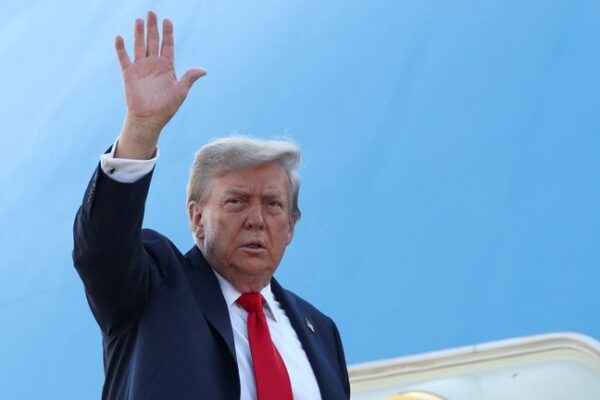
As President Donald Trump heads to Alaska for a high-stakes summit with Russian President Vladimir Putin, he underscored that no business dealings between the U.S. and Russia will take place until the war in Ukraine is “settled”—a clear signal of linkage between economic engagement and progress on peace. On board Air Force One, Trump conveyed his hope that the Alaska meeting could pave the way for broader diplomacy, with potential follow-up talks involving Ukrainian President Volodymyr Zelenskyy. “I’m not here to negotiate for Ukraine, I’m here to get them at a table,” he stated, emphasizing that any territorial discussions must be decided by Kyiv. President Zelenskyy—excluded from the summit—stressed Ukraine’s reliance on American leadership. He called for genuine engagement that leads to a “just peace” and urged inclusion in future negotiations, asserting that without Ukraine’s input, any decision would be meaningless. The meeting takes place against a backdrop of rising tensions and persistent skepticism. Trump’s linkage of business engagement to conflict resolution reflects his approach, while critics remain wary that sidelining Ukraine undermines both the peace process and Ukraine’s sovereignty.

Read More

US Warns Nigerian Students of Visa Revocation Over Academic Violations

The United States government has issued a strong warning to Nigerian students and other international students in the country, cautioning them against violating the conditions of their student visas. In an advisory shared on Monday via its official X (formerly Twitter) account, the US Mission in Nigeria emphasized that students who drop out, miss classes, or abandon their academic programmes without formally notifying their institutions risk having their visas revoked. The mission further warned that such violations could jeopardize eligibility for future US visas, regardless of the visa category. “If you drop out, skip classes, or leave your programmes of study without informing your school, your student visa may be revoked, and you may lose eligibility for future US visas,” the advisory stated. Students were strongly advised to adhere strictly to the terms of their visa and maintain active academic status throughout their stay in the United States to avoid immigration-related issues. The warning serves as a reminder to thousands of Nigerian students currently enrolled in US institutions to remain compliant with visa regulations, especially as the new academic year approaches.

Read More

Trump Orders Nuclear Submarines Closer to Russia Amid Escalating Tensions with Medvedev

United States President Donald Trump has ordered the deployment of two nuclear submarines closer to Russian territory, marking a significant escalation in his ongoing war of words with Russian Security Council Deputy Chairman Dmitry Medvedev. In a post on his platform, Truth Social, Trump said the move was a direct response to what he described as “highly provocative statements” made by Medvedev earlier in the week, including warnings about Russia’s Cold War-era nuclear weapons system, commonly referred to as the “Dead Hand.” “I have ordered two nuclear submarines to be positioned in the appropriate regions, just in case these foolish and inflammatory statements are more than just that,” Trump wrote. “Words are very important, and can often lead to unintended consequences. I hope this will not be one of those instances.” This latest exchange follows a string of increasingly hostile remarks between both leaders in recent months. Medvedev, once Russia’s president and now a key Putin ally, has used social media to taunt Trump, while Trump has publicly lambasted Russia’s invasion of Ukraine and openly criticized Medvedev’s rhetoric. Earlier this week, Trump dismissed concerns over India-Russia trade relations, instead taking aim at Medvedev: “Russia and the USA do almost no business together. Let’s keep it that way, and tell Medvedev, the failed former President of Russia, who thinks he’s still President, to watch his words. He’s entering very dangerous territory!” Medvedev responded sarcastically on Telegram, invoking Trump’s apparent love for “The Walking Dead” and mocking the U.S. leader’s warnings. “If some words from the former president of Russia trigger such a nervous reaction from the high-and-mighty president of the United States, then Russia is doing everything right,” Medvedev wrote.“And as for ‘dead economies’ and ‘dangerous territory’ — well, let Trump remember his favourite films about the ‘Walking Dead.’” Rising Nuclear Rhetoric This isn’t the first time the two have exchanged nuclear threats. Back in June, Trump accused Medvedev of casually referencing nuclear weapons and offering warheads to Iran. He responded by highlighting America’s powerful nuclear submarine fleet, calling them “the most powerful and lethal weapons ever built.” The confrontation adds to concerns over global stability as nuclear rhetoric intensifies from both sides. Frustrations Over Ukraine The clash also reflects Trump’s growing frustration with the stalled efforts to end the Russia-Ukraine war, which has dragged on since Russia’s full-scale invasion in February 2022. Despite entering his second term promising to be a “global peacemaker,” Trump has faced criticism for appearing to favor concessions to Russia in earlier negotiations. In recent weeks, however, he has adopted a tougher stance—imposing deadlines on Moscow and warning of severe economic sanctions. “Russia — I think it’s disgusting what they’re doing,” Trump said on Thursday, following fresh Russian shelling of Kyiv. Medvedev has dismissed Trump’s threats as “theatrical,” warning that his confrontational approach risks triggering a wider conflict—possibly involving the U.S. “Each new ultimatum is a threat and a step towards war. Not between Russia and Ukraine, but with his own country,” Medvedev said. As tensions rise and military assets are repositioned, the world watches closely, with fears of further escalation between the world’s leading nuclear powers. Source: By Al Jazeera

Read More

Trump Gives Russia 10–12 Days to End Ukraine War: “No Reason in Waiting”

Turnberry, Scotland — July 28, 2025U.S. President Donald Trump has issued a sharp new ultimatum to Russian President Vladimir Putin, demanding an end to the ongoing war in Ukraine within 10 to 12 days — significantly reducing the 50-day deadline he initially set earlier this month. Speaking during a press conference alongside UK Prime Minister Keir Starmer, Trump expressed frustration with Russia’s continued military offensive in Ukraine and signaled growing impatience with the lack of progress toward a ceasefire. “I’m going to make a new deadline of about … 10 or 12 days from today,” Trump said. “There’s no reason in waiting. We just don’t see any progress being made.” The Kremlin has yet to issue a formal response. Trump’s warning comes as Moscow intensifies airstrikes across Ukraine, despite several diplomatic overtures from the U.S. and its European allies. A recent ceasefire deal remains in limbo, with Russian forces reportedly escalating attacks in key areas including Kyiv and eastern border regions. The U.S. president, who returned to office this year with a promise to end the conflict within 24 hours, continues to present himself as a peacemaker, but has faced criticism for his mixed signals. Though he has repeatedly threatened sanctions and tariffs on Russia and countries buying Russian exports, his administration has been cautious in implementing such measures. “I don’t want to do that to Russia. I love the Russian people,” Trump said Monday.“But if you know what the answer is going to be, why wait?” Trump also expressed disappointment with Ukrainian President Volodymyr Zelenskyy, whom he accused of stalling peace efforts. He referenced past conversations with Putin, saying: “We thought we had that settled numerous times, and then President Putin goes out and starts launching rockets into some city like Kyiv and kills a lot of people in a nursing home or whatever. And I say that’s not the way to do it.” With tensions rising and the international community watching closely, the next 10 days could prove critical for diplomatic relations — and for Ukraine’s war-ravaged future.

Read More