US To Impose Visa Restrictions On Individuals Persecuting Christians In Nigeria

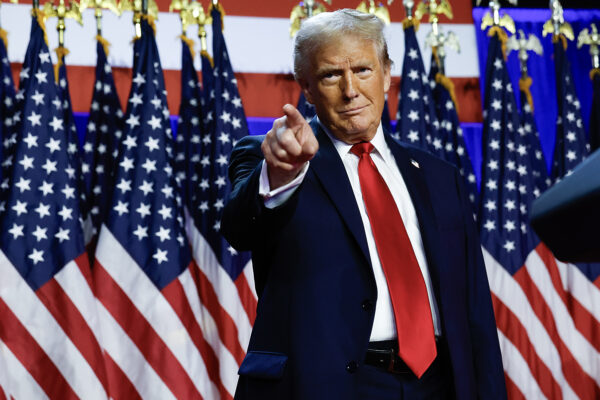
The United States has announced visa restrictions targeting individuals involved in the persecution of Christians in Nigeria. U.S. Secretary of State Marco Rubio disclosed the measures on X on Wednesday, saying they will apply to anyone who directs, authorizes, funds, or supports violations of religious freedom. “United States is taking decisive action in response to the atrocities and violence against Christians in Nigeria and around the world,” Rubio said. “The @StateDept will restrict U.S. visas for those who knowingly direct, authorize, fund, support, or carry out violations of religious freedom. This visa policy applies to Nigeria and other governments or individuals that persecute people for their religious beliefs.” The decision follows President Donald Trump’s designation of Nigeria as a Country of Particular Concern, citing what he described as “genocide against Christians” in the country. Trump announced the designation on October 30 via Truth Social and later highlighted it during a national address.

Read More

Badaru Abubakar Denies Resignation Rumours Claiming He Opposed US And Tinubu’s Military Actions

Former Defence Minister Mohammed Badaru Abubakar has refuted online reports suggesting he resigned from office because he “could not stand and watch the US and Tinubu government bombing our brothers in the forest.” In a statement on Wednesday, Badaru described the publication as false, malicious, and misleading. He stressed that neither he nor any authorised representative made such remarks. “The report aims to damage my reputation, create friction between me and President Bola Tinubu, and generate unnecessary controversy,” he said. Badaru clarified that the reasons for his resignation were formally communicated to the President and had already been made public through official channels. He reaffirmed his commitment to Nigeria’s peace and stability and expressed continued support for the All Progressives Congress (APC) ahead of the 2027 general elections. The former minister urged the public to disregard the viral claims, calling them the work of mischief makers.

Read More

US Congress To Hold Briefing On Attacks Against Christians In Nigeria Tuesday

The United States House Appropriations Committee will hold a joint congressional briefing on Tuesday to examine the reported persecution of Christians in Nigeria, officials confirmed. US Congressman Riley Moore shared on X that the session will be led by House Appropriations Committee Vice Chair and National Security Subcommittee Chairman Mario Díaz-Balart, with participation from members of the Appropriations, Foreign Affairs, and Financial Services Committees. Representatives from the US Commission on International Religious Freedom, along with other experts, are expected to provide testimony. The briefing is intended to highlight what officials describe as “escalating violence and targeted persecution of Christians in Nigeria.” According to the announcement, the session will gather evidence for a comprehensive report “directed by President Trump on the massacre of Nigerian Christians and the steps Congress can take to support the White House’s efforts to protect vulnerable faith communities worldwide.” Committee officials said the briefing will provide lawmakers with key information on the challenges facing religious minorities. The briefing coincides with strengthened US–Nigeria security cooperation. President Bola Tinubu recently approved Nigeria’s delegation to the new US–Nigeria Joint Working Group, established to implement security agreements from high-level talks in Washington led by National Security Adviser Nuhu Ribadu. The working group, composed of senior ministers and security officials, aims to enhance counterterrorism operations, intelligence sharing, border security, and coordination on humanitarian and civilian protection issues. The initiative comes amid rising concerns over terrorism, banditry, and attacks targeting Christians in Nigeria, prompting heightened scrutiny and warnings from US authorities about the protection of vulnerable faith communities.

Read More

Russia-Ukraine War Live: US Envoy Steve Witkoff Heads to Moscow as Trump Pushes for Rapid Peace Deal

At least 19 civilians have been wounded following a series of overnight Russian drone strikes on Ukraine’s southeastern Zaporizhzhia region, authorities said, as heavy fighting continues along the front lines. The attacks came amid intensifying diplomatic activity, with the United States confirming that special envoy Steve Witkoff will travel to Moscow for high-level talks with Russian President Vladimir Putin as part of Washington’s push to secure a ceasefire agreement. Ukraine signals openness to US plan The Ukrainian government said it supports the “essence” of a new US-backed proposal aimed at ending the nearly four-year war. President Donald Trump said on Tuesday that “progress” is being made, even as negotiations drag on in Geneva and other European capitals. Witkoff’s visit is the most direct engagement yet between Washington and Moscow under the Trump administration’s peace initiative. Russia accuses Europe of undermining peace efforts Russia’s Foreign Ministry claimed that European politicians and media outlets are attempting to undermine US-led efforts to broker a settlement, accusing Western governments of trying to prolong the conflict to weaken Moscow. The EU, UK and other Western partners have publicly expressed concerns about parts of the US plan, warning that any agreement must protect Ukraine’s sovereignty and territorial integrity. Russian air defences repel multiple drone attacks Russia’s Defence Ministry said its air defence units intercepted 33 Ukrainian drones across the Belgorod, Voronezh, Lipetsk, and Bryansk regions on Tuesday night. No casualties were reported. As diplomatic efforts resume and battlefield intensity escalates, the coming days are expected to be pivotal in determining whether the warring parties move closer to a negotiated settlement or brace for another winter of fighting.

Read More

US Revokes Thousands of Visas Over Crimes, Security and Immigration Violations

The U.S. government has revoked visas for thousands of foreign nationals as part of efforts to enhance public safety. In a statement on Thursday, the U.S. Department of State said the action reflects the Trump administration’s commitment to keeping promises and prioritizing the safety and interests of American citizens. The revocations targeted individuals involved in criminal activities, including assault, theft, and driving under the influence. In 2025, 16,000 people had their visas canceled for DUI offenses, 12,000 for assault, and 8,000 for theft. Other reasons for visa revocation included terrorism, support for terrorist activities, threats to public safety, and overstaying visas. The Department emphasized that these measures are aimed at protecting the public and maintaining the integrity of the U.S. immigration system.

Read More
Trump Bans Soyinka From US

Wole Soyinka Says He Predicted US Mass Visa Revocation After Trump Took Office

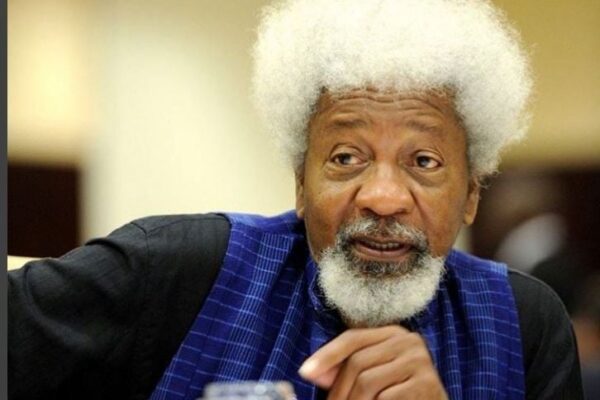
Nobel laureate Professor Wole Soyinka has claimed he foresaw the mass revocation of visas and green cards by the United States, saying he had long predicted that such actions would follow once Donald Trump assumed office as President. Speaking in an interview with BBC News Pidgin published on Wednesday, the world-renowned writer — whose own U.S. visa was recently revoked — said his prediction was rooted in his understanding of Trump’s character. “This is a petty-minded dictator,” Soyinka said. “You see how he deals with his objects of hate. We saw that dark side of the American system — more killings, extrajudicial killings of black people, of minorities, during that build-up, during the campaign, and on account of hate rhetoric. I saw it and I said, listen carefully — when that man comes to power, the first thing he will do is cancel even the green cards.” His remarks come amid worsening diplomatic tension between Nigeria and the U.S. after President Trump designated Nigeria a “Country of Particular Concern,” alleging a “Christian genocide.” The U.S. leader further threatened military intervention if the Nigerian government failed to stop the killings, a statement that has stirred global criticism and fear. Soyinka, an outspoken critic of Trump, had famously vowed in 2016 to destroy his U.S. Green Card once Trump was sworn in — a promise he later fulfilled. “I have already done it. I have disengaged from the United States. I had a horror of what was to come with Trump,” he said at the time. The 91-year-old playwright recently revealed that the U.S. Embassy revoked his B1/B2 visa through a letter dated October 23, 2025. The Consulate directed him to bring in his passport for the “physical cancellation” of the visa — an instruction he described as “a joke.” According to the embassy letter, Soyinka must reapply if he wishes to travel to the United States again. But the laureate said he has no plans to do so. “I’m not going to wait to be told to come for a reinterview or simply told, ‘Get out!’ I don’t like to be kicked out; I like to kick myself out — it’s more dignified.” Soyinka disclosed that his visa issue followed an earlier notice from the U.S. Internal Revenue Service (IRS) informing him of a tax audit. “After he took office, I got a letter from the IRS telling me to report for an audit. The coincidence for me was very impressive,” he said. He explained that the audit covered a five-year period and that he had voluntarily informed the U.S. Embassy about it to avoid any misunderstanding. “I didn’t want to be advertised as a tax dodger owing the United States money,” Soyinka told journalists. The U.S. Mission in Nigeria, responding to inquiries, later clarified that visas are a privilege, not a right, and can be revoked at any time at the discretion of the U.S. government. Despite his criticisms of Trump’s policies, Soyinka maintained that his personal relationship with the American people remains cordial, saying he was always treated with respect whenever he visited the embassy.

Read More

Erdogan Calls on US and Allies to Pressure Israel Over Gaza Ceasefire Violations

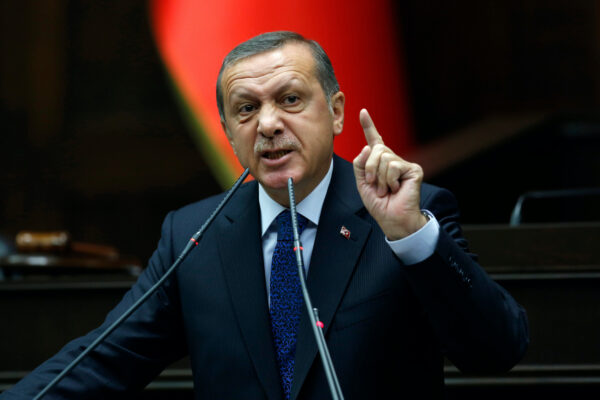
Turkish President Recep Tayyip Erdogan has urged the United States and other nations to take stronger action to ensure Israel abides by the Gaza ceasefire agreement. He suggested that measures such as sanctions or suspending arms sales should be considered to compel Israel to stop its violations. Speaking to reporters on board a return flight from Oman, Erdogan emphasized that Hamas was adhering to the terms of the ceasefire. “Gaza is a test for the Islamic world. God willing, we will pass this test with flying colours and take our place alongside our brothers and sisters in the strongest possible way,” he said, according to an official readout. The Turkish leader reiterated that Türkiye remains prepared to assist in the implementation of the planned Gaza task force “in any way needed.” Ankara has consistently expressed support for international mechanisms aimed at maintaining stability and rebuilding Gaza following the devastation caused by the conflict. Reports in recent days suggest that Israeli Prime Minister Benjamin Netanyahu has rejected any involvement of Turkish personnel on the ground in Gaza. This stance underscores the deep mistrust that continues to define relations between the two countries. Since the outbreak of Israel’s war on Gaza, relations between Türkiye and Israel—already strained—have deteriorated further. Erdogan has frequently accused Israel of committing atrocities and violating international law during its military operations. Turkish officials have also criticized what they describe as the international community’s “double standards” in holding Israel accountable. Ankara has repeatedly called on Western powers to match their statements with concrete actions to enforce compliance with ceasefire terms. Erdogan’s latest comments come amid fragile calm in Gaza, where sporadic Israeli operations and airstrikes have continued despite the ceasefire framework brokered by international mediators. Humanitarian agencies warn that violations risk reigniting a wider escalation. Türkiye has positioned itself as a vocal advocate for Palestinian rights, providing humanitarian assistance and calling for international unity in rebuilding Gaza. Erdogan’s appeal highlights Ankara’s ongoing effort to shape regional diplomacy and assert its influence in the post-conflict landscape.

Read More

As US Gets Tough On Moscow, Has Putin’s Strategy Of Playing Trump Run Its Course?

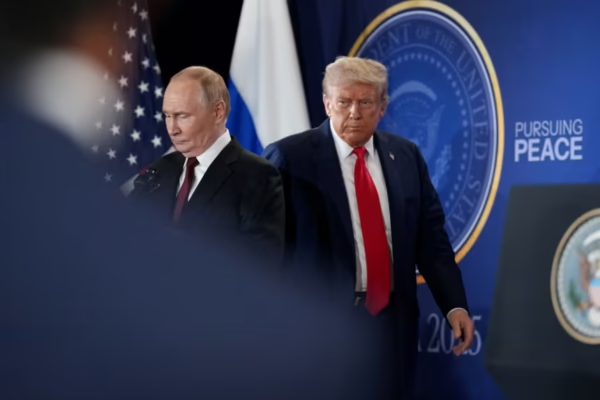
The Kremlin may have believed that US President Donald Trump lacked the resolve to exert real pressure on Moscow to end the war in Ukraine. For months, carefully timed calls from the Kremlin seemed to persuade the White House to pull back from decisive actions — including Trump’s recent reversal on supplying long-range Tomahawk missiles to Kyiv. But the latest US Treasury sanctions on Russia’s two largest oil companies — Rosneft and Lukoil — may now force President Vladimir Putin to reassess both his approach to Trump and his broader war strategy. Former Russian president and Putin ally Dmitry Medvedev lashed out at Trump, calling him a “talkative peacemaker who has now fully embarked on the war path against Russia,” adding pointedly, “This is his conflict now, not the senile Biden’s.” While the sanctions themselves may not devastate Russia’s economy, oil remains central to funding the Kremlin’s war in Ukraine. Despite years of Western restrictions, Moscow has developed methods to skirt sanctions, and Russian officials say they will adapt once again. “Our country has developed a strong immunity to Western restrictions,” foreign ministry spokesperson Maria Zakharova declared. The real challenge for the Kremlin lies in the erosion of its long-favored strategy of manipulating the Trump administration — offering gestures of peace and trade opportunities while continuing its military offensive. That tactic appears to have reached its limits. Trump, increasingly wary of being “played along” by Putin, has taken his first significant punitive step against Russia since returning to office. Alongside the sanctions, Trump abruptly canceled a planned summit with Putin in Budapest — a blow to the Kremlin’s hopes of another high-profile meeting showcasing Putin’s global relevance. Russian officials had claimed that preparations were underway, but the optimism now seems misplaced. Putin, facing war crimes charges and growing isolation, had relished August’s summit with Trump in Alaska — a rare diplomatic win that projected parity between Moscow and Washington. This time, however, the White House insists there will be no repeat unless Russia shows tangible progress on peace in Ukraine. The US Treasury has hinted at even tougher sanctions ahead, signaling what could be the start of a more assertive American approach toward Moscow. Ukraine’s President Volodymyr Zelensky hailed the move as “very important,” while European leaders expressed relief at Washington’s firmer stance. Still, uncertainty lingers. After nine turbulent months of Trump’s presidency, diplomats in Kyiv, Brussels, and even Moscow remain cautious — aware that, in Trump’s unpredictable world, a single well-timed phone call from Putin could shift the balance once again.

Read More