Trump Declares Venezuelan Airspace Completely Off-Limits Amid Escalating Tensions

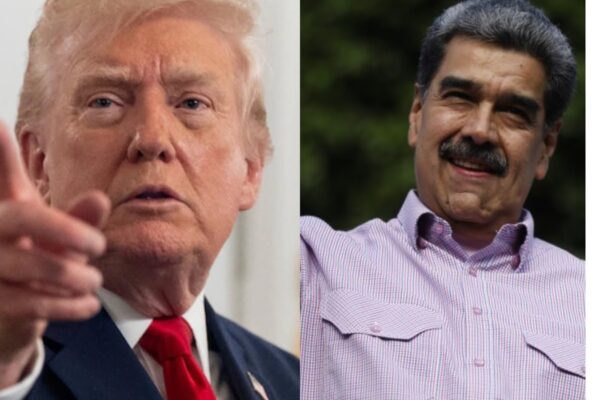
US President Donald Trump has intensified Washington’s confrontation with Venezuela by announcing that the airspace around the country should now be treated as fully restricted. In a message he directed at “all Airlines, Pilots, Drug Dealers, and Human Traffickers,” he warned on Saturday that the airspace above and near Venezuela is “closed in its entirety.” Venezuelan officials have not yet issued a reaction. The declaration follows months of expanded US operations targeting what Washington describes as Venezuela-linked drug networks. American forces have carried out several deadly strikes on vessels accused of transporting narcotics, leaving many people dead. UN experts have condemned the attacks as extrajudicial killings. The fallout even led the United Kingdom to freeze intelligence cooperation with the US, with British officials saying they did not want to be involved in actions they believe fall outside the limits of their intelligence-sharing agreement. Trump also signaled on Thursday that the US might soon begin pursuing suspected Venezuelan drug traffickers on land. President Nicolas Maduro dismissed the warnings, insisting the country would not be bullied. Analysts say the pattern of US actions suggests more than a drug-control mission, arguing it could be part of a broader attempt to weaken or remove Maduro’s government. Trump has maintained a long-running campaign against the Venezuelan leader. In August, his administration increased the bounty for information leading to Maduro’s arrest, describing him as “one of the largest narco-traffickers in the world.” The reward, previously $25 million, has been raised to $50 million.
Read More

Trump Excludes South Africa From 2026 G20 Summit After Diplomatic Clash

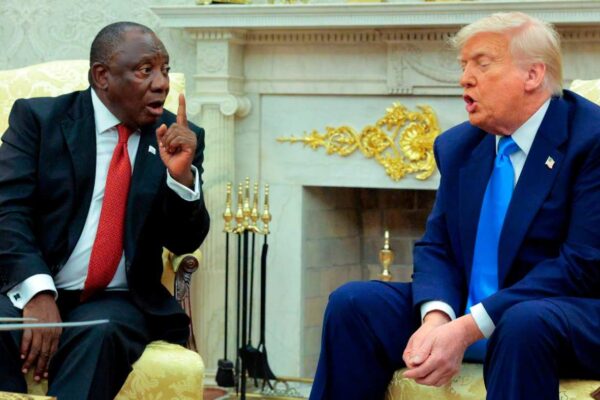
President Donald Trump has announced that South Africa will be excluded from next year’s G20 summit in Miami, intensifying a diplomatic dispute that began when the US boycotted last week’s first-ever G20 meeting held in Africa. South Africa formally handed over the G20 presidency to the United States on Monday. However, the traditional transfer between heads of state was reduced to a symbolic event at the foreign ministry after President Cyril Ramaphosa declined a last-minute request to hand over the presidency to a US diplomat. Trump cited this refusal as the reason for barring South Africa. “Therefore, at my direction, South Africa will NOT be receiving an invitation to the 2026 G20, which will be hosted in the Great City of Miami, Florida next year,” Trump wrote on Truth Social. He added, “South Africa has demonstrated to the world they are not a country worthy of membership anywhere,” and said the US would “stop all payments and subsidies to them, effective immediately.” South Africa, which has long championed multilateralism, vowed it would still attend the Miami summit. Ramaphosa emphasized that the country is a G20 member “in its own name and right” and that its membership is recognized by all other members. The presidency said, “South Africa is a sovereign constitutional democratic country and does not appreciate insults from another country about its worth in participating in global platforms.” The tensions stem partly from Trump’s repeated claims of a “genocide” of white farmers in South Africa, which his administration has cited in criticism of the country. South Africa’s presidency called these claims “misinformation and distortions” and expressed regret that, despite Ramaphosa’s attempts to reset relations, punitive measures continue. The diplomatic spat escalated after Washington revoked the visa of Naledi Pandor, a former South African foreign minister, just hours after Ramaphosa declined the request to hand over the G20 presidency to a US diplomat. During the recent G20 summit, Ramaphosa successfully led the remaining 19 members in signing a joint declaration, despite Trump’s insistence that no collective statement be issued. Experts warn that Trump’s move could have broader economic consequences. Chris Hattingh, executive director of the Johannesburg-based Centre for Risk Analysis, noted, “There is a risk that the US will pressure other countries to weaken their trade, investment, commercial and diplomatic links with South Africa, lest they also be pushed out of the G20.” Despite political tensions, US businesses continue to engage with South Africa. At the recent B20 — the business track of the G20 — representatives from JPMorgan, Visa, and Citi signed a joint statement with South African counterparts to strengthen business ties. Gary Litman, the US business sherpa, said the goal is to ensure political leaders provide an environment where companies can pursue their business objectives. The exclusion underscores the growing friction between the two nations and highlights the delicate balance between diplomacy, politics, and trade ahead of the Miami summit.

Read More

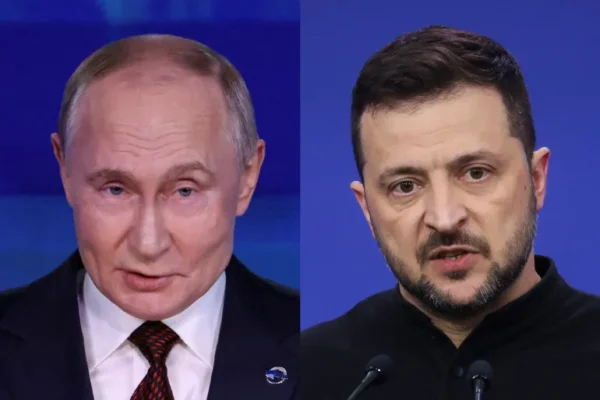
Russia-Ukraine War Live: US Envoy Steve Witkoff Heads to Moscow as Trump Pushes for Rapid Peace Deal

At least 19 civilians have been wounded following a series of overnight Russian drone strikes on Ukraine’s southeastern Zaporizhzhia region, authorities said, as heavy fighting continues along the front lines. The attacks came amid intensifying diplomatic activity, with the United States confirming that special envoy Steve Witkoff will travel to Moscow for high-level talks with Russian President Vladimir Putin as part of Washington’s push to secure a ceasefire agreement. Ukraine signals openness to US plan The Ukrainian government said it supports the “essence” of a new US-backed proposal aimed at ending the nearly four-year war. President Donald Trump said on Tuesday that “progress” is being made, even as negotiations drag on in Geneva and other European capitals. Witkoff’s visit is the most direct engagement yet between Washington and Moscow under the Trump administration’s peace initiative. Russia accuses Europe of undermining peace efforts Russia’s Foreign Ministry claimed that European politicians and media outlets are attempting to undermine US-led efforts to broker a settlement, accusing Western governments of trying to prolong the conflict to weaken Moscow. The EU, UK and other Western partners have publicly expressed concerns about parts of the US plan, warning that any agreement must protect Ukraine’s sovereignty and territorial integrity. Russian air defences repel multiple drone attacks Russia’s Defence Ministry said its air defence units intercepted 33 Ukrainian drones across the Belgorod, Voronezh, Lipetsk, and Bryansk regions on Tuesday night. No casualties were reported. As diplomatic efforts resume and battlefield intensity escalates, the coming days are expected to be pivotal in determining whether the warring parties move closer to a negotiated settlement or brace for another winter of fighting.

Read More

Trump Calls Nigeria A Disgrace As He Accuses Government Of Failing To Protect Christians

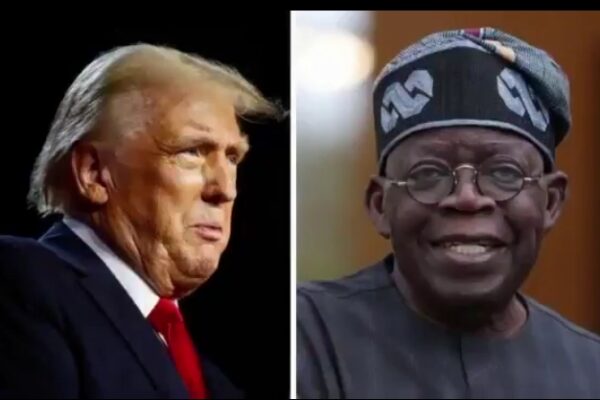
US President Donald Trump intensified his criticism of Nigeria on Friday, labeling the country “a disgrace” and renewing claims that its government is failing to protect Christians from extremist attacks. Speaking on a conservative radio show, Trump threatened military intervention against Islamist militants in Nigeria if the government does not “do more” to halt violence targeting Christian communities. “Nigeria is a disgrace. The whole thing is a disgrace,” Trump said. “They’re killing people by the thousands. It’s a genocide, and I’m really angry about it. And we pay, you know, we give a lot of subsidies to Nigeria. We’re going to end up stopping.” Nigeria has experienced long-standing ethnoreligious conflicts affecting both Christians and Muslims, though the narrative of Christians being uniquely targeted has gained significant attention among right-wing groups in the US. Trump’s remarks came a day after US Defence Secretary Pete Hegseth met with Nigeria’s National Security Adviser, Nuhu Ribadu, at the Pentagon to reinforce the administration’s claims of “horrific violence” against Christians in the country. “Under @POTUS leadership, DOW is working aggressively with Nigeria to end the persecution of Christians by jihadist terrorists,” Hegseth said in a post on X, referring to the Department of Defence by its preferred acronym “DOW” (Department of War). A statement from the Defence Department said Hegseth and Ribadu discussed “tangible progress” on curbing violence against Christians and countering jihadist activity in West Africa. President Bola Tinubu, a Muslim whose wife is a Christian pastor, has consistently rejected accusations of state-supported religious persecution, emphasizing that his government is committed to protecting all Nigerians regardless of faith. “The characterisation of Nigeria as religiously intolerant does not reflect our national reality,” Tinubu said. Despite this, Trump and his allies continue to push the narrative. Earlier this week, rapper Nicki Minaj joined US Ambassador Mike Waltz at the United Nations to echo similar claims. In a separate engagement, Republican Representative Riley Moore of West Virginia met Ribadu in Washington on Wednesday as part of ongoing high-level discussions between US officials and Nigeria’s security leadership.

Read More

FG Warns Trump’s Comments Could Embolden Violent Groups in Nigeria

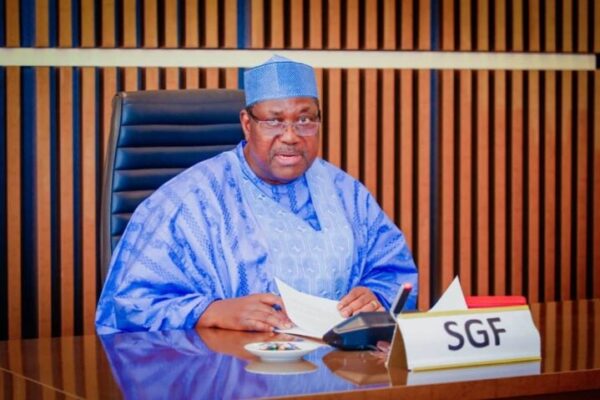
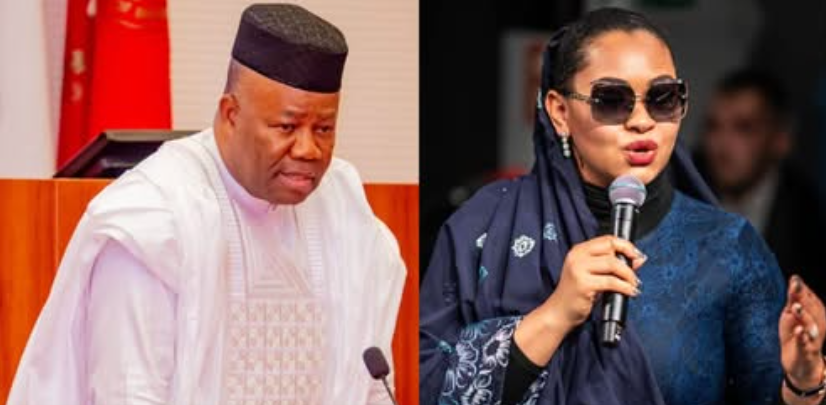
George Akume, Secretary to the Government of the Federation (SGF), has cautioned that recent comments by US President Donald Trump on Nigeria’s security situation may embolden violent groups to exploit international narratives and carry out fresh attacks. Trump had recently described Nigeria as a “country of particular concern” and accused the federal government of ignoring attacks on Christians. Speaking at a press briefing in Abuja on Wednesday, Akume detailed the evolution of violent extremism, Boko Haram and ISWAP insurgency, and banditry in northern Nigeria. He explained that the insurgency has two main fronts: ideological extremism in the north-east linked to global terrorist networks, and economically motivated violence in the north-west, driven by illegal mining, cattle rustling, extortion, and kidnapping-for-ransom. Akume stressed that both Muslims and Christians have been targeted, and no credible international organization has classified the crisis as genocide against Christians. “No credible international institution has designated the crisis as genocide against Christians. Boko Haram and ISWAP attack both churches and mosques, killing Muslims and Christians alike,” he said, adding that bandits attack communities without regard to religion. He traced part of Nigeria’s insecurity to weapons proliferation across the Sahel following the collapse of Libya and instability in Egypt after the 2011 uprisings, noting that Nigeria lacked a legal framework to tackle terrorism until the Terrorism Prevention Act was passed after the Independence Day bombing by Henry Okah. Akume provided a brief history of Boko Haram, from its founding in 2002 under Mohammed Yusuf, its escalation under Abubakar Shekau, to its transformation into ISWAP after pledging allegiance to ISIS in 2015. He also said that north-west banditry is fueled by competition for land and water, illegal mining, cattle rustling, and the commercialization of kidnapping. Highlighting recent attacks, he cited the June 2025 incident in Yelewata, Guma LGA of Benue, where at least 100 people were killed, prompting federal intervention. Akume assured that Nigeria’s armed forces remain “highly capable, experienced and professional,” emphasizing that the country does not require foreign troops but would benefit from targeted support in intelligence, technology, and equipment. “Recent pronouncements from the United States have inadvertently emboldened opportunistic violent groups seeking to exploit international narratives and attack soft targets,” he said, noting that insurgent structures had been significantly weakened prior to these remarks. Reiterating the government’s position, he said Nigeria rejects any claims that the conflict amounts to genocide and remains committed to protecting all citizens, regardless of religion. He underscored the country’s secular nature, reflected in diverse federal appointments, including within the security council. Looking ahead, Akume outlined plans to strengthen nationwide security operations, enhance intelligence-sharing with the US and other allies, tackle illegal mining, and improve border security. “Now is the time to speak with one strong and united voice to confront a common enemy — terrorists, bandits, and extremist insurgents — and eliminate them from our national borders,” he said.

Read More

Wike Blasts Turaki for Calling on Trump, Warns Against Threats to Nigeria’s Democracy

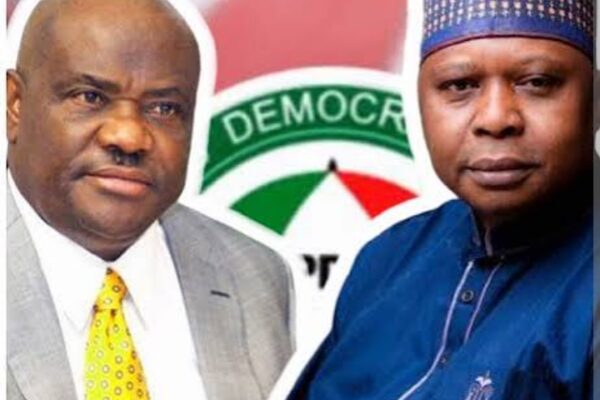
Nigerian politician Nyesom Wike has condemned PDP factional chairman Tanimu Turaki for publicly appealing to former U.S. President Donald Trump to “save” Nigeria’s democracy, describing the move as reckless and a threat to national security. Speaking to journalists, Wike questioned why Turaki would call on a foreign leader when his own party struggles to comply with court rulings. He also slammed Turaki’s claims that the government is committing a “genocide against Christians,” calling the statement misleading and dangerous. “You come out on national television to say it is not only killing — genocide against Christians. Essentially, you are telling the world that the government is committing genocide,” Wike said. “If we invite someone with facts, nobody complains. But if it is Wike, they cry foul. This is a threat to national security.” Wike stressed that political disputes within parties should be handled internally, not through inflammatory statements to the public or foreign powers. He added that Nigeria’s democracy is resilient and that the real danger comes from politicians who exaggerate internal conflicts for personal or factional gain. “He is calling Trump to come and save their democracy when they cannot even obey a simple court judgment,” Wike said, warning against unnecessary foreign involvement. His remarks highlight ongoing tensions within the PDP and serve as a caution against using external actors to influence domestic political matters.

Read More

Donald Trump Reveals Son Barron Is Cristiano Ronaldo Fan After White House Meeting

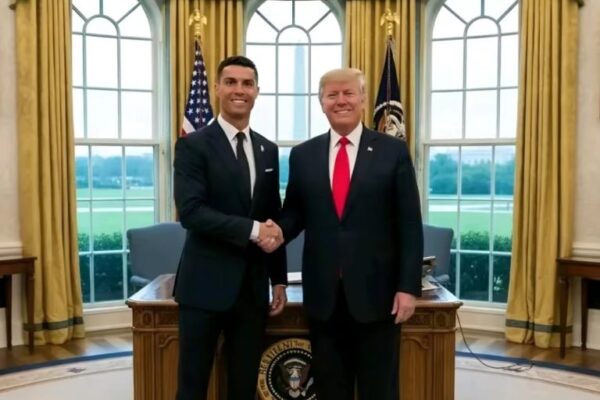
President Donald Trump has shared that his son, Barron Trump, is a fan of football star Cristiano Ronaldo after the teenager met the player at the White House on Tuesday evening. Ronaldo was among the guests at a state dinner hosted by Trump in honor of Saudi Arabia’s Crown Prince, Mohammed bin Salman. The Al Nassr forward attended the event with his fiancée, Georgina Rodriguez, as part of the Crown Prince’s delegation. The 40-year-old footballer, dressed in a black tuxedo, joined other high-profile figures including Elon Musk and U.S. Vice President JD Vance. During his speech at the dinner, Trump highlighted Ronaldo’s presence and shared Barron’s excitement about meeting him. “This room is loaded up with the biggest leaders in the world, business, sports… My son is a big fan of Ronaldo… Barron got to meet him, and I think he respects his father a little bit more now, just the fact that I introduced you. So I just want to thank you both for being here,” Trump said. Ronaldo’s visit came shortly after he was shown a red card in Portugal’s FIFA World Cup qualifier against Ireland, which sidelined him for Portugal’s 3-0 win over Armenia on Sunday. The victory confirmed Portugal’s place at the 2026 World Cup, scheduled to take place across the United States, Mexico, and Canada.

Read More

Trump Hosts Saudi Arabia’s Crown Prince Mohammed bin Salman — 5 Key Takeaways From High-Profile White House Meeting

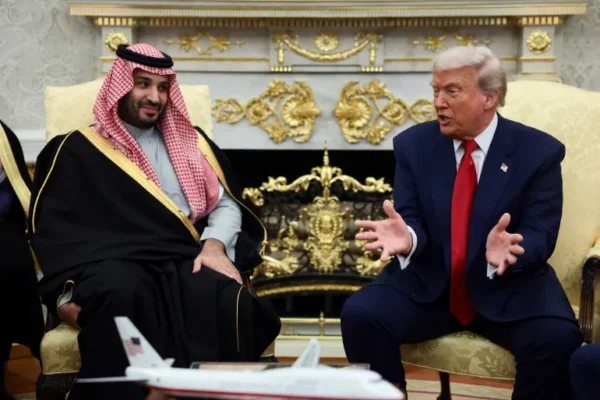
November 19, 2025 United States President Donald Trump on Tuesday hosted Saudi Arabia’s Crown Prince Mohammed bin Salman (MBS) at the White House, marking one of the most elaborate state welcomes of his administration and signalling a new phase in US–Saudi relations. MBS, who arrived through the South Portico, was received with marching bands, flag-bearing horsemen and a military flyover—an extravagant display underscoring Washington’s deepening ties with Riyadh. Both leaders later met journalists in the Oval Office, highlighting cooperation in security, investment, technology and Middle East diplomacy. Below are the key highlights from the meeting: 1. Progress on Possible Saudi–Israel Normalisation Trump and MBS confirmed they held “good talks” on Saudi Arabia potentially joining the Abraham Accords. While no timeline was given, the crown prince reiterated Riyadh’s long-standing position: any agreement must include a clear path to a Palestinian state. “We want to be sure we secure a clear path to a two-state solution,” MBS said. 2. US Grants Saudi Arabia ‘Major Non-NATO Ally’ Status At a black-tie dinner, Trump formally recognised Saudi Arabia as a major non-NATO ally, joining 19 other nations with privileged access to US military equipment. Both countries also signed a new strategic defence agreement, with the White House stating it will strengthen deterrence in the Middle East and secure increased Saudi contributions to shared security costs. Trump further confirmed he will approve the sale of F-35 fighter jets to the kingdom. 3. Trump Says Iran Wants a Deal While boasting about US strikes on Iran’s nuclear facilities earlier in the year, Trump also adopted a softer tone, suggesting Tehran now seeks diplomacy. “I am totally open to it,” he said. MBS told reporters Saudi Arabia would support a US–Iran agreement “that satisfies the region and the world”. 4. Saudi Arabia Set to Invest Up to $1 Trillion in the US Trump thanked the crown prince for what he described as $600 billion to $1 trillion in new Saudi investments into the US economy, spanning technology, artificial intelligence, rare minerals and manufacturing. MBS echoed this, saying the kingdom wants to anchor its economic transformation around emerging American technologies. 5. Warmth, Praise and Political Messaging The meeting was marked by unusually warm exchanges. Trump described MBS as “fantastic” and “brilliant”, even grabbing his hand while mocking former President Joe Biden’s fist-bump meeting with the crown prince in 2021. The optics underscored the administration’s view of Saudi Arabia not only as a strategic partner but also as a central pillar of its Middle East policy. What It Means The high-profile meeting signals: – A revived push for Saudi–Israel normalisation – Deeper defence and security alignment – Massive economic ties and tech partnerships – Potential diplomatic openings with Iran With Trump and MBS projecting unity and ambition, Washington and Riyadh appear poised for one of the closest bilateral partnerships in decades.

Read More