Trump’s 50% Tariff on India: Impact, Exemptions, and Future Relations

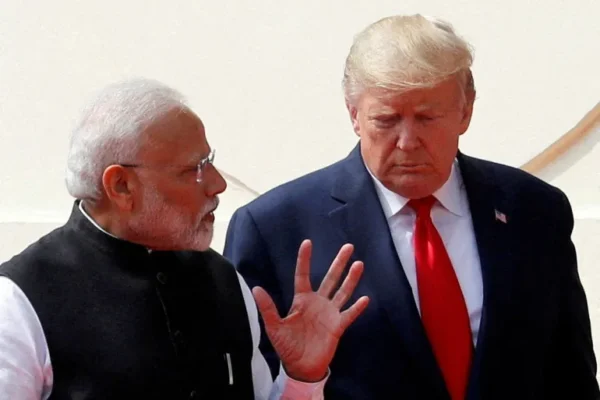
U.S. President Donald Trump’s new 50 percent tariff on Indian imports, which officially took effect on Wednesday, is poised to disrupt trade worth billions of dollars and could strain relations between Washington and New Delhi. The tariff escalation began in late July, with the U.S. initially imposing a 25 percent tariff on Indian goods. A week later, an additional 25 percent was added, citing India’s continued purchase of Russian oil. This move is seen as part of the ongoing trade tension between the two nations. Which Sectors Will Be Affected? The new 50 percent tariff will apply to a wide range of Indian exports, including gems, jewelry, textiles, footwear, furniture, and industrial chemicals. According to the Global Trade Research Initiative (GTRI), Indian exports to the U.S. could drop from $86.5 billion this year to an estimated $50 billion by 2026 due to these tariff hikes. Several key sectors, such as textiles, garments, gems and jewelry, shrimp, and carpets, are expected to bear the brunt of this tariff. The GTRI warns of a potential 70 percent drop in exports from these industries, which could jeopardize hundreds of thousands of jobs. “These sectors are labor-intensive, with many small companies that may not survive the hit,” said MK Venu, founding editor of The Wire news outlet. He also noted that businesses could relocate to countries like Vietnam, Bangladesh, and Pakistan, which offer more competitive export conditions. Which Industries Are Exempt? The Indian pharmaceutical industry has been granted an exemption from the new tariffs, as U.S. consumers rely heavily on affordable generic drugs, with India supplying nearly half of the U.S.’s generic medication imports. In 2024, Indian pharmaceutical exports to the U.S. amounted to approximately $8.7 billion. Additionally, products like semiconductors, consumer electronics, aluminum, steel, and passenger vehicles will be subject to separate tariffs, outside the blanket 50 percent rate. India’s Response and Mitigation Plans In response to the new tariffs, Indian Prime Minister Narendra Modi has called for greater self-reliance, emphasizing India’s need to increase its domestic productive capacity. In his Independence Day speech, Modi stressed that India should strive for self-sufficiency “not out of desperation, but out of pride,” particularly as global economic tensions rise. To offset the potential economic damage, the Indian government is offering financial assistance to exporters affected by the tariffs, encouraging them to diversify into new markets, including Latin America and the Middle East. Modi’s government has also promised tax cuts, subsidies, and a simplification of the Goods and Services Tax (GST) to support domestic businesses. Faisal Ahmed, professor of geopolitics at the Fore School of Management, pointed out that India’s push for economic self-sufficiency isn’t new. The tariff situation is expected to accelerate this process. However, critics, including Venu, argue that the government lacks clarity on how to fund these subsidies, which may not be enough to cushion the blow to affected industries. Impact on Bilateral Relations The imposition of these tariffs is likely to strain U.S.-India relations, which were already under pressure due to disagreements over trade imbalances and India’s Russian oil imports. U.S. Treasury Secretary Scott Bessent and other Trump officials have accused India of indirectly funding Russia’s war against Ukraine by purchasing Russian oil, a claim India denies. In response, New Delhi emphasized that its oil imports are driven by market forces and the energy needs of its 1.4 billion people. The U.S. has also expressed dissatisfaction with India’s high tariffs on American agricultural goods, with Trump previously criticizing India’s 39 percent average tariff on agricultural imports. However, New Delhi has refused to open its agriculture sector to cheap U.S. imports, citing the need to protect local farmers. The Path Ahead The tariff dispute has prompted India to reconsider its overreliance on the U.S. market, with New Delhi exploring alternatives such as joining multilateral trade pacts and strengthening ties with countries like China and Russia. The Indian government is also negotiating a trade deal with the European Union, aiming to conclude it by the end of the year. While some analysts predict that the tariffs may only cause a modest impact on India’s GDP, estimates suggest a potential loss of about $36 billion, or 0.9 percent of GDP. Despite the challenges, India is expected to continue growing, with the International Monetary Fund forecasting a 6.4 percent GDP growth in 2026. Trump’s Justification for Tariffs President Trump has repeatedly criticized India’s high tariffs on U.S. goods, arguing that India has been one of the highest-tariffed nations globally. His administration has sought to push India to reduce these trade barriers, particularly in sectors like agriculture and dairy, though India has resisted such demands. With the ongoing geopolitical rivalry between Russia and the West, India’s continued purchase of Russian crude oil remains a significant point of contention. U.S. officials have accused India of “profiteering” from discounted Russian oil, further fueling tensions. As the trade conflict escalates, India is likely to reevaluate its foreign policy and economic strategy, seeking new alliances and trade partners in the face of shifting global dynamics.
Read More

Trump Vows to Pursue Death Penalty in Washington DC Murder Cases

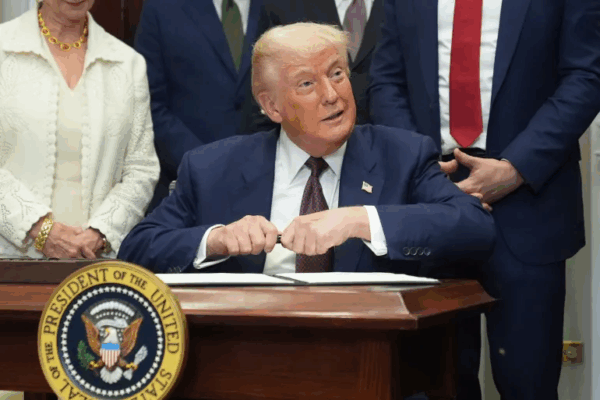
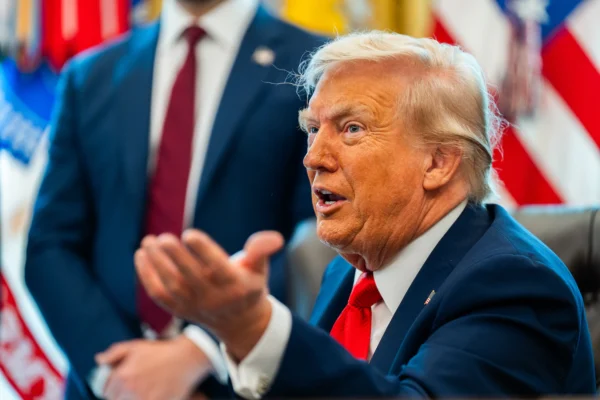
President Donald Trump announced Tuesday that his administration will seek the death penalty in murder cases occurring in Washington, DC, framing the move as a strong deterrent to violent crime in the nation’s capital. “Anybody murders something in the capital, capital punishment. Capital, capital punishment,” Trump said during a Cabinet meeting at the White House. “If somebody kills somebody in the capital, Washington, DC, we’re going to be seeking the death penalty.” The president described the policy as a “very strong preventative” measure against violent crime. “I don’t know if we’re ready for it in this country… we have no choice,” he added. Trump noted that the measure would apply specifically to the District of Columbia, while states would retain the authority to determine their own stance on capital punishment. It remains unclear how the administration intends to enforce the directive. Washington, DC, does not have its own death penalty statute, but the federal government does. In the District, most serious criminal cases are prosecuted by the U.S. Attorney’s Office — a federal agency — rather than a local district attorney, giving the federal government a unique level of control over criminal prosecutions in the city. Legal analysts say implementing such a policy would likely involve using federal statutes to pursue capital punishment in eligible murder cases, but noted it could spark legal and political challenges given the city’s historical opposition to the death penalty. No further details were immediately provided by the White House.

Read More
Trump-Zelenskyy Meeting: US President Suggests No Need for Ceasefire

Trump-Zelenskyy Meeting: US President Suggests No Need for Ceasefire

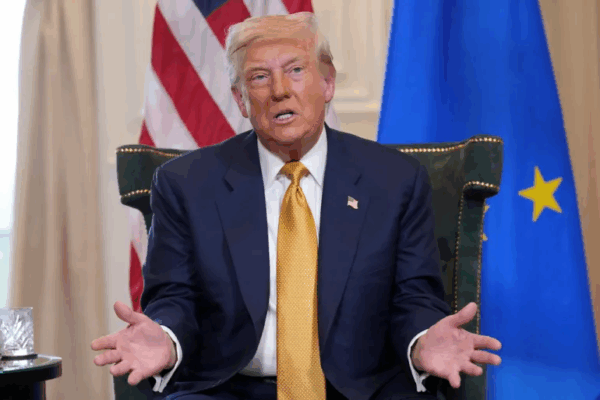
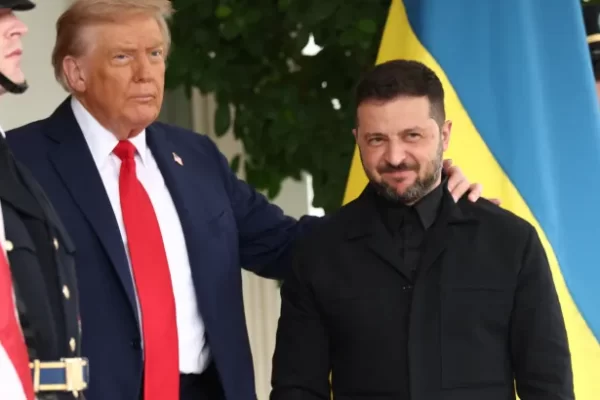
US President Donald Trump has hosted Ukrainian President Volodymyr Zelenskyy at the White House for high-stakes talks on the future of the war in Ukraine. The meeting, which lasted about 30 minutes before a press briefing, is expected to be followed by discussions with seven European leaders and a phone call with Russian President Vladimir Putin. Ahead of the summit, Trump urged Ukraine to abandon its NATO membership ambitions and its hopes of regaining Crimea, which Russia annexed in 2014. The United States and most of the international community still regard the annexation as illegal. Key developments from the White House meeting: The talks mark Trump’s most direct engagement on Ukraine since returning to office. Analysts say the emphasis on negotiations, rather than continued battlefield support, could signal a significant shift in US policy — one that places Trump at the center of a possible deal involving Kyiv and Moscow.

Read More

World Leaders Court Unpredictable Trump as White House Talks on Ukraine Begin

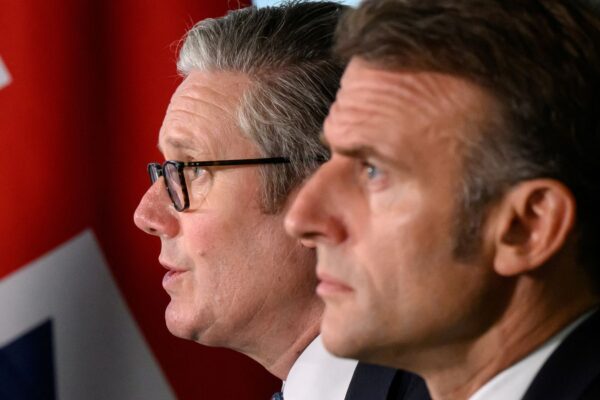
In an unprecedented show of urgency, world leaders including UK Prime Minister Sir Keir Starmer and French President Emmanuel Macron have gathered at the White House for hastily arranged talks on the war in Ukraine. The meeting, called just days after Donald Trump’s summit with Vladimir Putin in Alaska, underscores the pivotal role the U.S. president now plays in determining the future of the conflict. A High-Stakes Meeting Diplomatic sources described the gathering as an “organic” next step after Trump’s discussions with Putin. Unlike in Alaska, where Europeans were absent, today they will dominate the room. For Trump, often at ease in the spotlight, the gathering serves as a platform to showcase his influence as a global convener. For the Europeans, it is a critical opportunity to pin down exactly what Trump is willing to guarantee in terms of Ukraine’s security—and what, if anything, he may have already discussed with Putin on land or territorial control swaps. Lessons From February The urgency is shaped by the memory of a disastrous Oval Office meeting in February, when Trump and Vice President JD Vance publicly berated President Volodymyr Zelenskyy in a tense exchange that rattled European capitals. Since then, leaders across Europe have recalibrated—boosting their own defense spending and pursuing personal ties with Trump. Whether through Starmer’s state visit, Finland’s Alexander Stubb joining Trump on the golf course, or Italy’s Giorgia Meloni aligning her rhetoric with his, each leader has sought to stay on Trump’s good side for precisely this kind of moment. What’s at Stake European leaders are expected to flatter Trump while issuing subtle warnings. They will frame him as the architect of a potential peace deal—an achievement that could cement his legacy—while stressing the need for continued U.S. commitment to Europe and resistance against Russian demands. Central to the talks will be whether Trump is prepared to offer Ukraine binding security guarantees and whether Putin might accept a U.S.-European pact short of NATO membership. Yet ambiguity looms large: vague agreements might yield a quick fix but could prove unsustainable in the long run. Optics and Outcomes Much will hinge not only on the substance of discussions but also on optics. Analysts note Trump often blurs the line between detail and spectacle, with even minor gestures—such as Zelenskyy’s choice of attire—becoming symbolic flashpoints. Beyond the closed doors, the world will watch for signs of whether today’s meeting produces a genuine framework for peace or simply another dramatic episode in an unpredictable diplomatic process.

Read More

Ukraine War: Trump Says Zelenskyy Can End War as Russian Strike in Kharkiv Kills Seven

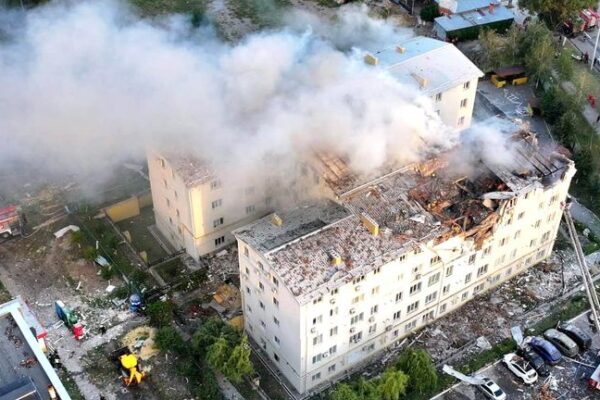
Ukrainian President Volodymyr Zelenskyy is set to meet Donald Trump at the White House today, with discussions expected to focus on possible ceasefire arrangements and the future of U.S. support for Ukraine. The talks come amid heightened tensions following a deadly overnight Russian missile strike on the eastern city of Kharkiv, which killed at least seven civilians and injured dozens more. Trump’s Remarks Ahead of Talks Speaking to reporters en route to Washington, Trump said he believed Zelenskyy had the ability to “end the war,” though he did not clarify whether he envisioned concessions to Russia as part of a potential settlement. He reiterated his stance that the U.S. would not pursue new business or diplomatic openings with Moscow until the conflict was “settled,” suggesting a possible shift in tone while maintaining pressure on the Kremlin. European Support for Zelenskyy Ahead of the White House meeting, several European leaders pledged continued backing for Ukraine. Officials in Brussels and Berlin emphasized that any negotiations should not compromise Ukraine’s territorial integrity. Zelenskyy is expected to present a renewed appeal for sustained U.S. military and financial aid, particularly as concerns grow over battlefield losses and Russia’s intensified air campaign. Kharkiv Under Fire In the early hours of this morning, Russian forces launched missile strikes on residential districts in Kharkiv, Ukraine’s second-largest city. Local authorities confirmed seven deaths and said rescue workers were still searching for survivors in the rubble. The strike is the latest in a series of escalations targeting civilian areas, which Kyiv has denounced as acts of terror designed to weaken public morale. What’s Next The outcome of today’s White House talks could prove pivotal. If Trump signals willingness to broker a ceasefire or peace talks, it may open a new phase in the nearly four-year conflict. However, Ukraine’s leadership continues to insist that any agreement must ensure sovereignty and security guarantees, while Russia shows no sign of backing down militarily.

Read More

Ukraine War Update: Zelenskyy Meets Starmer; Kremlin Confirms Trump-Putin Summit Plans

Ukrainian President Volodymyr Zelenskyy visited UK Prime Minister Keir Starmer at Downing Street on August 14, highlighting Britain’s continued support for Ukraine ahead of the upcoming U.S.–Russia summit in Alaska. Starmer reaffirmed the UK’s commitment to Ukraine’s territorial integrity and warned that further pressure could be applied to Russia if necessary. The meeting comes at a critical moment, as the Kremlin confirmed that Presidents Donald Trump and Vladimir Putin will hold a one-on-one meeting this Friday at Joint Base Elmendorf-Richardson in Anchorage, Alaska. Following the private discussion, their delegations will join for broader talks, concluding with a joint press conference. This will be the first in-person meeting between Trump and Putin since 2019. It has raised concerns among European leaders, who fear Ukraine’s interests could be sidelined during negotiations. Many have stressed that any resolution to the conflict must not undermine Ukraine’s sovereignty. Trump has described the summit as a “listening exercise,” with the aim of exploring possible ceasefire arrangements. He has also indicated that economic measures could be considered if diplomatic progress stalls, while Putin has framed the talks as an opportunity to address security concerns and “reset” strained relations.

Read More

Trump Orders Nuclear Submarines Closer to Russia Amid Escalating Tensions with Medvedev

United States President Donald Trump has ordered the deployment of two nuclear submarines closer to Russian territory, marking a significant escalation in his ongoing war of words with Russian Security Council Deputy Chairman Dmitry Medvedev. In a post on his platform, Truth Social, Trump said the move was a direct response to what he described as “highly provocative statements” made by Medvedev earlier in the week, including warnings about Russia’s Cold War-era nuclear weapons system, commonly referred to as the “Dead Hand.” “I have ordered two nuclear submarines to be positioned in the appropriate regions, just in case these foolish and inflammatory statements are more than just that,” Trump wrote. “Words are very important, and can often lead to unintended consequences. I hope this will not be one of those instances.” This latest exchange follows a string of increasingly hostile remarks between both leaders in recent months. Medvedev, once Russia’s president and now a key Putin ally, has used social media to taunt Trump, while Trump has publicly lambasted Russia’s invasion of Ukraine and openly criticized Medvedev’s rhetoric. Earlier this week, Trump dismissed concerns over India-Russia trade relations, instead taking aim at Medvedev: “Russia and the USA do almost no business together. Let’s keep it that way, and tell Medvedev, the failed former President of Russia, who thinks he’s still President, to watch his words. He’s entering very dangerous territory!” Medvedev responded sarcastically on Telegram, invoking Trump’s apparent love for “The Walking Dead” and mocking the U.S. leader’s warnings. “If some words from the former president of Russia trigger such a nervous reaction from the high-and-mighty president of the United States, then Russia is doing everything right,” Medvedev wrote.“And as for ‘dead economies’ and ‘dangerous territory’ — well, let Trump remember his favourite films about the ‘Walking Dead.’” Rising Nuclear Rhetoric This isn’t the first time the two have exchanged nuclear threats. Back in June, Trump accused Medvedev of casually referencing nuclear weapons and offering warheads to Iran. He responded by highlighting America’s powerful nuclear submarine fleet, calling them “the most powerful and lethal weapons ever built.” The confrontation adds to concerns over global stability as nuclear rhetoric intensifies from both sides. Frustrations Over Ukraine The clash also reflects Trump’s growing frustration with the stalled efforts to end the Russia-Ukraine war, which has dragged on since Russia’s full-scale invasion in February 2022. Despite entering his second term promising to be a “global peacemaker,” Trump has faced criticism for appearing to favor concessions to Russia in earlier negotiations. In recent weeks, however, he has adopted a tougher stance—imposing deadlines on Moscow and warning of severe economic sanctions. “Russia — I think it’s disgusting what they’re doing,” Trump said on Thursday, following fresh Russian shelling of Kyiv. Medvedev has dismissed Trump’s threats as “theatrical,” warning that his confrontational approach risks triggering a wider conflict—possibly involving the U.S. “Each new ultimatum is a threat and a step towards war. Not between Russia and Ukraine, but with his own country,” Medvedev said. As tensions rise and military assets are repositioned, the world watches closely, with fears of further escalation between the world’s leading nuclear powers. Source: By Al Jazeera

Read More

Trump Gives Russia 10–12 Days to End Ukraine War: “No Reason in Waiting”

Turnberry, Scotland — July 28, 2025U.S. President Donald Trump has issued a sharp new ultimatum to Russian President Vladimir Putin, demanding an end to the ongoing war in Ukraine within 10 to 12 days — significantly reducing the 50-day deadline he initially set earlier this month. Speaking during a press conference alongside UK Prime Minister Keir Starmer, Trump expressed frustration with Russia’s continued military offensive in Ukraine and signaled growing impatience with the lack of progress toward a ceasefire. “I’m going to make a new deadline of about … 10 or 12 days from today,” Trump said. “There’s no reason in waiting. We just don’t see any progress being made.” The Kremlin has yet to issue a formal response. Trump’s warning comes as Moscow intensifies airstrikes across Ukraine, despite several diplomatic overtures from the U.S. and its European allies. A recent ceasefire deal remains in limbo, with Russian forces reportedly escalating attacks in key areas including Kyiv and eastern border regions. The U.S. president, who returned to office this year with a promise to end the conflict within 24 hours, continues to present himself as a peacemaker, but has faced criticism for his mixed signals. Though he has repeatedly threatened sanctions and tariffs on Russia and countries buying Russian exports, his administration has been cautious in implementing such measures. “I don’t want to do that to Russia. I love the Russian people,” Trump said Monday.“But if you know what the answer is going to be, why wait?” Trump also expressed disappointment with Ukrainian President Volodymyr Zelenskyy, whom he accused of stalling peace efforts. He referenced past conversations with Putin, saying: “We thought we had that settled numerous times, and then President Putin goes out and starts launching rockets into some city like Kyiv and kills a lot of people in a nursing home or whatever. And I say that’s not the way to do it.” With tensions rising and the international community watching closely, the next 10 days could prove critical for diplomatic relations — and for Ukraine’s war-ravaged future.

Read More