Northern Governors, Traditional Rulers Hold Emergency Security Meeting In Kaduna

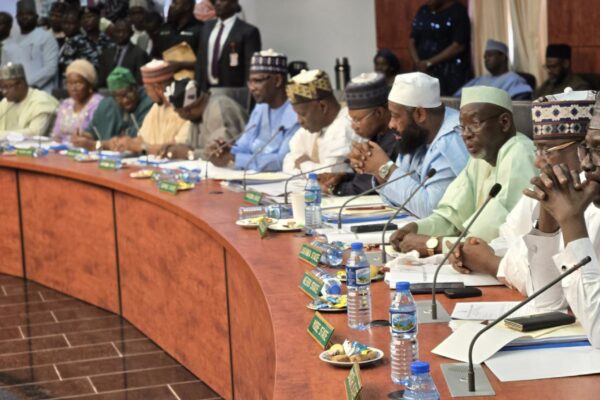
Northern governors and traditional rulers are convening at the Government House in Kaduna State to address escalating security concerns across the region. The meeting, initially scheduled for Saturday, November 29, 2025, brings together leaders from several northern states to craft a coordinated response to persistent security threats. “The meeting aims to develop a unified approach to tackling security concerns affecting the region and discuss the way forward on security matters,” Peter Ahemba, Senior Special Assistant to the Nasarawa State Governor on Public Affairs, told Daily Trust. He added that the Nasarawa State government had proactively organized the session to make decisive decisions to prevent security breaches in the state. “It is the duty of citizens to help deal with security threats in our country and state. Therefore, citizens must provide security agencies with relevant information about individuals with criminal tendencies,” Ahemba said. Among the governors attending are Uba Sani (Kaduna), Umar Bago (Niger), Inuwa Yahaya (Gombe), Nasir Idris (Kebbi), Ahmadu Fintiri (Adamawa), Abdullahi Sule (Nasarawa), Umar Namadi (Jigawa), Dauda Lawal (Zamfara), and Mai Mala Buni (Yobe), alongside several traditional rulers from the region. The gathering is expected to outline collaborative strategies and strengthen intelligence sharing among northern states to curb insecurity.

Read More

Southern Governors And Traditional Rulers Unite to Tackle Insecurity

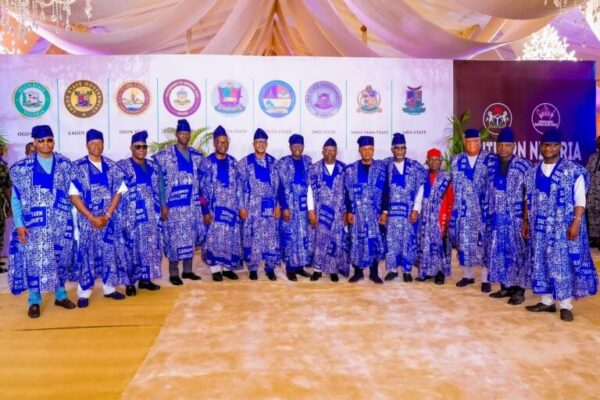
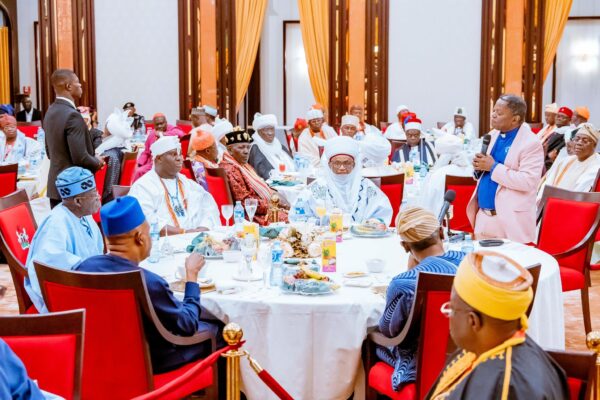
Southern governors and members of the Southern Nigeria Traditional Rulers Council met in Ogun State on Thursday to deliberate on security challenges, governance concerns, and developmental priorities affecting the region. The gathering ended with a shared position on several national and regional issues. In their joint communique, the leaders expressed renewed confidence in President Bola Tinubu, applauding what they described as steady progress in stabilising the nation’s economy, improving governance systems, and pushing forward major infrastructure developments. They also restated their long-standing advocacy for a Southern presidency, describing it as essential for fairness, political balance, and unity in the country. Lagos State Governor Babajide Sanwo-Olu, in a post on X, wrote, “We passed a vote of confidence in President Bola Tinubu and restated our support for a Southern presidency. We reaffirmed our commitment to a safer and more united South, expressed our condolences on recent national security losses, and acknowledged the President’s efforts in stabilising the economy and advancing major infrastructure projects.” According to him, the forum agreed on several new steps to strengthen regional security. These include the creation of a zonal security fund, better coordination and intelligence sharing among states, formal involvement of traditional rulers in security management, reinforcement of local security outfits, and actions to tackle illegal mining and land-related threats. The forum also offered condolences to families of security operatives and civilians killed in recent attacks, stressing that protecting lives and preserving stability across the South remain central to their agenda.

Read More

Traditional Rulers Have No Constitutional Powers to Impose Bans

Let’s be clear: traditional rulers in Nigeria have no constitutional authority to impose or enforce bans. Their functions are largely symbolic, advisory, cultural, and mediatory, particularly on issues related to customs, festivals, and community traditions. If a traditional ruler desires that a particular policy or restriction be made law, the proper democratic process is to present the proposal to the State House of Assembly, where it can be debated and, if found appropriate, passed into law by elected representatives of the people. In the present case, concerned residents of Lagos State should seriously consider challenging such actions in court to reinforce the principle that traditional institutions have no legal power to issue enforceable directives. This issue goes beyond one community or ruler—it is about upholding constitutional order and democratic accountability. Lagos, as Nigeria’s most cosmopolitan and economically vital state, must not set a precedent that allows unelected individuals to wield powers reserved for elected officials. Allowing such practices to stand risks blurring the line between cultural authority and constitutional governance, a development that could undermine both democracy and the rule of law.

Read More