Akpabio Urges Tinubu to Review Police Withdrawal From Federal Lawmakers

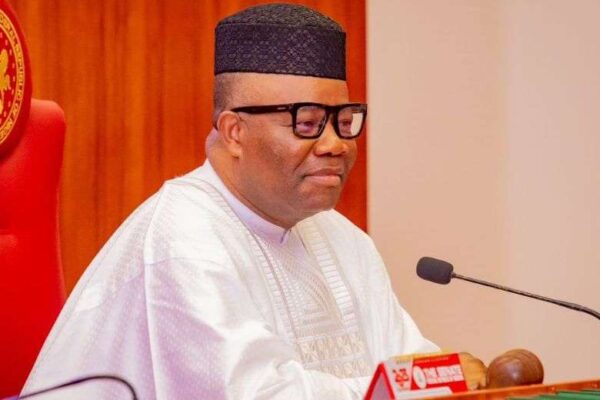
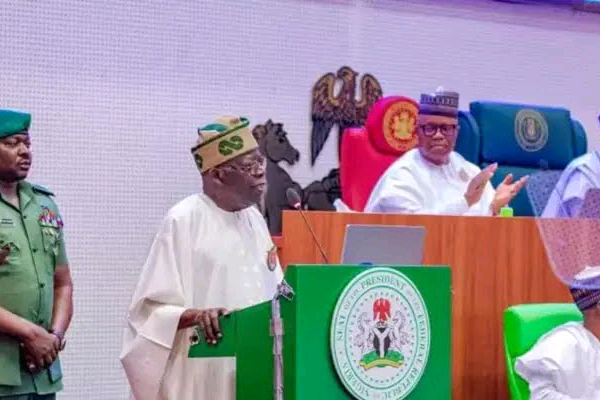
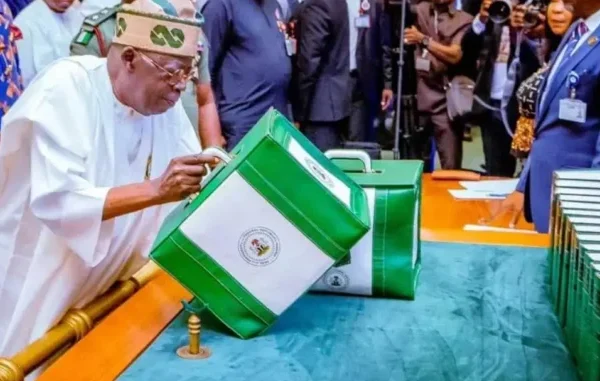
Senate President Godswill Akpabio has urged President Bola Tinubu to review his directive that ordered the withdrawal of police officers assigned to federal lawmakers, citing concerns over their security. The directive, issued on November 23, called for the immediate removal of police protection for very important personalities (VIPs) across the country. By November 26, several lawmakers had raised concerns that the move left them vulnerable. At the joint sitting of the National Assembly during the presentation of the 2026 appropriation bill on Friday, Akpabio highlighted these fears, saying some legislators might be unable to return home safely due to the change. “As we direct the security agencies to withdraw policemen from critical areas, some members have asked me to inform you that they may not be able to go home today because of this change,” he stated. “We plead with you, Mr President, for a review of the decision.” Akpabio also welcomed President Tinubu, Vice-President Kashim Shettima, and members of the Federal Executive Council to the National Assembly, describing the legislature as central to the president’s public service journey. He stressed that effective governance requires collaboration between the executive and legislature, dismissing claims that such cooperation compromises legislative independence. Akpabio described the 2026 appropriation bill as a strategic plan for national progress. “Over the past year, our country has faced significant challenges. Insecurity has tested our resolve and reminded us that peace must be constantly defended,” he said. He added that the 2025 budget demanded tough but necessary reforms prioritizing long-term national interests. Akpabio also noted the 10th Senate’s achievements, including landmark bills on security, economic reform, governance, electoral integrity, infrastructure, and social protection, all aimed at strengthening institutions and supporting security agencies.

Read More

Tinubu Presents ₦58.18 Trillion 2026 Budget, Prioritises Security and Economic Recovery

President Bola Ahmed Tinubu has presented the ₦58.18 trillion 2026 Appropriation Bill to a joint session of the National Assembly, unveiling a detailed plan aimed at boosting Nigeria’s economy, strengthening security, and improving living standards. Tagged “The Budget of Consolidation, Renewed Resilience and Shared Prosperity,” the 2026 proposal reflects the administration’s focus on fiscal discipline, economic reforms, and national stability. Speaking in Abuja on Friday, Tinubu acknowledged the economic challenges Nigerians have faced over the past two and a half years but noted signs of recovery. He highlighted that GDP growth reached 3.98 per cent in the third quarter of 2025, inflation has eased for eight consecutive months to 14.45 per cent in November, and Nigeria’s external reserves have risen to $47 billion—the highest in seven years—providing over ten months of import cover. The budget projects total revenue at ₦34.33 trillion and total expenditure at ₦58.18 trillion. Debt servicing is pegged at ₦15.52 trillion, non-debt recurrent expenditure at ₦15.25 trillion, and capital spending at ₦26.08 trillion. The budget deficit is estimated at ₦23.85 trillion, equivalent to 4.28 per cent of GDP. Assumptions include a crude oil price of $64.85 per barrel, daily production of 1.84 million barrels, and an exchange rate of ₦1,400 to the dollar. Security remains the top priority with an allocation of ₦5.41 trillion, followed by infrastructure (₦3.56 trillion), education (₦3.52 trillion), and health (₦2.48 trillion). Tinubu stressed a tougher approach to national security, declaring that all armed groups operating outside government authority—including bandits, kidnappers, militias, violent cult groups, and their sponsors—will be classified as terrorists and face decisive action. The President also pledged stricter budget execution, directing ministries, departments, and government agencies to meet revenue targets and eliminate leakages through full digitisation. In other sectors, Tinubu highlighted investments in education, healthcare, and agriculture, noting that over 418,000 students have benefited from the education loan scheme, while agricultural reforms will focus on mechanisation, irrigation, and food security. He called on lawmakers to support the budget, emphasising that collaboration between the executive and legislature is key to delivering the Renewed Hope Agenda. “The true value of a budget is not in its announcement, but in its delivery,” Tinubu said as he formally submitted the bill to the National Assembly.

Read More

FEC Approves 2026 Budget, Sets Stage For Tinubu’s National Assembly Presentation

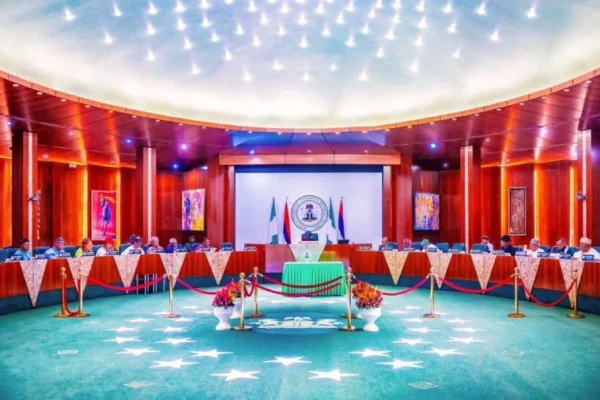
The Federal Executive Council has given the green light to the 2026 Budget, clearing the way for President Bola Ahmed Tinubu to present it to a joint session of the National Assembly this afternoon. The approval was confirmed on Friday by the President’s Special Assistant on Social Media, Dada Olusegun, via his X account. “The Federal Executive Council has approved the 2026 Budget, and it is now ready for presentation to a joint session of the National Assembly this afternoon by the President and Commander-in-Chief of the Armed Forces of the Federal Republic of Nigeria, Bola Ahmed Tinubu,” Olusegun’s statement read. The decision follows extensive FEC discussions reviewing key elements of the 2026–2028 Medium-Term Expenditure Framework (MTEF) and Fiscal Strategy Paper. Among the key parameters approved, the Council set an oil price benchmark of $64.85 per barrel and a budget exchange rate of ₦1,512 to one US dollar for the 2026 fiscal year.

Read More

Tinubu Will Not Direct EFCC, ICPC Over Farouk Ahmed Allegations — Presidency

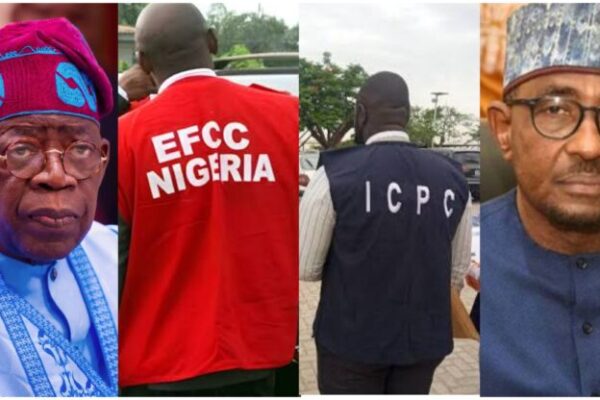
The Presidency has reiterated that President Bola Ahmed Tinubu will not step into the affairs of Nigeria’s anti-corruption agencies over the corruption allegations surrounding Farouk Ahmed, the former Chief Executive Officer of the Nigerian Midstream and Downstream Petroleum Regulatory Authority. Ahmed resigned from his position after Aliko Dangote, President and Chief Executive Officer of Dangote Industries Limited, accused him of corruption, triggering public outcry and demands for accountability. Reacting to the situation on Thursday, presidential spokesman Bayo Onanuga said the Economic and Financial Crimes Commission and the Independent Corrupt Practices and Other Related Offences Commission are independent bodies empowered by law to act without interference from the Presidency. His response came after criticism emerged on social media over the absence of arrests or publicly announced investigations following Ahmed’s resignation. An X user, @OurFavOnlineDoc, questioned why stepping down appeared to be the only consequence. “No prosecution. No arrest. No investigation. No proper accountability. Just allegation of stealing public funds, followed by a quiet resignation, and everybody can move on. This is not how to build a sane country with trust, integrity, and respect before the world. What a shame,” the user wrote. Onanuga dismissed the criticism, insisting that the President cannot dictate how the anti-graft agencies operate. “This is how we get things wrong through uninformed criticism. ICPC and EFCC are autonomous institutions. The ball is now in their courts to carry out their mandates. Mr. President will not tell them what to do,” he said.

Read More

President Tinubu To Present 2026 Appropriation Bill To National Assembly On December 19

President Bola Ahmed Tinubu is set to present the 2026 Appropriation Bill to a joint session of the National Assembly on Friday, December 19, 2025. A formal communication from the Presidency is expected to be read on the floor of the House of Representatives on Thursday, informing lawmakers and staff of the President’s scheduled appearance. This follows a letter dated December 17, 2025, signed by Adm. Essien Eyo Essien, Secretary of Human Resources and Staff Development, on behalf of the Clerk of the National Assembly, Kamoru Ogunlana. Copies were also sent to the deputy clerk and departmental heads. The letter stated that President Tinubu, in his role as President and Commander-in-Chief of the Armed Forces, will present the proposed 2026 budget at 2:00 p.m. on Friday. It also provided details on security and access arrangements for the day. Accredited personnel were directed to be at their duty posts by 11:00 a.m., as entry to the National Assembly complex will be restricted afterward. Non-accredited persons were advised to avoid the premises. Additionally, staff members—except the Clerk, Deputy Clerk, and the Clerks of the House and Senate along with their deputies—were instructed to park vehicles at designated areas, including the Annex or the new car park near the NASS Gate. The annual budget presentation is a major event in Nigeria’s fiscal calendar, marking the formal submission of the Federal Government’s fiscal proposals to the legislature for review, debate, and eventual approval.

Read More

Tinubu Suspends ADC Colonel Nurudeen Yusuf’s Promotion After Military Concerns

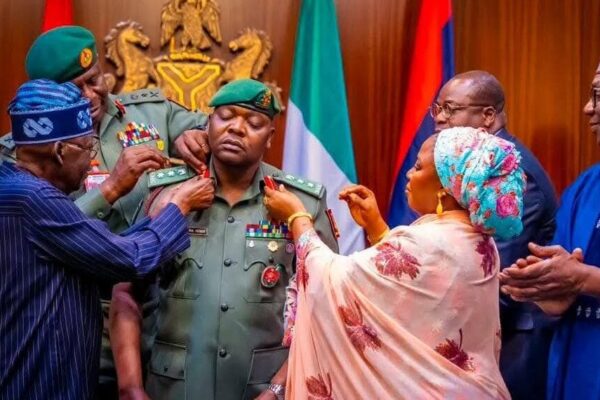
President Bola Tinubu has reportedly halted plans to fast-track a promotion for his Aide-de-Camp (ADC), Colonel Nurudeen Yusuf, following interventions by senior retired military officers, including two former Chiefs of Army Staff, according to military sources. Yusuf was reportedly set to be elevated to brigadier-general barely a year after his promotion to colonel in December 2024, with a quiet ceremony scheduled for Monday evening. The plan was reportedly shelved at the last minute over concerns about its impact on military discipline, seniority, and morale. Promotion to brigadier-general in the Nigerian Army is typically a highly competitive process. Officers are usually required to spend at least four years at the rank of colonel, complete senior military education at institutions such as the National Defence College or NIPSS Kuru, and pass rigorous promotion boards evaluating service records, command experience, and available vacancies. The proposed acceleration of Yusuf’s promotion was seen as a departure from these established norms. A leaked letter dated December 12, 2025, from the Office of the National Security Adviser, signed by Nuhu Ribadu, stated that Yusuf would continue to serve as the President’s ADC despite the proposed promotion. Sources also noted that no brigadier-general has previously served as ADC to a sitting Nigerian President, raising concerns within the Army hierarchy. Ahead of the planned ceremony, Defence Minister General Christopher Musa (retd.) and Chief of Army Staff Lt. Gen. Waidi Shaibu reportedly cut short an official trip to Lagos to return to Abuja. The decisive intervention, however, came from two widely respected former Army Chiefs who persuaded the President to suspend the promotion. A source within the Presidency confirmed that the elevation “would not happen anytime soon.” The decision coincided with a closed-door meeting between President Tinubu and Nigeria’s Service Chiefs at the Presidential Villa amid growing internal and regional security challenges. The meeting, which took place shortly after Tinubu attended a book presentation at the State House Conference Centre, was his first engagement with the full military high command since General Musa’s appointment as Defence Minister on December 4, signaling efforts to realign defence and security strategy under new leadership. While the agenda of the meeting was not disclosed, it came amid worsening insecurity, including the ongoing captivity of 115 students abducted from a Catholic boarding school in November. The President had earlier declared a national security emergency, ordered fresh recruitment into security agencies, and redeployed police personnel attached to private individuals to core duties. The meeting also followed Senate approval for the deployment of Nigerian troops to the Republic of Benin after an attempted coup, reflecting Nigeria’s expanding regional security responsibilities. Reports indicate discussions included internal security operations, intelligence coordination, border security, counterterrorism, and regional commitments. Though Yusuf’s promotion is on hold, the episode has reignited debates over the balance between presidential authority and military procedure. While exceptional promotions are not unprecedented, accelerating an officer to general rank is particularly sensitive, as it can affect seniority and morale. ADCs, given their proximity to the Commander-in-Chief, occupy a unique role focused on protective and administrative duties rather than command. “Military morale rests on the belief that everyone plays by the same rules,” a retired infantry officer said. “Once officers feel that access to power outweighs merit, cohesion suffers.” The controversy underscores the broader challenge for the Tinubu administration: exercising presidential authority in security matters while maintaining institutional confidence. In a military stretched by insurgency, banditry, and extensive deployments, perception can be as crucial as command. Whether the promotion is eventually confirmed or quietly abandoned, the episode highlights that in military affairs, the process of decision-making can be as important as the outcome itself.

Read More

Tinubu Meets NLC Leaders In Last-Minute Move To Stop Nationwide Protest

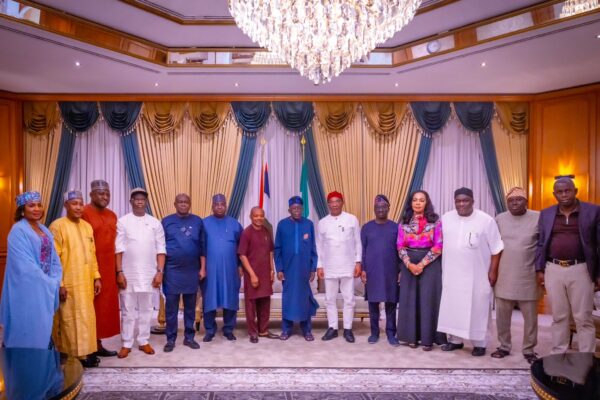
President Bola Tinubu met behind closed doors with the leadership of the Nigeria Labour Congress on Tuesday night in a bid to halt the nationwide protest scheduled to begin today. The meeting, held at the State House in Abuja, was led on the labour side by NLC President Joe Ajaero. After the talks, Ajaero avoided giving a definite answer on whether the protest would still take place, saying the decision would be taken collectively by the union. “If I’m insisting, I’m not insisting. I will communicate to you. It is not an organisation that one person rules. Let’s go back now. You have a meeting of labour and the governor’s forum. We’ll go back to the drawing board and digest all that Mr President said to us, and move forward from there.” He added that the NLC leadership would reconvene early on Wednesday to review the outcome of the engagement with the President. “We came for consultation with the president, and we are finished. So, we have to go back to our meeting and then continue tomorrow. By tomorrow, we will get the outcome.” The labour union is expected to announce later on Wednesday whether it will proceed with the planned protest. The meeting was also attended by the Chairman of the APC Governors’ Forum, Hope Uzodimma, Edo State Governor Monday Okpebholo, Kebbi State Governor Nasir Idris, and the Minister of State for Labour, Nkeiruka Onyejeocha.

Read More

Tinubu Celebrates Wike On His 58th Birthday

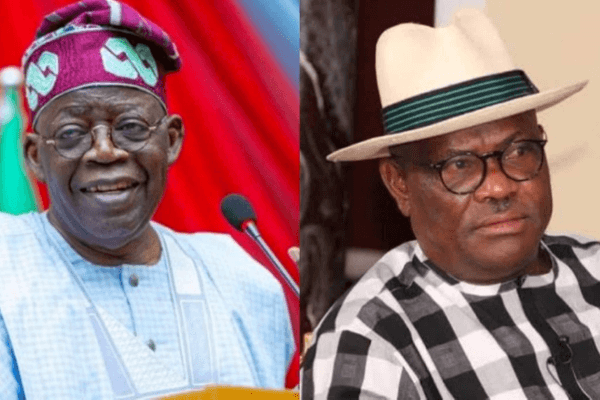
President Bola Tinubu has congratulated Chief Nyesom Wike, Minister of the Federal Capital Territory (FCT), on his birthday, December 13. President Tinubu celebrated with the Minister and former governor of Rivers State, giving thanks to God Almighty for enriching him with a life defined by purpose, service, and courage. The President described Chief Wike as an audacious top performer who defies obstacles and delivers results. President Tinubu acknowledged the ongoing transformation of the Federal Capital Territory through infrastructure expansion, highlighting the Minister’s recent intervention that broke the 14-year logjam in the construction of the Apo-Karshi road. The President commended Chief Wike for his resilience, can-do attitude, and commitment to excellence in all assignments. President Tinubu thanked the Minister for his consistent efforts in delivering results and wishes him a happy birthday and strength to further his good work in the FCT. “Nyesom Wike has been one of the shining stars in the cabinet, an exceptional performer, developing infrastructure in the Federal capital as never seen before and proving that his moniker as ‘Mr Project’ is not limited to his home state of Rivers. “I commend him for being one of the champions of our Renewed Hope Agenda, even though he belongs to another party and wish him well as he marks another year in his life journey”.

Read More