Nigerian Army Eliminate Top Sambisa Commander, 10 Terrorists in Night Operation

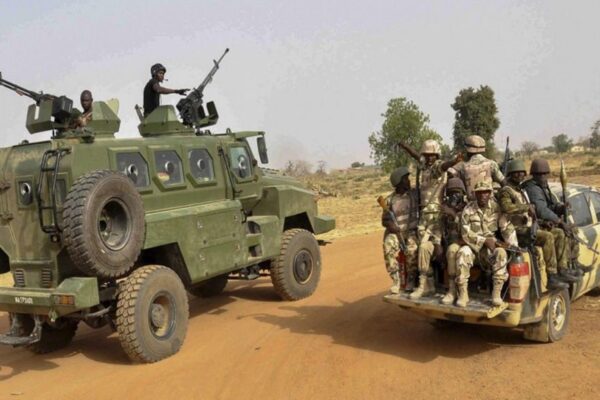
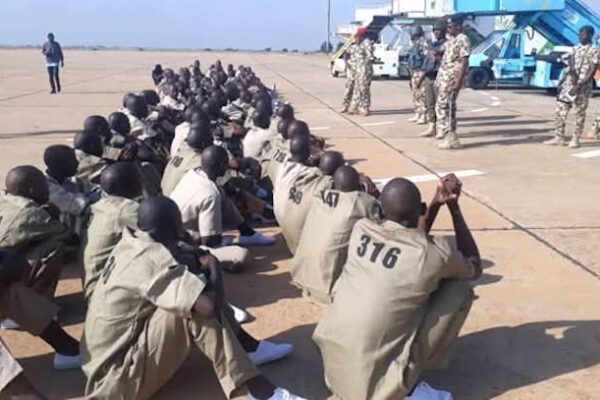
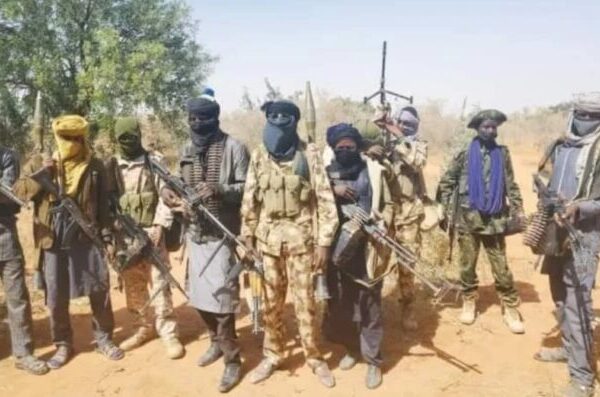
Troops of the Joint Task Force (North East), Operation HADIN KAI (OPHK), have recorded another significant operational success with the neutralisation of a top Boko Haram/ISWAP leader Abu Khalid, identified as the Second-in-Command of Boko Haram in the Sambisa Forest, alongside 10 other terrorists during a night operation in Borno State. Barely 24 hours after troops eliminated the notorious Boko Haram/ISWAP commander, Julaibib, operating within the Gujba axis of the Timbuktu Triangle, troops of Sector 1, in conjunction with members of the Civilian Joint Task Force (CJTF) on Operation DESERT SANITY, made contact with terrorists at the Komala general area of Konduga Local Government Area during night offensives at about 11:00 p.m. Abu Khalid was a key figure within the terrorist hierarchy, coordinating operations and logistics in the Sambisa axis. Following the successful engagement, troops recovered five (5) AK-47 rifles, magazines, several bicycles, assorted logistics and food items, as well as huge medical consumables. No casualty was recorded among own troops during the operation. Troops’ morale remains high as clearance operations continue across the Sambisa Forest, Mandara Mountains, Timbuktu Triangle and other known hideouts of Boko Haram and ISWAP in the North East region. The Joint Task Force (North East) reaffirms its commitment to sustaining the tempo of operations until all terrorist elements are neutralised , lasting peace and economic stability are restored to the region. The Military High Command commended the troops for their sacrifices and dedication in the fight against terrorism and other criminal activities in the North East region, urging them to sustain the operational tempo.  

Read More

Tinubu Orders Security Agencies To Hunt Kasuwan Daji Attackers, Urges Rescue Of Kidnapped Victims

President Bola Tinubu on Sunday directed the military, police, and State Security Service (SSS) to locate and apprehend those responsible for the deadly attack on Kasuwan Daji market in Niger State, which left at least 30 villagers dead and saw scores of women and children abducted. The President also called on security agencies to immediately rescue all kidnapped victims, warning that the perpetrators “must face the full consequences of their criminal actions.” In a statement signed by his Special Adviser on Information and Strategy, Bayo Onanuga, Tinubu linked the Saturday attack to terrorists fleeing Sokoto and Zamfara states following a United States airstrike on Christmas Eve. The bandits struck Kasuwan Daji market in Demo community, Borgu Local Government Area, on January 3, 2026. They killed 30 people, abducted many others, and set the market on fire. Niger State Police spokesperson SP Wasiu Abiodun confirmed that suspected bandits from the National Park forest along Kabe District carried out the attack, looting shops and taking food items. “These terrorists have tested the resolve of our country and its people. They must, therefore, face the full consequences of their criminal actions. No matter who they are or what their intent is, they must be hunted down,” the President said. He added that anyone aiding or abetting the attackers “will be caught and brought to justice.” Tinubu extended condolences to the families of the victims and the people of Niger State, assuring that security agencies have been instructed to strengthen operations in vulnerable areas. The directive follows US airstrikes in Tangaza Local Government Area of Sokoto State between December 25 and 26, 2025, which targeted terrorist bases in the Bauni axis. The operation, using 16 MQ-9 Reaper drone munitions, struck two Islamic State sites where fighters were attempting to infiltrate Nigeria from the Sahel. The Lakurawa group, active in remote areas of Sokoto, northwest Zamfara, and Kebbi states, has been designated a terrorist organization by the Federal Government. Analysts say that the US strikes displaced terrorists from Sokoto and Zamfara, pushing them to seek new bases in Niger State. Residents reported seeing armed men moving through surrounding communities for nearly a week before the attack. The assault occurred near Papiri community, where over 300 schoolchildren and teachers were kidnapped from a Catholic school in November 2025. Tinubu urged Nigerians to remain united against security threats, warning against divisive rhetoric that could undermine national cohesion. “These times demand our humanity. We must stand together as one people and confront these monsters in unison. United, we can and must defeat them, deny them any sanctuary. We must reclaim the peace and security of these attacked communities,” he said. In 2025, Nigeria was ranked the sixth most terrorized country globally, up two positions from the previous year. Non-state armed groups killed at least 2,266 people in the first half of 2025, nearly double the 1,083 fatalities during the same period in 2024, and surpassing the 2,194 deaths recorded for all of 2024. To strengthen the nation’s security, Tinubu proposed a N5.41 trillion allocation for the sector in the 2026 budget—the largest ever for a single sector—aimed at equipping the military, boosting joint operations among security agencies, and supporting community-based peacebuilding initiatives to counter violent extremism.

Read More

FG To Delete Terrorist Accounts On Social Media, Tracks Online Financing Networks

The Federal Government has confirmed that Nigerian security agencies are partnering with major social media companies to track and remove accounts used by terrorist and criminal groups to promote their activities and raise funds. Maj.-Gen. Adamu Laka, Director-General of the National Counter Terrorism Centre, made the disclosure on Tuesday during an end-of-year briefing in Abuja. He said platforms such as TikTok, Facebook, Instagram, Snapchat, and X have been exploited by terrorists to publicize operations, display looted items, and communicate with supporters. Security agencies have held multiple engagements with these companies to address posts and accounts deemed threats to national security. “Social media platforms have been used by terrorist groups—if you knew how many accounts we have taken down. We meet with platforms like TikTok, Instagram, Snapchat, Facebook, and X. While they are businesses focused on growth, we explain the security risks and ensure harmful accounts are removed,” Laka said. The DG recalled that at one point, bandits were posting videos of stolen goods on TikTok, livestreaming, and holding online conversations, but these activities have since been curtailed. He added that terrorist groups continually change tactics, including operating under aliases and unverified accounts, and security agencies are constantly updating their strategies to counter these shifts. Ransom payments remain a major source of terror financing, with kidnappers increasingly using point-of-sale (POS) operators to transfer funds, making it harder to trace. “You see a transfer made by terrorists, and when you investigate, the account belongs to a POS operator. The kidnappers provide the POS operator’s number, the money is transferred, and they collect it,” he explained. Laka said authorities have intensified efforts to trace ransom payments, arrest suspects, and dismantle terror financing networks, though operational details are withheld for security reasons. Several arrests, prosecutions, and asset recoveries have helped Nigeria comply with international anti-money laundering and counter-terrorism financing standards. He also highlighted coordinated investigations by security agencies, financial intelligence units, and the judiciary as key to Nigeria’s recent progress in meeting Financial Action Task Force requirements. Acknowledging challenges posed by evolving terrorist tactics and porous borders in the Sahel, Laka reassured Nigerians that both physical and digital counter-terrorism measures are being strengthened. “Towards the end of 2023, the security situation in Nigeria was improving. But after coups in some Sahel countries, the situation worsened due to cross-border terrorist connections. Nigeria must play a leadership role in West Africa and the Sahel to address these threats. We are doing our best, and in 2026, we will intensify our efforts,” he said.

Read More

Two Suspected ISWAP Terrorists Arrested In Lagos, Residents On Edge

Tension has risen in Lagos after the arrest of two men suspected to be members of the Islamic State West Africa Province, ISWAP. The suspects, identified as Modu Gana and Ibrahim Dugge, were reportedly picked up on Sunday, December 21, by operatives of the State Security Service. A security source with knowledge of the operation said the arrests took place around 8:45 a.m. in the Apapa area of the state. Both men are said to be in custody and are currently being questioned by security officials. Investigations indicated that the arrests were based on intelligence suggesting the suspects had recently moved from Nigeria’s insurgency-affected North-east region to Lagos. Attempts to get official confirmation from the SSS were unsuccessful, as a member of the agency’s media unit said the matter had not yet been formally brought to their attention. Since the redeployment of its former spokesperson, Peter Afunanya, the SSS has largely limited public communication, explaining that the approach is aimed at safeguarding operational efficiency. As of the time of this report, authorities have not disclosed the reason for the suspects’ presence in Lagos, and there is no immediate indication of planned attacks in the city. However, security experts have cautioned that ISWAP has been exploring ways to expand its operations beyond its usual bases in the North-east, a development that continues to raise concerns nationwide.

Read More
Atiku’s Media Aide Accuses Tinubu of Favoritism Towards Christians, Sparks Religious Backlash

Atiku Abubakar Questions FG: “Why Negotiate With Terrorists Instead of Arresting Them?” Over Kebbi Schoolgirls’ Release

Former Vice President Atiku Abubakar has criticised the Federal Government over the recent release of abducted schoolgirls in Kebbi State, arguing that their freedom should not be celebrated as an achievement but rather seen as a reflection of Nigeria’s deteriorating security situation. In a statement issued by his media office on Wednesday, Atiku described the girls’ return as “not a trophy moment” but “a damning reminder that terrorists now operate freely, negotiate openly, and dictate terms while this administration issues press statements to save face.” The statement came in response to remarks by Presidential Special Adviser on Information and Strategy, Bayo Onanuga, who, in an interview on Arise News TV on Monday, credited the Department of State Services (DSS) and the military for tracking the kidnappers in real time and establishing contact to secure the girls’ release without paying ransom. Atiku dismissed this account as “a shameful attempt to whitewash a national tragedy and dress up government incompetence as heroism.” He questioned, “If, as Onanuga claims, the DSS and the military could ‘track’ the kidnappers in real time and ‘made contact’ with them, then the question is simple: Why were these criminals not arrested, neutralised, or dismantled on the spot? Why is the government boasting about talking to terrorists instead of eliminating them? Why is kidnapping now reduced to a routine phone call between criminals and state officials?” He added that the administration’s explanation implies that “terrorists and bandits have become an alternative government, negotiating, collecting ransom, and walking away untouched, while the presidency celebrates their compliance.” Atiku further stressed, “No serious nation applauds itself for negotiating with terrorists it claims to have under surveillance. No responsible government congratulates itself for allowing abductors to walk back into the forests to kidnap again.” The abduction occurred on November 17, when armed assailants stormed Government Girls’ Secondary School in Maga, Kebbi State, killing a staff member and abducting 25 students from their dormitory.

Read More

BREAKING: Terrorists Invade Isapa Community In Kwara, Kidnap Pregnant Woman, Children, And Nursing Mothers

Terrorists have launched a violent attack on Isapa community in the Ekiti Local Government Area of Kwara State, kidnapping a pregnant woman, 10 children, two nursing mothers, and several other residents. According to reports, around 20 to 30 armed bandits invaded the community, driving a large herd of cattle and firing sporadically. An elderly woman was reportedly hit by a stray bullet during the assault. A community leader confirmed to National Pilot that 11 people were abducted, including seven members of the same family. The victims have been named as Talatu Kabiru, Magaji, Kande, Hadiza, Mariam, Saima, Habibat, Fatima Yusufu, Sarah Sunday (pregnant), Lami Fidelis (nursing mother), and Haja Na Allah. The attackers reportedly fled through bush paths connecting Eruku to nearby communities, leaving residents in panic and confusion. This attack comes barely two weeks after gunmen targeted Christ Apostolic Church (CAC), abducting 38 worshippers and killing others during the raid. Authorities later confirmed that all 38 church abductees were rescued.

Read More

Saudi Cleric Sheikh Assim Al Hakeem Visits Nigeria Despite Extremist Teachings

Saudi-born Islamic cleric Sheikh Assim Al Hakeem arrived in Nigeria on Friday, drawing sharp criticism for his extremist views. The cleric, known for advocating strict Sharia law, has repeatedly called on Muslims to enslave or kill non-Muslims who refuse to convert to Islam, pay taxes to an Islamic government, or follow Sharia. Sheikh Hakeem, banned from speaking at UK universities in 2012 over his radical teachings, has long been associated with ultra-conservative interpretations of Islam. His views contrast with Saudi Arabia’s Crown Prince Mohammed bin Salman, who has sought to distance the country from such hardline ideologies. In a YouTube video posted on April 1, 2020, now approaching 87,000 views, Sheikh Hakeem encouraged Muslims to prepare over the next 40 to 50 years to expand Islamic influence worldwide. He described a system where non-Muslims would be compelled to accept Islam, pay Jizyah taxes, or obey Sharia law, warning that refusal could lead to armed conflict, enslavement, and loss of land. Explaining the types of jihad in Islam, he said: “The other type of Jihad is the one that everyone is trying to hide. It is the Jihad of pursuing, running after; and this Jihad was in the time of the Prophet, but this Jihad cannot be accomplished, cannot take place unless the state (number) of the Muslims is strong. If we don’t have a strong Muslim country, who can they pursue or attack? Just stay where you are and try to fix yourself, enrich your people with Islamic knowledge, and Iman.” He added that the aim of such jihad is primarily Da’wah, or inviting non-Muslims to Islam: “It is for Da’wah. Jihad is only for Da’wah, and that is why when Muslims go and conquer the adjacent country, what do we do? We kill them all? No. The prophet says, the first thing you do is to call them to Islam, if they accept it, you leave them, once they’re Muslims, we go, if they refuse, then tell them that ‘Allah obliged upon you to pay taxation’. You have to give us a percentage (Jizyah), and this percentage is given once or twice a year, and it is equivalent to the Zakat (alms giving by Muslims). Jizyah is not taken from women and children; it is only taken from men who work and can produce. And in return, when enemies come and attack your country, you don’t fight; we Muslims will protect you, and you’ll enjoy sitting in your home and your country and live your life normally. “But, the ruling is for Sharia, so you do not open nightclubs, you do not fornicate in the streets, you live your normal lives, but publicly, Islam rules. If they refuse, then we have to fight (demonstrates the slaughter sign); and if we fight you, then we capture you, you’ll become our slaves, and we’ll take your land, because you refused; I [we] give you two good options, this is the strength of Islam.” Sheikh Hakeem also expressed concern over the current global Muslim population, saying such a vision would only be possible in 40 to 50 years: “Maybe in the coming 40 to 50 years when Muslims become strong, as they’re supposed to be, and they’re focused Islamically, and Islamically-oriented.” In Nigeria, he was invited as a keynote speaker at an event organized by the 1Ummah Islamic Organisation, which lists Africa’s richest man, Aliko Dangote, among its financiers. Other speakers included former communications minister Isa Ali Pantami and several prominent clerics and scholars. The event took place in Lagos on November 15 and 16, with a follow-up session scheduled in Abuja on November 22. Sheikh Hakeem’s presence in Nigeria has drawn international attention amid ongoing reports of attacks on Christians in the country. The U.S. recently designated Nigeria a Country of Particular Concern, citing ongoing religious persecution, and warned of potential intervention against extremist groups. Authorities in Nigeria had not commented on his entry as of press time, leaving questions over security vetting and the influence of radical teachings in Africa’s most populous nation.

Read More

Pastor Adeboye Tells Tinubu To Pressure Trump, Warns Security Chiefs: “Fix Terrorists Or Resign”

The General Overseer of the Redeemed Christian Church of God, Pastor Enoch Adeboye, has weighed in on U.S. President Donald Trump’s recent threats of military action in Nigeria. In a video recorded during a recent church program, Adeboye appealed to President Bola Tinubu’s administration to approach the matter with speed, diplomacy, and careful judgment. “My children, if I were asked to make suggestions, I will say quietly to our government, move fast, move diplomatically, move wisely. Find a way to convince the president of America to please delay his actions for about 100 days,” Adeboye said. He also urged that Nigeria’s security agencies be held accountable, advising: “Then come home and say to our security chiefs: get rid of these terrorists within 90 days, or resign.” The call comes after Trump designated Nigeria as a “country of particular concern” and threatened military intervention, citing what he described as ongoing attacks on Christians and the government’s failure to protect religious minorities. The Nigerian government, however, has strongly denied any persecution of religious groups, emphasizing that the country faces security challenges but no targeted religious violence.

Read More