Super Eagles Open AFCON 2025 With 2-1 Win Over Tanzania

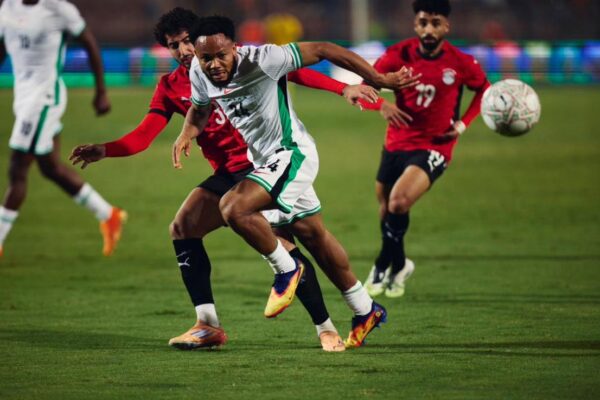
Nigeria began their 2025 Africa Cup of Nations (AFCON) campaign with a 2–1 win over Tanzania at the Complexe Sportif de Fès on Tuesday. The Super Eagles took the lead in the 36th minute when Semi Ajayi rose highest from an Alex Iwobi corner to head the ball into the net. Ademola Lookman restored Nigeria’s lead in the 52nd minute, finishing from another precise assist by Iwobi after Tanzania had equalised. The match started with Nigeria pressing early, with Akor Adams’ header hitting the crossbar and Lookman’s 26th-minute attempt deflected for a corner. Victor Osimhen also came close before halftime but was stopped by Tanzanian defender Bakari Mwamnyeto. Tanzania responded shortly after the second half began, with Novatus Miroshi setting up Charles M’Mombwa, who calmly finished past goalkeeper Stanley Nwabali to make it 1–1. Despite missing further opportunities, including a disallowed goal for offside by Osimhen, Nigeria managed the closing stages well to secure the victory. The win puts the Super Eagles at the top of Group C, while Tanzania will aim to recover in their next match against Uganda.

Read More

Morocco 2025: Super Eagles Aim for Three Points Against Taifa Stars in Opener

Nigeria and Tanzania clash in the first match of Group C of the 35th Africa Cup of Nations on Tuesday with the Super Eagles favoured to pick all three points to put their campaign in good stead right from the opening day. The Taifa Stars, coached by Miguel Gamondi, are making only their fourth appearance in the Africa Cup of Nations, following group stage exits in 1980, 2019 and 2023. They are yet to win a match in Africa’s flagship football championship, after drawing three and losing six of their previous nine encounters. Surely, the setting is similar to the Biblical David Vs Goliath situation, with Nigeria having participated in 20 previous editions, clinched three titles, won the silver medals on five occasions, taken the bronze medals eight times, and played a total of 104 matches. Nigeria is the most decorated team in the 68-year history of the Africa Cup of Nations, though Egypt have seven titles, Cameroon have five and Ghana have four. Inside the 35,000-capacity Complexe Sportif de Fès on Tuesday evening, Coach Eric Chelle, who told CAFonline.com last month that Nigerians expect their team to win every match, will most probably set his store by goalkeeper Stanley Nwabali, central defenders Semi Ajayi and Calvin Bassey, wing-backs Bright Osayi-Samuel and Zaidu Sanusi, midfielders Wilfred Ndidi (new captain), Frank Onyeka and Alex Iwobi, and forwards Simon Moses, Ademola Lookman and Victor Osimhen. He has excellent options in Ryan Alebiosu, Bruno Onyemaechi, Chidozie Awaziem, Raphael Onyedika, Ebenezer Akinsanmiro, Samuel Chukwueze and Paul Onuachu. Gamondi will most likely weave his strategy around captain Mbwana Samatta (from Le Havre in the French Ligue 1) and Simon Msuva (who plays in Iraq). These two are very experienced warriors on the international stage and know when to deal and dither. There are also wing-back Mohammed Hussein (who plays for Young Africans in the Tanzania Premier League), and the nifty midfielder Feisal Salum (also in the Tanzania Premier League with Azam FC). More than 45 years ago, in the sunshine of Lagos, a Nigerian team captained by Christian Chukwu (who would emerge Player of the Tournament) and a Taifa Stars squad led by Leodegar Tenga (now Chairman of Tanzania’s National Sports Council) clashed in the opening match of the 12th AFCON at the National Stadium, Surulere. Nigeria won 3-1, to secure three precious points on their way to lifting the trophy for the first time. Fès is expected to be cold on Tuesday, just like most parts of Morocco presently, but the Super Eagles are determined to ride through the climate and post a result that will stimulate greater interest of Nigerian ball fans at home and in the diaspora in the 35th AFCON finals.

Read More

Super Eagles Foes, Tanzania Unveils AFCON 2025 Squad

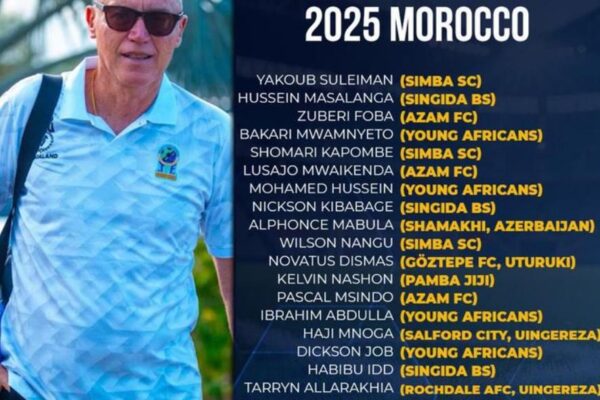
Taifa Stars of Tanzania Head coach, Miguel Gamondi has named his squad for the 2025 Africa Cup of Nations. Gamondi picked a invite a mix of players from the Tanzanian domestic league and a few overseas-based stars, as the team aims for a good performance in Morocco. The Taifa Stars are already in Egypt for a series of friendly matches, where they will fine-tune their squad before heading to Morocco for the tournament. At this year’s tournament, they’ve been placed in Group C, alongside Nigeria, Uganda, and Tunisia. Tanzania’s first match will be against Nigeria on January 23rd. Super Eagles are unbeaten in all past encounters against Tanzania winning five wins and three draws. Tanzania’s second match is against regional rivals Uganda on January 27th, followed by their final group match against Tunisia on January 30th. All matches will be played in Fez, Morocco. For the Taifa Stars, this tournament represents a chance to progress beyond the group stage for the first time in their AFCON history. In their three previous appearances (1980, 2019, and 2023), Tanzania was eliminated at the group stage. The team is hopeful that this will be the year they break that barrier and make a deep run in the competition.

Read More

Tanzanian President Samia Sworn In For Second Term

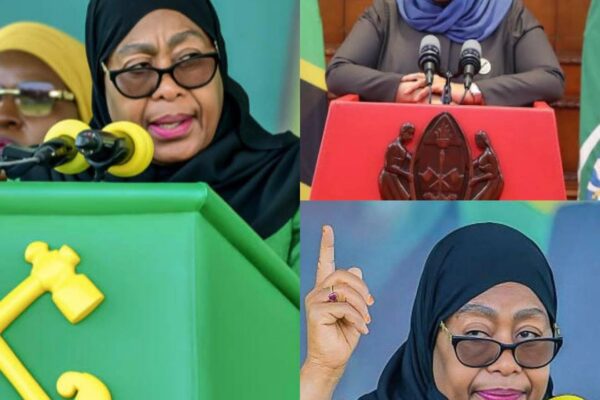
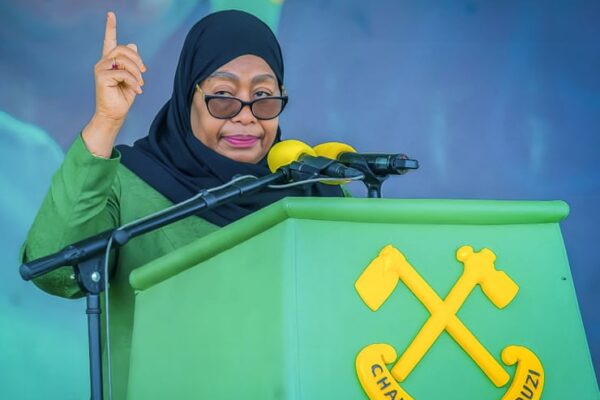
Tanzanian President Samia Suluhu Hassan has been sworn in for a second term under tight security, following an election criticized by the opposition as fraudulent and marked by violent unrest. The inauguration took place at a military parade ground in Dodoma, replacing the traditional stadium setting. The event was closed to the public but broadcast live on state television. Samia was officially declared the winner on Saturday, securing 98% of the vote in an election where major opposition figures were either imprisoned or barred from running. International observers and local opposition have questioned the election’s credibility, with reports suggesting hundreds of people were killed in post-election violence. Observers from the Southern African Development Community (SADC) stated that in many areas, “voters could not express their democratic will,” pointing to opposition restrictions and alleged ballot irregularities. Authorities have minimized reports of violence, while a nationwide internet shutdown from election day until Monday has made it difficult to verify the scale of the unrest. After taking the oath, President Samia thanked the electoral commission for conducting the elections with “unquestionable efficiency” but expressed sorrow over the loss of life and destruction of property, calling it a stain on Tanzania’s reputation. Some Tanzanians remain unaccounted for. Mama Kassim, who has not seen her two sons since polling day, told the BBC, “I don’t know where he is, I don’t know whether he has been arrested, I don’t know if he is injured, I don’t know if he is hospitalised, I don’t know if he is dead.” The unrest has caused widespread disruption, with prices of food, fuel, and other essentials soaring. Schools and public transport have been suspended, and hospitals have been treating numerous injured people. During the inauguration, attended by leaders from Somalia, Zambia, Mozambique, and Burundi, President Samia called on authorities to restore normalcy immediately. She also said some of those arrested were foreign nationals and security agencies were investigating. The opposition Chadema party rejected the election results, claiming they “have no basis in reality” and called for a new vote. Police blamed violence and vandalism on foreign nationals and local motorbike operators, amid reports that some Kenyan nationals are missing or dead. International figures have expressed concern: Pope Leo XIV called for prayers for victims of post-election violence, EU foreign affairs chief Kaja Kallas urged restraint, and UN Secretary-General António Guterres voiced deep concern over the deaths and injuries. Tanzania’s main opposition leaders did not contest the election. Tundu Lissu faces treason charges, which he denies, while Luhaga Mpina was barred on legal grounds. Only smaller parties with little public support were allowed to participate. The ruling Chama Cha Mapinduzi (CCM) party, along with its predecessor TANU, has maintained power in Tanzania since independence. Ahead of the vote, human rights groups including Amnesty International warned of a “wave of terror” targeting opposition members, citing disappearances, torture, and extrajudicial killings. The government insisted the election would be free and fair. Samia Suluhu Hassan initially became Tanzania’s first female president in 2021 following the death of John Magufuli.

Read More

Tanzania’s Samia Suluhu Hassan Wins Second Term Amid Protests

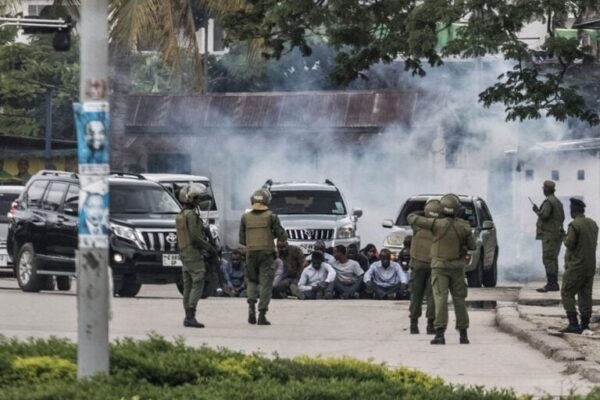
Tanzania’s President Samia Suluhu Hassan has been declared the winner of the country’s presidential election, securing a second term in office despite widespread unrest and allegations of electoral irregularities. According to the National Electoral Commission, Samia won nearly 98% of the votes, receiving around 31.9 million of the 32 million ballots cast, with voter turnout reported at approximately 87% of the nation’s 37.6 million registered voters. Electoral chief Jacobs Mwambegele confirmed the result on Saturday, announcing, “I hereby declare Samia Suluhu Hassan as the winner of the presidential election under the Chama Cha Mapinduzi (CCM) party.” In Tanzania’s semi-autonomous archipelago of Zanzibar, incumbent President Hussein Mwinyi of CCM also won decisively with nearly 80% of the vote. Opposition parties in Zanzibar, however, accused authorities of “massive fraud,” and Mwinyi’s swearing-in ceremony is currently underway at Amaan Complex Stadium. The election period was marred by significant unrest. Demonstrators in Dar es Salaam and other major cities took to the streets, tearing down campaign posters and clashing with security forces, despite warnings from the army chief to end the protests. Most of the protests were led by young Tanzanians who condemned the election as unfair, citing the suppression of opposition leaders—one in jail and another barred from running due to technicalities. Chadema, the main opposition party, claimed that around 700 people were killed in clashes with security forces, while a diplomatic source indicated credible evidence of at least 500 fatalities. The Tanzanian government, however, has downplayed the violence, with Foreign Minister Mahmoud Kombo Thabit describing incidents as “a few isolated pockets” and asserting that security forces acted decisively. Only two main opposition candidates were allowed to contest: Tundu Lissu, detained on treason charges he denies, and Luhaga Mpina of the ACT-Wazalendo party, who was excluded on technical grounds. Sixteen smaller parties also participated but hold little political influence. The ruling CCM party has dominated Tanzania’s politics since independence and has never lost a national election. Ahead of the vote, human rights organizations, including Amnesty International, raised alarms over government repression, citing enforced disappearances, torture, and extrajudicial killings of opposition figures. The government denied these claims, insisting the election would be free and fair. Samia Suluhu Hassan, Tanzania’s first female president, assumed office in 2021 following the death of her predecessor, John Magufuli. Despite the official results, tensions remain high across the country, with heavy security presence continuing in major urban centers.

Read More

Tanzania Election Violence Escalates as Opposition Reports Hundreds Dead Amid Internet Blackout

Tanzania is facing a mounting crisis after three days of violent protests following Wednesday’s elections, with the main opposition claiming hundreds have been killed while the government denies using “excessive force.” The country remained under an internet blackout on Friday, restricting access to information. Security sources and a diplomat in Dar es Salaam told AFP that the death toll could be in the “hundreds” as demonstrations continued. President Samia Suluhu Hassan had aimed to secure a strong mandate and consolidate her power, with many of her key challengers either jailed or barred from participating. The elections, however, quickly spiraled into chaos. Protesters took to the streets in Dar es Salaam and other cities, tearing down campaign posters, clashing with police, and attacking polling stations. Authorities responded with a curfew and an internet shutdown. Foreign Minister Mahmoud Thabit Kombo told Al-Jazeera that the government had “no figures” on fatalities and that “no excessive force has been used.” Chadema, the main opposition party, reported far higher numbers. Spokesman John Kitoka said about 350 people were killed in Dar es Salaam and over 200 in Mwanza, with nationwide deaths potentially reaching 700. He warned the toll could rise further during curfew hours. A security source estimated as many as 700–800 fatalities across the country. With foreign journalists largely barred and communications restricted, independent verification has been difficult. The United Nations reported “credible reports” of at least 10 deaths, while Amnesty International cited at least 100 killed. Many hospitals and clinics refused to comment out of fear. Hassan has yet to publicly address the unrest, and local news outlets have not posted updates since Wednesday. Army chief Jacob Mkunda labeled the protesters “criminals” on Thursday. In Zanzibar, Hassan’s party, CCM, was declared the winner of local elections, but opposition party ACT-Wazalendo rejected the results, alleging voter fraud and demanding a rerun. Opposition officials claimed ballot boxes were stuffed, multiple votes were cast without ID, and election observers were removed from counting rooms. Residents in Zanzibar expressed fear, with many unwilling to speak openly due to potential reprisals. Analysts say Hassan has faced resistance from factions within the army and supporters of her late predecessor, John Magufuli, since taking office in 2021. Ahead of the vote, authorities banned Chadema and put its leader on trial for treason. Human rights groups condemned a “wave of terror” across the country, including high-profile abductions in the final days before the election. Much of the public anger has focused on Hassan’s son, Abdul Halim Hafidh Ameir, who is accused of overseeing the crackdown. While ACT-Wazalendo could contest local elections in Zanzibar, its candidate was barred from running against Hassan on the mainland.

Read More

Priscilla Ojo Addresses Claims That Juma Jux’s Store Was Burnt Down In Tanzania

Priscilla Ojo has reacted to viral reports alleging that her husband, Tanzanian singer Juma Jux, lost his luxury store to protesters during post-election violence. A tweet that spread widely online claimed that Juma Jux’s boutique, reportedly worth over $780 million, was “set ablaze and completely destroyed” amid unrest that followed the country’s tense presidential election. Reacting to the rumours on Snapchat, Priscilla dismissed reports that the store was burnt, though she confirmed it had been looted. She simply wrote: “LOOTED✅ BURNT❎” Juma Jux also took to social media to reassure his fans, writing: “God is in control.” Her clarification comes as Tanzanian authorities work to restore calm after widespread chaos and destruction linked to the disputed election.

Read More

At Least 38 Killed 28 Injured in Fiery Bus Collision in Tanzania’s Kilimanjaro Region

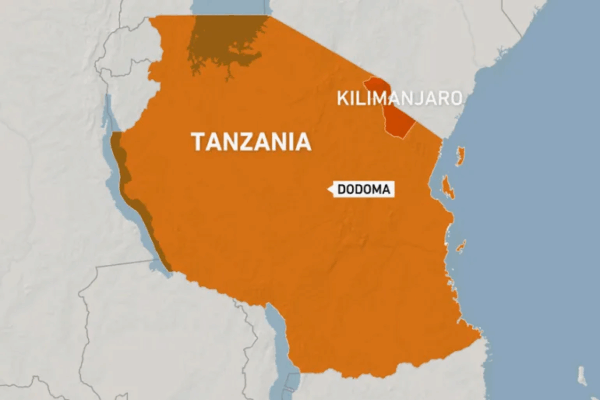
At least 38 people have been confirmed dead and 28 others injured following a horrific collision between a bus and a minibus in Tanzania’s Kilimanjaro region on Saturday evening. The crash occurred in the Sabasaba area after a tyre burst on one of the vehicles, causing the driver to lose control and triggering a fire that engulfed both vehicles. According to a statement from the presidency on Sunday, 36 of the victims remain unidentified due to the severity of the burns. The nationalities of the deceased have not yet been confirmed. Six of the injured remain hospitalized, while President Samia Suluhu Hassan extended her condolences to the bereaved families and called for stricter enforcement of road safety measures. Tanzania continues to struggle with frequent road accidents despite ongoing awareness campaigns. The World Health Organization estimated that between 13,000 and 19,000 people died in road accidents in the country in 2016, far exceeding the official government figure of 3,256.

Read More