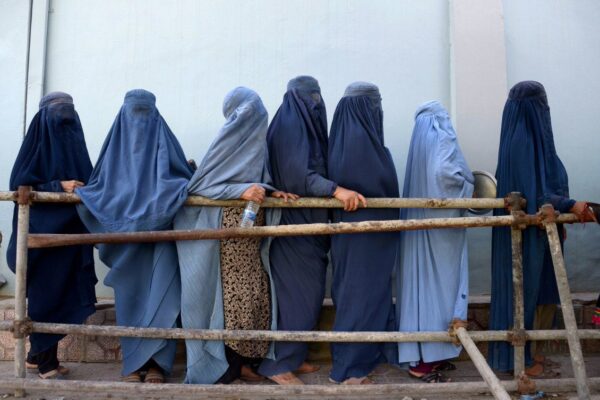
The Taliban has firmly rejected former US President Donald Trump’s call for Washington to “take back” Bagram Air Base in Afghanistan, declaring that Afghan territory will “never be handed over to anyone under any circumstances.” In an exclusive interview with Sky News, the Taliban’s chief spokesman, Zabihullah Mujahid, made the statement while also revealing that the group has held discussions with the United States about reopening diplomatic missions in both Kabul and Washington, D.C. “We have discussed this matter and we wish to see the embassies reopened both in Kabul and in Washington,” Mujahid said. Taliban Denies Legitimacy Problem Four years after seizing power, only Russia has officially recognized the Taliban government. However, Mujahid insisted that the Islamic Emirate is not suffering from a legitimacy crisis. “It is not only Russia that has openly recognized the Islamic Emirate. There are several other countries that have extended recognition, though not publicly,” he claimed. Ongoing Restrictions on Women and Girls Despite international criticism, the Taliban continues to impose harsh restrictions on women’s rights. Girls above the age of 12 remain banned from attending school, and women are barred from most forms of employment and public life. When asked whether the Taliban planned to reopen secondary schools for girls, Mujahid declined to give assurances. “I cannot make any promises in this regard,” he said, adding that the government was still working to align its policies with “principles of Islamic law and Afghan culture.” The International Criminal Court (ICC) has issued arrest warrants for two senior Taliban leaders, including Supreme Leader Haibatullah Akhundzada, on charges of persecuting women and girls. Internet Blackout Raises Concerns Afghanistan recently experienced a 48-hour nationwide internet shutdown that halted banking, disrupted airlines, and cut off millions from communication. Mujahid said he was unaware of the reason for the blackout, claiming, “We have not received any official communication from the ministry of telecommunications.” However, one Afghan service provider reportedly told customers the outage was ordered by the government. Human rights activists condemned the blackout as a deliberate act of censorship, particularly harmful to women and girls who rely on online learning. ‘Visible Signs of Recovery’ Amid Crisis Despite an ongoing economic collapse, widespread malnutrition, and severe droughts, Mujahid maintained that Afghanistan had seen “relative peace and stability under a unified government.” “There are visible signs of economic recovery,” he said, attributing the country’s humanitarian crisis to “decades of conflict and two major invasions that devastated Afghanistan’s infrastructure and economy.” According to UNICEF, around 90% of Afghan children under five now live in food poverty, with malnutrition rates among the highest in the world.