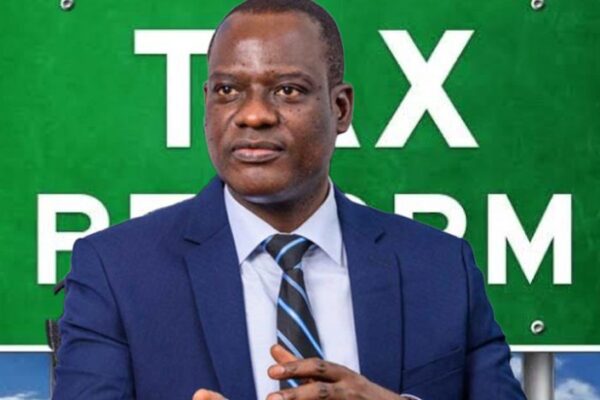
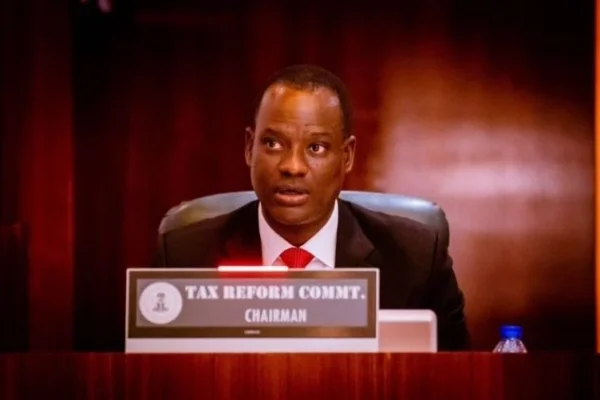
Every Nigerian Must File Tax Returns By March 31 – Oyedele

The Chairman of the Presidential Committee on Fiscal Policy and Tax Reforms, Taiwo Oyedele, has called on Nigerians to comply with the law by filing their annual tax returns, stressing that the obligation applies to both employers and individual taxpayers. Oyedele made the call during a webinar organised for HR managers, payroll officers, chief financial officers and tax managers, held in collaboration with the Joint Revenue Board. The session, which was posted on YouTube on Friday, focused on tax compliance and ongoing fiscal reforms. Speaking during the webinar, Oyedele noted that a significant number of Nigerians remain non-compliant with the requirement to file self-assessment tax returns. “In terms of filing returns, you need to file annual returns as employers for your employees. Many of you must have done that already. If you haven’t, you have just a couple of days left to file those returns, including projections of how much you will pay your staff,” he said. He also highlighted the low level of compliance among individual taxpayers, describing it as a major weakness in Nigeria’s tax system. “This is one area where we have been non-compliant in Nigeria. In many states, more than 90%—even the most sophisticated states—cannot boast of 5% filing returns,” Oyedele said. According to him, recent tax reforms have clarified that employees still have responsibilities even when their employers deduct taxes directly from their salaries. “Many people assume that if they are an employee and the employer has deducted pay, they don’t have to do anything. That is wrong. Both under the old and new tax laws, you must still file your returns.” Oyedele assured taxpayers that efforts are ongoing to simplify the filing process and encourage compliance across all income levels. “I’m sure the tax authorities, joint revenue boards, and various state internal revenue services are working on how to make this process simpler and easier. All of us must file our returns, including those earning low income. You must file returns by 31st March of the year in respect of the previous fiscal year.” He further disclosed that businesses benefiting from tax incentives now have additional disclosure obligations under the new tax framework. “Under the new tax law, if you operate a business as an enterprise and you enjoy certain incentives, you have the obligation to disclose those incentives. There’s a disclosure requirement for tax incentives that is not available to everybody as a general rule for taxpayers—to disclose them when filing their tax returns or shortly after.” Oyedele concluded by reiterating that improved compliance is central to strengthening Nigeria’s fiscal system and supporting sustainable economic development.

Read More

Taiwo Oyedele Denies Claims That New Tax Law Guidelines Were Halted

Taiwo Oyedele, Chairman of the Presidential Tax Reform Committee, has refuted reports suggesting that the Federal Government has suspended the issuance of implementation guidelines for Nigeria’s new tax laws. The clarification came on Thursday via Oyedele’s X account, in response to a report claiming that uncertainty over the final versions of the tax laws had forced a pause in government action. The report alleged that Oyedele had directed the Nigeria Revenue Service (NRS) and the Joint Revenue Board (JRB) to delay issuing the guidelines, amid doubts about whether the circulating copies of the laws reflected the official final versions. It further claimed that printed copies were withheld after the National Assembly reportedly retained all gazetted copies for internal review, raising concerns about discrepancies between versions. Oyedele dismissed the report outright, writing simply: “Fake news.”

Read More

Taiwo Oyedele Says He Faces Death Threats Over Nigeria’s Sweeping Tax Reforms

Taiwo Oyedele, Chairman of the Presidential Committee on Fiscal Policy and Tax Reforms, has disclosed that he has received threats to his life due to his involvement in implementing Nigeria’s sweeping tax reforms. Speaking on Tuesday in Abuja at a governance colloquium celebrating the 50th birthday of the Special Adviser to the President on Policy and Coordination, Hajiya Hadiza Bala-Usman, Oyedele said pushing reforms that challenge entrenched interests requires courage in a system historically resistant to change. “Reforms are hard, and tax reforms are even harder. You need courage. I receive threats simply for trying to fix a broken system,” he said. He identified weak public trust in government, low tax compliance, and misunderstandings about fiscal policies as major obstacles. Oyedele explained that Nigeria’s tax revenue remains far below that of peer countries, making comprehensive reforms necessary. Oyedele urged supporters of the reforms to speak out, warning that silence allows opponents to control the narrative. He noted that many Nigerians mistakenly believe the reforms introduce new taxes, when in fact they reduce and harmonise existing levies. “Implementing these reforms carries significant political, economic, and reputational risks. You need courage to push through,” he added, likening the changes to a surgical fix rather than previous short-term solutions. Despite facing online abuse and personal threats, Oyedele defended the reform strategy, emphasizing it as essential for long-term fiscal stability. “What we have been doing all my adult life with the tax system was a pain reliever. Now we’re doing the surgery. It will come with pain, but it is the only right thing to do,” he said. He concluded by expressing optimism about the country’s progress, describing the current reform momentum as unprecedented and urging Nigerians to remain committed to achieving sustainable fiscal growth.

Read More

New Tax Laws Won’t Allow Automatic Bank Deductions — Taiwo Oyedele

Taiwo Oyedele, Chairman of the Presidential Committee on Fiscal Policy and Tax Reforms, has assured Nigerians that the new tax laws set to take effect on January 1, 2026, will not involve automatic deductions from personal bank accounts. Speaking during Channels Television’s end-of-year programme, 2025 In Retrospect: Charting a Pathway to 2026, Oyedele clarified that the reforms are based on self-declaration of income rather than direct debits. “People think that the government will debit their bank accounts from next year, and how they even came up with that, I have no idea. Nobody will debit your account for any amount you transfer. Whether it’s a billion or one thousand naira, at the end of the year, you tell the government yourself,” he said. Oyedele explained that taxpayers would only need to declare their earnings at the end of the tax year, highlighting that the framework is designed to be simple, transparent, and fair, especially for small business owners and low-income earners. “You know what constitutes your income and what doesn’t. So you tell the government: ‘This is my income and here is the tax.’ If you are exempted, you simply declare: ‘This is my income, and I am exempted from tax.’ It is a very simple process that we are simplifying further,” he said. He added that the reforms aim to make taxation progressive, removing the burden on vulnerable earners. “If you run a small business as a sole proprietor, an enterprise, or you are just hustling, the system will no longer be regressive. We’ve made it progressive,” Oyedele stated. Earlier, President Bola Tinubu affirmed that the new tax laws, including those enacted on June 26, 2025, and others starting January 2026, would proceed as planned. He described the reforms as “a once-in-a-generation opportunity to build a fair, competitive, and robust fiscal foundation,” emphasising that they are intended to restructure and harmonise the system rather than increase taxes. The president urged all stakeholders to support the implementation, noting that the process is now “firmly in the delivery stage” with no major obstacles threatening its progress.

Read More

New Tax Reforms to Begin January 1, 2026, Says Taiwo Oyedele

Taiwo Oyedele, Chairman of the Presidential Fiscal Policy and Tax Reforms Committee, has confirmed that Nigeria’s new tax reforms will be implemented starting January 1, 2026. Speaking to journalists after the National Tax Policy Implementation Committee (NTPIC), chaired by Joseph Tegbe, visited President Bola Tinubu in Lagos, Oyedele explained that the reforms aim to ease the tax burden on Nigerians and stimulate economic growth. He said, “The implementation of the two remaining new tax laws will proceed as scheduled on January 1, 2026. These reforms are designed to provide relief to the Nigerian people. “About 98 per cent of workers will either pay no PAYE tax or reduced amounts; small businesses, representing 97 per cent of the sector, will be exempted from corporate income tax, VAT, and withholding tax, while larger companies will see a reduction in their tax obligations. “The goal is to foster economic growth, inclusivity, and shared prosperity. We are pleased with the progress and look forward to the reforms taking effect at the start of the new year.”

Read More

Presidency Calls on National Assembly to Probe Alleged Discrepancies in New Tax Reform Laws

The Presidency has addressed the controversy surrounding Nigeria’s newly signed tax reform laws, with Taiwo Oyedele, Chairman of the Presidential Fiscal Policy and Tax Reforms Committee, urging the National Assembly to look into alleged discrepancies in the gazetted versions of the bills. Oyedele made the remarks on Monday during an interview on Channels Television’s Morning Brief, following calls from former Vice President Atiku Abubakar, Labour Party presidential candidate Peter Obi, and several civil society groups for the suspension of the laws’ implementation. The controversy began when House of Representatives member Abdulsamad Dasuki claimed that the tax bills passed by lawmakers differed from the versions later gazetted and made public. Dasuki argued that this violated his legislative rights, insisting that the final gazetted laws did not reflect what was actually debated and approved. Responding to the claims, Oyedele described circulating reports as misleading, noting that any alleged discrepancies could not be verified without access to the officially certified versions of the bills passed by the National Assembly. “Before you can say there is a difference between what was gazetted and what was passed, we don’t even have what was passed. Only the lawmakers can say authoritatively what they sent,” he said. He added that even members of the executive, including himself, only had access to the versions submitted to President Bola Tinubu for assent. Addressing concerns about a controversial Section 41(8) provision, which reportedly required a 20 per cent deposit, Oyedele said he had contacted the relevant House committee for clarification. “I know that particular provision is not in the final gazette, but it was in the draft. Some documents circulating publicly were prepared before the committee completed its work,” he explained. Oyedele urged patience, emphasizing that media reports did not come from the House committee and that an official investigation should be allowed to take place. President Tinubu recently signed four key tax reform bills—the Nigeria Tax Act, Nigeria Tax Administration Act, Nigeria Revenue Service (Establishment) Act, and Joint Revenue Board (Establishment) Act—describing them as the most significant overhaul of Nigeria’s tax system in decades. The laws are scheduled to take effect on January 1, 2026. According to the Federal Government, the reforms aim to simplify tax compliance, expand the tax base, eliminate multiple taxation, and modernize revenue collection across all levels of government.

Read More

Oyedele Says 5% Fuel Levy On Hold Until Naira Strengthens Or Oil Prices Fall

Chairman of the Presidential Committee on Fiscal Policy and Tax Reforms, Taiwo Oyedele, has said the proposed 5% fuel surcharge will not be implemented until key economic conditions improve — particularly a stronger naira or a drop in global crude oil prices. Speaking at the Haulage and Logistics Magazine Conference & Exhibition in Lagos, Oyedele explained that while the policy aims to generate funds for road maintenance, enforcing it now would further burden Nigerians already struggling with rising costs. He recalled that the fuel surcharge was first introduced during former President Olusegun Obasanjo’s administration to allocate part of fuel revenue to road repairs — 40% for federal roads and 60% for state and local government roads. “The idea is brilliant and already being implemented in more than 150 countries,” Oyedele said, expressing concern that most of Nigeria’s 200,000 kilometres of roads remain in poor condition. He noted that the Federal Roads Maintenance Agency (FERMA) had sought approval to begin collecting the levy following fuel subsidy removal but said the committee opposed it. “We said no – introducing such a tax now would be insensitive,” he stated. Oyedele explained that the surcharge remains in the draft tax law but would only take effect after an official order from the Minister of Finance. “For me, the right time will be when the naira strengthens or crude prices drop, so the surcharge won’t raise pump prices,” he added. He further assured that the committee’s ongoing tax reforms are focused on easing the burden on the haulage and logistics sector by scrapping multiple taxes, reducing operational costs, and improving efficiency. “We are not introducing new taxes; we are removing the many duplicated ones that frustrate transporters and increase prices,” he said. Oyedele added that under the new policy, transport and logistics businesses with annual turnover below N100 million will be exempt from company income tax, while eligible operators will enjoy VAT refunds and other tax incentives. He emphasized that the reforms will simplify Nigeria’s tax structure and ensure all revenues are collected transparently and shared fairly among all tiers of government.

Read More