
Trump Welcomes Syrian President Ahmed al-Sharaa to White House

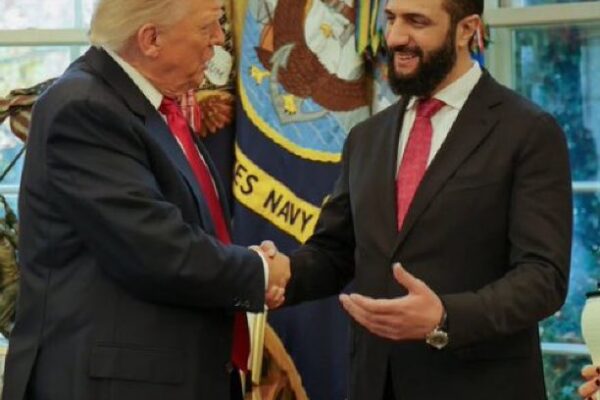
President Donald Trump hosted Syrian President Ahmed al-Sharaa at the White House on Monday, marking the first visit by a Syrian leader since the country gained independence in 1946. The meeting came as the U.S. Treasury Department extended sanctions on Damascus for another six months. Al-Sharaa, 43, a former al-Qaeda commander who overthrew Bashar al-Assad last December, has spent the past year reshaping his image, presenting himself as a unifying leader seeking to end Syria’s international isolation. The Syrian presidency said the talks focused on strengthening bilateral relations, enhancing cooperation, and discussing regional and global issues of mutual concern. Trump praised al-Sharaa, saying, “He comes from a very tough place, and he’s a tough guy. I like him. We’ll do everything we can to make Syria successful, because that’s part of the Middle East. We have peace now in the Middle East – the first time that anyone can remember that ever happening.” He also acknowledged al-Sharaa’s controversial past, adding, “We’ve all had rough pasts.” Al-Sharaa later told Fox News that his former ties to al-Qaeda were in the past and were not part of discussions with Trump. He stressed that Syria is now considered a strategic partner rather than a threat. The White House meeting follows their first encounter six months ago in Saudi Arabia, where Trump announced plans to lift sanctions, and comes shortly after the U.S. removed al-Sharaa from its list of “Specially Designated Global Terrorists.” Captured by U.S. forces in Iraq, al-Sharaa later led Syria’s al-Qaeda branch, Hayat Tahrir al-Sham, which split from the network in 2016. Less than a year ago, the U.S. had offered a $10 million reward for information leading to his capture. Since assuming power, he has embraced his birth name and promoted a message of tolerance and inclusivity. Earlier this year, he addressed the United Nations General Assembly, declaring that Syria is “reclaiming its rightful place among the nations of the world” while pursuing stronger economic ties with the U.S. and European Union. Despite the historic nature of the visit, al-Sharaa received a low-profile reception. He entered through a side door, without a formal greeting from Trump, and no joint press conference or photo session took place. As he left, he briefly greeted supporters outside the White House. An anonymous U.S. official said Syria would be allowed to resume operations at its embassy in Washington, enabling closer coordination on counterterrorism, security, and economic issues. The move could also pave the way for a potential U.S. troop withdrawal from the country. The visit occurred amid security concerns, with Syrian authorities revealing that two separate ISIL assassination plots targeting al-Sharaa had been foiled in recent months. Over the weekend, the Syrian Ministry of Interior launched a nationwide campaign against ISIL cells, arresting more than 70 suspects.
Read More

Renewed Fighting in Syria’s Suwayda Leaves Hundreds Dead as Ceasefire Collapses; UN Raises Alarm

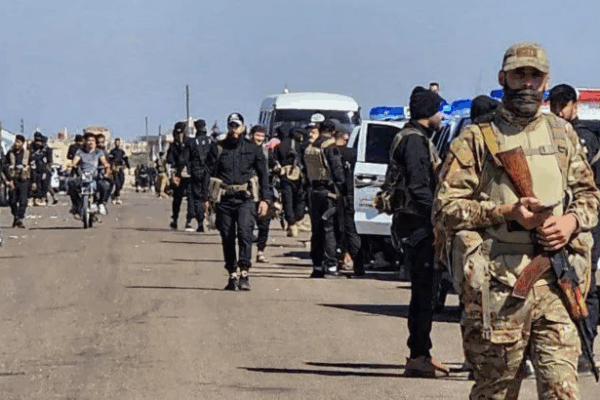
Heavy clashes have erupted again in Syria’s southern province of Suwayda between Druze factions and Bedouin tribes, following the collapse of a fragile ceasefire just a day after Syrian government forces withdrew from the area. The renewed violence on Friday marks a dangerous escalation in the region, which has witnessed an upsurge in deadly tribal conflicts since the overthrow of President Bashar al-Assad in December 2024. Government Denies Troop Redeployment The Syrian Interior Ministry strongly denied reports suggesting that government forces were redeploying to Suwayda, describing such claims as “false and misleading.” Spokesperson Noureddine al-Baba stated, “We confirm that no official statement has been issued in this regard, and we categorically deny the veracity of what was published.” However, diplomatic sources revealed that Israel had reached a provisional understanding allowing limited entry of Syrian internal security forces—but not army units—into Suwayda for 48 hours to prevent further bloodshed. This comes after Israeli airstrikes earlier this week targeted positions in Suwayda and Damascus, actions Tel Aviv claimed were aimed at protecting the Druze population. Casualties and Evacuations According to the Syrian Network for Human Rights, at least 321 people have been killed since violence erupted on Sunday, with over 570 injured and hundreds of families displaced. Syrian emergency officials reported recovering 87 bodies from the conflict zones while continuing evacuation operations under heavy fire. The UK-based Syrian Observatory for Human Rights confirmed renewed gunfire west of Suwayda city, while social media footage verified by Al Jazeera showed tribal reinforcements arriving in rural areas. One video featured Bedouin tribal leader Abdul Moneim al-Naseef urging, “All tribes across Syrian provinces must immediately head to Suwayda to save our people from massacres.” Ceasefire Collapses The breakdown of the truce—brokered just two days ago—has intensified fears of a prolonged conflict. Under the short-lived deal, Druze factions and community elders were to maintain security in the province without interference from Syrian government forces. Analysts warn the resurgence of violence could destabilize Syria’s already fragile post-war environment, especially given Israel’s stated opposition to a full return of Syrian forces to the southern front. UN Condemns Atrocities The United Nations Human Rights Office issued a stark warning on Friday, citing “credible reports of widespread human rights violations” by all parties, including summary executions, arbitrary killings, kidnappings, looting, and destruction of civilian homes. UN rights chief Volker Turk urged all factions to halt the violence, stressing, “The bloodshed must stop, and the protection of civilians must be the utmost priority, in line with international human rights law.” The UN Refugee Agency (UNHCR) expressed alarm over the impact of hostilities on aid delivery. Spokesperson William Spindler told reporters in Geneva: “It is very difficult for us to operate there… our capacity to deliver aid is very limited. We are calling on all parties to allow humanitarian access.” Broader Implications Observers believe the fighting reflects long-standing fault lines between Bedouin tribes and Druze factions, which have periodically flared since the fall of Assad. However, this latest episode is seen as particularly dangerous, as Bedouin groups have openly called for state intervention, and regional actors like Israel are becoming increasingly involved. Political analyst Labib al-Nahhas noted that Tel Aviv’s cautious approval for limited security deployments signals its concern over deteriorating conditions: “Israel’s allies are under threat, so they need to intervene… the middle ground is allowing local security forces—not the army—for a short period to contain the bloodshed.”

Read More