EFCC Receives Petition Against Mele Kyari Promises Swift Investigation

Senate Summons Mele Kyari, Former NNPCL Officials Over Alleged Missing N210 Trillion

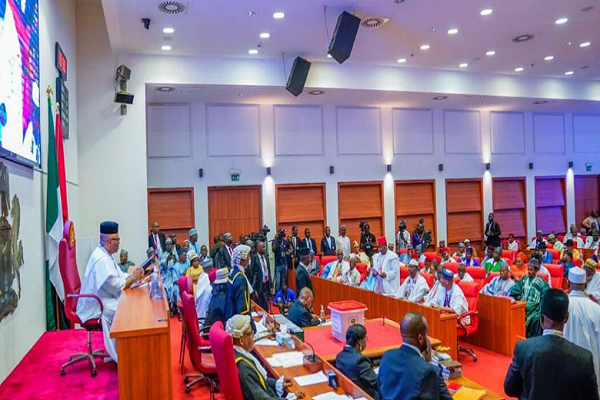
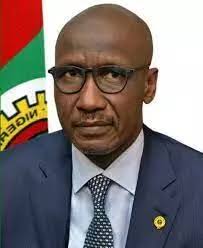
Former Group Chief Executive Officer of the Nigerian National Petroleum Company Limited (NNPCL), Mele Kyari, has been summoned by the Senate Committee on Public Accounts over alleged financial irregularities amounting to about N210 trillion. The committee’s chairman, Senator Ahmed Wadada, announced the decision during a press conference in Abuja, stating that Kyari and members of his former management team are required to explain several issues discovered in the company’s audited financial records between 2017 and 2023. According to Wadada, the investigation began in May 2025 after lawmakers reviewed reports from the Office of the Auditor-General for the Federation covering the 2019 and 2020 financial years. He said the committee later expanded its probe to include NNPCL’s audited accounts prepared by external auditors, as well as financial documents from the former National Petroleum Investment Management Services (NAPIMS), now called NNPCL Upstream Investment Limited. The lawmaker explained that the panel raised 19 queries to the company seeking clarification on inconsistencies found in the financial statements. However, the responses provided by NNPCL were described as inadequate. One of the major concerns raised by the committee was the N103 trillion listed as accrued expenses in the company’s 2022 audited accounts. The expenses were said to include retention fees, legal costs and audit charges, but the accounts did not provide a clear breakdown of the figures. Although the company explained that the amount represented cumulative spending by joint venture partners under the joint venture cash call arrangement, the committee rejected the claim, noting that the cash call system had been abolished in 2016 and became effective from January 2017. The panel also questioned another N107 trillion recorded as sundry receivables as of December 2023. According to the committee, NNPCL claimed that some of the funds were owed by defunct banks and other organisations but failed to provide detailed records identifying the institutions involved. Lawmakers further observed a possible duplication of subsidy deductions worth N3.8 trillion, which they said appeared to have been removed both from crude oil revenues recorded by NAPIMS and from petroleum product proceeds in NNPC’s accounts. Additional concerns were raised over about N5 trillion listed as direct production costs between 2017 and 2021, despite the fact that neither NNPC nor NAPIMS directly produces crude oil. The committee also described as excessive the N5.9 billion reportedly spent on incorporation expenses during the transition from NNPC to NNPCL. Following the discoveries, the committee directed the company to account for the combined N210 trillion linked to unexplained accrued expenses and receivables. It also asked that any production costs wrongly charged to crude oil revenue within the period under review be refunded. In addition to Kyari, the committee has invited former Chief Financial Officer Umar Ajiya and the former Group General Manager of NAPIMS, Bala Wunti, to appear before it as part of the ongoing investigation.

Read More

Senate Calls For Immediate Removal Of CAC Registrar-General Husaini Magaji Over Repeated Absences

The Senate has formally asked for the dismissal of Husaini Ishaq Magaji, the Registrar-General of the Corporate Affairs Commission (CAC), accusing him of repeatedly ignoring invitations to appear before lawmakers. The issue came to a head during a session of the Senate Committee on Finance attended by members of the President’s economic team. Proceedings reportedly began on a tense note when it was discovered that the CAC boss, who had been invited to brief the committee on the commission’s activities and financial records, was absent once again. Raising the matter, Orji Uzor Kalu expressed anger over what he described as a pattern of avoidance. He moved a motion seeking the immediate removal of the Registrar-General, insisting that the official had consistently failed to respect the committee’s summons. “Since I came to the Senate, he has always given excuses that he is in the Villa.” The Chairman of the Committee on Finance, Sani Musa, also voiced concern over unresolved discrepancies linked to the commission’s revenue reconciliation. He noted that Magaji’s repeated absence had stalled efforts to clarify the outstanding issues. In support of the motion, Adams Oshiomhole proposed tougher measures, including withholding legislative approval of the CAC’s 2026 budget until the concerns are properly addressed. After deliberations, the Senate adopted the motion calling on the President to remove the CAC Registrar-General from office.

Read More
Senate Steps In To End ASUU Strike, Sets Meeting With Education Minister And NUC

Senate Slashes Election Notice Period To 300 Days to Grant INEC More Flexibility

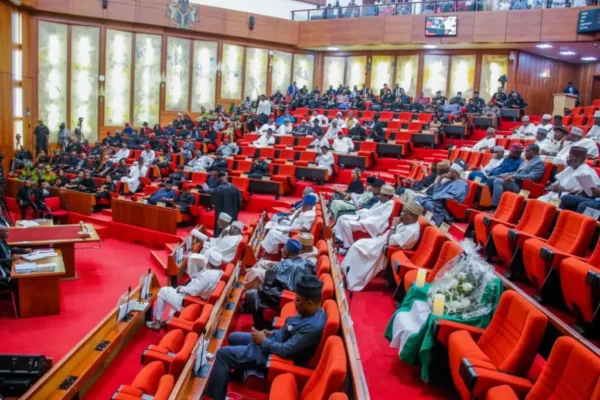
Nigeria’s upper legislative chamber has approved fresh changes to the Electoral Act Amendment Bill, trimming the statutory election notice period from 360 days to 300 days in a bid to give the Independent National Electoral Commission more flexibility in fixing poll dates. The adjustment effectively grants INEC an extra 60 days to review and realign its timetable, particularly to prevent any overlap between national elections and the Ramadan fasting season. Senate Leader Opeyemi Bamidele said the chamber reconvened mainly to fine-tune sections of the bill that would allow the electoral body reconsider its schedule without breaching legal timelines. Earlier, INEC had announced February 20 for presidential and National Assembly elections, while governorship and state assembly polls were slated for March 6. The timeline drew public concern over a possible clash with Ramadan. Chairman of the Senate Committee on Electoral Matters, Simon Lalong, noted that the commission did not deliberately create the scheduling tension, explaining that the framework guiding the timetable had been put in place before the current leadership took charge. Lawmakers also revisited Clause 60 of the bill, which addresses the mode of transmitting election results. During debate, Senator Eyinnaya Abaribe advocated mandatory real-time electronic transmission, insisting it would strengthen transparency and deepen public trust in the electoral system. After deliberations in a closed session, however, the Senate resolved to retain a safeguard allowing manual transmission where electronic networks fail. Senate President Godswill Akpabio said the provision would guarantee continuity of the electoral process in situations where technological systems encounter difficulties.

Read More
Senate Steps In To End ASUU Strike, Sets Meeting With Education Minister And NUC

BREAKING: Senate Amends Electoral Act to Allow Electronic Transmission of Results

The Senate has amended Section 60 of the Electoral Act to permit presiding officers at polling units to electronically transmit election results to the Independent National Electoral Commission’s (INEC) Results Viewing Portal (IREV). The amendment was approved on Tuesday during an emergency plenary session, with Senate President Godswill Akpabio explaining how the new system will operate. According to Akpabio, presiding officers will transmit results electronically after completing the required documentation at the polling units. “The presiding officer shall electronically transmit the results from each polling unit to the IREV portal after Form EC8A has been signed and stamped by the presiding officer, and/or countersigned by the candidates or polling agents where available at the polling units,” he said. He, however, noted that provisions have been made in situations where electronic transmission is not possible. “Provided that if the electronic transmission of the results fails as a result of communication failure, the manually signed and stamped Form EC8A shall be the primary source of collation and declaration of results,” Akpabio added. The amendment, adopted as Clause 60(3), followed a motion by Senate Chief Whip Mohammed Monguno, who sought to reverse the Senate’s earlier decision rejecting real-time electronic transmission of results. Previously, the Senate had retained sections of the 2023 Electoral Act that restricted electronic transmission. With the new amendment, presiding officers may now electronically transmit results where technology permits, while the signed Form EC8A will serve as the authoritative document in cases of technical failure. The decision generated debate on the Senate floor, with Senator Enyinnaya Abaribe initially calling for a division before later withdrawing his request.

Read More

Senate To Hold Emergency Plenary Session on Tuesday

The President of the Senate, Godswill Akpabio, has directed the reconvening of plenary for an emergency sittingscheduled for Tuesday, February 10, 2026. The announcement was made on Sunday in a statement signed by the Clerk of the Senate, Emmanuel Odo, who urged all senators to be present at 12:00 pm. “The President of the Senate, Godswill Akpabio, has directed the reconvening of plenary for an emergency sitting on Tuesday, February 10th, 2026,” the statement read. The reasons for the emergency session were not disclosed. Recall  that the development comes shortly after the Senate, on February 4, rejected a proposed amendment to the Electoral Act which sought to make real-time electronic transmission of election results mandatory—a measure widely viewed as a step toward improving transparency and credibility in Nigeria’s electoral process. The Senate’s decision has sparked widespread criticism from civil society organisations, activists, and prominent Nigerians, who argue that the move could undermine efforts to strengthen electoral integrity ahead of the 2027 general elections. Notable critics include former minister Oby Ezekwesili, as well as groups such as Afenifere, who have warned that the rejection may erode public confidence in the country’s electoral system.

Read More
Senate Steps In To End ASUU Strike, Sets Meeting With Education Minister And NUC

Senate Rejects Mandatory Electronic Transmission of Election Results

The Senate has turned down a proposed change to Clause 60, Subsection 3, of the Electoral Amendment Bill that aimed to compel the electronic transmission of election results. Under the rejected amendment, presiding officers of the Independent National Electoral Commission (INEC) would have been mandated to upload polling unit results electronically to the IREV portal in real time, once Form EC&A had been duly signed and stamped by the presiding officer and countersigned by party agents. Rather than adopt the proposal, the Senate opted to retain the current provision in the Electoral Act, which provides that “the presiding officer shall transfer the results, including the total number of accredited voters and the results of the ballot, in a manner as prescribed by the Commission.”

Read More

Senate Confirms Oritsemeyiwa Eyesan As NUPRC CEO, Saidu Mohammed As NMDPRA CEO

The Nigerian Senate has approved the appointments of Oritsemeyiwa Amanorisewo Eyesan as Chief Executive Officer of the Nigerian Upstream Petroleum Regulatory Commission (NUPRC) and Engineer Saidu Aliyu Mohammed as CEO of the Nigerian Midstream and Downstream Petroleum Regulatory Authority (NMDPRA). The nominations, made by President Bola Tinubu, were expedited by the upper chamber to ensure uninterrupted regulation of Nigeria’s petroleum sector. Eyesan, a petroleum economist, has over 30 years of experience in the oil and gas industry, having served in various capacities within the Nigerian National Petroleum Company Limited (NNPCL) and its subsidiaries, with a strong focus on upstream operations. Mohammed, a chemical engineer, is well-regarded for his expertise in refining, gas management, and policy formulation, having held several senior leadership roles in the sector. The appointments come amid recent leadership changes in the regulatory agencies, part of broader efforts to enhance oversight and improve efficiency across the upstream, midstream, and downstream petroleum segments under the Petroleum Industry Act (PIA). Both CEOs are expected to strengthen investor confidence, ensure strict regulatory compliance, and advance Nigeria’s domestic refining and gas development initiatives.

Read More
Senate Steps In To End ASUU Strike, Sets Meeting With Education Minister And NUC

JUST IN: Senate Confirms 64 Ambassadorial Nominees

The Senate has confirmed 64 nominees for career and non-career ambassadorial positions after reviewing a report from its Committee on Foreign Affairs. The committee’s recommendations were presented by Chairman Senator Sani Bello and were subsequently adopted by the lawmakers. During the session, Senator Sahabi Yau raised concerns over the absence of any nominee from Zamfara State, calling on the Senate to formally alert the President about the omission. The Senate President acknowledged the concern, noting that the current list was not comprehensive. He assured members that the matter would be brought to the President’s attention and that additional ambassadorial appointments would ensure representation for Zamfara State.

Read More