Sowore Threatens To Proceed With Oworonshoki Demolition Protest Despite Police Alert

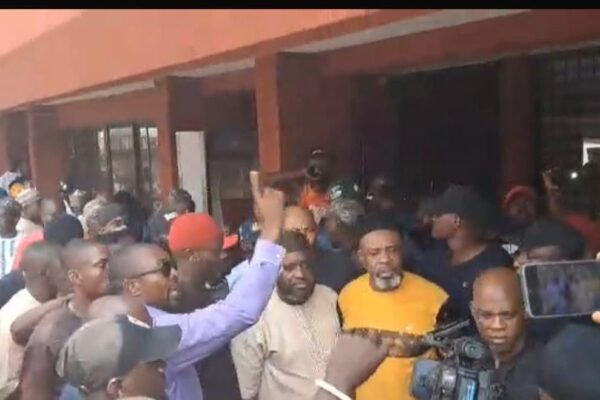
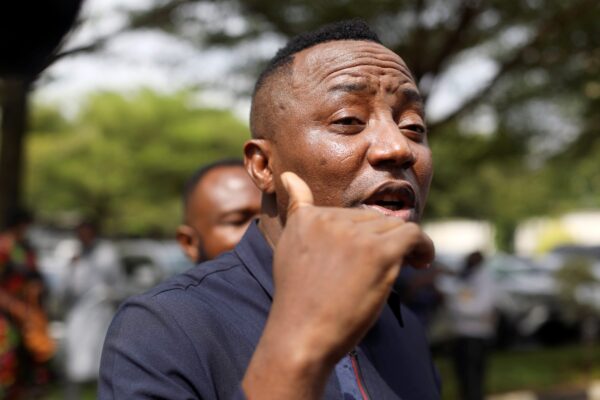
Omoyele Sowore, the Nigerian activist and Sahara Reporters publisher, has pledged to go ahead with a protest in Lagos over the recent demolitions in Oworonshoki, rejecting a warning from the Lagos State Police Command. On his Facebook page, Sowore wrote: “I heard the CP of the Nigeria Police Force Lagos had the effrontery to warn that TIB & I are not to protest over Oworonsoki Demolitions; these unprofessional, wornout officers have no place in our society. The mass action must go on!” He described the warning as unprofessional and insisted the demonstration would continue. The demolitions in Oworonshoki have drawn public backlash, with residents claiming their homes were destroyed without proper compensation. Eyewitnesses said police deployed around 50 officers and used tear gas to disperse residents during the late-night operation. The Lagos police commissioner had cautioned Sowore and his supporters to stay away from the state, threatening legal action if public order was disrupted. He defended the demolitions, saying the affected structures were illegal and sometimes used by criminals. Sowore’s determination to proceed highlights his ongoing fight against government overreach and his advocacy for citizens’ rights, attracting attention both within Nigeria and internationally.

Read More

SUV Crashes Into Electrified Barricade During #FreeNnamdiKanu Protest in Abuja

Panic erupted in the Nigerian capital on Monday after an SUV accidentally drove into a barbed electric wire barricade set up by security forces during a protest calling for the release of Indigenous People of Biafra (IPOB) leader, Nnamdi Kanu. The incident occurred amid heightened tension as demonstrators gathered in Abuja to demand Kanu’s freedom. According to eyewitness reports, the electrified barrier had been installed by security personnel to prevent protesters from advancing toward restricted government areas. Video footage circulating online shows the SUV colliding with the live wire, sparking chaos as onlookers screamed in fear. Security officers at the scene quickly warned the occupants to remain inside the vehicle while they disconnected the power source to avert possible electrocution. The crash happened as police moved to disperse the crowd, firing teargas and making multiple arrests, including that of Kanu’s lawyer, Barrister Aloy Ejimakor. Authorities had earlier issued warnings against holding protests near sensitive zones, citing an existing court order. The protest, led by activist Omoyele Sowore under the banner of the #FreeNnamdiKanuNow movement, has drawn increased security presence around Abuja’s major routes and government buildings.

Read More

Tension in Abuja as Security Forces Seal Off Presidential Villa Over Nnamdi Kanu Protest

Heavy security presence enveloped parts of Abuja on Monday amid planned demonstrations demanding the release of Indigenous People of Biafra (IPOB) leader, Mazi Nnamdi Kanu. The protest, convened by activist and former presidential candidate Omoyele Sowore under the #RevolutionNow movement, triggered widespread gridlock across the Federal Capital Territory (FCT) as security forces mounted tight surveillance around key government institutions. Soldiers, police officers, and operatives of the Department of State Services (DSS) were deployed in large numbers, sealing off the Three Arms Zone and intensifying stop-and-search operations around the Presidential Villa and adjoining routes. Even staff of the Villa with valid parking permits were turned back and redirected to alternative routes after all access points to the State House were closed. One frustrated staff member posted online: “Please, can someone find out what is going on in the Villa? All access roads are blocked. Nobody is allowed in, even with tags.” The lockdown caused heavy traffic along major routes including the Keffi–Abuja Expressway, where soldiers reportedly mounted checkpoints near the Sani Abacha Barracks as early as 4 a.m. Civil servants and traders commuting from Nyanya, Karu, Mararaba, and Masaka faced long delays. Security blockades were also observed along the Dutse–Bwari axis and Airport Road, forcing travelers heading toward the Central Business District to take detours. One internal memo to workers read: “Good morning, dear colleagues. Please, if you are coming from Airport Road to Central Area, follow Area 1. Security blocked from National Mosque.” Security patrols were also visible around Eagle Square, the Federal Secretariat, and the National Assembly, with officials on high alert to prevent disruptions. Nnamdi Kanu, arrested and extradited to Nigeria in June 2021, remains in custody despite multiple court orders for his release. His supporters continue to demand his freedom, citing concerns about his deteriorating health and prolonged detention.

Read More
Tinubu’s Aide Urges NBA, LPDC to Sanction Nnamdi Kanu’s Lawyer Aloy Ejimakor for Joining Protest

Tinubu’s Aide Urges NBA, LPDC to Sanction Nnamdi Kanu’s Lawyer Aloy Ejimakor for Joining Protest

The Special Adviser to President Bola Tinubu on Information and Strategy, Bayo Onanuga, has called on Nigeria’s legal regulatory bodies to sanction Mr. Aloy Ejimakor, one of the lawyers representing detained IPOB leader Nnamdi Kanu, for participating in the ongoing #FreeNnamdiKanu protest in Abuja. Onanuga made the statement in a post on his X (formerly Twitter) handle on Monday, criticising Ejimakor for joining the demonstration organised by human rights activist and former presidential candidate Omoyele Sowore. “I spotted Aloy Ejimakor, one of Nnamdi Kanu’s lawyers, among the small group of protesters mobilised in Abuja by Omoyele Sowore,” Onanuga wrote. He argued that Ejimakor’s involvement in the protest undermines legal ethics, noting that Kanu’s case is still before a competent court. “I wonder what Mr. Ejimakor was thinking when he decided to join this shambolic protest. As a lawyer, he should be aware of the principle of sub judice, particularly in relation to the ongoing treason case before the court,” Onanuga said. The presidential aide emphasised that the prosecution had concluded its case, and it was now the responsibility of Kanu’s legal team to focus on preparing a strong defence rather than participating in public demonstrations. “Rather than focusing on preparing a strong case, Mr. Ejimakor has resorted to extra-legal tactics, joining a career anarchist to influence the process. Ejimakor’s action questions his adherence to professional ethics,” he added. Onanuga urged the Nigerian Bar Association (NBA) and the Legal Practitioners Disciplinary Committee (LPDC) to review Ejimakor’s conduct and consider appropriate sanctions for what he described as “unethical behaviour.”

Read More

Security Operatives Disperse #FreeNnamdiKanuNow Protest Led by Sowore in Abuja

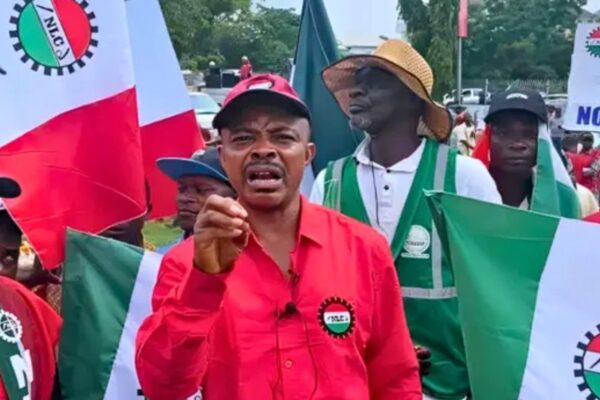
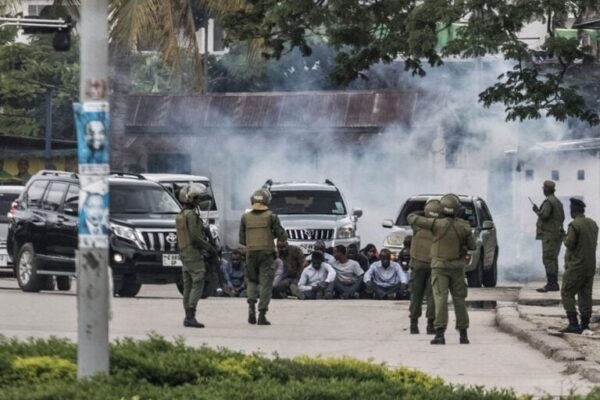
Security operatives on Monday forcefully dispersed protesters led by activist and Sahara Reporters publisher, Omoyele Sowore, who gathered in Abuja under the banner of the #FreeNnamdiKanuNow movement. The demonstration, which also had in attendance lawyer Barr. Aloy Ejimakor and other supporters of the detained IPOB leader, Nnamdi Kanu, took place near the Nigerian Communications Commission (NCC) headquarters in Maitama. Protesters were seen chanting “Free Nnamdi Kanu Now” and calling on the federal government to release the separatist leader. They also warned security agents against the use of tear gas during the peaceful gathering. However, the situation reportedly turned chaotic as gunshots rang out, prompting the protesters to flee for safety. As of press time, there has been no official statement from either the police or the Department of State Services (DSS) regarding the incident or possible arrests.

Read More

Togo Protests Signal Youth Anger at Dynastic Rule – But Is Change Possible?

Rights groups call out state repression after violent crackdown on protests against President Faure Gnassingbe’s extended rule. Police remove a barricade set up by demonstrators during a protest calling for President Faure Gnassingbe’s resignation in Lome, Togo, on June 26, 2025 [Erick Lome, Togo – The chants have faded in the streets, the barricades have been cleared, and an eerie calm hangs over Togo after days of mass protests in the West African nation’s capital. But beneath the surface, anger simmers, security forces remain stationed at key intersections, and many fear the storm is far from over. From June 26 to 28, thousands took to the streets of Lome to protest constitutional reforms that critics say enable President Faure Gnassingbe to remain in power indefinitely. The 59-year-old – in office since 2005 following the death of his father, who ruled for 38 years – was recently sworn in as president of the Council of Ministers, a powerful executive role with no term limits under a newly adopted parliamentary system. At least four people are believed to have died, dozens were injured, and more than 60 were arrested, according to local civil society groups. Verified videos circulating online show beatings, street chases, and men in plain clothes dragging civilians away. But in a country long used to political fatigue and fractured opposition, the past week marked a rupture. Rejecting a political dynastyTo many observers, these protests represent more than a reaction to constitutional reform: They signal a generational break. “These young people are not simply protesting a new constitution,” said Pap Koudjo, a Togolese journalist and essayist. “They are rejecting 58 years of political inheritance, from father to son, that has brought nothing but poverty, repression, and humiliation.” Most of the protesters were under 25. Many have never known another leader. They have grown up with frequent blackouts, crumbling infrastructure, joblessness and shrinking freedoms. The constitutional change, which removed term limits from the new executive role and eliminated direct presidential elections, was a red line. The government attempted damage control. A steep 12.5 percent electricity price hike – another source of rage – was quickly withdrawn. The activist singer Aamron, whose arrest days earlier had galvanised public anger, was discreetly released. But neither move stemmed the unrest.“The arrest of Aamron was a trigger,” said Paul Amegakpo, a political analyst and chair of the Tamberma Institute for Governance. “But the real story is that this regime has lost its ability to offer a negotiated and institutional solution to the crisis. It is relying purely on military strength.” He points to signs of disquiet within the state itself. A rare statement from former Defence Minister Marguerite Gnakade, condemning the violence and Gnassingbe’s leadership, suggests fractures may exist at the highest levels of the security apparatus. “There’s an institutional void,” Amegakpo said. “Two months after the transition to the Fifth Republic, the country still has no appointed government,” he added, referring to the post-amendment Togo. TogoPeople protest against Togo’s longtime leader, Faure Gnassingbe, in Lome [Alice Lawson/Reuters]Civil society fills the vacuumPerhaps more telling than the protests themselves is who led them. Not traditional opposition parties, which have been weakened by years of cooptation and exile, but influencers from the diaspora, civil society activists, artists and uncelebrated citizens. “The opposition has been exhausted – physically, politically, and financially,” said Koudjo. “After decades of failed dialogue and betrayed agreements, the youth has stepped in.” As protests surged, more institutional voices followed. Several civic organisations issued strong statements condemning the “disproportionate use of force” and demanding independent investigations into the deaths and disappearances. Though not leading the mobilisation, these groups echoed growing alarm about the government’s response and the erosion of civic space. The Media Foundation for West Africa warned that the environment for free expression in Togo was “shrinking dangerously”, a sentiment echoed by other international observers. To Fabien Offner, a researcher for Amnesty International, the crackdown is part of a larger, entrenched system. “What we’re seeing is not an isolated event – it’s the continuation of a repressive architecture,” Offner told Al Jazeera. “We’ve documented patterns of arbitrary arrests, beatings with cords, posturing torture, and impunity – all now normalised.” Amnesty says families are still searching for loved ones taken during the protests. Some have received no information on their whereabouts or legal status. “This is not just about protest management. It’s about the systematic denial of fundamental rights,” Offner said. He added that the government’s claim that protests were “unauthorised” is a misreading of international law. “Peaceful assembly does not require prior approval. What’s unlawful is systematically preventing it.” Amnesty is calling for an independent inquiry into the deaths, a public list of detainees, and full transparency from prosecutors. But Offner also addressed a more uncomfortable truth: international silence. “Togo has become a diplomatic blind spot,” he said. “We need stronger, more vocal engagement from the African Union, ECOWAS, the United Nations, and key bilateral partners. Their silence emboldens the cycle of repression. They must speak out and act.” Even the country’s Catholic bishops, traditionally cautious, warned in a rare statement of the risks of “implosion under suppressed frustration”, and called for “a sincere, inclusive and constructive dialogue”. Togo’s unrest also reflects a broader trend across West Africa, observers note, where youth-led movements are increasingly challenging entrenched political orders – not just at the ballot box, but in the streets, on social media and through global solidarity networks. From the recent mobilisations in Senegal to popular uprisings in Burkina Faso, young people are asserting their agency against systems they view as unresponsive, outdated or undemocratic. In Togo, the protests may be domestic in origin, but they are part of a wider regional pulse demanding accountability and renewal. Togo’s President Faure GnassingbeThe government holds its line“These were not peaceful assemblies – these were attempts to disrupt public order,” said Gilbert Bawara, minister of public service and senior figure in the UNIR governing party. Bawara denied that security forces committed systematic abuses, and insisted that…

Read More

𝐉𝐮𝐧𝐞 𝟏𝟐 P𝐫𝐨𝐭𝐞𝐬𝐭 B𝐞𝐠𝐢𝐧𝐬 𝐢𝐧 𝐀𝐛𝐮𝐣𝐚 A𝐦𝐢𝐝 H𝐞𝐚𝐯𝐲 S𝐞𝐜𝐮𝐫𝐢𝐭𝐲

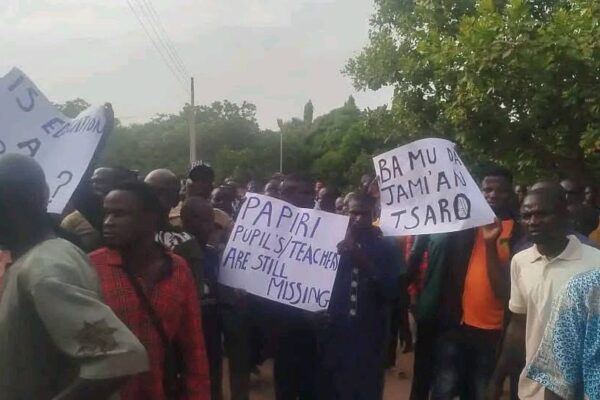
Protest has commenced in the Federal Capital Territory to demonstrate against rising hardship and insecurity in the country. Security agencies had earlier deployed heavily armed personnel to strategic locations across the city, including potential protest hotspots. The presence of operatives was particularly noticeable at major junctions and the national Assembly, among other places where the protesters could have gathered. However, the protest, which coincides with Nigeria’s Democracy Day, commenced in the Apo area of Abuja, where demonstrators were seen chanting solidarity songs and waving placards to express their grievances.

Read More

UniAbuja: SERAP threatens to sue FG over attack on media

Socio-Economic Rights and Accountability Project (SERAP) has threatened to sue should the Federal Government fails to investigate assault on Channels TV crew at University of Abuja. The nonprofit, nonpartisan, legal and advocacy organization committed to promoting human rights, transparency, and accountability in governance claimed security operatives brutally assaulted Channels TV crew covering a protest at the University of Abuja (UniAbuja) and vandalised the crew car, after detaining them for over an hour on Tuesday. The organisation however urged the President Bola Ahmed Tinubu’s administration to immediately instruct the Inspector General of Police to thoroughly investigate the alleged assault on the media crew. In a statement on the organisation’s official X handle on Wednesday, SERAP demanded that those suspected to be responsible must be identified and prosecuted. “The authorities must ensure justice and effective remedies for the journalists and crew affected, including financial compensation and repair or replacement of the damaged vehicle and equipment. “We’ll see in court if the recommended measures are not promptly taken. “Those responsible for physically attacking journalists and the UniAbuja authorities need to be held to account. The administration needs to make clear that attacks against journalists and media workers will not be tolerated. “No journalists should face physical violence for doing their jobs. “Nigerian authorities should guarantee that all journalists in the country are able to carry out their work without fear of reprisals. The de facto impunity for crimes against journalists and media workers must end. “The Nigerian Constitution 1999 [as amended] in section 39 guarantees the rights to freedom of expression, information and the media. Similarly, article 9 of the African Charter on Human and Peoples’ Rights and article 19 of the International Covenant on Civil and Political Rights to which Nigeria is a state party protect freedom of expression, information and the media. “The constitutional provisions and international standards serve as a critical check on authorities at all levels,” SERAP stated. Professors at UniAbuja were protesting the selection process for the university’s vice-chancellor, and the Channels TV crew was present to cover the demonstration.

Read More