


FG Clarifies Position on ASUU Agreement, Says 2009 Accord Remains Last Signed Deal

Federal Government Allows Polytechnics To Award Degrees, Ending HND Gap

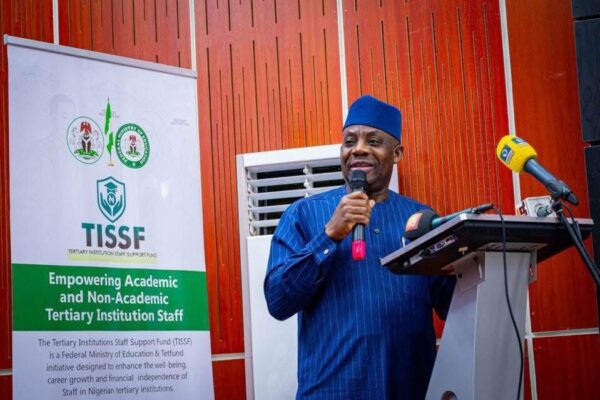
The Federal Government has announced a major change for polytechnics in Nigeria, giving them the power to award university-style degrees. This move is aimed at ending the long-standing distinction between Higher National Diploma (HND) holders and university graduates. Education Minister, Dr. Tunji Alausa, unveiled the plan on Wednesday during a meeting in Abuja with polytechnic leaders, education commissioners, and other stakeholders. He described the change as historic, saying it would stop years of unfair treatment of polytechnic graduates and position polytechnics as top centres for higher education. Dr. Alausa explained that while polytechnics will now award degrees, they will continue to focus on practical, hands-on training that prepares students for real-world jobs. The policy is part of President Bola Ahmed Tinubu’s Renewed Hope Agenda, which focuses on creating jobs, expanding industries, and building skilled workers for Nigeria’s future. With this change, polytechnics are expected to work more closely with industries, access better funding, and gain public trust. The government promises that the transition will follow clear rules and quality checks to ensure Nigerian polytechnic degrees meet high standards. The minister also encouraged polytechnic leaders to promote innovation through entrepreneurship hubs, research centres, and partnerships with industries. He highlighted areas such as renewable energy, agriculture technology, digital manufacturing, and climate solutions as key fields for students to focus on. This reform is seen as a major step toward giving polytechnic graduates the same opportunities and recognition as university graduates, while strengthening Nigeria’s workforce and economy.
Read More

Mathematics No Longer Required For Arts And Humanities Students In University And Polytechnic Admissions

The Federal Ministry of Education has announced that senior secondary school students in the arts and humanities will no longer need a credit in mathematics in their Senior School Certificate Examination (SSCE) conducted by WAEC or NECO to gain admission into Nigerian universities and polytechnics. For decades, all admission seekers—regardless of their chosen fields—were required to obtain five credits, including English and Mathematics, to qualify for higher education. However, the ministry said this requirement has now been revised to better reflect the needs of each discipline. According to a statement by ministry spokesperson Folasade Boriowo, the updated National Guidelines for Entry Requirements into Nigerian Tertiary Institutions aim to “remove barriers while maintaining academic standards.” The new framework applies to universities, polytechnics, colleges of education, and Innovation Enterprise Academies nationwide: Universities: Candidates must have a minimum of five credit passes in relevant subjects, including English Language, in not more than two sittings. Mathematics remains compulsory for Science, Technology, and Social Science courses only. Polytechnics (ND Level): A minimum of four credit passes in relevant subjects is required, including English for non-science courses and Mathematics for science-related ones. Polytechnics (HND Level): Candidates must present five credits, including both English Language and Mathematics. Colleges of Education (NCE Level): A minimum of four credits is needed, with English mandatory for Arts and Social Science courses, and Mathematics for Science, Vocational, and Technical programs. Education analyst Ayodamola Oluwatoyin commended the move, describing it as a “brilliant reform” that will ease admission hurdles for many students. Minister of Education, Dr. Tunji Alausa, said the decision represents a deliberate effort to expand access to tertiary education across the country.

Read More