
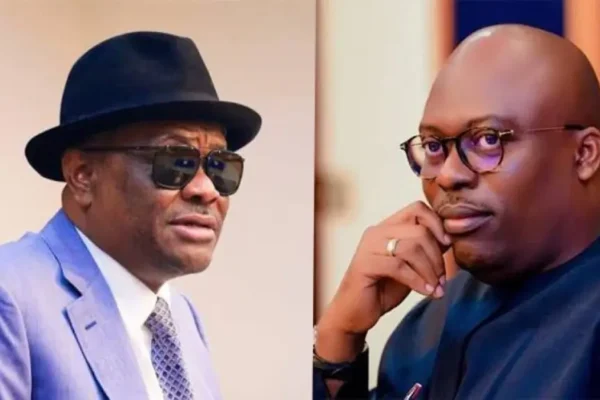
Wike Claims Rivers Governor Fubara Broke Presidential Agreement, Vows to Reveal Details

The Minister of the Federal Capital Territory, Nyesom Wike, has accused Rivers State Governor Siminalayi Fubara of reneging on an agreement brokered by President Bola Tinubu to resolve the state’s political crisis. Wike made the claim on Wednesday during a thank-you visit to residents of Tai Local Government Area, saying he would soon make the details of the deal public. The agreement followed a closed-door meeting convened by President Tinubu at the State House in Abuja in June 2025, which involved both Wike and Fubara. The meeting aimed to end the prolonged power struggle in Rivers State that led to a state of emergency and the suspension of the governor and members of the State House of Assembly. While both leaders had pledged to work together for peace, the terms of the deal were not publicly disclosed. “After agreeing on something, you renege. And you think you are a smart politician? You are clever by half. Very soon, we will let Rivers people know what we agreed before Mr President. If you can renege on what we agreed before Mr President, then who are we?” Wike said. The minister also reiterated his warning about Fubara’s political future, asserting that his supporters were ready to “correct the mistake” of the 2023 election. “We are battle-ready. We were the original ‘mandate’ people. Don’t deal with people who cannot keep to agreements. If they like, let them keep all the money, whether they have N600bn or not. We have defeated people with money before. We will still defeat people with money. What matters is the people, it’s not money,” he added. Wike also thanked the people of Tai for supporting President Tinubu during the 2023 election, noting that their loyalty had resulted in federal appointments, infrastructure development, and the establishment of the Federal University of Environment in the area.
Read More
DR Congo, Rwanda Hold First Oversight Talks Following Peace Deal

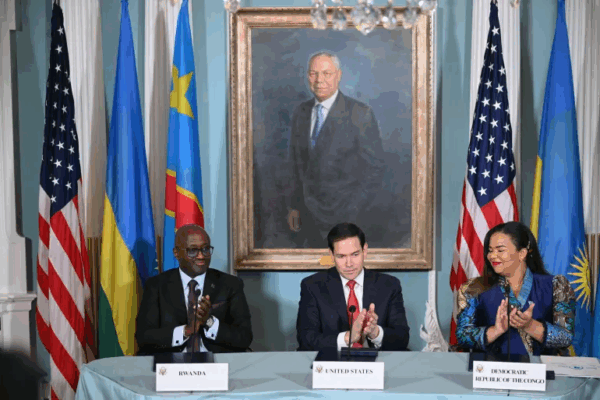
DR Congo, Rwanda Hold First Oversight Talks Following Peace Deal

By Kamal Yalwa | August 2, 2025 The Democratic Republic of the Congo (DRC) and Rwanda have convened the inaugural meeting of a joint oversight committee in Washington, marking a tentative step toward implementing a peace agreement signed in June. The African Union, Qatar, and the United States—key backers of the deal—participated in Thursday’s meeting, which aimed to monitor progress and maintain momentum toward peace in the conflict-ridden Great Lakes region. According to a joint statement released by both governments on Friday, the committee “discussed progress on implementing the agreement” signed during a high-profile summit hosted by U.S. Secretary of State Marco Rubio. The June 27 accord, seen as a turning point after years of deadly conflict, pledged respect for territorial integrity and a halt to hostilities in eastern DRC. Implementation Lags Despite Initial Momentum Under the terms of the deal, Rwanda agreed to withdraw its troops from eastern DRC within 90 days, while both nations committed to establishing a joint security coordination mechanism within 30 days. However, that timeline has already begun to slip. More than a month after the agreement was signed, there has been no meeting of the joint security body, and operations targeting the DRC-based rebel group Democratic Forces for the Liberation of Rwanda (FDLR) have yet to commence. The withdrawal of Rwandan troops has also not begun. Despite these setbacks, U.S. Africa adviser Massad Boulos insisted the deal is not derailed. “There was no timeline for that,” Boulos said, referring to operations against the FDLR. “If you look at the chronology of what we’ve been able to do since April, it’s been extensive, on point, and very much in line with our aspirations.” Tensions Still Simmer on the Ground Military and diplomatic sources say that while the talks continue, armed groups on both sides are reinforcing positions. The Rwandan-backed M23 and Congolese-aligned Wazalendo militias have reportedly strengthened their presence along contested front lines. The peace agreement includes vague provisions on economic cooperation and mineral trade, but critics argue the deal lacks specifics on enforcement and verification, particularly regarding troop movements and disarmament timelines. While the oversight committee is designed to address such gaps and disputes, analysts say the fragile trust between Kigali and Kinshasa, combined with persistent insecurity, will test the deal’s durability in the months ahead.

Read More