Bishop Kukah Visits Nnamdi Kanu At Sokoto Prison

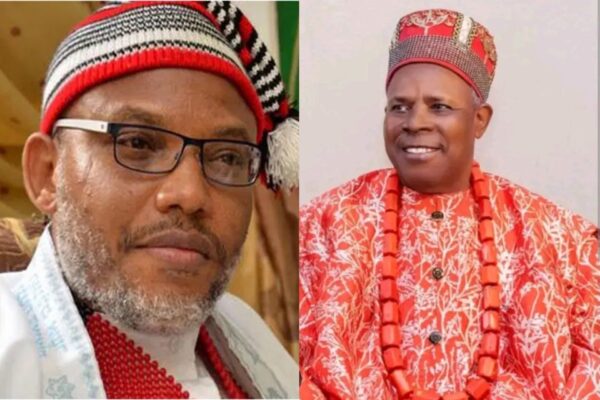
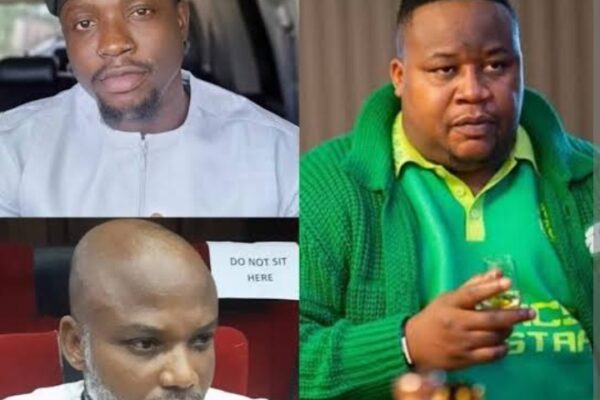
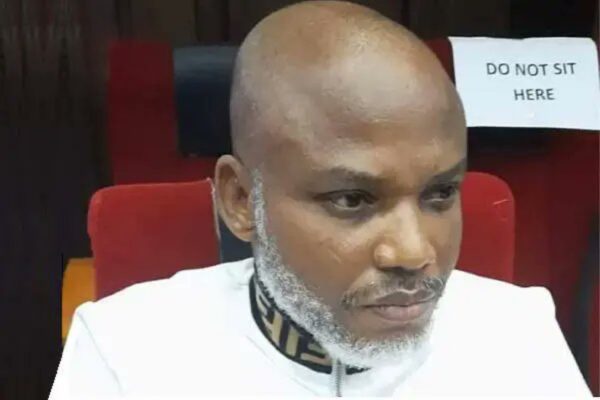
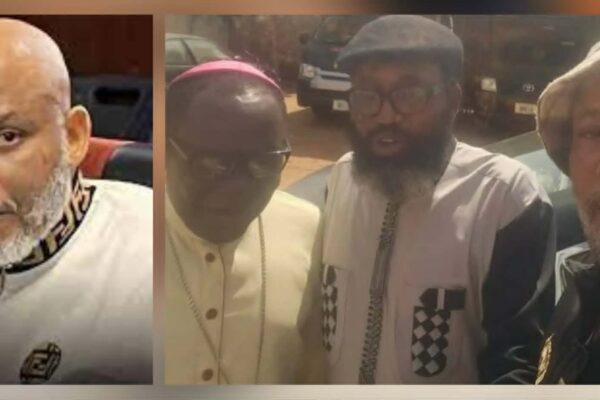
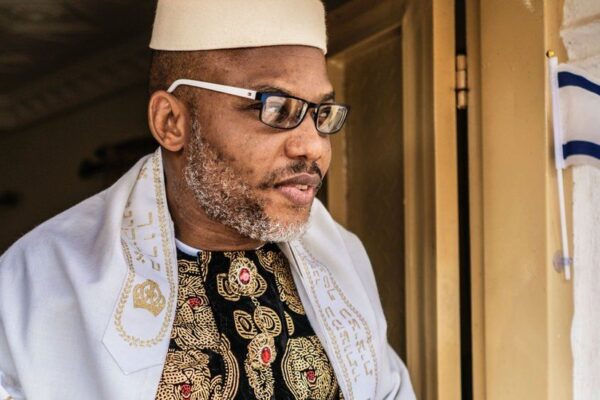
The Catholic Bishop of Sokoto, Most Rev. Matthew Hassan Kukah, has paid a visit to Nnamdi Kanu, leader of the Indigenous People of Biafra (IPOB), at the Sokoto Correctional Centre. Former African Action Congress (AAC) presidential candidate Omoyele Sowore commended the visit, describing it as a strong show of support. “Thank you so much, Bishop Matthew Hassan Kukah, for taking the time to visit Mazi Nnamdi Kanu today. Your visitation represents the solidarity of Sokoto Diocese with #MNK during this challenging time,” Sowore said. Kanu was convicted on terrorism charges by the Federal High Court in Abuja on November 20, 2025, and sentenced to life imprisonment. He was transferred to the Sokoto Correctional Centre the following day, following a court order that barred him from being held at Kuje Prison. The conviction followed prosecution on seven terrorism-related counts, including incitement and unlawful broadcasts. Justice James Omotosho found Kanu guilty on all counts and sentenced him to life imprisonment. Since his transfer, Kanu’s legal team has filed motions requesting his return to Abuja to facilitate his appeal. They argue that the distance makes it difficult to access court records, prepare his defense, and meet with lawyers. His team also contends that Nigeria lacked jurisdiction over broadcasts made in the UK, describing the trial as rushed and flawed. The court had ruled that Kanu could be detained in any correctional facility except Kuje Prison. Notable figures, including Abia State Governor Dr. Alex Otti and Sokoto State Governor Ahmad Aliyu, visited Kanu at the custodial centre in late November.

Read More

Court Rejects Nnamdi Kanu’s Ex Parte Bid For Transfer From Sokoto Prison

The Federal High Court in Abuja has refused to consider an application filed by the leader of the proscribed Indigenous People of Biafra (IPOB), Nnamdi Kanu, seeking an immediate transfer from the Sokoto Correctional Facility to a custodial centre closer to the court. Kanu had approached the court through an ex parte motion, asking that he be moved either to Suleja or Keffi custodial centres to enable him pursue his appeal more effectively. The application was brought by a lawyer from the Legal Aid Council of Nigeria, Demdoo Asan. However, Justice James Omotosho ruled that such a request could not be granted without hearing from the respondents — the Federal Government and the Nigerian Correctional Service (NCoS). The judge held that since the order sought would directly affect the agencies, they must first be properly notified and given the opportunity to respond. While reviewing the application, the judge specifically questioned the use of the word “compel” in the relief seeking to force the government and the correctional service to transfer Kanu. Following this, the lawyer agreed to withdraw that part of the request, and the court formally struck it out. Justice Omotosho also queried why the application was brought as an ex parte motion when judgment in the matter had earlier been delivered in the presence of both parties. The judge stressed that even a law school student should know such an application must be brought on notice. Asan admitted that the respondents ought to be served and heard before any decision could be made. He explained that he had only just taken over the case on instruction from his superiors while he was on leave. The court further discovered that Kanu’s notice of appeal was filed on November 10, before the judgment was delivered on November 20, making it ineffective. Based on this, Justice Omotosho held that there was no valid notice of appeal before the court. The case was subsequently adjourned to January 27, 2026, to allow Kanu to properly serve the relevant parties and regularise his application.

Read More

Nnamdi Kanu Moves To Be Transferred From Sokoto Prison To Pursue Appeal

Nnamdi Kanu, leader of the Indigenous People of Biafra (IPOB), has filed a new application at the Federal High Court in Abuja requesting a transfer from the Sokoto Correctional Centre. Kanu, who was recently sentenced to life imprisonment on terrorism charges, submitted the motion ex parte, which he personally signed. The application was formally presented to the court on Thursday by his younger brother, Prince Emmanuel Kanu. In the motion, Kanu argued that his current detention in Sokoto, over 700 kilometres from Abuja, would hinder his ability to personally pursue his constitutional right to appeal the conviction. He stated that preparing the notice and record of appeal requires his presence at the registry of the Federal High Court and the Court of Appeal in Abuja. Kanu further explained that all individuals essential to assisting him with his appeal, including family members, associates, and legal consultants, are based in Abuja. He stressed that remaining in Sokoto would make it practically impossible to coordinate with them, creating exceptional hardship and potentially undermining his right to appeal. The IPOB leader maintained that continued detention far from the capital amounts to a violation of Section 36 of the 1999 Constitution of the Federal Republic of Nigeria (as amended), which guarantees the right to a fair hearing.

Read More

President Tinubu Holds Meeting With Abia Governor Alex Otti Over Nnamdi Kanu Release

President Bola Tinubu on Tuesday received Abia State Governor Alex Otti at the Presidential Villa, Abuja, in a meeting reportedly linked to ongoing efforts to secure the release of IPOB leader Nnamdi Kanu. Kanu, who was sentenced to life imprisonment on terrorism-related charges by a Federal High Court in Abuja on November 20, 2025, has since become the focus of protests and advocacy for his release. Governor Otti’s visit comes after he met Kanu at the Sokoto prison, where the IPOB leader is serving his sentence. He was accompanied by Kanu’s younger brother, Emmanuel Kanu; Abia State Attorney-General and Commissioner for Justice, Ikechukwu Uwanna, SAN; and his Special Adviser on Media and Publicity, Ferdinand Ekeoma. Following the prison visit, Otti reaffirmed the state’s commitment to pursuing all lawful measures to secure Kanu’s freedom. “While Mazi Nnamdi Kanu is free to appeal his conviction, I’m pleased to inform you that I have activated, and will continue to pursue, the agreed strategy until his freedom is secured,” he stated. Tuesday’s meeting with President Tinubu is seen as part of a coordinated political and legal effort to explore possible solutions at the federal level. Details of the discussions between Tinubu and Otti have not yet been made public.

Read More

Alex Otti Visits Nnamdi Kanu In Sokoto, Assures Continued Efforts For His Release

Abia State Governor Alex Otti on Sunday paid a visit to Indigenous People of Biafra (IPOB) leader Nnamdi Kanu at the Sokoto Correctional Centre, assuring him that efforts to secure his release remain active. Governor Otti was joined by Kanu’s younger brother, Emmanuel Kanu; Abia State Attorney-General and Commissioner for Justice Ikechukwu Uwanna (SAN); and his Special Adviser on Media and Publicity, Ferdinand Ekeoma. Officials from the Sokoto State Government were also present. Speaking after the visit, Ekeoma said Otti encouraged Kanu to stay strong, noting that the governor had intensified initiatives he began more than two years ago. Otti expressed confidence that the situation would be resolved administratively, and that Kanu would soon regain his freedom. The governor also informed Kanu that the Sultan of Sokoto, Alhaji Muhammad Sa’ad Abubakar, had expressed support for a peaceful resolution. Otti recounted that the Sultan jokingly referred to Kanu as his “subject” and hinted at turbaning him, a remark that made Kanu laugh. Kanu, reportedly in good spirits, thanked Otti for the visit, commended the development projects in Abia State, and encouraged the governor to continue prioritising effective governance.

Read More

Nnamdi Kanu’s Wife, Brother and Lawyer, Aloy Ejimakor, Visits Nnamdi Kanu in Sokoto Prison

Aloy Ejimakor, Special Counsel to Nnamdi Kanu, leader of the Indigenous People of Biafra (IPOB), has visited the pro-Biafra leader in Sokoto State. Ejimakor arrived on Wednesday alongside Kanu’s wife, Uchechi, and his brother, Prince Emmanuel Kanu, to see the convicted agitator at the Sokoto State Custodial Centre, where he is serving a life sentence handed down by Justice James Omotosho of the Abuja Federal High Court on terrorism-related charges. Sharing the visit on X, Ejimakor called on the Igbo community to take action in support of Kanu, writing: “I just arrived Sokoto (with Prince Emmanuel Kanu & his wife) to have a visitation with MAZI NNAMDI KANU. Ndigbo must vigorously rise to the urgent task of freeing #MNK from this ordeal & injustice that reflect on all of us.”

Read More

Sheikh Ahmad Gumi Says He Will Push For Nnamdi Kanu’s Pardon If He Shows Remorse

Islamic cleric Sheikh Ahmad Gumi has defended his stance on using non-kinetic methods to address Nigeria’s security challenges, saying he would support calls for the release of IPOB leader Nnamdi Kanu if the activist shows genuine remorse. Kanu was convicted on seven counts of terrorism by the Federal High Court in Abuja. Speaking on Channels Television’s The Morning Brief on Tuesday, Gumi said that if Kanu expresses regret for his past actions and advocates for peace, he would be among those pushing for his pardon and amnesty. “This Kanu, imprisoned for terrorism for urging attacks on our soldiers, if he now shows remorse and calls for peace, I will be at the forefront demanding his pardon and amnesty,” Gumi stated. He referenced past instances where amnesty was granted in Nigeria, including former President Shehu Shagari pardoning Odumegwu Ojukwu and Umaru Yar’Adua offering amnesty to Niger Delta militants. “This is how things have always been handled in our country,” he added. Gumi, who has consistently advocated for non-violent solutions to insecurity, particularly in northern Nigeria, argued that military action alone cannot resolve the nation’s challenges. “Even America could not succeed in Afghanistan, and Israel struggled in a small strip of land. Our army is not equipped for guerrilla warfare; no army is,” he said. He further highlighted that some groups, like Fulani herdsmen, have shown willingness to engage in peace talks. “When called for peace, they respond, sometimes armed for various reasons,” he said. “Can you call IPOB for peace? Can you call Boko Haram? Some leaders have tried, but it gets harder over time. Anyone inclined toward peace, I support them.” Gumi’s comments come amid escalating insecurity in Nigeria, with mass abductions of schoolchildren and worshippers reported in several states. While President Bola Tinubu has directed security forces to pursue the perpetrators, opposition figures have criticized the government’s handling of the situation as insufficient.

Read More

Peter Obi Calls Nnamdi Kanu’s Conviction A Costly Leadership Failure That Deepens Tension

Peter Obi has reacted to the arrest, detention, and eventual conviction of Nnamdi Kanu, describing the entire episode as a costly leadership failure that has deepened national tension instead of easing it. In a statement released through his media aide, Ibrahim Umar, Obi urged Nigerians to reflect on the situation, noting that the country is already weighed down by economic hardship, insecurity, and years of misgovernance. According to the statement, the moment calls for calm thinking, not further escalation. Obi restated his long-standing view that Kanu’s arrest should never have happened, arguing that the current outcome is the result of a government that ignored wiser options. He stressed that the concerns Kanu raised were issues many Nigerians also worry about—issues that required open conversation, fairness, and inclusion. He argued that stable nations resolve grievances by reforming policies, broadening representation, and engaging constructively with affected groups. In this case, he said Nigeria chose force before exhausting dialogue. The statement added, “Coercion becomes necessary only when reason has been exhausted. In this case, reason was not fully explored, if at all”. While acknowledging that some believe the justice system simply followed its procedures, Obi maintained that real leadership sometimes requires going beyond strict legal pathways to prevent deeper national cracks. He pointed to examples around the world where countries rely on political solutions, negotiated peace, or conditional amnesty when legal outcomes threaten national cohesion. He described the government’s approach as similar to a person stuck in a pit who keeps digging instead of looking for a way out, warning that such choices only fuel suspicion and worsen an already fragile atmosphere. Obi appealed for restraint and called on the Presidency, the Council of State, and respected national figures to step in and steer the country toward reconciliation. He urged efforts that promote healing rather than hostility, unity instead of bitterness, and dialogue over confrontation. He expressed confidence that Nigeria can still find peace if it commits to justice, fairness, and compassion.

Read More