One Year After Deadly Protests, Amnesty International Slams Nigerian Government Over Lack of Accountability

One Year After Deadly Protests, Amnesty International Slams Nigerian Government Over Lack of Accountability

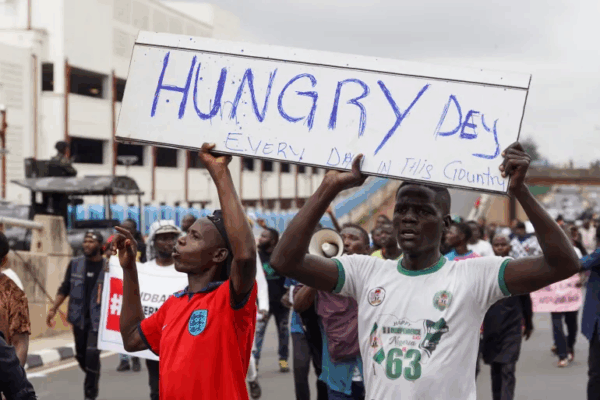
By Kamal Yalwa: August 2, 2025 | Abuja One year after security forces reportedly killed at least 24 protesters during nationwide demonstrations against economic hardship, Amnesty International has condemned the Nigerian government’s continued failure to ensure justice and accountability. The human rights watchdog, in a statement issued on Friday to mark the anniversary of the 2024 protests, accused Nigerian police of denying well-documented allegations of extrajudicial killings, torture, and unlawful arrests. “Despite the gravity of these human rights violations, not a single member of the security forces has been prosecuted,” said Isa Sanusi, Director of Amnesty International Nigeria. “Accountability remains elusive for the 24 peaceful protesters killed in Kano, Jigawa, Katsina, Borno, Niger and Kaduna states. Those behind these atrocities must be held to account.” The protests, which began in early August 2024 under the hashtag #EndBadGovernanceInNigeria, were sparked by growing public anger over soaring fuel prices and runaway inflation, largely triggered by President Bola Ahmed Tinubu’s sweeping economic reforms, including the removal of fuel subsidies and floating of the naira. Amnesty said its investigations confirmed that police fired live ammunition at close range—often targeting the head and torso—indicating a clear “shoot-to-kill” approach. The organisation also raised alarm over the “sham trials” of hundreds of protesters arrested during and after the demonstrations. Many of the arrested face charges ranging from inciting mutiny to calling for a military takeover and using WhatsApp to “levy war against the state.” Some were reportedly charged for chanting slogans such as “Tinubu must go.” “The Nigerian authorities are yet to take appropriate and effective measures to respect, protect, promote and fulfil the rights to freedom of expression and peaceful assembly,” Sanusi said, while also accusing the government of continuing mass surveillance, intimidation, and arbitrary detention of protesters. Though some detainees—many of them minors—were released by presidential order following public outcry in late 2024, over 700 people still face trial. The Ministry of Justice did not respond to AFP’s request for comment on the allegations. While President Tinubu’s economic reforms have been hailed by some international observers as necessary for long-term growth, the short-term effects have devastated millions of Nigerians, pushing many into poverty and prompting widespread unrest. Amnesty reiterated its call for full investigations, transparent prosecutions, and compensation for victims’ families.

Read More
Nigerian Man Loses Fingers to Frostbite While Fleeing US Deportation to Canada

Nigerian Man Loses Fingers to Frostbite While Fleeing US Deportation to Canada

Chidi Nwagbo, a 57-year-old Nigerian man facing deportation from the United States, has recounted how he lost several fingers to frostbite while attempting to cross into Canada with the help of human smugglers. Nwagbo, who has lived in the US since 1988, said he felt compelled to flee after Donald Trump’s re-election in November. In February, he paid $2,000 to smugglers in New Jersey, who promised him safe passage to Canada through the snowy borderlands between New York and Quebec. The journey, however, turned into a life-threatening ordeal. Nwagbo and other migrants, including women and a baby, were forced to trek through deep snow in freezing temperatures as low as -28°C. He lost his gloves along the way, and frostbite later led to the amputation of multiple fingers. “It was supposed to be a 30 to 40 minutes walk. These people (smugglers) kept calling, saying, ‘Just keep going, you only have 10 minutes,’” Nwagbo recalled. Nwagbo and 98 other migrants were eventually intercepted by the Royal Canadian Mounted Police at the Quebec-US border. He now regrets his decision, warning others against using smugglers: “Don’t do it. Smugglers only care about money. They don’t care about your safety.”

Read More
Nigerian Arrested in India for ₦214m Drug Trafficking

Nigerian Arrested in India for ₦214m Drug Trafficking

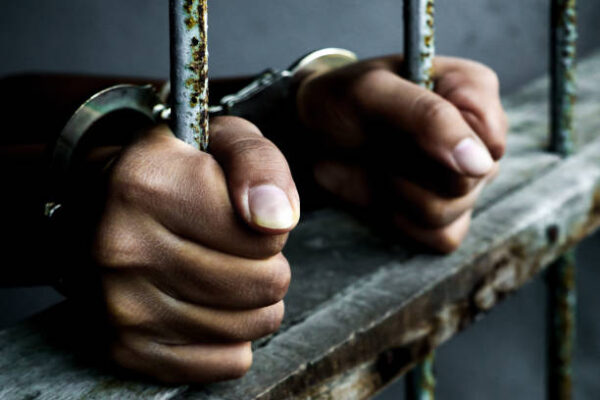
Bengaluru, India – Barely a week after a Nigerian hairstylist, Ifeoluwa Akinwunmi, was arrested in India with drugs worth over ₦1.8 billion, another Nigerian national has been apprehended for a similar offence. The suspect, identified as Chikuwuma, was arrested by operatives of Bengaluru’s Central Crime Branch (CCB) during a raid in the Avalahalli area of northern Bengaluru. Officials said the narcotics seized were valued at Rs 1.2 crore (approximately ₦214 million). According to India Today, Chikuwuma was caught in the act of selling narcotics and is believed to be part of a wider international trafficking network. The raid, conducted by the CCB Narcotics Wing, resulted in the recovery of MDMA and crystal substances. Police sources disclosed that Chikuwuma had allegedly been involved in drug trafficking since 2013, importing narcotics from overseas and distributing them across Bengaluru, especially in its outskirts. Authorities confirmed that the suspect is under custody as investigations continue to uncover others linked to the syndicate. The latest arrest adds to the growing list of Nigerians facing prosecution in India for drug-related offences

Read More
Over 70% of Nigerian Shipments to U.S. Rejected or Delayed Amid New Tariff Policy

Over 70% of Nigerian Shipments to U.S. Rejected or Delayed Amid New Tariff Policy

Since the enforcement of former U.S. President Donald Trump’s new tariff policy—particularly targeting imports from Africa—over 70% of shipments sent from Nigeria to the United States via air cargo have been either refused entry or placed on indefinite hold. Ini Daniel, Chief Commercial Officer at AAJ Express Logistics Limited, disclosed this on Tuesday, highlighting the severe disruption the policy has caused. He noted that the delays have created major setbacks for Nigerian exporters and importers operating in the U.S. market. “Nigerian exporters are facing unprecedented challenges following the full implementation of Trump’s tariff regulations on April 2, 2025,” Daniel said. “Cargo and courier companies are struggling with clearance, creating a crisis for exporters trying to meet demands in the U.S.” The aviation sector has also been hit hard, with airlines reportedly offering steep discounts or even free returns due to the growing backlog of undelivered goods. Exporters, meanwhile, remain in the dark as U.S. customs officials have yet to provide clear reasons for the shipment rejections. Daniel emphasized that Nigeria is not alone in this dilemma—exporters from China, Europe, and other African nations are also being impacted. In light of the uncertainty, he advised Nigerian exporters to temporarily halt shipments to the U.S. until customs authorities issue clearer guidelines. Exporters now anxiously await clarification and a resolution that could restore smooth trade with the U.S. market.

Read More