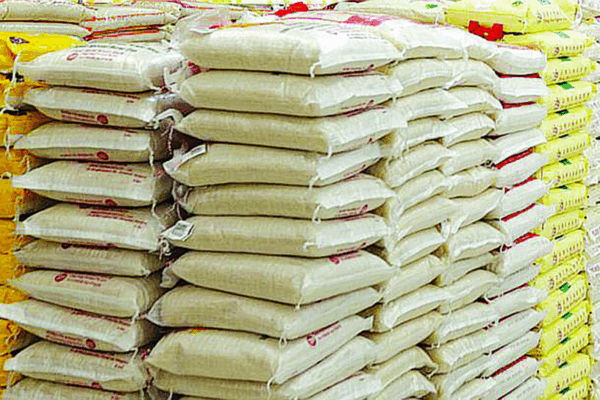
Rice Prices Soar Again, Hit ₦100,000 per Bag as Import Waiver Window Ends

Nigerians are facing renewed hardship as the price of rice surges across major markets, reversing months of relief that had seen the staple drop to around ₦65,000 per 50kg bag. A Sunday Vanguard market survey in Lagos revealed that some brands of rice now sell for as much as ₦100,000 per bag, with prices for other brands ranging between ₦77,000 and ₦90,000, depending on quality and grain type. Dealers and analysts attribute the sudden spike to the expiration of the 150-day duty-free import window granted under the Presidential Accelerated Stabilisation and Advancement Plan introduced in July 2024. The temporary policy had allowed select firms to import essential grains, including rice, without paying import duties, a measure intended to curb inflation and rising food costs. However, insiders say the process was shrouded in secrecy, with only a few large firms benefiting. Secrecy, Selective Waivers, and Policy Gaps Peter Dama, Chairman of the Board of Trustees of the Competitive African Rice Forum – Nigerian Chapter (CARF-FSD) and President of the Rice Millers Association of Nigeria (RIMAN), confirmed that only three firms, including one in Lagos and another in Kaduna, received the waivers. Dama lamented that the waiver initiative ignored established stakeholders who built Nigeria’s rice value chain. He said that many local millers and processors who applied for the waivers never received a response from the government. “Short-term fixes like waivers only hurt the local industry,” Dama warned. “We need long-term investments to support farmers, processors, and marketers if we want real food security.” Market Reactions: “We’re Not in Business Anymore” Rice dealers in Lagos expressed deep frustration. At Daleko Market, Mrs. Bolatito Yunisa described the situation as dire: “A bag of short grain rice that sold for ₦65,000 is now ₦85,000. Long grain rice is as high as ₦100,000. We are frustrated. Where is Nigerian rice?” At Mile 12 Market, Mrs. Bukola Osagie said many buyers now request rice in small measurements like “Derica” due to high prices. “We’re barely surviving. Even we, as dealers, now struggle to make sales.” The same 50kg bag of locally produced rice that once sold for ₦70,000 now goes for over ₦80,000, raising fears that Nigeria’s rice affordability crisis could worsen. ₦1.9 Trillion Spent, But to What End? According to RIMAN, ₦1.9 trillion ($1.17 billion) was spent on duty-free brown rice imports in the second half of 2024. About 2.4 million tonnes of rice were shipped into Nigeria between July and December 2024 alone. In early July 2025, 10,000 tonnes were offloaded in Lagos from a shipment by African Swift, while another 32,000 tonnes from Thailand arrived in January via DUCAT Logistics. Despite these massive imports, smuggled rice from Benin Republic still dominates many markets, with prices ranging from ₦70,000 to ₦78,000, due to a continued deficit in domestic production. “Nigeria has more than enough rice mills to feed the country,” Dama said. “But policy inconsistency, FX shortages, and selective waivers have made local milling unsustainable.” Local Mills Shutting Down Dama warned that many local rice mills have been forced to scale down or shut down due to a collapse in demand for paddy rice and an inability to compete with cheaper, subsidised imports. Other compounding challenges include: “You don’t expect millers to run at a loss. We want to feed the nation, but the system must support us,” he said. Rice Smuggling Undermines Local Production Illegal rice imports continue to flood the country. RIMAN estimates that over 1 million metric tonnes of smuggled rice have entered Nigeria between January and July 2025 alone, further destabilising the local market. “The Ministry of Agriculture submitted a vetted list of genuine millers to the Finance Ministry — but no action has followed. The silence is disturbing,” Dama added. A Collapse of Hard-Won Gains? Dama warned that unless urgent action is taken, Nigeria risks losing the gains made in the rice value chain in recent years — including job creation, rural development, and food security. “The same farmers who kept this country fed during the COVID-19 lockdowns are now being abandoned. What signal is government sending?” With prices soaring and production stagnating, the question for millions of Nigerians remains the same: When will rice — the country’s most consumed staple — become affordable again?

Read More

CAF Appoints Namibian Referee for Morocco, Nigeria Final

Namibian referee Antsino Twanyanyukwa has been appointed by CAF to referee the CAF Women’s Africa Cup of Nations (WAFCON), Morocco 2024 Final. Antsino, who has been one of the standout performers among match officials during the tournament, will make history as the first Namibian to officiate a WAFCON final. Her steady leadership, consistency, and calm control of matches have earned her the ultimate honour. “I didn’t expect this at all; I’m still in shock. But with God, all things are possible,” says Antsino. “WAFCON is a major competition, and expectations are high. We have to go in with the mindset that the whole continent is watching and give our absolute best. “Personally, I believe I have the talent and the potential. They’ve seen what I can do, and now it’s my opportunity to prove it; to show it on the pitch.” She will be joined by an elite team of assistants: Alice Umutesi (Rwanda) as Assistant Referee 1, and Tabara Mbodji (Senegal) as Assistant Referee 2, both of whom have been commended for their sharp decision-making and composure throughout the tournament. In the Video Assistant Referee (VAR) booth, another iconic name leads the charge. Rwanda’s Salima Mukansanga, a pioneer in global football officiating and one of the most respected figures in the women’s game, will serve as the VAR. Mukansanga made headlines as the first woman to officiate at the CAF Africa Cup of Nations (AFCON) in 2022 and has brought her experience from the Olympics and FIFA Women’s World Cups to the TotalEnergies CAF WAFCON, Morocco 2024 once again. Supporting her in this final are Letticia Viana (Eswatini) as AVAR 1 and Diana Chikotesha (Zambia) as AVAR 2, both rising stars in Africa’s officiating ranks. Antsino officiated several key matches, impressing CAF’s Technical and Refereeing Committee with her ability to remain poised in high-pressure moments. Her most recent performance showcased her exceptional fitness, and match control, all vital in the modern game. CAF Head of Refereeing, Desire Noumandiez Doue hailed her appointment. “Their appointment was informed by their consistent quality and performance,” said Desire. “It is the result of their hard work, both in training and in the matches they’ve officiated, as well as their overall readiness. “Their performances have shown consistency in key areas: tactical awareness, anticipation, match control, and overall game management. The two assistants, in particular, are among a group of brilliant young referees emerging on the continent, and their improvement has been nothing short of impressive. “This selection also reflects CAF’s commitment to fairness. It’s our way of saying: if you perform well, you deserve the best. And the referees selected for the final are among the best we have. “Antsino for instance, has demonstrated all the qualities we look for. We’ve been monitoring her closely for the past three years, and she has done incredibly well. At the rate she is going, she’s certainly a potential candidate for the FIFA Women’s World Cup.” “We know that a final is never just another match. That’s why we invest in preparing our referees, not just tactically, but mentally as well. We emphasize confidence, focus, and the understanding that they are carrying the hopes of all of us on that pitch. We remind them: go out there and give it your very best.” The all-women officiating team for the final reflects CAF’s continued investment in women’s football and its commitment to creating opportunities for women at every level of the game. Speaking ahead of the final, Antsino reflected not only on her personal journey but on the legacy she hopes to inspire. “I know everyone will be happy for me now, because in Namibia, support comes naturally. I believe this moment will inspire many. To the young ones out there: work hard, stay disciplined, and always pray. Stay focused, and nothing will stop you from achieving your goals.” The CAF WAFCON, Morocco 2024 Final will be contested between Nigeria and Morocco on Saturday, July 26 at the Olympic Stadium in Rabat.

Read More

Mission X: We Are Focused on Lifting the Trophy – Madugu

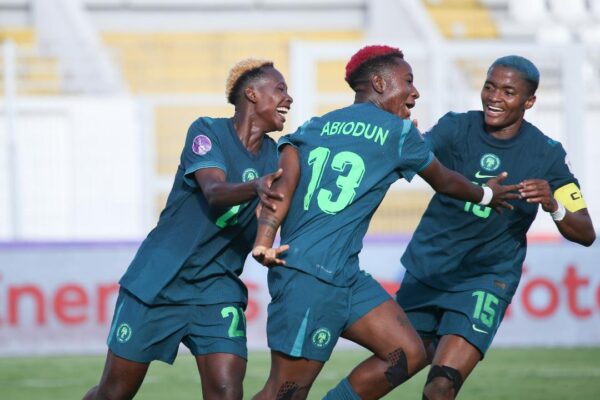
Coach Justine Madugu has said that Nigeria’s Super Falcons have not come this far at the 13th Women Africa Cup of Nations to think of anything but reclaiming the trophy they have won a total of nine times out of the previous 12 championships. The Super Falcons, one of only seven teams to have featured at every single edition of the FIFA Women’s World Cup finals since the competition was launched in 1991, saw off the challenge of gutsy Cup-holders Banyana Banyana of South Africa in Tuesday’s second semi final, thanks to an eye-widening cross-cum-floater goal by defender Michelle Alozie in added time. “We thank God for making it to the final. I want to assure you that we are not going to relent or take our eyes off the ball. Our focus is on lifting the trophy in Rabat on Saturday,” Madugu said as the nine-time champions packed their bags to leave Morocco’s industrial and economic capital, Casablanca, on Wednesday afternoon. “We knew South Africa, as Cup holders, would be difficult but we were ready for them. I am glad that our tactics paid off. As I said before the tournament, we will always assess the opposition first and then determine what tactics would suit us better and serve our purpose. We have done these in our previous five games and we will do the same in the final.” Nigeria go up against hosts Morocco at the Olympic Stadium in Rabat from 9pm on Saturday night, in what has been labelled as the most-anticipated match of the 13th Women AFCON – a clash of the dominant power and one of the emerging powers of women’s football on the continent. It is the second time in 17 months that Nigeria will confront the host nation in a major continental final (the Super Eagles faced hosts Cote d’Ivoire in the final of the men’s AFCON in Abidjan in February 2024), with South Africa as the stepping stone in the previous hurdle. Captain Rasheedat Ajibade’s on-field elegance, team-carrying role and resoluteness have found ample support from the rapid pace and energy of Folasade Ijamilusi, the attacking potency of Chinwendu Ihezuo, the vibrancy and spiritedness of Esther Okoronkwo and Jennifer Echegini, the attack-minded play of defender Ashleigh Plumptre, and the near-impregnability of goalkeeper Chiamaka Nnadozie (Africa’s Goalkeeper of the Year back-to-back). Nigeria’s tally has been an impressive 11 goals for and one against – a penalty scored by Linda Motlhalo as the Banyana vainly sought a way back into the game in Tuesday’s semi final in Casablanca. It is a long way and many days from 17 October 1998, when the Falcons hammered the Lionesses 8-0 in a group phase match in Kaduna, at the inaugural edition of what was then known as the African Women Championship. Nkiru Okosieme, Patience Avre and Rita Nwadike weighed in with a brace each, while Mercy Akide and Florence Omagbemi scored one each. Two years later, at the second edition hosted by South Africa, the Falcons again whipped the Lionesses, this time 6-0, with a brace each by the fabulous Mercy Akide and Kikelomo Ajayi, and one each Maureen Madu and Nwadike. Yet, three years ago, as hosts, the Lionesses got one up on the Falcons – winning their semi final clash on penalty shootout after a 1-1 drawin regulation and extra time. Morocco’s rise to this fresh height (dining at the table of Empresses) has been nothing if not meteoric. From high-margin maulings in the nineties and noughties, the Lionesses have reached back-to-back Women AFCON final matches with eye-catching performances, spring in their steps, confidence in their gait and esteem in their comportment. Saturday’s final is guaranteed to be played in front of a capacity crowd at the Olympic Stadium – a fitting showcase to the rising profile and steady progress of women’s football on the African continent.

Read More

FIFA Appoints Match Officials for U-20 World Cup Chile 2025

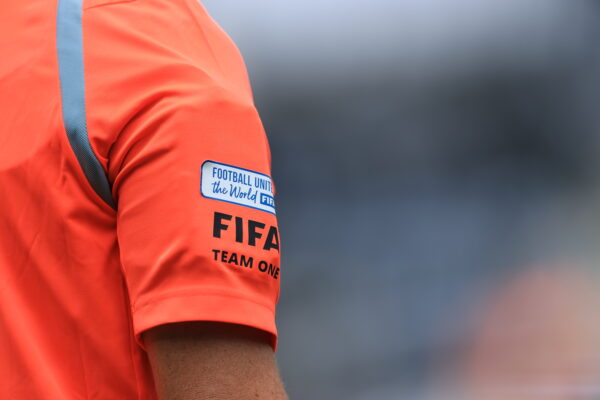
The FIFA Referees Committee has announced the match officials who will oversee games at the FIFA U-20 World Cup Chile 2025, which will take place from 27 September to 19 October. A total of 54 match officials (18 referees and 36 assistant referees) from 22 FIFA Member Associations are set to take charge of the matches. “Following the success of the FIFA Club World Cup, we look forward to another exciting tournament, for which we have once again appointed a very strong Team One line-up. From a refereeing perspective, it’s very important that the officials have the opportunity to be involved at a tournament featuring the stars of tomorrow and for us to carry out further testing of Football Video Support (FVS), which has been a great success so far,” said the Chairman of the FIFA Referees Committee, Pierluigi Collina. The use of Football Video Support (FVS) at the tournament follows on from the trials implemented last year at the FIFA U-20 Women’s World Cup in Colombia and the FIFA U-17 Women’s World Cup in the Dominican Republic. The FVS trials followed numerous requests from member associations for an alternative, cost-effective way of using technology to support match officials. Unlike the video assistant referee (VAR) system, FVS does not use dedicated video match officials and therefore does not check all match-changing incidents. Instead, the onus falls on the respective head coaches, who are allowed to make a limited number of review requests per game when they feel that a clear and obvious error has been made in match-changing incidents, such as goals, penalty decisions, direct red card incidents or cases of mistaken identity. The players can also recommend that their coaches request a review. “Chile is a football-loving country, and we have an excellent opportunity to ensure that this year’s edition of the FIFA U-20 World Cup leaves a legacy on a refereeing level. The (FIFA) U-20 World Cup is a highly competitive tournament that requires officials to have a sound reading of the game,” noted FIFA Director of Refereeing Massimo Busacca.

Read More

US Issues Fresh Travel Advisory Warning Against Travel to Nigeria

The United States government has issued a new travel advisory cautioning its citizens against travelling to Nigeria due to a combination of security threats and inadequate healthcare services. The advisory, released as part of the US security review for Africa, cited kidnapping, terrorism, armed gangs, and violent crime as major risks. It also flagged the poor availability of healthcare services and warned travellers to make provisions for all necessary medications and emergency care before visiting. Nigeria was listed alongside 11 other high-risk African countries, including Somalia, Libya, Burkina Faso, South Sudan, Democratic Republic of Congo, Uganda, Burundi, Mauritania, Guinea-Bissau, Niger, and Chad. The US State Department categorised Nigeria under Level 3: “Reconsider Travel”, with 18 states placed under Level 4: “Do Not Travel”. These include: The US Mission in Nigeria highlighted the prevalence of violent crimes such as armed robbery, assault, carjacking, roadside banditry, and kidnappings for ransom, warning that terrorists may strike with little or no notice at public places, hotels, markets, and transportation hubs. Additionally, the advisory underscored Nigeria’s high malaria risk, unreliable healthcare services, lack of emergency response infrastructure, and counterfeit pharmaceuticals, urging travellers to secure comprehensive travel and medical evacuation insurance.

Read More

Sport Integrity Foundation Presents Half-Year Report of Activities in Nigeria Football

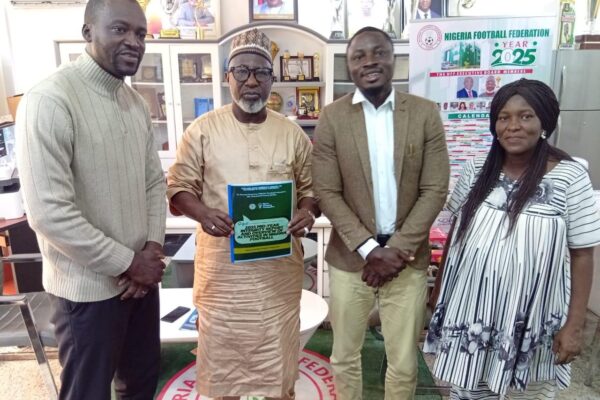
The Nigeria Football Federation on Tuesday received an independent Mid-Year report of Activities in Nigeria Football from the Sport Integrity Foundation. NFF General Secretary, Dr Mohammed Sanusi (MON) hailed the efforts of the Foundation and praised it for contributing its quota as partners-in-progress to moving Nigeria football, which is in line with the objectives of the Ibrahim Gusau-led administration to inspire all stakeholders to contribute what they can to grow the Nigeria game. “We’re very impressed to see such initiative coming from your organisation. The NFF cannot see everything but having organisations like yours delights us. You are becoming an important eye for the integrity of the game. “The NFF board is very committed to ethics and integrity and we’re doing everything to make sure that anybody trying to bring the game into disrepute will be punished. We also need the collaboration of law enforcement agencies so that when we pass resolutions, such individuals can be punished within the ambit of the law,” Dr Sanusi said. The delegation of Sport Integrity Foundation included Abiola Shodiya, Co-ordinator and; Sammy Ejegwa, Georgina Bode and Taofeek Lawal, who are members.

Read More

WAFU B U20 Boys Tourney: Flying Eagles Strategise to Stop Ivorians in Final

Nigeria’s U20 boys, Flying Eagles know they must be at their very best to surmount the challenge of in-form Young Elephants of Cote d’Ivoire in Wednesday’s Final match of the WAFU B U20 Boys Tournament in Accra, Ghana. The Ivorians have taken no prisoners at this tournament, winning all their four previous matches. They edged Burkina Faso 2-1 in their first match, and went on to conquer Niger Republic and Togo with 1-0 and 2-0 scorelines in their other two matches in the group phase. In Sunday’s semi finals, they came from behind to defeat host nation Ghana 2-1, underscoring their strength, resilience and adversity quotient. Forward Mohammed Abdullahi earned Nigeria a point with an 84th minute equalizer against the Black Satellites of Ghana in the competition’s opening match, and the Flying Eagles then came from behind to rout Benin Republic’s U20 boys 4-1 in the three-team group A. In their semi final, two-time FIFA U20 World Cup runners-up Nigeria edged the U20 boys of Niger Republic 4-3 after a penalty shootout, following 0-0 in regulation time. There will be plenty of fireworks at Ghana’s Centre of Excellence in Prampram on Wednesday, with the Nigerian President of WAFU B, Alhaji Ibrahim Musa Gusau (MON), seated alongside other top officials of WAFU at the grand finale. Wednesday’s encounter is an opportunity for Head Coach Aliyu Zubair to put some polish on his rising reputation as a winner, having led the Flying Eagles to win the WAFU B U20 Championship in Togo last year and coming away with a FIFA World Cup ticket from the U20 Africa Cup of Nations in Egypt a couple of months ago. Mohammed Abdullahi and Ezekiel Kpangu are the players to watch out for in the Nigerian side, while Abdoul Bamba and Ali Kone constitute potent threats at the fore of the Ivorians.

Read More

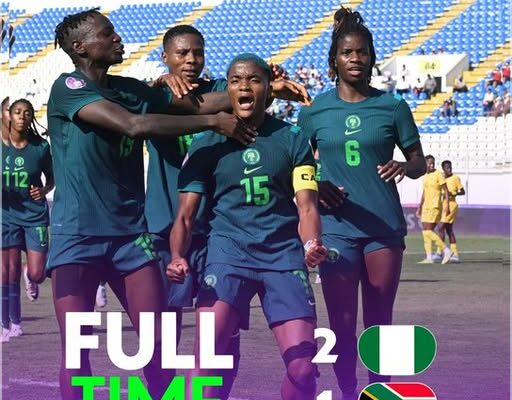
Nigeria Defeat South Africa 2-1 to Reach WAFCON Final

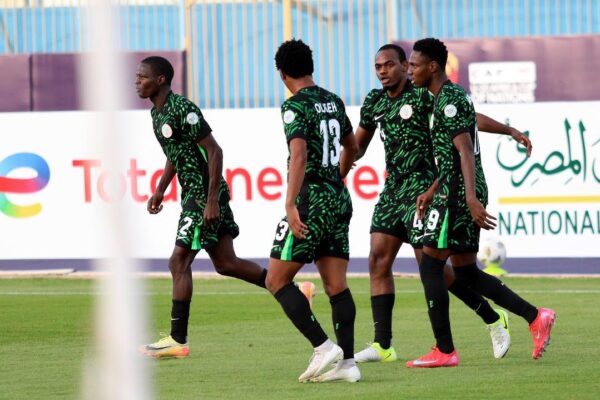
Nigeria’s Super Falcons have booked their place in the final of the Women’s Africa Cup of Nations (WAFCON) after a hard-fought 2-1 victory over South Africa’s Banyana Banyana on Tuesday at the Larbi Zaouli Stadium in Casablanca. Rasheedat Ajibade put Nigeria ahead in the 35th minute from the penalty spot after Folashade Ijamilusi was fouled in the box. South Africa fought back early in the second half, with Linda Motlhalo converting a penalty in the 58th minute to level the score. With the game finely poised, Nigeria’s resilience paid off as they capitalized on a late counterattack to secure the winning goal, sealing a dramatic 2-1 triumph. The result sends the Super Falcons to yet another WAFCON final, where they will battle for a record-extending 10th title.

Read More