ECONEC to Use Nigeria’s 2023 Election Review as Benchmark for West Africa

By Kamal Yalwa: August 1, 2025 The ECOWAS Network of Electoral Commissions (ECONEC) says the findings and recommendations from Nigeria’s 2023 general elections will serve as a benchmark for improving electoral processes across the West African subregion. Speaking during a post-election follow-up and needs assessment mission to Nigeria, ECONEC President and Chairperson of Liberia’s National Elections Commission, Mrs. Davidetta Browne-Lansanah, said the recommendations will help guide reforms in individual election management bodies (EMBs) in the region. “We anticipate that during our engagement, we may be able to understand the reasons behind some of the issues that emerged from the 2023 elections and how INEC was able to navigate and find solutions,” she stated during the delegation’s visit to the Independent National Electoral Commission (INEC) in Abuja. Browne-Lansanah emphasized that ECONEC views the Nigerian experience as a learning opportunity for all member states. “We want to understand what happened, learn from your expertise in addressing the challenges, and apply those lessons to strengthen our own electoral systems.” She also expressed gratitude to INEC for its support to Liberia’s electoral commission, noting that Nigeria had provided essential materials and helped set up an ICT facility for her commission. “Through ECONEC’s principles and ideals, Nigeria responded to our needs. This mission is committed to learning,” she said. Responding, INEC Chairman Prof. Mahmood Yakubu acknowledged ECOWAS’ role in deploying both short-term and long-term observation missions during Nigeria’s 2023 general elections. He noted that ECOWAS made 37 recommendations following the polls—13 of which were directed at INEC, while 24 were meant for other institutions including the National Assembly, the Nigeria Police Force, and the National Broadcasting Commission (NBC). “The commission has reviewed all 13 recommendations requiring administrative action and has already implemented many of them,” Prof. Yakubu said, adding that other recommendations needing legislative changes are under review by the National Assembly. He noted that INEC had incorporated most of the suggestions into its own set of 142 recommendations for electoral reform, which were developed through broad consultations with stakeholders.

Read More

Osimhen Completes Galatasaray Move

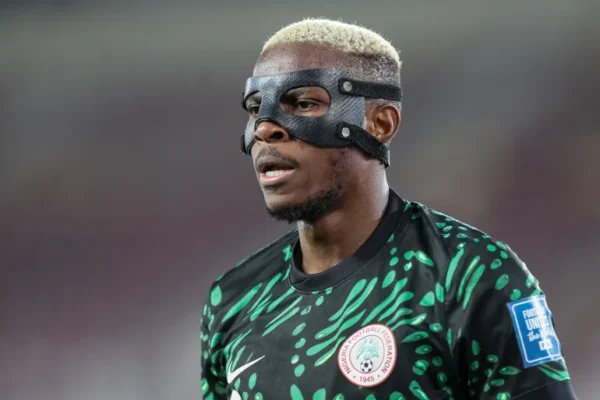
Napoli striker Victor Osimhen on Thursday completed his permanent move to Turkish champions Galatasaray in a 75 million euro ($87.5 million) four-year deal. A key figure in Napoli’s 2023 title triumph, Osimhen spent last season on loan at Galatasaray, scoring 26 goals in 30 league games as the Istanbul club claimed their 25th Super Lig crown. He was absent as Napoli, the freshly crowned Serie A champions, resumed training at the start of the week as the finer details of the deal were concluded. Napoli coach Antonio Conte seemingly did not have the 26-year-old in his plans for his side’s Scudetto defence next term. Negotiations with Galatasaray had been ongoing for several weeks but up to Thursday had stalled over the terms of payment for the transfer. Napoli recently recruited Kevin De Bruyne from Premier League club Manchester City. Osimhen becomes Galatasaray’s most expensive ever player.

Read More

8th African Nations Championship: Eagles B Seek Win against Zanzibar in Second Friendly Match

Nigeria’s home-based senior men’s team will seek victory over hosts Zanzibar on Thursday in the second of a two-match programme arranged to put the Super Eagles B in competition mood ahead of the 8th African Nations Championship kicking off on Saturday. The 2018 silver medallists were held to a scoreless draw in the two teams’ first game played at the Mau Stadium – located in the centre of Zanzibar – on Monday. Nigeria, also bronze medal winners in 2014, dominated Monday’s game all-round, with superior ball possession and attempts on goal. They created a plethora of chances but the Zanzibar rearguard worked overtime to keep the scoreline barren. Adedayo Olamilekan, Hadi Haruna, Sikiru Alimi and Harrison Tochukwu were impressive in a game in which goalkeeper Ozoemena Ani, captain Nduka Junior, Leonard Ngenge, Abdulrafiu Taiwo, Sodiq Ismaila, Ijoma Anthony, Harrison Ozondu, Akanni Qudus, Taofeek Otaniyi, Godwin Obaje, Jabbar Malik and Shola Adelani also featured. Thursday’s encounter, also scheduled for the Mau Stadium, comes five days before Nigeria’s first match of the competition – a clash with Cup holders Senegal – at Zanzibar’s 15,000 -capacity Amaan Stadium. The Eagles will then confront Sudan in their second match of the group phase (also at the Amaan Stadium) on Tuesday, 12th August before concluding their group D campaign against Congo at the Benjamin Mkapa Stadium in Dar es Salaam on Tuesday, 19th August. The four-week, 19-nation finals have encamped five teams in groups A, B and C, with only Nigeria’s group D having only four teams. Other venues for the competition are the Moi International Sports Centre, Kasarani and the Nyayo National Stadium (both in Nairobi, Kenya), and the Mandela National Stadium in Kampala, Uganda.

Read More

NNPCL Restates Commitment to Oil, Gas Development in Northern Nigeria

The Nigerian National Petroleum Company Limited (NNPCL) has reaffirmed its commitment to the exploration and development of oil and gas resources in northern Nigeria. Yusuf Usman, a director at NNPCL, gave the assurance on Wednesday during a government-citizen engagement session organized by the Sir Ahmadu Bello Foundation in Kaduna. Usman disclosed that the company has drilled four wells in the Kolmani area of Bauchi State and is currently assessing the appropriate technology for the next phase of drilling operations. He also announced that five Compressed Natural Gas (CNG) and Liquefied Natural Gas (LNG) plants are under construction in Kogi State as part of President Bola Tinubu’s CNG Initiative. The plants are expected to improve gas supply and accessibility across the northern region.

Read More

Fuel Subsidy Removal: 7 Ingenious Ways Nigerians Are Surviving the Hardship

When President Bola Ahmed Tinubu declared “fuel subsidy is gone” on May 29, 2023, few Nigerians fully grasped the financial shockwave that would follow. Within hours, fuel prices soared from ₦185 per litre to over ₦800, forcing many to abandon their vehicles and search for alternative means to navigate daily life. But in true Nigerian fashion, resilience and ingenuity have taken center stage. From increased walking to embracing electric mobility, Nigerians are finding creative — and often humorous — ways to adapt. Here are seven notable ways Nigerians are surviving the fuel subsidy removal: 1. The Trekking Revolution: ‘Subsidy Cardio’ Goes ViralWith transport costs rising, many urban dwellers have taken to walking long distances daily. What started as a necessity has now become a form of fitness.“I used to drive from Jakande to Lekki Phase 1. Now I walk part of the journey, and my jeans fit better,” says Nkem, a makeup artist in Lagos.A survey by SBM Intelligence revealed that 38% of urban Nigerians now walk more frequently to cut transportation expenses. 2. Okadas and Kekes Replace Ride-Hailing AppsAs Uber and Bolt fares become unaffordable for many, Nigerians are returning to motorcycles (okadas) and tricycles (kekes) for quicker, cheaper movement — even if it means squeezing three people onto one bike during rush hour. 3. Office Sleepovers Become Cost-Saving StrategyTo avoid the daily transportation burden, some workers are opting to sleep at the office. In sectors like tech and banking, employers have reportedly provided mats and basic amenities for staff who now go home only on weekends.“I only go home on weekends. It saves me ₦14,000 weekly,” says Uzo, a financial analyst based in Victoria Island.A Channels TV report estimates that transportation now consumes up to 50% of some Lagosians’ monthly income. 4. Remote Work Gains New PopularityThe fuel crisis has accelerated the shift to remote work, especially in startups, NGOs, and even religious institutions.“Fuel subsidy killed our physical Monday devotions. Now we pray on WhatsApp voice note,” says Lekan, a church administrator.Zoom, WhatsApp, and Telegram have effectively become digital offices across the country. 5. Electric Scooters and Bicycles Gain TractionElectric mobility is emerging as a trendy alternative, particularly in Lagos and Abuja. Young professionals now use electric scooters and bikes for short commutes, cutting fuel costs entirely.“I plug it at night, ride to work in the morning. I’ve not bought petrol in three weeks,” says Tope, a software developer in Yaba.Brands like Solar Taxi and MAX.ng are expanding their footprint in Nigeria’s e-mobility sector. 6. Transport WhatsApp Groups Build CommunityIn cities like Lagos, WhatsApp has become a tool for daily ride coordination. Residents from areas such as Isolo, Berger, and Surulere have created groups to share danfos, kekes, and even private car rides.“It’s not just about saving money — it’s vibes and survival,” says Joy, a human resource executive in Surulere. 7. Charging Gadgets at Work Becomes NormWith irregular power supply and longer hours spent outside the home, people now carry portable power banks religiously. Others opt to charge all devices — from phones to mini-fans — at their workplaces.“Fuel is gold. If NEPA takes light, I wait till I get to the office to charge anything,” says Mustapha, a graphic designer. Conclusion: Nigerian Resilience in ActionThe removal of fuel subsidies has undoubtedly reshaped daily life in Nigeria, but it has also showcased the nation’s remarkable adaptability. From trekking to remote work, and electric scooters to ride-sharing communities, Nigerians are once again proving that Naija no dey carry last. Are you also finding creative ways to cope with the subsidy era? Share your survival story — because in Nigeria, even hardship can’t stop the hustle.

Read More

WAFCON 2025: Morocco Petitions CAF Over Officiating After Nigeria’s Comeback Win

Tension continues to rise following Nigeria’s dramatic 3-2 victory over host nation Morocco in the final of the 2025 Women’s Africa Cup of Nations (WAFCON), as the Moroccan Football Federation (FRMF) has officially lodged a protest with the Confederation of African Football (CAF) over alleged officiating errors that they claim influenced the outcome. The FRMF’s petition centers on a pivotal moment in the 82nd minute when Nigerian defender Tosin Demehin was flagged for a handball in the penalty box. The referee initially awarded a penalty to Morocco, but after a VAR review, the decision was overturned — a move that Moroccan officials and fans have strongly condemned. “It was a small detail that cost us the game,” lamented Morocco’s head coach Jorge Vilda, who previously led Spain to the 2023 FIFA Women’s World Cup title. While acknowledging that his players were physically drained in the second half, Vilda insisted that the reversal of the penalty was a major turning point. Morocco had taken a 2-0 lead in the first half, stunning fans at the Olympic Stadium in Rabat. But the Super Falcons launched a spirited second-half comeback with goals from Esther Okoronkwo, Folashade Ijamilusi, and Jennifer Echegini, who came off the bench to score the winner. Nigeria’s head coach Justine Madugu praised his players’ determination and credited tactical changes at halftime for the turnaround. “The substitutions made all the difference,” Madugu said. “But full credit to Morocco — they played an excellent first half.” The defeat marks a bitter moment for Morocco, making them the first host nation to lose back-to-back WAFCON finals. The FRMF insists CAF must review the officiating and has called for stronger accountability to preserve the tournament’s integrity. In the third-place match, Ghana’s Black Queens edged past South Africa’s Banyana Banyana in a penalty shootout after a 1-1 draw in regular time, claiming the bronze medal in a fiercely contested fixture.

Read More

Breaking: Tinubu Splashes $100,000 Each, 3-bed Flats on Super Falcons

Members of the victorious Super Falcons have been rewarded with the sum of $100,000 ,00 each, 3-bed room flats and National award for emerging winners of the just concluded Women Africa Nations Cup in Morocco. President Bola Ahmed Tinubu made this announcement at the reception held at the banquet hall at the Presidential Villa on Monday. According to the President, each of the players and technical crew will pocket an naira equivalent of $100,000,00 and $50,000,00 respectively. In addition, the President awarded the players with Officer of the Order of the Niger (OON), just as they were gifted 3-bed room apartment each the Renewed Hope Agenda Estate at the Federal Capital Territory (FCT), Abuja. In similar vein, the Kwara State Governor, AbdulRahman AbdulRazaq, who doubles as the Chairman of the Progressive Governor Forum showered the team with the sum of N10million each.

Read More

VP Shettima Reaffirms Nigeria’s Commitment to Food Security at UN Summit

Addis Ababa, Ethiopia – July 28, 2025Nigeria’s Vice President, Kashim Shettima, has reiterated the country’s strong commitment to food and nutrition security while addressing global leaders at the United Nations Food Systems Summit held at the iconic African Hall of the United Nations Economic Commission for Africa in Addis Ababa, Ethiopia. Speaking at the summit, Shettima emphasized that food insecurity is a global challenge that “knows no borders” and called for collective international action. He outlined Nigeria’s strategic approach, highlighting the Presidential Initiative on Food Security, which aims to scale up the production of maize, rice, cassava, and wheat using climate-smart solutions. “Nutrition is at the heart of Nigeria’s vision,” he stated, citing the integration of food and nutrition targets into national frameworks such as the National Development Plan and Agenda 2050. The Vice President also spotlighted the Nutrition 774 initiative, designed to implement the Sustainable Development Goals (SDGs) at the grassroots level by reaching all 774 local government areas in Nigeria — turning “pledges into meals,” he said. Shettima noted that Nigeria is embracing innovation to transform its agricultural sector. “The Fourth Industrial Revolution is driving our agricultural systems, through the use of artificial intelligence, geospatial analytics, and satellite-driven climate intelligence,” he said. These technologies, he added, are enhancing transparency, boosting production, improving market access, and reducing food waste. Highlighting strategic partnerships, the Vice President pointed to collaborations with the African Development Bank (AfDB) and the International Fund for Agricultural Development (IFAD) to develop Special Agro-Industrial Processing Zones. These zones, he said, are creating jobs, attracting investment, and linking local farmers to global markets. He concluded by emphasizing the role of nutrition education and school feeding programs in securing long-term outcomes, stating that they are essential for “building healthier futures” for Nigerian children.

Read More