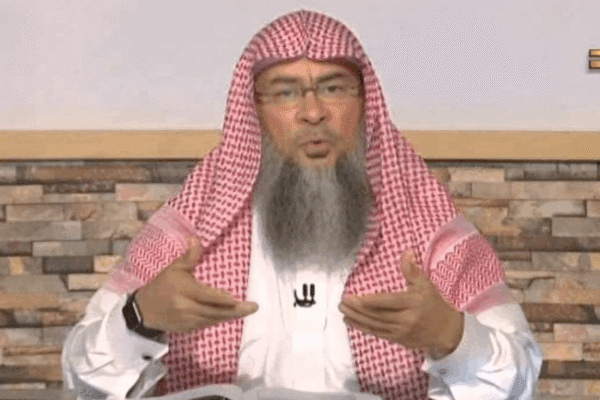
Saudi Cleric Sheikh Assim Al Hakeem Visits Nigeria Despite Extremist Teachings

Saudi-born Islamic cleric Sheikh Assim Al Hakeem arrived in Nigeria on Friday, drawing sharp criticism for his extremist views. The cleric, known for advocating strict Sharia law, has repeatedly called on Muslims to enslave or kill non-Muslims who refuse to convert to Islam, pay taxes to an Islamic government, or follow Sharia. Sheikh Hakeem, banned from speaking at UK universities in 2012 over his radical teachings, has long been associated with ultra-conservative interpretations of Islam. His views contrast with Saudi Arabia’s Crown Prince Mohammed bin Salman, who has sought to distance the country from such hardline ideologies. In a YouTube video posted on April 1, 2020, now approaching 87,000 views, Sheikh Hakeem encouraged Muslims to prepare over the next 40 to 50 years to expand Islamic influence worldwide. He described a system where non-Muslims would be compelled to accept Islam, pay Jizyah taxes, or obey Sharia law, warning that refusal could lead to armed conflict, enslavement, and loss of land. Explaining the types of jihad in Islam, he said: “The other type of Jihad is the one that everyone is trying to hide. It is the Jihad of pursuing, running after; and this Jihad was in the time of the Prophet, but this Jihad cannot be accomplished, cannot take place unless the state (number) of the Muslims is strong. If we don’t have a strong Muslim country, who can they pursue or attack? Just stay where you are and try to fix yourself, enrich your people with Islamic knowledge, and Iman.” He added that the aim of such jihad is primarily Da’wah, or inviting non-Muslims to Islam: “It is for Da’wah. Jihad is only for Da’wah, and that is why when Muslims go and conquer the adjacent country, what do we do? We kill them all? No. The prophet says, the first thing you do is to call them to Islam, if they accept it, you leave them, once they’re Muslims, we go, if they refuse, then tell them that ‘Allah obliged upon you to pay taxation’. You have to give us a percentage (Jizyah), and this percentage is given once or twice a year, and it is equivalent to the Zakat (alms giving by Muslims). Jizyah is not taken from women and children; it is only taken from men who work and can produce. And in return, when enemies come and attack your country, you don’t fight; we Muslims will protect you, and you’ll enjoy sitting in your home and your country and live your life normally. “But, the ruling is for Sharia, so you do not open nightclubs, you do not fornicate in the streets, you live your normal lives, but publicly, Islam rules. If they refuse, then we have to fight (demonstrates the slaughter sign); and if we fight you, then we capture you, you’ll become our slaves, and we’ll take your land, because you refused; I [we] give you two good options, this is the strength of Islam.” Sheikh Hakeem also expressed concern over the current global Muslim population, saying such a vision would only be possible in 40 to 50 years: “Maybe in the coming 40 to 50 years when Muslims become strong, as they’re supposed to be, and they’re focused Islamically, and Islamically-oriented.” In Nigeria, he was invited as a keynote speaker at an event organized by the 1Ummah Islamic Organisation, which lists Africa’s richest man, Aliko Dangote, among its financiers. Other speakers included former communications minister Isa Ali Pantami and several prominent clerics and scholars. The event took place in Lagos on November 15 and 16, with a follow-up session scheduled in Abuja on November 22. Sheikh Hakeem’s presence in Nigeria has drawn international attention amid ongoing reports of attacks on Christians in the country. The U.S. recently designated Nigeria a Country of Particular Concern, citing ongoing religious persecution, and warned of potential intervention against extremist groups. Authorities in Nigeria had not commented on his entry as of press time, leaving questions over security vetting and the influence of radical teachings in Africa’s most populous nation.
Read More

NWFL Launches Mandatory Digital Registration and Licensing Portal for 2025/26 Premiership Season

The Nigeria Women Football League (NWFL) has launched a compulsory digital portal for player registration and club licensing ahead of the 2025/26 season. The initiative was announced in a statement issued on Friday, November 14, by the league’s Media Director, Samuel Ahmadu, as part of ongoing efforts to modernise administrative processes and strengthen regulatory compliance across the league. Confirming the development, Chief Operating Officer Modupe Shabi said the digital platform represents a significant advancement in the NWFL’s governance standards. “This platform is designed to eliminate manual delays, minimise documentation errors, and provide real-time oversight of all registration activities. It is an important step toward making the NWFL more efficient and globally competitive,” she said. Shabi noted that the portal’s verification features will play a critical role in reducing common infractions such as age falsification, dual registration, and irregular player movement. “The system gives the league the ability to authenticate submitted documents instantly. It strengthens integrity, ensures accountability, and aligns us with international best practices,” she added. The NWFL COO also disclosed that the initiative received strong endorsement from club representatives during the recent Congress in Port Harcourt, where stakeholders approved the digital migration as essential to improving organisational efficiency and strengthening league structures. Under the updated NWFL Registration and Club Licensing Regulations, all clubs are required to complete their player registration exclusively through the new portal from November 14 to 21, 2025. Required documentation includes national identification, passport photographs, verified age records, academic credentials, medical fitness reports, and digitally signed player contracts. Licensing submissions also mandate coaching licences, stadium certification, audited financial statements, ownership documents, and evidence of youth development structures. According to the NWFL secretariat, the digital portal is also a strategic tool to enhance the marketability of the league by improving transparency, data integrity, and administrative professionalism, key requirements for attracting sponsors, commercial partners, and international collaborations.  

Read More

World Cup Play-off Final: Ekong says Eagles Will Be Up to Leopards’ Challenge

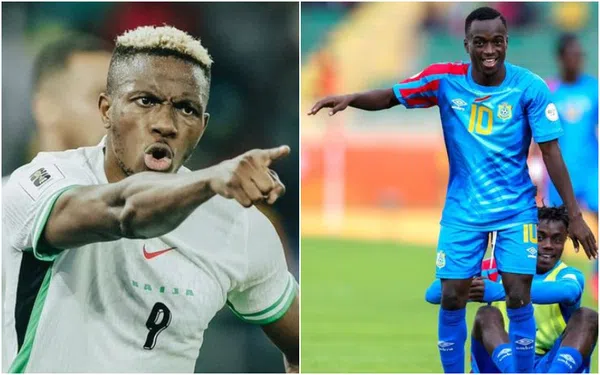
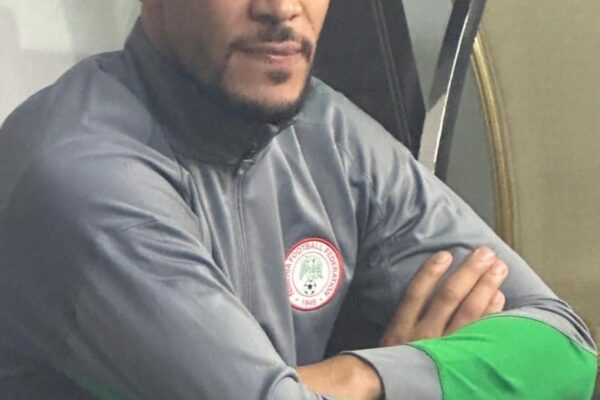
Nigeria’s captain William Ekong has admitted that the Leopards of Democratic Republic of Congo will be a mountain to climb in Sunday’s Final of the FIFA World Cup Africa Playoff Tournament, but assured that the Super Eagles have the ammunition to prevail at the Complexe Sportif Prince Moulay El Hassan. Both countries, who share five African titles between them, clash in a high-stakes game that will produce Africa’s representative at the Intercontinental Playoffs for two more slots at the 2026 FIFA World Cup finals. That tournament will take place in Mexico in four months. “There is no doubt that the Congolese will be a big challenge. They got here because they are tough and ambitious, and also want to go to the World Cup. “However, we have a large group of players here, 24 of them, out of which only about four of us have been to the World Cup (in 2018). There is that adrenalin flowing in their system to go to the World Cup and I see it as a big motivation for us to conquer on Sunday.” Ekong, Alex Iwobi, Wilfred Ndidi and Chidozie Awaziem are the only members of the present squad who were part of the squad to Russia 2018. Coach Éric Chelle’s ensemble must beware of a number of predators in the Congo squad, including Spain-based Cédric Bakambu, France-based Nathaniel Mbuku, former Russia U21 star Theo Bongonda and Pyramid of Egypt’s Fiston Mayele. English Premiership’s Noah Sadiki and Spain-based Charles Pickel are to hold in midfield, while the attack-minded Aaron Wan-Bissaka leads a compact defence that also includes captain Chancel Mbemba, who is looking forward to his 101st cap. Chelle has all his 24 players available for selection, including Iwobi who will be winning his 91st cap and Simon Moses who will collect his 87th, and Ekong said on Saturday afternoon that the entire group is focused on emerging victorious on Sunday evening. “We would have preferred to have taken the automatic ticket but it didn’t work out. Now, we are here and we have a second chance and we do not intend to bungle it.” Sunday’s match will kick off at 8pm. SUPER EAGLES, LEOPARDS IN HISTORY 13 Dec 1969: DR Congo 5-0 Nigeria (Friendly: Kinshasa) 01 March 1976: DR Congo 2-4 Nigeria (AFCON finals: Dire Dawa) 19 Jan 1992: DR Congo 0-1 Nigeria (AFCON finals: Ziguinchor) 02 Apr 1994: DR Congo 0-2 Nigeria (AFCON finals: Tunis) 03 Mar 2010: Nigeria 5-0 DR Congo (Friendly: Abuja) 08 Oct 2015: DR Congo 2-0 Nigeria (Friendly: Visé) 27 May 2018: Nigeria 1-1 DR Congo (Friendly: Port Harcourt) . Between 1971-1997, DR Congo was known as Zaire ÉRIC SÉKOU CHELLE’S SUPER EAGLES DIARY 21 Mar 2025: Rwanda 0-2 Nigeria (FIFA World Cup Q: Kigali) 25 Mar 2025: Nigeria 1-1 Zimbabwe (FIFA World Cup Q: Uyo) 28 May 2025: Nigeria 2-1 Ghana (Unity Cup: London) 31 May 2025: Jamaica 2-2 Nigeria (Unity Cup: London) . Nigeria win 5-4 on penalties to retain the trophy 06 Jun 2025: Russia 1-1 Nigeria (Friendly: Moscow) 06 Sep 2025: Nigeria 1-0 Rwanda (FIFA World Cup Q: Uyo) 09 Sep 2025: South Africa 1-1 Nigeria (FIFA World Cup Q: Bloemfontein) 10 Oct 2025: Lesotho 1-2 Nigeria (FIFA World Cup Q: Polokwane) 14 Oct 2025: Nigeria 4-0 Bénin Republic (FIFA World Cup Q: Uyo) 13 Nov 2025: Gabon 1-4 Nigeria (FIFA World Cup Playoff: Rabat)

Read More

Nigeria Super Eagles to Take on DR Congo in 2026 World Cup Africa Qualifiers Final

The DR Congo Leopards will face Nigeria’s Super Eagles in the final of the 2026 World Cup Africa qualifiers in Morocco on Sunday. DR Congo secured their spot after a dramatic 1-0 victory over Cameroon in the second semi-final at Stade El Barid in Rabat. Captain Chancel Mbemba scored a stoppage-time winner, heading in a corner from Brian Cipenga in the first minute of added time to stun the five-time African champions. Cameroon, who hold the African record for the most World Cup appearances with eight, will miss out on the expanded 48-team tournament next year after losing their automatic spot in the playoffs to Cape Verde, marking the latter’s first-ever World Cup qualification. Earlier, Nigeria advanced to the final with a 4-1 win over Gabon after extra time at Moulay Hassan Stadium in Rabat. The winner of the Africa playoff final will move on to a six-team intercontinental qualifier in Mexico by March 2026, which will determine the last two spots for the 2026 World Cup in Canada, Mexico, and the United States.

Read More

Nigeria and Mali Reaffirm Commitment to Strengthen Security Collaboration

Nigeria and Mali have reaffirmed their commitment to strengthening bilateral relations and addressing regional security challenges. This development followed a courtesy visit by Nigeria’s Minister of Defence, Mohammed Badaru, to Mali’s Prime Minister, General Abdoulaye Maiga, during his participation in the inaugural International Defence and Security Exhibition (BAMEX 2025) held in Bamako, Mali. The visit marked a key diplomatic moment, with Badaru leading the Nigerian delegation at BAMEX 2025, a platform designed to foster security collaboration and highlight innovations in defence technology across Africa. In a statement issued on Friday by the Minister’s Media Aide, Comrade Mati Ali, Badaru described the reception in Mali as “warm and exemplary,” praised the country’s hospitality, and reiterated Nigeria’s commitment to deepening defence cooperation to tackle shared regional security threats. Badaru said, “I bring the goodwill and warm greetings of President Bola Ahmed Tinubu to the Government and people of Mali. Nigeria is committed to deepening our ties and working closely with Mali to tackle challenges that threaten peace in our region.” He further emphasized that Nigeria views Mali as a strategic partner, with shared security interests making defence collaboration a top priority. In response, Prime Minister Maiga expressed gratitude for Nigeria’s commitment and participation in BAMEX 2025, calling it “a testament to our enduring friendship and mutual respect.” He added, “The Government of Mali values Nigeria’s ongoing support and partnership, especially as we confront various security issues together. Such unity remains critical in safeguarding our nations against current and future threats.” The statement also noted that top military officials from both countries attended the meeting, signaling a shared determination to leverage their resources and experience to enhance security and stability across West Africa. As BAMEX 2025 concluded, both nations pledged renewed efforts to strengthen ties and cooperation in addressing regional security challenges.

Read More

Super Eagles Beat Gabon 4–1 After Extra Time to Reach World Cup Play-Off Final

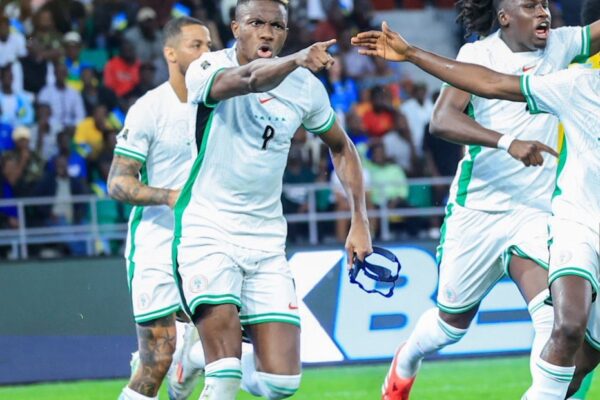
The Super Eagles secured a 4–1 extra-time victory over Gabon to advance to the final of the 2026 FIFA World Cup African play-offs in Rabat, Morocco. Nigeria showcased determination and attacking flair against a resilient Gabonese side. Sevilla forward Akor Adams opened the scoring in the 78th minute, finishing neatly from inside the box after sustained pressure from the Super Eagles. Gabon responded late, with Mario Lemina equalizing in the 89th minute to force extra time. In the additional period, Nigeria dominated. Chidera Ejuke restored their lead in the 97th minute, before Victor Osimhen took over, scoring in the 102nd and 110th minutes to complete a memorable 4–1 win. The Super Eagles will now face the winner of the semi-final between Cameroon and DR Congo in the play-off final on Sunday, November 16. The winner will move on to the inter-confederation play-offs, keeping alive hopes of qualifying for the 2026 FIFA World Cup in North America.

Read More

Nigeria’s Total Public Debt May Rise to N193tn as Tinubu Seeks Fresh Loans

Nigeria’s total public debt could rise by about N40.61 trillion to N193 trillion if all loan requests made by President Bola Tinubu in 2025 are approved and fully disbursed, according to an analysis by The PUNCH. The requests represent approximately 26.6% of Nigeria’s existing debt stock as of June 2025, coming amid mounting fiscal pressures and increasing foreign-currency exposure. Figures from the Debt Management Office (DMO) show that as of June 30, 2025, Nigeria’s total public debt stood at N152.4 trillion, comprising N71.85 trillion in external debt and N80.55 trillion in domestic debt, calculated at an exchange rate of N1,529.21/$1. Using the Central Bank of Nigeria’s November 10, 2025 official rates—N1,437.29 per dollar, N1,662.66 per euro, and N9.33 per yen—The PUNCH projected that Tinubu’s 2025 loan pipeline could lift total debt to about N193.01 trillion, equivalent to $134.3 billion at current rates. This would push Nigeria’s external debt component above 57% of the total, increasing the country’s foreign exposure. At least three major loan requests have been made by President Tinubu this year. In May 2025, he sought National Assembly approval for a $21.5 billion external loan package, €2.19 billion, and ¥15 billion, alongside a N758 billion domestic bond to fund the 2025–2026 borrowing plan, infrastructure projects, and pension liabilities. “In light of the significant infrastructure deficit and paucity of resources, it has become essential to pursue prudent borrowing to close the financial shortfall,” Tinubu said in his letter to lawmakers. The Senate approved the request in July after the presentation of a report by the Committee on Local and Foreign Debt chaired by Senator Aliyu Wamako. Senator Olamilekan Adeola, Chairman of the Appropriations Committee, said the borrowing was already embedded in the 2025 budget framework, while Senator Sani Musa of the Finance Committee defended the move as consistent with global economic norms. “There’s no economy that grows without borrowing,” Musa said. Similarly, Senator Adetokunbo Abiru, who chairs the Banking Committee, assured that the loans are concessional, long-term, and tied to capital projects. However, Senator Abdul Ningi (Bauchi Central) expressed concern over transparency and equitable allocation, urging the government to disclose detailed utilisation plans. In October, Tinubu sent another letter seeking $2.3 billion in external loans and a $500 million debut sovereign sukuk to help finance the 2025 budget deficit and refinance maturing Eurobonds. The National Assembly approved the request on October 29, bringing total external borrowing this year to about $24.8 billion. Defending the proposal, Senator Adams Oshiomhole argued that properly structured loans could stimulate growth and create jobs. A third request, submitted in November, sought approval for N1.15 trillion in domestic borrowing to close the gap in the N59.9 trillion 2025 budget and settle outstanding contractor payments. Tinubu said the funds would ensure the “full implementation of government programmes and projects” under the fiscal plan. If all requests are executed, Nigeria’s total debt would increase from N152.40 trillion in mid-2025 to about N193.01 trillion. External obligations would grow by N39.6 trillion to N111.45 trillion, while domestic debt would rise by about N1 trillion to N81.56 trillion. Between June 2023 and June 2025, Nigeria’s total public debt grew by N65 trillion, a 74.4% jump from N87.38 trillion, driven mainly by exchange rate depreciation following the naira unification policy. External debt rose modestly in dollar terms—from $43.16 billion to $46.98 billion—but doubled in naira value due to the weakening exchange rate. Domestic debt also increased by N26.4 trillion, reflecting continued borrowing and the securitisation of the Central Bank’s N22.7 trillion overdraft. DMO Director-General Patience Oniha maintains that Nigeria’s debt remains sustainable, with a debt-to-GDP ratio of about 40%, below the international benchmark of 70%. However, analysts have warned that while new loans may fund infrastructure and stabilise the budget, the nation’s debt service-to-revenue ratio, among the highest in Africa, poses a growing threat to fiscal stability. Dr. Muda Yusuf, CEO of the Centre for the Promotion of Private Enterprise, cautioned that Nigeria’s debt service burden is already outpacing capital expenditure, urging stronger revenue mobilisation and spending discipline. “Debt service is already far more than capital spending. We need to tread cautiously,” he said. Vahyala Kwaga, Deputy Country Director of BudgIT, warned that the government risks breaching its debt threshold and called for greater transparency in how loans are managed. Likewise, Auwal Rafsanjani, Executive Director of the Civil Society Legislative Advocacy Centre, criticised the continued borrowing without accountability, alleging that “previous loans, including the $3.4bn IMF facility, remain unaccounted for.” Emmanuel Onwubiko, National Coordinator of the Human Rights Writers Association of Nigeria, described the President’s borrowing spree as reckless and damaging. “There is no valid reason why the president wants to drag the country into these debts,” he said, blaming both the executive and legislature for pushing Nigeria toward a “bottomless pit of foreign loans.”

Read More

Super Eagles Boycott Training Over Unpaid Bonuses Ahead Of Gabon World Cup Play-Off

Nigeria’s Super Eagles and their technical team skipped training in Rabat on Tuesday to protest unpaid bonuses, raising concerns ahead of their 2026 FIFA World Cup Africa play-off semi-final against Gabon, PUNCH Online reports. The players and staff reportedly withheld participation due to outstanding allowances dating back to 2019, which cover achievements such as reaching the 2025 Africa Cup of Nations and qualifying for the World Cup play-offs, according to BBC Sports journalist Oluwashina Okeleji. Okeleji shared on X that the team was “awaiting a quick resolution to continue preparation for Thursday’s game,” noting that the squad is frustrated by “empty promises” regarding their bonuses. A statement allegedly signed by the Super Eagles and their technical crew read: “The full squad, including officials, withheld from training today in Morocco because of unresolved issues with outstanding payments. The Super Eagles are awaiting a quick resolution to continue preparation for Thursday’s game with Gabon. Thank you. From the players.” Sports photojournalist Sulaimon Adebayo, covering the team in Morocco, confirmed the boycott. PUNCH Online reached out to Nigeria Football Federation (NFF) Communications Director Ademola Olajire and Super Eagles media officer Promise Efoghe for comment. Efoghe acknowledged the message but had not responded by the time of reporting. The squad in Morocco includes 23 players: captain William Troost-Ekong; forwards Victor Osimhen, Ademola Lookman, Moses Simon, Chidera Ejuke, Alex Iwobi, Samuel Chukwueze, and Akor Adams; defenders Calvin Bassey, Chidozie Awaziem, Benjamin Frederick, Semi Ajayi, Zaidu Sanusi, Amas Obasogie, and Stanley Nwabali; and midfielders Wilfred Ndidi, Frank Onyeka, Raphael Onyedika, Alhassan Yusuf, Tolu Arokodare, Olakunle Olusegun, and Bright Osayi-Samuel. Goalkeeper Maduka Okoye, recently back in form with Udinese, is yet to join the camp. The team had held their first full training session on Monday in Rabat with 14 players, as head coach Eric Chelle prepared the squad. Sevilla duo Akor Adams and Chidera Ejuke were absent, while African Footballer of the Year Ademola Lookman arrived later in the afternoon. The Super Eagles are set to face Gabon on Thursday at the 22,000-capacity Moulay Hassan Stadium in Rabat. Meanwhile, Cameroon and the Democratic Republic of Congo will contest the other semi-final at El-Barid Stadium, with the winners meeting in the final on November 16 to determine who advances to the inter-confederation play-offs for a spot at the 2026 World Cup in North America.

Read More