President Tinubu To Present 2026 Appropriation Bill To National Assembly On December 19

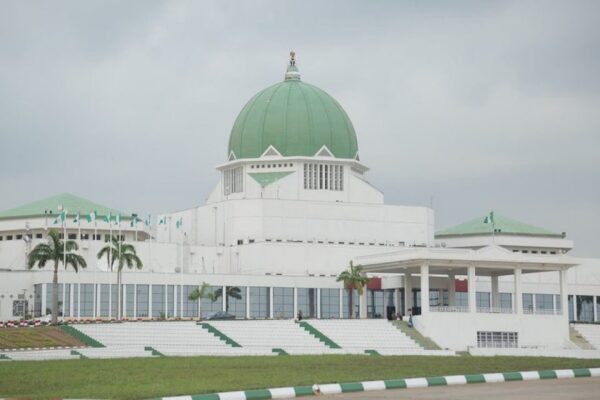
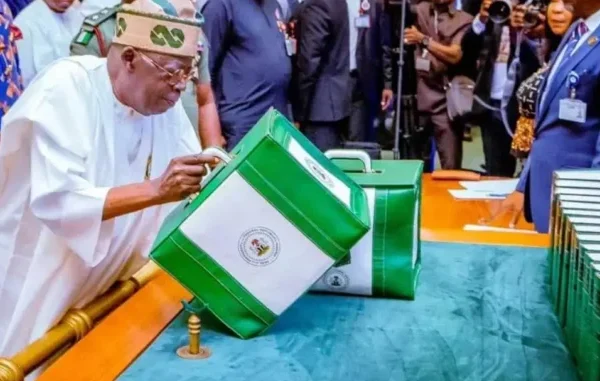
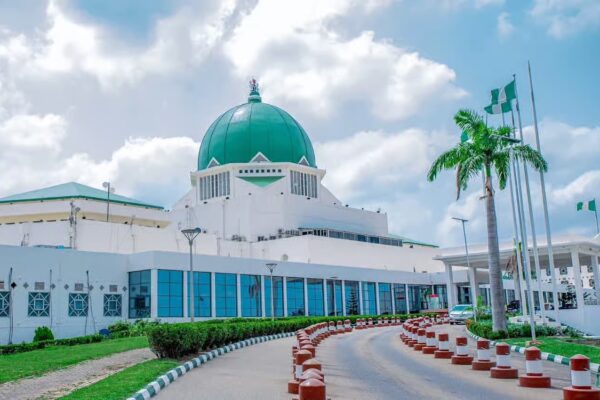
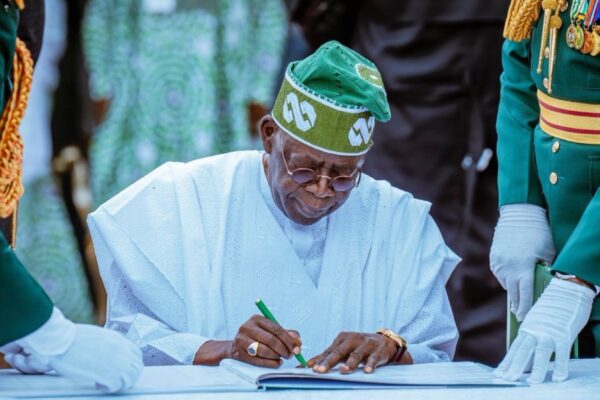
President Bola Ahmed Tinubu is set to present the 2026 Appropriation Bill to a joint session of the National Assembly on Friday, December 19, 2025. A formal communication from the Presidency is expected to be read on the floor of the House of Representatives on Thursday, informing lawmakers and staff of the President’s scheduled appearance. This follows a letter dated December 17, 2025, signed by Adm. Essien Eyo Essien, Secretary of Human Resources and Staff Development, on behalf of the Clerk of the National Assembly, Kamoru Ogunlana. Copies were also sent to the deputy clerk and departmental heads. The letter stated that President Tinubu, in his role as President and Commander-in-Chief of the Armed Forces, will present the proposed 2026 budget at 2:00 p.m. on Friday. It also provided details on security and access arrangements for the day. Accredited personnel were directed to be at their duty posts by 11:00 a.m., as entry to the National Assembly complex will be restricted afterward. Non-accredited persons were advised to avoid the premises. Additionally, staff members—except the Clerk, Deputy Clerk, and the Clerks of the House and Senate along with their deputies—were instructed to park vehicles at designated areas, including the Annex or the new car park near the NASS Gate. The annual budget presentation is a major event in Nigeria’s fiscal calendar, marking the formal submission of the Federal Government’s fiscal proposals to the legislature for review, debate, and eventual approval.

Read More

National Assembly To Create 156 New Seats For Women With Passage Of Reserved Seats Bill

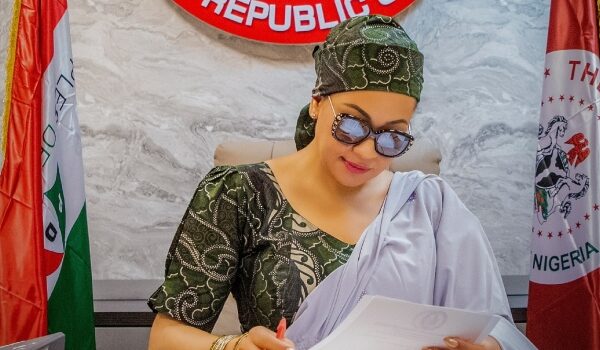
Nigerian women could secure up to 156 additional seats across federal and state legislatures if the Reserved Seats for Women Bill presently before the National Assembly is approved and signed into law by the President. The proposed legislation seeks to amend the 1999 Constitution to introduce special seats exclusively for women in the Senate, House of Representatives and state Houses of Assembly. Supporters of the bill describe it as a corrective, strategic and temporary intervention aimed at addressing the persistent underrepresentation of women in governance after decades of exclusion. Under the original framework of the proposal, each state would produce one reserved female seat in the Senate and one in the House of Representatives, in addition to three seats for women in every state assembly. However, developments indicate that the Senate is instead pressing for a modified arrangement that would allocate one reserved women’s seat per geopolitical zone in the upper chamber. Speaking during a training programme for members of the House of Representatives Press Corps organised by the House Committee on Media and Public Affairs in partnership with the TOS Foundation, the Special Adviser to the Deputy Speaker on Legislative Matters, Chidozie Aja, dismissed claims that the bill was designed to edge men out of existing elective offices. “For emphasis, these seats will not replace existing seats, but will expand representation to create room for women at the table of decision-making. It is important, also to note that political parties will field only female candidates for these seats.” He explained that the bill was initially structured to last for four election cycles, covering a period of 16 years, describing it as a temporary special measure. However, he disclosed that current proposals may lead to either an extension of the duration or the complete removal of the sunset clause. “It is meant to last for four election cycles of 16 years in all. It is a temporary special measure. However, adjustments being proposed so far may either completely remove the sunset clause or extend the duration. Summarily, the Bill seeks to alter Sections 48, 49, 71, 77, 91 and 117 of the Constitution of the Federal Republic of Nigeria, 1999; and more recently recommended alteration of Section 42.” Aja noted that while this form of gender-based legislative intervention is new in Nigeria’s political system, it has produced strong results in other African countries. “While this is novel in the Nigerian space, this approach has been used successfully by Rwanda, now the global leader with 61% women in Parliament. Other countries that have successfully implemented this approach, in various forms and mixes, include Tanzania, Uganda, Kenya, Burkina Faso and Senegal.” He acknowledged that even with the proposed expansion, Nigeria’s overall female representation would still remain relatively low, though it would mark a meaningful step forward. “It is important to note that even if additional 74 seats are granted in the Senate and House of Representatives, bringing the total number of seats to 543, it means that Nigeria will only secure 13.6% women representation in the national parliament. Not an outstanding progress, but significant.” According to him, global evidence supports structural gender quotas as an effective tool for improving governance. “The evidence is clear, countries that adopt structural gender quotas tend to experience stronger representation, better governance, and improved development outcomes.” Aja further stressed that the bill would strengthen Nigeria’s democracy, noting that democracy works best when all segments of society are represented. He explained that Nigeria’s democratic system is currently operating below its full potential because women remain largely excluded from political power. He added that women’s inclusion would make democracy deeper, more legitimate and more stable. He also pointed out that multiple global studies show that when women take active roles in governance, parliaments pass stronger health policies, more education-focused laws, improved social protection frameworks and more community-driven development policies. According to him, women’s presence directly enhances the quality of governance. Aja described women as critical players in peacebuilding, particularly at the grassroots level, noting that their involvement helps reduce conflict and strengthens community resilience. He further maintained that gender inclusion should also be seen as a powerful economic strategy. Citing a study by the McKinsey Global Institute, he revealed that Nigeria’s economy stands to benefit significantly from full inclusion of women in political and economic life. The institute projects a potential overall economic gain of $22.9 billion and up to 23 percent growth in GDP if Nigeria succeeds in substantially reducing gender inequality by 2025.

Read More

Tinubu Requests N1.15 Trillion Domestic Loan To Fund 2025 Budget

President Bola Tinubu has approached the National Assembly seeking approval to borrow N1.15 trillion from the domestic debt market to fund the 2025 budget deficit. The request was presented to the Senate on Tuesday through a letter read during plenary. The letter explained that the proposed borrowing would help close the budget gap and ensure the full execution of government programmes and projects outlined in the 2025 fiscal plan. Senate President Godswill Akpabio has referred the request to the Senate Committee on Local and Foreign Debt, directing the committee to report back within one week for further legislative action.

Read More
JAMB Officials Walk Out On Lawmakers During Heated National Assembly Hearing

JAMB Officials Walk Out On Lawmakers During Heated National Assembly Hearing

Tension flared at the National Assembly on Wednesday when officials of the Joint Admissions and Matriculation Board (JAMB) abruptly walked out of an investigative hearing convened by the House of Representatives Committee on Basic Education Examination Bodies. The session, chaired by Hon. Oboku Oforji, was set up to scrutinize JAMB’s 2023–2024 budget performance, Internally Generated Revenue (IGR), remittances to the Consolidated Revenue Fund (CRF), and the board’s financial records from 2023 to date. Lawmakers said the committee had written to JAMB three times—on October 6, 17, and 23, 2025—demanding the appearance of the Registrar, Prof. Ishaq Oloyede, along with relevant documents. But instead of showing up in person, Oloyede sent a director, Mufutau Bello, to represent him. Trouble began when Bello asked journalists covering the hearing to leave, arguing that the financial documents contained sensitive details. The committee rejected the request, insisting that the hearing was a public session and that it alone could decide the manner of its proceedings. The situation quickly escalated when Bello became visibly upset, ordered his team to pack up, and walked out of the session in protest—leaving lawmakers stunned. Furious over the walkout, the committee directed the Sergeant-at-Arms to arrest the JAMB officials, but they had already left the premises. Calling the incident “unfortunate and unacceptable,” Oforji warned that the House would not tolerate attempts by any agency to undermine its constitutional authority. “Our duty is to ensure that every institution under our oversight remains transparent and accountable to Nigerians. This is not about witch-hunting,” he said. The committee has now summoned Prof. Oloyede to appear personally with his management team and all required documents by Tuesday next week. Oforji warned that failure to comply would compel the House to invoke its powers under Sections 88 and 89 of the 1999 Constitution (as amended). Speaking after the rowdy session, committee members described JAMB’s action as a contempt of parliament and a direct challenge to democratic oversight. The hearing was adjourned until next Tuesday, with a final warning that any further defiance by the examination body would attract strict parliamentary sanctions.

Read More

National Assembly Proposes November 2026 For Nigeria’s Next General Elections

The National Assembly has proposed rescheduling Nigeria’s next general elections to November 2026, moving them six months earlier than the usual February timeline. The recommendation comes through the Electoral Act (Amendment) Bill 2025, which was presented on Monday at a joint public hearing by the Senate and House Committees on Electoral Matters in Abuja. The bill seeks to repeal the 2022 Electoral Act and introduce a new Electoral Act 2025. Lawmakers, civil society groups, and other stakeholders attended the one-day session. The draft amendment states that “Elections into the office of the President and Governor of a State shall be held not later than 185 days before the expiration of the term of office of the last holder of the office.” The change is intended to ensure all election disputes are resolved before the May 29, 2027 handover. “The above provisions are to ensure that all litigations are concluded before swearing in,” the document notes. Lawmakers, however, emphasized that adjusting the election date alone may not be sufficient unless the judiciary is strengthened to handle the growing number of election cases. The joint committee questioned, “In a situation where a rerun is ordered by the Supreme Court at the end of 185 days, can we have vacancy in the office of the President?” highlighting the need for judicial preparedness. If the amendment is approved, presidential and governorship elections would take place in November 2026, about six months before the current administration’s term ends. Other notable provisions in the bill include voting rights for inmates, early diaspora voting, linking voter registration to the National Identification Number (NIN), and mandatory electronic transmission of results. The amendment also proposes significant changes to voter identification. It states that “The use of the Permanent Voter Card (PVC) will not be compulsory, since the Bimodal Voter Accreditation System (BVAS) does not recognise the microchip in the PVC.” Registered voters would be able to “download and print their voter’s card whenever the need arises.” Lawmakers believe this digital approach will curb the buying and selling of PVCs, a challenge in past elections, and make voter verification fully electronic. The draft includes adjustments to Sections 18 and 47 and deletes Section 22 of the existing Electoral Act.  

Read More
Natasha’s Constituents Submit Petition To INEC For Her Recall 

Senator Natasha Returns to National Assembly, Begins Legislative Duties

The suspended Kogi Central Senator, Natasha Akpoti-Uduaghan, has returned to her office in the National Assembly. This followed the reopening of her office in the National Assembly by the Sergeant at Arms of the National Assembly, along with a combined team of security operatives. There was mild drama at the National Assembly complex on Tuesday following Natasha’s arrival. The lawmaker, dressed in black, arrived at about 2:30 pm in the company of her supporters, shortly after the Sergeant-at-Arms announced the reopening of her office, which had been sealed for months. However, her entry was initially resisted by some security operatives who prevented her from accessing the main building. The Senate is currently on recess and is expected to resume plenary on October 7, 2025. The unsealing of Natasha’s office is an indication that the suspended lawmaker may soon resume her official duties as a senator as lawmakers prepares to resume plenary on October 7, 2025. Natasha had made an allegation of sexual harassment against the Senate President, Godswill Akpabio. The office had remained locked for six months, following Senator Akpoti-Uduaghan’s suspension by the Senate in March over alleged violations of its standing rules. Her suspension had sparked widespread reactions, with many, particularly civil society organisations and opposition politicians, condemning the Senate’s action. She approached the court in July over the matter and made an unsuccessful attempt to resume sitting.

Read More

INEC, NCoS To Engage National Assembly On Framework For Inmate Voting

The Independent National Electoral Commission (INEC) has said it will work with the Nigerian Correctional Service (NCoS) and other stakeholders to engage the National Assembly for a clear legal provision on the voting rights of inmates in correctional facilities across the country. Chairman of the Commission, Prof. Mahmood Yakubu, gave the assurance when the Controller General of NCoS, Sylvester Ndidi Nwakuche mni, paid him a courtesy visit at the Commission’s headquarters in Abuja on Friday, 8th August 2025. Prof. Yakubu explained that the matter of inmate voting must be addressed within the framework of the law, noting that elections are governed strictly by legal provisions. He stressed that the ongoing electoral reform process presents an important opportunity to clarify and strengthen the legal basis for extending the franchise to inmates in line with constitutional and international human rights standards. He underscored the need to resolve ambiguities in Section 12(1)(e) of the Electoral Act 2022, which limits registration to Nigerian citizens “not subject to any legal incapacity to vote under any law, rule or regulations in force in Nigeria.” He said: “There are various interpretations as to whether this provision relates to inmates on death row, those serving life sentences, or those convicted of treason. Our immediate task is to engage with the National Assembly for a clear legal provision on inmate voting. Thereafter, we can address the specific issues that may arise in the course of implementation.” Prof. Yakubu recalled that INEC had previously held extensive engagements with the correctional service to consider modalities for inmate voting. These included the setting up of a joint technical committee to review operational issues, the sharing of data on the locations and categories of federal correctional facilities nationwide, and an assessment of how voter registration, polling unit creation, and voter education could be carried out within such facilities. The Commission had also in the interest of transparency, raised questions about access for election observers, the media, and political parties, including whether campaigns could be conducted in correctional facilities and polling agents appointed on election day. The INEC Chairman referenced landmark judicial decisions on the matter, notably the Federal High Court ruling in Benin on 16th December 2014 and the subsequent Court of Appeal decision of 7th December 2018, affirming the right of five plaintiffs awaiting trial to vote in elections. The courts held that, under Article 25 of the International Covenant on Civil and Political Rights (1966) and Section 25 of the Nigerian Constitution, awaiting-trial inmates retain their voting rights provided they assert the choice voluntarily. He further noted that inmate voting is already a reality in other countries, including Ghana, Kenya, and South Africa, where Nigerian election observers have witnessed the process firsthand. The INEC Chairman commended civil society organisations, particularly the Carmelite Prisoners’ Interest Organization (CAPIO), for sustained advocacy on inmate voting, and welcomed what he described as the positive disposition of the joint committees of the Senate and House of Representatives on Electoral Matters toward inclusivity in Nigeria’s democratic process. Earlier in his remarks, Mr Nwakuche said his visit was both to pay respect to the INEC Chairman and to formally raise the issue of extending voting rights to inmates. He described inmates as a community that may have been underserved and unnoticed despite their potential contributions to national development. He disclosed that the service currently holds over 81,000 inmates, 66 percent of whom are awaiting trial and are therefore presumed innocent under the law. He argued that incarceration alone should not extinguish their civic rights, citing both court rulings and a recent resolution of the National Assembly in support of inmate voting. “I’m here, Chairman, to see how we can work together, even if it is not now but in the nearest future, to grant these inmates the right to vote. What are the things needed from our side as correctional officers? What are the things needed from your side? We must ensure that these people are not denied their rights,” he said. Mr. Nwakuche also emphasised that inmate voting is not only about rights, but also about the dignity of citizenship and the principles of inclusivity in a democracy. Responding, Prof. Yakubu reassured the NCoS boss that the Commission shares the same determination to extend the franchise to eligible inmates, adding that the meeting had reaffirmed the resolve to pursue the necessary legal and operational measures to make inmate voting a reality in Nigeria.

Read More

Okonjo-Iweala, Sen. Natasha, Others Bag Arise News Awards

World Trade Organisation (WTO) Director-General, Dr. Ngozi Okonjo-Iweala, Senator Natasha Akpoti-Uduaghan and other bagged Arise News Women Making Impact awards in Lagos on Monday. The General Council of the World Trade Organization (WTO) agreed on 29 November by consensus to reappoint Iweala as Director-General for a second four-year term, set to begin on 1 September 2025. This decision reflects broad recognition of her exceptional leadership and strategic vision for the future of the WTO. The reappointment process, initiated on 8 October 2024, was overseen by Ambassador Petter Ølberg of Norway, Chair of the General Council. With no additional nominations submitted by the 8 November deadline, Dr. Okonjo-Iweala stood as the sole candidate. The process was conducted in a fully open and transparent manner, adhering to the WTO’s “Procedures for the Appointment of Directors-General” (WT/L/509). Similarly, Natasha Akpoti-Uduaghan, who was suspended for six months after submitting a petition was among the awardees. Akpoti-Uduaghan said she was being punished for speaking out against the system and that she now feared for her and her two-year-old’s safety as her security detail had been stripped. “The Nigerian Senate operates like a cult. The Senate president runs the Senate like a dictator, not a democrat. There is no freedom of speech, there is no freedom of expression and anyone who dares to go against him gets cut to size,” the 45-year-old said in the first TV interview since her suspension. Akpoti-Uduaghan, who represents the opposition Peoples Democratic Party (PDP), alleged that the sexual harassment started in 2023, when she visited Akpabio’s country home with her husband. She said the Akpabio “squeezed her hand suggestively” and said “I will make an opportunity for us to come here and have a good moment”. Akpoti-Uduaghan one of four female senators in a parliament of 109 members and she is also the first female senator in her state. Akpoti-Uduaghan told the BBC that she no longer had access to security as a result of the suspension.

Read More