
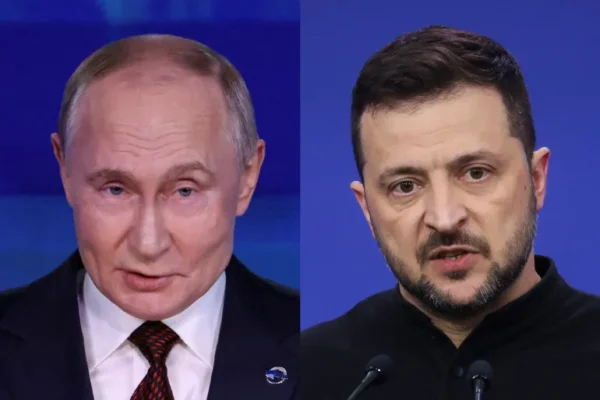
Russia-Ukraine War Live: US Envoy Steve Witkoff Heads to Moscow as Trump Pushes for Rapid Peace Deal

At least 19 civilians have been wounded following a series of overnight Russian drone strikes on Ukraine’s southeastern Zaporizhzhia region, authorities said, as heavy fighting continues along the front lines. The attacks came amid intensifying diplomatic activity, with the United States confirming that special envoy Steve Witkoff will travel to Moscow for high-level talks with Russian President Vladimir Putin as part of Washington’s push to secure a ceasefire agreement. Ukraine signals openness to US plan The Ukrainian government said it supports the “essence” of a new US-backed proposal aimed at ending the nearly four-year war. President Donald Trump said on Tuesday that “progress” is being made, even as negotiations drag on in Geneva and other European capitals. Witkoff’s visit is the most direct engagement yet between Washington and Moscow under the Trump administration’s peace initiative. Russia accuses Europe of undermining peace efforts Russia’s Foreign Ministry claimed that European politicians and media outlets are attempting to undermine US-led efforts to broker a settlement, accusing Western governments of trying to prolong the conflict to weaken Moscow. The EU, UK and other Western partners have publicly expressed concerns about parts of the US plan, warning that any agreement must protect Ukraine’s sovereignty and territorial integrity. Russian air defences repel multiple drone attacks Russia’s Defence Ministry said its air defence units intercepted 33 Ukrainian drones across the Belgorod, Voronezh, Lipetsk, and Bryansk regions on Tuesday night. No casualties were reported. As diplomatic efforts resume and battlefield intensity escalates, the coming days are expected to be pivotal in determining whether the warring parties move closer to a negotiated settlement or brace for another winter of fighting.
Read More
Ukraine targets key Russian oil refinery as Moscow tests hypersonic missile Published On 14 Sep 2025

Ukraine Strikes Russian Oil Refinery as Moscow Launches Hypersonic Missile in Escalating Conflict

Ukraine has claimed responsibility for a drone strike on one of Russia’s largest oil refineries, the Kirishi facility in the Leningrad region, amid an intensifying exchange of aerial attacks between the two nations. The strike, confirmed by both Kyiv and Moscow, is part of Ukraine’s ongoing strategy to target infrastructure supplying Russian troops and fuel to the front lines. The Russian Ministry of Defence reported shooting down more than 360 drones overnight, along with HIMARS rockets and guided bombs. Ukraine’s military said it intercepted 164 drones and a ballistic missile during the same period. While Ukraine called the Kirishi refinery strike a “successful operation,” the extent of the damage remains unclear. Leningrad Governor Alexander Drozdenko stated that three drones were destroyed in the area, with a fire caused by debris quickly extinguished and no reported injuries. The refinery attack came amid a series of disruptive incidents across Russia’s transportation infrastructure, including two separate freight train derailments in Leningrad and a deadly rail explosion in the western Oryol region. Ukraine has not officially claimed responsibility for the rail incidents but has stated it will continue targeting supply routes critical to Russia’s war effort. Meanwhile, Russia escalated its own operations, testing a Zircon (Tsirkon) hypersonic cruise missile during joint military exercises with Belarus in the Barents Sea. The Russian Defence Ministry confirmed the missile test as part of the ongoing “Zapad” (West) drills, which also involved bomber strikes and anti-submarine operations. As these hostilities unfold, regional tensions continue to rise. NATO allies Poland and Romania reported breaches of their airspace by Russian drones during strikes on Ukraine, prompting emergency responses from fighter jets. NATO has since announced “Eastern Sentry,” a new initiative to reinforce security along its eastern flank. The United States, under President Donald Trump, has signaled potential new sanctions against Russia—but only if all NATO members agree to cease buying Russian oil, a proposal that may prove difficult to implement. With the conflict now in its fourth year, both sides appear to be ramping up both offensive and defensive measures as global concerns over escalation and cross-border incidents intensify.

Read More