
Mbappé Sends Bailiff to PSG Over €5.9m Unpaid Settlement

Mbappé Sends Bailiff to PSG Over €5.9m Unpaid Settlement

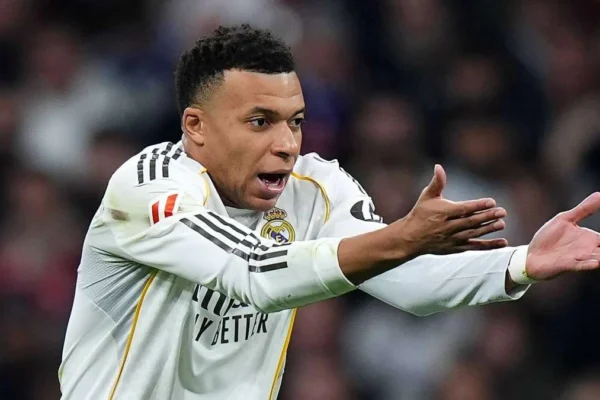
Kylian Mbappé has escalated his financial dispute with Paris Saint-Germain, sending a bailiff to the club to formally demand the outstanding €5.9 million owed to him by his former employers. The Ligue 1 giants had previously been ordered by a judge in December 2025 to pay Mbappé a total of €60.9 million, following a contractual settlement. While PSG have already paid €55 million, the remaining €5.9 million—relating to paid leave and accrued interest—is yet to be settled. The formal demand was issued on Friday, giving PSG an eight-day deadline to clear the balance. Should the club fail to comply within the stipulated period, Mbappé would be entitled to instruct his legal team to initiate court-ordered seizure of funds directly from PSG’s accounts. The latest development adds another chapter to the increasingly strained relationship between the French superstar and his former club, months after his high-profile departure from Paris. Away from the legal wrangling, Mbappé has also been dealing with frustration on the pitch following Real Madrid’s 4–2 Champions League defeat to Benfica, a result that complicated Los Blancos’ hopes of finishing in the competition’s top eight. Speaking after the loss, the France captain delivered a blunt assessment of his team’s performance, questioning their mentality rather than their quality. “It isn’t about quality, and it isn’t about tactics,” Mbappé said. “It’s about having more desire than your opponent. You could see everything was on the line for Benfica, and you couldn’t see that for us, and that’s a problem.” He added that Real’s inconsistency is becoming a worrying trend. “We aren’t being consistent in our play. A team of champions doesn’t do that. We can’t play well one day and not the next.” Mbappé also lamented Real Madrid’s failure to secure a top-eight finish, which would have reduced their Champions League workload. “We had a clear goal of finishing in the top eight to have two fewer games and lighten the load, but we started very poorly,” he said. “If they had gone into halftime 5–1 up, it wouldn’t have surprised anyone.” Real Madrid bounced back domestically with a 2–1 victory over Rayo Vallecano at the weekend, with Mbappé scoring a dramatic 100th-minute penalty to secure all three points. However, the forward admitted the Benfica defeat still “hurts,” as the club now faces additional playoff matches instead of a more relaxed February schedule. As Mbappé continues to push for the final portion of his settlement from PSG, both his legal battle off the pitch and leadership role at Real Madrid remain firmly in the spotlight.
Read More
Back in a 1999 column, my former boss Bill Simmons introduced the "Ewing Theory." It came from a friend of his who believed that Patrick Ewing’s teams — at both Georgetown and with the New York Knicks — strangely played better whenever Ewing was injured or stuck on the bench with foul trouble, as Simmons later explained in an ESPN piece. Ewing, a star center drafted No. 1 overall by the Knicks in 1985, had a long, impressive career. Unfortunately, it unfolded alongside the dominance of Michael Jordan, meaning Ewing's Knicks won plenty of games but never captured an NBA title. In 1999, during the Eastern Conference finals, Ewing tore his Achilles. The eighth-seeded Knicks were tied 1-1 with the second-seeded Indiana Pacers, and most expected the Pacers to cruise to the NBA Finals. Instead, Simmons published his column introducing the Ewing Theory — and right on cue, the Knicks won three straight to clinch the series. Over the past 25 years, the Ewing Theory has been mocked and misunderstood. Critics quip: Oh, so it’s better not to have great players? They point out that the Knicks haven’t been back to the Eastern Conference finals since Ewing left. And they question why Simmons chose Ewing in the first place. But the name wasn’t really the point. As Simmons explained in a 2013 update, the Ewing Theory isn’t about tearing down a player — it’s about what happens when a team recalibrates after losing a star. Sometimes a player is overrated. Sometimes his absence gives other players a chance to thrive in a better-fitting system. And sometimes, losing a centerpiece forces everyone to step up, rediscover urgency, and rebuild momentum — transforming the team in the process. Sound familiar? Imagine if the world’s supposed best soccer player changed clubs over the summer, only for his new team to get worse while his old team thrived without him. Well, that’s exactly what's happened with Kylian Mbappé after his move from Paris Saint-Germain to Real Madrid. So, ahead of the upcoming El Clásico — the Copa del Rey final between Real Madrid and Barcelona (streaming live on ESPN+) — let’s dive into how Mbappé’s departure hurt Madrid, why PSG improved without him, and what it all might say about Mbappé as a player.

How Kylian Mbappé made Real Madrid worse

Back in a 1999 column, my former boss Bill Simmons introduced the “Ewing Theory.” It came from a friend of his who believed that Patrick Ewing’s teams — at both Georgetown and with the New York Knicks — strangely played better whenever Ewing was injured or stuck on the bench with foul trouble, as Simmons later explained in an ESPN piece. Ewing, a star center drafted No. 1 overall by the Knicks in 1985, had a long, impressive career. Unfortunately, it unfolded alongside the dominance of Michael Jordan, meaning Ewing’s Knicks won plenty of games but never captured an NBA title. In 1999, during the Eastern Conference finals, Ewing tore his Achilles. The eighth-seeded Knicks were tied 1-1 with the second-seeded Indiana Pacers, and most expected the Pacers to cruise to the NBA Finals. Instead, Simmons published his column introducing the Ewing Theory — and right on cue, the Knicks won three straight to clinch the series. Over the past 25 years, the Ewing Theory has been mocked and misunderstood. Critics quip: Oh, so it’s better not to have great players? They point out that the Knicks haven’t been back to the Eastern Conference finals since Ewing left. And they question why Simmons chose Ewing in the first place. But the name wasn’t really the point. As Simmons explained in a 2013 update, the Ewing Theory isn’t about tearing down a player — it’s about what happens when a team recalibrates after losing a star. Sometimes a player is overrated. Sometimes his absence gives other players a chance to thrive in a better-fitting system. And sometimes, losing a centerpiece forces everyone to step up, rediscover urgency, and rebuild momentum — transforming the team in the process. Sound familiar? Imagine if the world’s supposed best soccer player changed clubs over the summer, only for his new team to get worse while his old team thrived without him. Well, that’s exactly what’s happened with Kylian Mbappé after his move from Paris Saint-Germain to Real Madrid. So, ahead of the upcoming El Clásico — the Copa del Rey final between Real Madrid and Barcelona (streaming live on ESPN+) — let’s dive into how Mbappé’s departure hurt Madrid, why PSG improved without him, and what it all might say about Mbappé as a player.

Read More