Kwankwaso Says Meeting With Makinde Was Courtesy Visit, Not 2027 Political Move

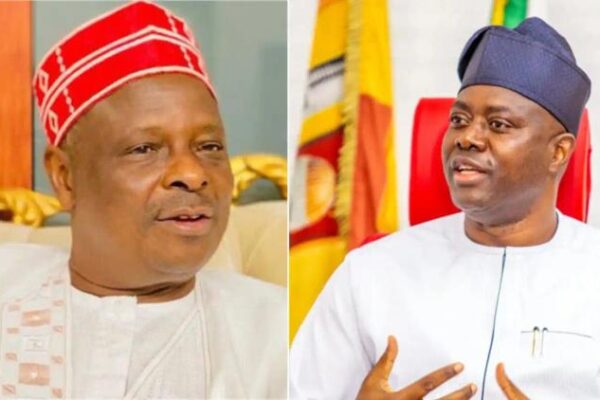
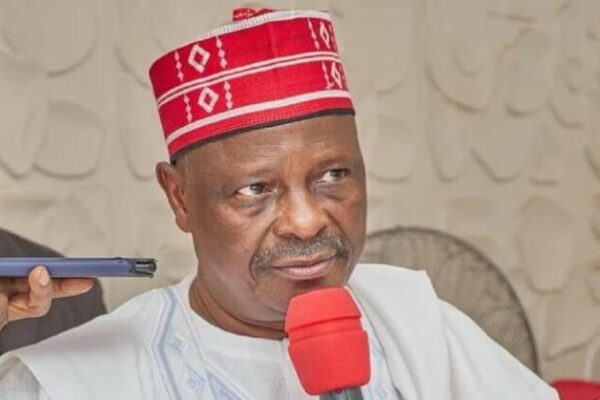
Rabiu Kwankwaso, the National Leader of the New Nigeria Peoples Party (NNPP), has stated that his recent private meeting with Oyo State Governor Seyi Makinde was rooted in personal ties rather than political calculations. Kwankwaso visited Makinde at the Governor’s Office in Ibadan on Wednesday while in Oyo State to commission the NNPP’s state secretariat and engage with party members. The meeting, held behind closed doors, lasted close to two hours. Speaking with journalists afterward, Kwankwaso dismissed claims that the visit was part of any strategy ahead of the 2027 general elections. “This visit is more about personal friendship than party politics.” “Governor Makinde and I have known each other for a long time. Before proceeding to our party engagement in the state, I felt it was proper to pay him a courtesy call.” He acknowledged Makinde’s membership of the Peoples Democratic Party (PDP) and reflected on his own political background, noting that he was among the founding members of the PDP in 1998. Kwankwaso recalled emerging as governor of Kano State under the PDP in 1999 and later serving as Minister of Defence. He explained that he subsequently moved to the All Progressives Congress (APC) before joining the NNPP, where he now leads the party nationally. As part of his activities in the state, Kwankwaso inaugurated the NNPP office in Ibadan, saying the step was intended to solidify the party’s structure and prepare for the 2027 elections. The meeting comes shortly after Kano State Governor Abba Yusuf left the NNPP for the APC.

Read More

Kwankwaso, Seyi Makinde Hold Closed-Door Meeting Ahead Of 2027 Elections

Former presidential candidate of the New Nigeria Peoples Party, Rabiu Musa Kwankwaso, met privately with Seyi Makinde at the Governor’s Office in Ibadan. The closed-door meeting at the Oyo State Secretariat was shrouded in secrecy, with neither side revealing the content of their discussions. Political analysts suggest the meeting could be linked to preparations for the 2027 general elections, given Kwankwaso’s recent political engagements and Makinde’s strategic role in national politics. Observers note that interactions between prominent political figures often serve as a platform for strategic alliances, consultations, and early planning ahead of critical electoral contests.

Read More

Kwankwasiyya Movement Condemns US Bill Targeting Senator Kwankwaso Over Alleged Religious Violations

The Kwankwasiyya Movement has rejected attempts by five US lawmakers to blacklist its leader, Senator Rabiu Musa Kwankwaso, over alleged “severe religious freedom violations” in Nigeria. The move follows the introduction of the Nigeria Religious Freedom and Accountability Act 2026 (HR 7457) in the US Congress on Tuesday. If passed, the bill would direct the US State and Treasury Departments to impose visa restrictions and freeze assets of Kwankwaso and organizations such as the Miyetti Allah Cattle Breeders Association (MACBAN), accusing them of participating in the systemic persecution of Christians. Responding on Thursday, the movement described the allegations against the former Kano State Governor as “unfounded” and “politically motivated,” demanding his immediate removal from the proposed legislation. “We state unequivocally that these allegations are consistent with nothing in the verifiable public record of Senator Kwankwaso’s life and service,” said spokesperson Habibu Sale Mohammed. The statement specifically addressed claims by US Representative Riley Moore, a sponsor of the bill, who linked Kwankwaso to religious extremism due to the implementation of Sharia law during his governorship. The movement argued that Sharia-based legal systems in Northern Nigeria are constitutional and not unique to Kano State. “The constitutional development of Sharia-based legal systems was neither unique to Kano State nor the initiative of one individual,” the statement said. “To single out Senator Kwankwaso while similar arrangements exist in several states raises serious questions about the evidentiary standard behind such a recommendation.” Highlighting Kwankwaso’s public record, the movement said he has never been indicted, prosecuted, or credibly accused of religious persecution, extremism, or human rights violations. It noted that the Sharia-based systems operate under constitutional oversight and appellate review. The group also cited Nigeria’s diplomatic relations with countries that maintain diverse legal frameworks, arguing that constitutional sovereignty and contextual understanding should guide international engagement. “The United States maintains strategic relationships with several nations whose legal systems incorporate Islamic jurisprudence. It would therefore be inconsistent to treat Nigeria’s constitutionally grounded legal pluralism differently without clear and individualized evidence of wrongdoing,” the statement said. Defending Kwankwaso’s tenure as governor, the movement emphasized his “decisive measures” to curb extremist threats and protect lives across religious divides. It also referenced his 2023 presidential ticket with Bishop Isaac Idahosa as evidence of his commitment to religious inclusion and national balance. “It is deeply concerning that an opposition political leader with a longstanding national profile would be isolated in a matter of such gravity without transparent and verifiable findings,” Mohammed said. The movement urged the US Congress to reject the recommendation and remove Kwankwaso’s name from the bill, warning that the proposal may be influenced by individuals with personal or political agendas. “Allegations of this magnitude must be grounded in demonstrable facts, not generalized assumptions,” the statement added. Reaffirming its support for Kwankwaso, the Kwankwasiyya Movement described him as “a nationalist, a democrat, and a statesman whose public service has been anchored on justice, unity, and inclusive governance,” expressing confidence that fairness and due process would prevail. The bill, introduced by US Representatives Chris Smith, Riley Moore, Brian Mast, Mario Diaz-Balart, and Bill Huizenga, alleges that Kwankwaso is among those contributing to the “systemic persecution of Christians” in Nigeria.

Read More

Kwankwaso’s Son Steps Down As Kano State Commissioner For Youth And Sports Development

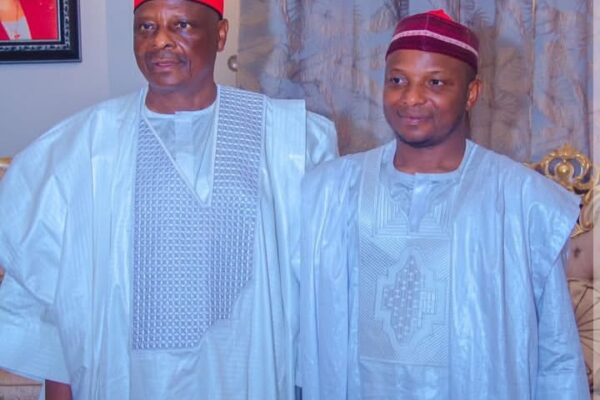
Mustapha Rabiu Kwankwaso, son of former NNPP presidential candidate Senator Rabiu Kwankwaso, has stepped down as Kano State Commissioner for Youth and Sports Development. He made the announcement on Monday through a statement on his official Facebook page, formally resigning from the State Executive Council. In the statement, he expressed gratitude to Governor Abba Kabir Yusuf for the opportunity to serve. “It is with a heavy heart that I announce my resignation as Honourable Commissioner, Ministry of Youth and Sports Development, and member of the Kano State Executive Council,” Kwankwaso said. He thanked the governor for trusting him and reflected on the experiences and lessons gained while serving the people of the state. “I am deeply grateful to Governor Abba Kabir Yusuf for giving me the chance to serve the great people of Kano State. My time in office has been full of valuable experiences and lessons, and I sincerely appreciate the confidence placed in me,” he added. Kwankwaso also expressed hope that the youth and sports sectors would continue to receive adequate support under the current administration, stressing the importance of sustained investment in youth empowerment and sports development. “As I step down, I pray that the youth of Kano State continue to get the attention and opportunities they deserve. I remain hopeful that our sports initiatives will thrive and grow in the coming years,” he said. He concluded by praying for the prosperity of the state and its leadership: “May Allah (SWT) continue to bless our beloved Kano State. I wish the government and people all the very best.” His resignation comes amid ongoing political reshuffles in Kano State following Governor Yusuf’s recent exit from the NNPP.

Read More

Kwankwaso Blasts Abba Yusuf’s Defection, Declares January 23 As World Betrayal Day

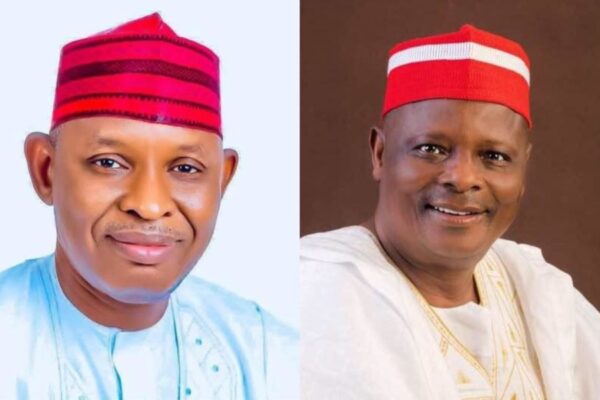
The leadership of the New Nigeria People’s Party (NNPP) has strongly criticised Kano State Governor Abba Yusuf’s decision to quit the party, branding the move as a painful betrayal of the confidence reposed in him by party leaders and supporters. NNPP’s national leader, Senator Rabiu Musa Kwankwaso, while addressing loyalists at his Miller Road residence in Kano, announced that January 23 would now be recognised within the movement as “World Betrayal Day.” He explained that the idea originated from social media reactions to the governor’s resignation, many of which described the development as an act of betrayal. “None caught my attention more than one who posted, suggesting that we declare January 23 annually as World Betrayal Day. “Therefore, as the leader and grand patron of this movement, I hereby declare that I fully support the declaration.” Kwankwaso said the date would be observed with special programmes to serve as a constant reminder of what he described as a defining moment in the history of the movement. Governor Yusuf’s spokesperson, Sanusi Bature, had earlier confirmed the governor’s resignation from the NNPP in a statement issued on Friday. In its reaction, the NNPP, through a statement signed by National Publicity Secretary Ladipo Johnson, said the party received the news with deep sadness and disappointment, rejecting Yusuf’s claim that his departure was caused by an irredeemable internal crisis. “We deeply regret that Governor Abba, a man entrusted by the people of Kano State on the strength of his decades of unwavering loyalty and dedicated service to the Kwankwasiyya Movement, has now chosen to betray that sacred trust. By this action, he risks returning the state to the very forces that have long opposed its progress and the aspirations of its people. “It is noteworthy that our party, the NNPP, had recently conducted congresses for its leadership from the ward to the national convention, held on December 20, 2025, at which the governor himself was present, and INEC had supervised. “The party had also participated and won in two supplementary elections for Bagwai/Shanono and Ghari/Tsanyawa constituency, respectively held in August 2025, about three months ago. The assertion he made of an irredeemable crisis in the party is therefore baseless and an afterthought.” The party also recalled a similar episode in Kano’s political history, noting that defections had previously been punished by the electorate. “Yet, the electorate delivered a resounding verdict: In the 1983 gubernatorial election, Rimi was humiliatingly defeated by Mallam Aliyu Sabo Bakin Zuwo of the PRP, finishing second. Even more telling, of the 120 state assembly members who joined Rimi’s defection, only one was re-elected, an outcome that should serve as a sobering lesson to any politician contemplating the path of disloyalty. “While this development is deeply disturbing and painful for all who have invested in the Kwankwasiyya vision, we urge the 1,019,602 people who cast their votes for his election, as well as the good people of Kano State and Nigeria, to remain calm, patient, and restrained. Let us not descend into acrimony or division. “History has consistently shown that those who trade loyalty for expediency, and honour for deceit, rarely escape the judgment of the people. The truth endures, and the loyalty of Kano’s masses to principled leadership will ultimately prevail.”

Read More

Kwankwaso Insists On Presidential Or Vice Presidential Slot As Condition For 2027 Defection

Dr. Rabi’u Musa Kwankwaso has made it clear that any move away from his current political platform ahead of the 2027 general election will depend strictly on the position being offered to him. Speaking in Kano on Saturday while hosting supporters of the New Nigeria Peoples Party (NNPP), the former Kano State governor confirmed that discussions are ongoing at the national level about aligning with an opposition coalition. However, he stressed that he is not interested in vague promises or minor appointments. “At the national level, talks are ongoing to join an opposition coalition. We told them that we agree to go with you, but what will you give me. Appointments? How many? Which one among them will fit me, which I will accept?” Kwankwaso stated that his stance has already been clearly communicated to those involved in the talks, insisting that only the top positions would justify such a political shift. “I have made it categorically clear that I will only join a coalition that considers me as either the presidential or vice-presidential candidate.” He added that his supporters across the country would not back any defection unless it firmly places him as either the presidential or vice-presidential flag bearer in the 2027 election. The former governor also disclosed that the ruling All Progressives Congress (APC) had previously made overtures to him. According to Kwankwaso, those discussions collapsed after the party failed to present what he described as a concrete and meaningful offer capable of benefiting both him and his political base.

Read More

NNPP Crisis: Kwankwaso Camp Loses as Court Affirms Agbo Major Leadership

Party writes INEC, demands immediate enforcement of court orders The leadership crisis rocking the New Nigeria Peoples Party (NNPP) has taken a decisive turn as the Federal Capital Territory (FCT) High Court in Abuja issued fresh orders affirming Dr. Agbo Gilbert Major as the authentic national chairman of the party. The orders, delivered on 25 and 27 November 2025 by Justice Bello Kawu of High Court No. 14, restrain the Independent National Electoral Commission (INEC) from recognising or engaging with any faction other than the Agbo Major–led leadership. In the ruling of 25 November, the court granted the NNPP leave to apply for judicial review by mandamus and held that the leave would operate as a stay against any contrary action, recognition, or communication by INEC or the faction led by Dr. Ajuju Ahmed. The judge also ordered an accelerated hearing and abridged timelines, fixing 10 December 2025 for the substantive case. A follow-up ruling on 27 November authorised substituted service on 16 respondents via the NNPP National Secretariat in Abuja. The court further barred INEC from monitoring, attending, or participating in any congress or convention organised by the Ahmed-led group until the matter is resolved. Among the restrained respondents are Dr. Ajuju Ahmed, Hon. Abba Kawu Ali, Prince Nwaeze Onu, Hon. Aladipo Alayokun, Ladipo Johnson, Arc. Mohammed Abacha, and Mustapha Alkassim. Following the court directives, the NNPP’s legal team wrote to the new INEC Chairman, Prof. Joash Amupitan, SAN, notifying him of the binding orders. In the letter dated 26 November 2025, the party congratulated the chairman and reminded the Commission of several subsisting court judgments—including those from the Abia State High Court (HUZ/11/2024) and the FCT High Court (FCT/HC/CV/5518/2024)—all affirming the validity of the national convention that produced Dr. Agbo Major. The letter also faulted INEC for previously engaging the Ahmed faction despite these judgments, citing an “unauthorised and illegal” letter dated 31 October 2025 in which Dr. Ahmed and Dipo Olayoku purported to notify INEC of planned congresses and a national convention. The NNPP insisted that the individuals had “no authority, standing, or legal relationship” with the party. The party warned INEC that any further engagement with the factional group would amount to wilful disobedience of court orders and violate Section 287(3) of the 1999 Constitution. It cited the Supreme Court decision in Governor of Lagos State v. Ojukwu to emphasise that no public authority may place itself above judicial orders. Justice Kawu’s rulings categorically bar INEC from recognising, publishing, or uploading any logo, communication, or document originating from the factional respondents pending the conclusion of the judicial review. The court ordered the NNPP to serve all processes on the respondents within five days, while the respondents must file their counter-affidavits within five days thereafter. The NNPP may reply within three days. The matter is scheduled for hearing on 10 December 2025 at High Court No. 14, Apo, Abuja. In a firm position following the rulings, the NNPP demanded that INEC—“as a matter of necessity”—must upload the Dr. Agbo Gilbert Major and Comrade Oginni Olaposi Sunday–led National Working Committee (NWC) on its official website and restore the party’s original logo and colours within 48 hours of receiving the enrolled order. The party stressed that there must be no vacuum in administration as it prepares for the next court date. The latest court orders deepen the long-running leadership tussle within the NNPP—a dispute that has resulted in multiple litigations since 2023 and pitted two major factions against each other, including loyalists of former presidential candidate Rabiu Musa Kwankwaso.

Read More

NNPP Too Small For Me, Kwankwaso Never Reached Out While I Was In Prison,’ Says Faruk Lawan

Former Nigerian lawmaker Faruk Lawan has revealed that the leader of the New Nigeria Peoples Party (NNPP), Senator Rabi’u Musa Kwankwaso, never reached out to him during his time in prison. Speaking in an interview with BBC Hausa, Lawan expressed disappointment that even a year after regaining his freedom, Kwankwaso still had not contacted him. Lawan, who was recently pardoned by President Bola Ahmed Tinubu on October 9, 2025, following his conviction for corruption offences, stated that although mutual respect remains between him and Kwankwaso, their political paths have now diverged. “Now a whole year has passed, and he hasn’t called to wish me well or to say ‘May God bring you out of this place’ or even to pray for me,” Lawan lamented, describing it as a clear indication of a lack of concern from his former political ally. He clarified that while there is still mutual respect, he no longer aligns politically with the Kwankwasiyya movement. “Between me and Kwankwaso, there is still respect and relationship, but politically, to be sincere, I’m no longer aligning with him and the NNPP,” he said. Explaining his decision to move away from the NNPP, Lawan said he now seeks to operate on a broader, national scale rather than remain within what he described as a party “too small” for his political ambitions. “Even before now, the party I belong to is a national party. I’m not a local politician, and I believe my political reach should be expansive. As it stands now, the NNPP feels too small for me,” he stated. Reflecting on his time in prison, Lawan said the experience gave him clarity about who his true friends were. “Whenever God places you in a trial, He illuminates for you who your allies are and who are not. If you are in such a place, you have a long time to reflect on your relationships,” he said. In contrast, Lawan praised some political figures who stood by him throughout his ordeal. He recalled how former APC National Chairman Umar Ganduje maintained regular contact, often speaking with him for hours and checking on his welfare. “There is not a week that will pass by that he (Ganduje) will not call me for us to talk for an hour, asking me how the situation is, including my lawyer arrangements,” he recounted. He also noted that some members of the National Assembly and a 10-member committee sent by the Speaker of the House of Representatives visited him during his incarceration, offering support that contributed to his eventual release. Describing his presidential pardon as a moment of joy and renewal, Lawan said, “If one faces a trial and God presents a chance for pardon, then one must rejoice. Honestly, my family, my supporters, wherever they are, we all know that the day this happened was a day of joy for all of us.” He expressed gratitude to President Bola Tinubu for granting him the pardon, calling it an act of justice and compassion. “It was also a day we gave thanks to God, for He delivered us, and to thank the President of Nigeria, Bola Tinubu, for doing what was right and deserving of commendation,” he said. Reflecting on his faith and optimism, Lawan concluded that his time in prison strengthened his spirit and outlook on life. “This made it so that even before leaving prison, my mind was at ease, and I was convinced that wherever I would go, I would find people to interact with. If they could survive there, I saw no reason why I couldn’t survive outside,” he said.

Read More