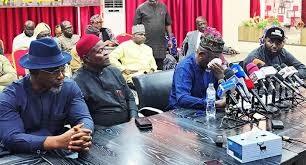
The Joint Admissions and Matriculation Board has admitted that there were errors that affected the performance of candidates during the 2025 Unified Tertiary Matriculation Examination held across different centres in the country. The Registrar of the board, Ishaq Oloyede, who made the admission during a media briefing in Abuja on Wednesday, also broke down in tears while admitting to the error. “Once again, we apologise and assure you that this incident represents a significant setback…. We remain committed to emerging stronger in our core values of transparency, fairness and equity. “It is our culture to admit error because we know that in spite of the best of our efforts, we are human; we are not perfect,” Oloyede said as he wiped tears off his eyes with a white handkerchief. He also announced that about 379,997 candidates in the just concluded 2025 exercise would retake the examination. This followed widespread complaints of technical glitches, unusually low scores, and alleged irregularities in the questions and the answers during the exercise. However, in a post on its X handle on Wednesday, the examination body said it established that a technical glitch affected 157 centres out of the 887 centres. This, it said, was responsible for the general low performance of the candidates. It said, “Man Proposes, God Disposes! It has been established that a technical glitch affected 157 centres out of the 887 centres in the 2025 UTME. This was basically responsible for the general low performance of the candidates scheduled to sit the examination in those centres. “As such, all the affected candidates will be contacted to reprint their examination slips towards retaking their examinations starting from 16th May, 2025.” JAMB had released a statistical breakdown of the 2025 UTME, where it revealed that over 1.5 million of the 1.95 million candidates who took the examination scored below 200. In a post on its official X on May 5, it highlighted that a total of 1,955,069 candidates sat for the examination, and of this number, a significant 1,534,654 candidates—representing 78.5 percent —scored below the 200 mark. A breakdown of the results showed that only 4,756 candidates (0.24 percent) achieved scores of 320 and above, while 7,658 candidates (0.39 percent) scored between 300 and 319. In total, just 12,414 candidates (0.63 percent) scored 300 and above. For the 250-299 score range, 73,441 candidates (3.76 percent) were recorded, while a larger proportion, 334,560 candidates (17.11%), scored between 200 and 249. The category with the highest number of candidates was the 160 to 199 range, with 983,187 candidates (50.29 percent). Further down the scale, 488,197 candidates (24.97 percent) scored between 140 and 159, and 57,419 candidates (2.94 percent) scored between 120 and 139. A percentage of candidates, 3,820 (0.20 percent), scored between 100 and 119, while 2,031 candidates (0.10 percent) fell below the 100 mark. In addition to the overall results, JAMB also disclosed that 40,247 underage candidates were allowed to participate in the examination due to their “exceptional abilities.” However, only 467 of these candidates (1.16 percent) achieved scores that met the defined threshold for “exceptional ability.” In 2024, over 1.94 million candidates registered for the UTME, with 1,904,189 candidates taking the examination across 118 towns and more than 700 centres. JAMB also said that only 0.4 percent of candidates who took the 2024 examination scored above 300, while 24 percent scored 200 or higher. JAMB also reported that 97 candidates were involved in examination infractions in the 2025 UTME, while 2,157 others were under investigation for “suspected malpractices.” The board further noted that 71,701 candidates were absent from the examination, and those facing biometric challenges were being investigated. JAMB also noted that those cleared would be rescheduled for examination at designated centres. It added that some results, including those of blind candidates and candidates in the JEOG category, are still being processed and will be released once finalised. JAMB had assured that candidates who faced biometric challenges or were involved in investigations would be given fair treatment, with rescheduling for those cleared.