
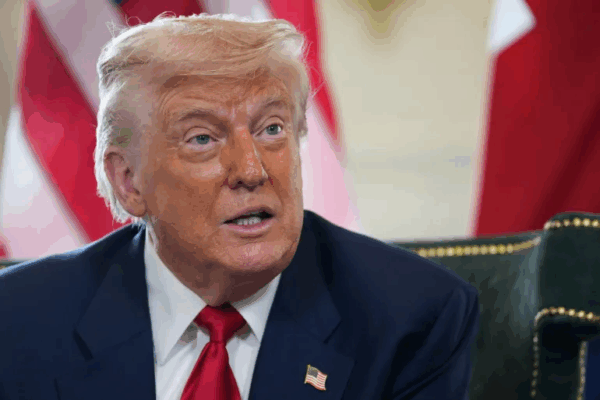
Trump Issues Fresh Threat to Iran Over Nuclear Programme: We’ll Wipe It Out Faster

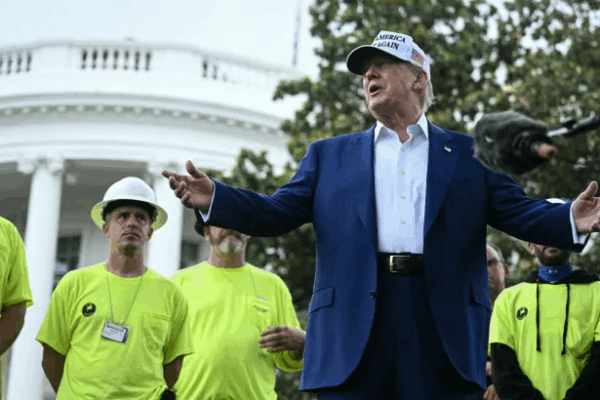
United States President Donald Trump has issued a stern new warning to Iran over its continued nuclear enrichment activities, declaring the U.S. would “wipe it out faster” than before if Tehran resumes nuclear development following recent strikes. The comments came during a joint press conference with UK Prime Minister Keir Starmer at Trump Turnberry golf resort in Scotland, where Trump accused Iran of sending “very bad, very nasty signals.” “We wiped out their nuclear possibilities. They can start again. If they do, we’ll wipe it out faster than you can wave your finger at it,” Trump warned.“We will do that gladly, openly and gladly,” he added. The remarks follow U.S. airstrikes earlier this month on three Iranian nuclear sites, which Washington claimed were part of efforts to halt Iran’s uranium enrichment. The attacks came shortly after Israel launched a military offensive against Tehran in June, an event that shattered previous diplomatic progress. Iran has since reaffirmed its intention to continue enrichment for what it insists are civilian energy purposes. Speaking ahead of recent talks with the UK, France, and Germany, Iranian Foreign Minister Abbas Araghchi defended Tehran’s right to maintain its nuclear programme under international law. The latest round of diplomatic talks—the first since the U.S.-Israel strikes—were described by Iranian officials as “serious, frank and detailed,” though no breakthroughs were announced. In an interview with Al Jazeera last week, Iranian President Masoud Pezeshkian reiterated his country’s stance: “We will not abandon our nuclear programme,” he said, while still expressing openness to negotiations.However, Pezeshkian also said he was “not very optimistic” about the ceasefire with Israel that ended the recent 12-day war. As global tensions remain high, European leaders are pushing for renewed diplomacy, but the Trump administration continues to take a hardline stance, insisting that Iran must fully dismantle its nuclear infrastructure or face further military action.
Read More

Iran Demands End to IAEA Double Standards Before Nuclear Talks Resume

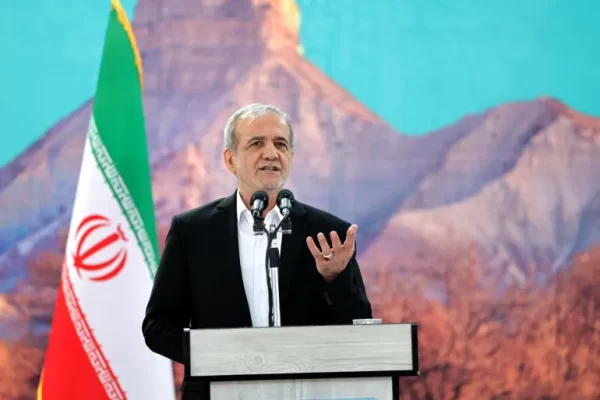
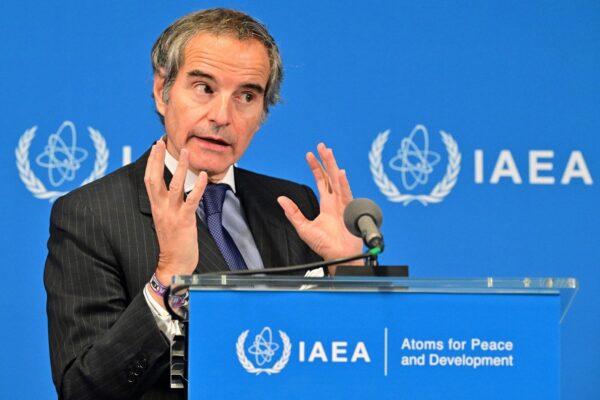
Iranian President Masoud Pezeshkian has warned that Tehran will not resume cooperation with the International Atomic Energy Agency (IAEA) unless the UN nuclear watchdog addresses what he described as “double standards” in its approach to Iran’s nuclear program. In a phone call on Thursday with European Council President Antonio Costa, Pezeshkian said Iran’s future cooperation with the agency would depend on it acting with impartiality — a demand linked to the IAEA’s silence following recent attacks on Iranian nuclear facilities by the United States and Israel. “The continuation of Iran’s cooperation with the agency depends on the latter correcting its double standards regarding the nuclear file,” Pezeshkian said, according to Iranian state media. He also issued a strong warning against further aggression, stating, “Any repeated attack against Iran will be met with a more decisive and regrettable response.” Backdrop: June Conflict with Israel and U.S. Tensions escalated in mid-June after Israel launched a series of airstrikes targeting Iranian military and nuclear sites, which were followed by U.S. bunker-buster bombings. In retaliation, Iran launched drone and missile attacks on Israel and a U.S. base in Qatar, prompting a 12-day conflict that ended with a fragile ceasefire declared by President Donald Trump. In the aftermath, Pezeshkian signed a law suspending Iran’s cooperation with the IAEA. The agency confirmed that its inspectors have now left Iran, marking a serious breakdown in international nuclear oversight. Iran Alleges IAEA Complicity Iran has accused the IAEA of enabling the attacks by adopting a resolution on June 12 that accused Iran of breaching its nuclear commitments — just one day before the strikes. Tehran claims the agency’s actions showed alignment with Western political pressure and failed to uphold neutrality. “Despite remaining a signatory to the NPT [Treaty on the Non-Proliferation of Nuclear Weapons], we no longer trust the IAEA to act impartially,” an Iranian foreign ministry source told local media. Global Reactions IAEA Director General Rafael Grossi said talks with Iran remain a “top priority” and expressed hope for a return to monitoring “as soon as possible.” But he acknowledged the agency has had no access to Iranian facilities since the conflict. Meanwhile, U.S. State Department spokesperson Tammy Bruce called Iran’s withdrawal from cooperation “unacceptable,” insisting: “Iran cannot and will not have a nuclear weapon.” Bruce urged Tehran to “reverse course and choose a path of peace and prosperity,” despite no conclusive U.S. intelligence indicating Iran is pursuing a bomb. BRICS Blasts U.S.-Israel Actions The BRICS bloc of emerging economies on Sunday condemned the U.S.-Israel bombardments of Iran as a “blatant breach of international law.” Iran welcomed the statement, linking the ongoing Gaza war and regional instability to global impunity enabled by Western powers. The situation now raises serious concerns over the future of the Iran nuclear deal, regional stability, and the credibility of multilateral institutions like the IAEA.

Read More

IAEA Inspectors Leave Iran Following US-Israel-Iran Conflict Marking Start of Nuclear Ambiguity

Tehran, Iran – July 5, 2025 — A team of inspectors from the International Atomic Energy Agency (IAEA) has departed Iran, following Tehran’s decision to suspend cooperation with the UN nuclear watchdog in the wake of the 12-day military conflict involving Israel, the United States, and Iran. In a statement on Friday, the IAEA confirmed that some of its staff had returned to its headquarters in Vienna, Austria, with Director-General Rafael Grossi urging the swift resumption of monitoring and verification operations inside Iran. While the IAEA did not disclose how many inspectors left or whether any remain in the country, Al Jazeera’s Resul Serdar, reporting from Tehran, said that the officials departed via land through Armenia, signaling the beginning of what observers are calling a new era of “nuclear ambiguity” in Iran. Iran Cuts Ties With IAEA After Airstrikes The inspectors had remained in Iran throughout the fighting, which began on June 13 when Israel launched airstrikes on Iranian military facilities, killing senior military officials, scientists, and civilians. The United States later joined the assault, dropping bunker-buster bombs on suspected nuclear sites — a move the Trump administration claimed set back Iran’s nuclear programme significantly. Following these events, Iran formally suspended cooperation with the IAEA, citing a deep erosion of trust and accusing the agency of bias. On Wednesday, Iranian President Masoud Pezeshkian ordered an end to ties with the IAEA, a decision backed by the Iranian Parliament and the Guardian Council. Guardian Council spokesperson Hadi Tahan Nazif defended the move as protecting Iran’s national sovereignty, adding that cooperation would only resume when there is “guaranteed security for nuclear facilities and scientists.” Diplomatic Fallout and Global Reaction The decision comes shortly after the IAEA passed a resolution on June 12 — just one day before the conflict began — accusing Iran of failing to meet its nuclear obligations under the Non-Proliferation Treaty (NPT). Iran criticized the timing of the resolution and condemned the IAEA for its silence on the subsequent US and Israeli airstrikes. Iran’s Foreign Minister Abbas Araghchi dismissed Grossi’s request to inspect bombed nuclear sites, saying the demand was “meaningless and possibly malign in intent.” Meanwhile, Washington reacted sharply. US State Department spokesperson Tammy Bruce described Iran’s move as “unacceptable” and urged Tehran to “reverse course and choose a path of peace and prosperity.” She reiterated the Biden administration’s stance: “Iran cannot and will not have a nuclear weapon.” Iran has consistently denied any intention to build nuclear arms, insisting that its programme is strictly for civilian energy purposes. To date, neither US intelligence nor the IAEA has provided definitive proof that Tehran is developing nuclear weapons. What Happens Next? The withdrawal of IAEA inspectors raises critical concerns over nuclear transparency in the region. Experts warn that the lack of independent verification could escalate tensions further and undermine any remaining diplomatic channels. While Iran maintains that its nuclear work remains peaceful, its rejection of inspections and the secrecy now surrounding its facilities may fuel international suspicion and increase the risk of miscalculation in an already volatile Middle East. As of now, there is no indication of when — or if — Iran will restore its cooperation with the IAEA.

Read More

UK court rejects bid to halt transfer of F-35 parts to Israel

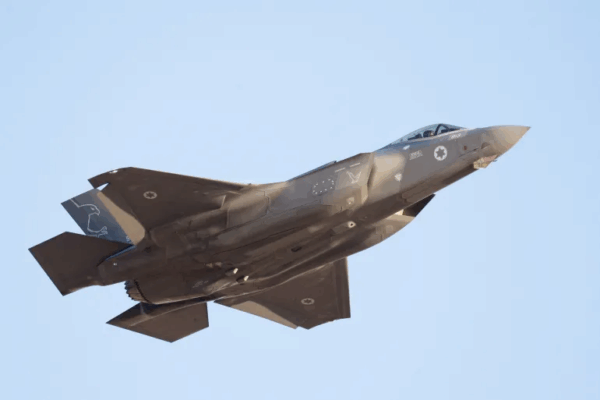
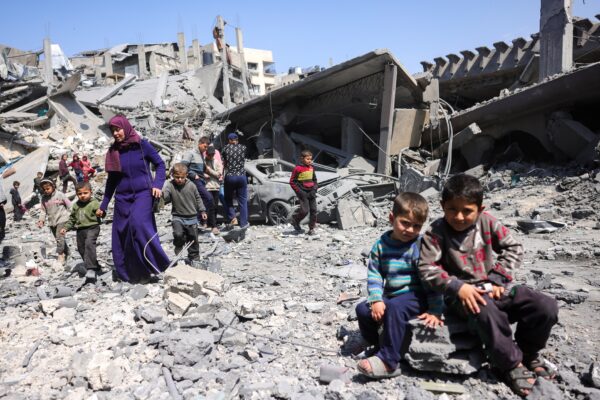
A London court has ruled the UK government’s decision to allow the export of F-35 fighter jet components to Israel during its war on Gaza is lawful. The human rights group Al-Haq argued at a hearing last month that the decision was unlawful because it was in breach of Britain’s obligations under international law, including the Geneva Conventions. Tens of thousands of Palestinians – mostly women and children – have been killed by Israel in its bombardments of Gaza. But the High Court dismissed the group’s challenge in a written ruling. The United Kingdom contributes components to an international defence programme that produces and maintains the F-35s. Defence Secretary John Healey said a suspension would impact the “whole F-35 programme” and have a “profound impact on international peace and security”.

Read More

Israeli Army Chief Links Strikes on Iran to Military Objectives in Gaza

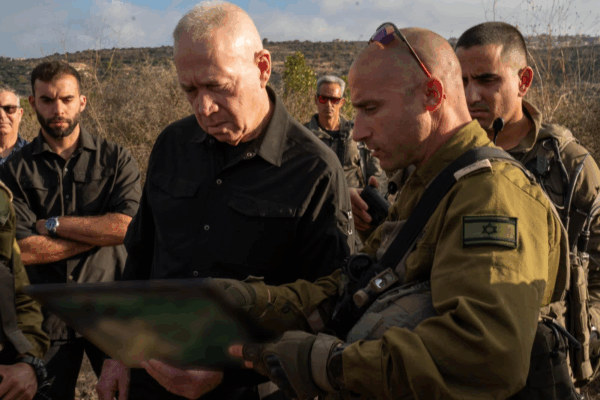
Israel’s Chief of the General Staff, Lieutenant General Eyal Zamir, has stated that recent Israeli strikes on Iran may serve to advance the country’s military objectives in Gaza, raising fresh concerns over the widening scope of the ongoing conflict. Speaking during a field tour of Israeli military positions in Gaza on Friday, Zamir claimed that Iran “has taken a heavy blow,” suggesting that the attack could directly support Israel’s operations in the Palestinian territory. “This may advance our objectives in Gaza,” he said. The comments come in the aftermath of Israel’s conclusion of “Operation Rising Lion,” which the military claims targeted elements of Iran’s nuclear infrastructure. Zamir further commended Israeli ground forces operating in Gaza, stating that their combat experience was “a significant part of the [Israel Defense Forces]’ ability to act with force in Iran.” His remarks appear to blur the distinction between Israel’s military confrontations with Iran and its ongoing war in Gaza, drawing criticism from analysts who warn that linking both theaters of conflict could signal a dangerous escalation. Despite months of air and ground assaults that have resulted in the deaths of tens of thousands of Palestinians and widespread destruction across Gaza, Zamir admitted that Israel’s declared military objectives in the territory remain unfulfilled. The statement has further fueled international concern over the growing regional dimension of Israel’s war efforts and the humanitarian toll in Gaza.

Read More

Iran, Israel Ceasefire Holds as Dozens Killed in Gaza

The US-brokered ceasefire between Iran and Israel appears to be holding as of Wednesday, as both sides signalled that their direct military confrontation had ended, at least for now, following 12 days of intense aerial and missile exchanges. Iranian lawmakers voted Wednesday in favour of suspending cooperation with the United Nations’ nuclear watchdog, state TV said, as an Iranian foreign ministry spokesman said Iran’s nuclear facilities had been “badly damaged” by US strikes. Meanwhile, in Gaza, Israeli fire killed over 50. The latest in a string of deadly incidents near aid distribution sites came after the United Nations had condemned the “weaponisation of food” in the Gaza Strip, where a US- and Israeli-backed foundation has largely replaced established humanitarian organisations. Civil defence spokesman Mahmud Bassal told AFP that Israeli fire targeted thousands of civilians waiting for aid in an area of central Gaza where Palestinians have gathered each night in the hope of collecting food rations. He added that the crowd was hit by Israeli “bullets and tank shells”. Iran on Wednesday branded NATO Secretary General Mark Rutte’s gushing note to President Donald Trump on US strikes targeting key nuclear sites as “disgraceful, despicable and irresponsible”. On Tuesday, Rutte hailed in a pre-NATO summit note to Trump what he called his “decisive action” in Iran, days after the United States conducted unprecedented strikes on its nuclear facilities. Rutte said the move “was truly extraordinary and something no one else dared to do. It makes us safer.” Iranian foreign ministry spokesman Esmaeil Baqaei hit back, saying it was “disgraceful, despicable and irresponsible for #NATO’s SG to congratulate a ‘truly extraordinary’ criminal act of aggression against a sovereign State.” Whoever “supports a crime is regarded as complicit,” Baqaei said in a post on X. President Donald Trump on Wednesday likened Washington’s strike on Iran’s nuclear facilities to the US dropping of atomic bombs on the Japanese cities of Hiroshima and Nagasaki to end World War II. “Actually, if you look at Hiroshima, if you look at Nagasaki, you know that ended a war too,” Trump said as he wrapped up NATO’s summit in The Hague. “This ended a war in a different way, but it was so devastating.” The head of Iran’s Revolutionary Guards command centre, Ali Shadmani, died of wounds sustained during Israel’s military strikes on the country, Iranian state media said on Wednesday. The guards’ command centre vowed “harsh revenge” for his killing, state media added. Israel’s armed forces had said on 17 June that it killed Shadmani, who it identified as Iran’s wartime chief of staff and most senior military commander.

Read More

War Powers Act in Focus as Trump Hints at Possible Strike on Iran

As tensions escalate in the Middle East, renewed attention is being drawn to the War Powers Act of 1973 amid speculation that former U.S. President Donald Trump may order a military strike on Iran. Trump recently refused to rule out U.S. involvement in Israel’s conflict with Iran, telling reporters: “I may do it. I may not.” While the U.S. Constitution grants Congress the sole authority to declare war, presidential military actions in modern times have largely sidestepped formal declarations, raising fresh questions about the balance of power between the executive and legislative branches. Trump’s allies have emphasized that any decision to engage militarily would rest squarely with him, with Department of State spokeswoman Tammy Bruce stating: “He is the singular guiding hand about what will be occurring from this point forward.” However, critics and anti-war advocates argue that Congress must play a decisive role in matters of war and peace, as stipulated under the Constitution. This has prompted some lawmakers to reassert congressional authority through the War Powers Act. The War Powers Resolution, enacted in 1973 during the aftermath of the Vietnam War, requires the president to notify Congress within 48 hours of deploying armed forces into hostilities. It also limits military engagement to 60 days—plus a 30-day withdrawal period—unless Congress authorizes continued involvement. Legal experts note that while the act exists to check presidential powers, it has rarely been enforced. Previous administrations, including Trump’s, have carried out strikes abroad—such as the killing of Iranian General Qassem Soleimani in 2020—without prior congressional approval. “Presidents have often cited national security and self-defense to bypass formal authorization,” said Ayodele Oni, a constitutional analyst. “The courts have also been reluctant to intervene in these political questions.” The last time the U.S. formally declared war was in 1942 during World War II. Since then, successive administrations have conducted military actions in Korea, Vietnam, Iraq, Libya, and elsewhere without formal declarations of war. Should Trump move forward with military action against Iran, Congress could invoke the War Powers Act to force a withdrawal. However, enforcement would likely face political hurdles, including the possibility of a presidential veto and the challenge of securing a two-thirds override in both chambers. As diplomatic tensions rise, the debate over war powers underscores the enduring struggle between executive authority and congressional oversight in U.S. foreign policy.

Read More

What Is Iran’s Fordow Nuclear Facility and Could US Weapons Destroy It?

The Fordow nuclear facility in Iran has once again come under global scrutiny amid heightened tensions following Israeli airstrikes and speculation about potential US military involvement. As concerns grow over Iran’s nuclear capabilities, many are questioning whether the fortified site could be destroyed — and what risks it poses. What Is the Fordow Facility?Located 30km northeast of Qom, deep in Iran’s mountainous terrain, Fordow was initially constructed as a military installation for the Islamic Revolutionary Guard Corps (IRGC) before being converted into a uranium enrichment site. The facility lies hundreds of meters underground, making it one of Iran’s most heavily fortified nuclear sites. Iran formally disclosed its existence to the International Atomic Energy Agency (IAEA) in 2009, only after Western intelligence services uncovered its secret development. Why Is It Significant?First site where uranium enriched close to weapons-grade levels was found: In 2023, IAEA inspectors detected particles enriched to nearly 90% purity — the threshold for weapons-grade uranium. Capacity: Fordow is equipped to hold nearly 3,000 centrifuges, a small portion compared to Natanz (which has capacity for about 50,000), but its location deep underground makes it more defensible. Symbolic and strategic value: Fordow’s continued operation is often cited by the West as a major obstacle to reviving the 2015 nuclear deal (JCPOA). Has Fordow Been Hit or Damaged in Recent Attacks?Following Israel’s massive strike on Iran’s Natanz facility, missiles also targeted Fordow. However, according to IAEA chief Rafael Grossi, no visible damage was recorded at Fordow or at the Khondab heavy water reactor. This suggests Fordow remains operational, unlike Natanz, which sustained both above-ground and suspected underground damage. What Happens at Fordow?Fordow’s original role was to enrich uranium up to 20% U-235 — far above the 3.67% permitted under the JCPOA but below weapons-grade. Since the US withdrawal from the JCPOA in 2018, Iran has resumed higher enrichment levels at the site. Uranium enrichment involves concentrating the fissile U-235 isotope. Weapons-grade uranium requires enrichment levels of 90% or more, which Fordow is technically capable of producing. What Did Iran Agree to Under the JCPOA?Under the 2015 JCPOA, Iran agreed to: By 2017, these conditions were met — until the agreement began to collapse post-2018. Can the US Destroy Fordow With Airstrikes?Not easily. Military analysts agree that Fordow’s deep underground location makes it extremely difficult to target with conventional weapons. To neutralize it, the US would likely require: In short, Fordow is not invulnerable, but destroying it would require serious firepower and likely a coordinated air campaign, not a single strike. What’s Next?With the Israel-Iran conflict escalating and the JCPOA effectively dormant, Fordow represents both a flashpoint and a symbol of Iran’s nuclear resilience. Whether the U.S. will attempt military action there remains uncertain, but any such move would risk widening the current conflict — and dragging the world’s most volatile region into deeper chaos. Bottom line:Fordow is a hardened, operational nuclear facility, vital to Iran’s enrichment program. While not untouchable, it’s built to withstand conventional strikes, and any U.S. attempt to neutralize it would be a major military gamble with significant regional consequences.

Read More