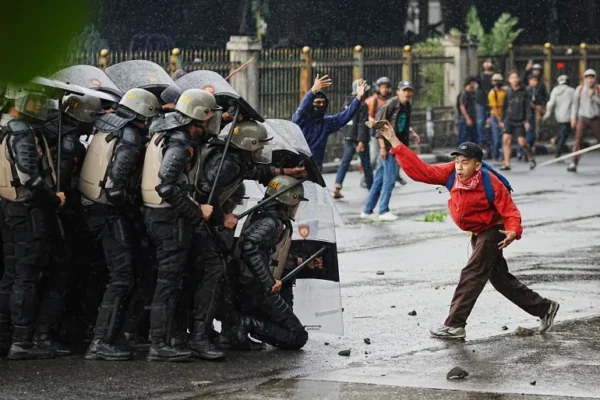
JAKARTA, Indonesia – A wave of nationwide protests continues to grip Indonesia, triggered by public outrage over government spending, economic hardship, and perceived indifference from the political elite. Sparked in late August by reports that members of parliament were receiving $3,000 monthly housing allowances—in a country where the minimum wage is just a fraction of that—the demonstrations have since evolved into a broader movement against inequality, corruption, and the rising cost of living. The protests, marked by clashes with riot police and widespread unrest, have spread across major islands including Java, Sumatra, Sulawesi, and Kalimantan. Public anger deepened following the death of 21-year-old food delivery rider Affan Kurniawan, who was fatally struck by a police vehicle while working during the protests in Jakarta. Kurniawan’s death became a rallying point for many, symbolizing the plight of Indonesia’s struggling working class and its growing gig economy. Several police officers are under investigation, and one has been dismissed. Amid the unrest, Al Jazeera spoke to five Indonesians from different walks of life about the underlying causes of the unrest—and what they believe must change. “Inequality Is the Root of the Problem” – Imran, Delivery Driver, North SumatraFor Imran, a food delivery worker in Langkat, the protests reflect deep-seated structural issues. “Economic, educational, and health inequalities are pushing people to the edge,” he said. “Our leaders should be solving these problems—not worsening them.” Imran described the $3,000 housing allowance for lawmakers as a stark insult to ordinary Indonesians, many of whom struggle to afford basic necessities. Following widespread backlash, parliament has since revoked the allowance, canceled plans to increase lawmakers’ salaries, and imposed a ban on non-essential overseas trips by officials. “We want peace. We want our rights respected. If that happens, the protests will stop,” Imran said. “They Forget About Us After Elections” – Rahmawati, Housewife, East KalimantanIn Samarinda, Rahmawati shared her frustration with rising food prices and government neglect. “Every year, groceries get more expensive. They [politicians] only remember us during elections,” she said. “After that, they vanish.” Despite reports of 5.12% GDP growth in Q2, everyday Indonesians say they see little improvement in their lives, particularly in rural and lower-income communities. Inflation in August reached 2.31% year-on-year, further straining household budgets. “We Need Systemic Reform” – Afifah, Women’s Rights Activist, JakartaFor Afifah, the protests go beyond economic grievances. “People are protesting the military’s growing power, job insecurity, poverty, and threats to democracy,” she said. “There have been protests all year, not just now.” She condemned the government’s violent crackdown on peaceful demonstrators, including the use of tear gas and water cannons on university campuses. “The police must respect our right to protest,” Afifah urged. “This country needs reform—from the economy to the environment and governance. And women must be included in that change.” “Military Expansion in Aceh Is a Red Line” – Muhammad, Social Worker, Banda AcehIn Aceh, a region scarred by decades of conflict with the Indonesian military, protests have also taken place—despite typically avoiding national demonstrations. “We protested peacefully against plans to build five new military battalions here,” said Muhammad, a social worker in Banda Aceh. “It’s very sensitive for us. We already endured 35 years of military oppression.” President Prabowo Subianto, a former general with ties to Indonesia’s authoritarian past, has faced criticism for his push to expand the military’s role in civilian affairs. Since taking office in October 2024, his administration has reportedly established dozens of new battalions, with plans for hundreds more. “The Emperor Has No Clothes” – Political AnalystAccording to a prominent Indonesian political analyst, much of the public anger stems from broken promises. “Prabowo ran as an economic reformer, but now many feel betrayed,” the analyst said. “He slashed $18 billion in public spending—especially in education and healthcare—while funding a $10 billion free school lunch program.” The analyst added that the president still has an opportunity to reverse course. “To regain public trust, he must act. That means holding corrupt officials accountable, prosecuting excessive use of force, and delivering on his economic promises. Fire some people. Arrest others. Show the people he’s serious.” A Nation at a CrossroadsThe protests show no signs of slowing. In Makassar, Sulawesi, demonstrators reportedly set fire to a regional government building, resulting in at least three deaths. In Jakarta, parliamentarians’ homes and even the residence of Finance Minister Sri Mulyani Indrawati were targeted by angry crowds. President Prabowo, in a televised address, condemned the unrest, warning that acts of “treason and terrorism” would not be tolerated. But for many Indonesians, harsh rhetoric does little to address the deeper crisis. “People are fed up,” Rahmawati said. “We want leaders who care about us—not just themselves.”