
House Of Reps Advances Bill To Create Ibadan State From Oyo

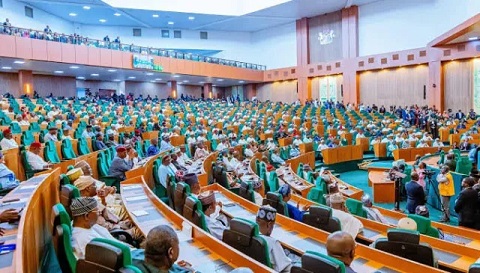
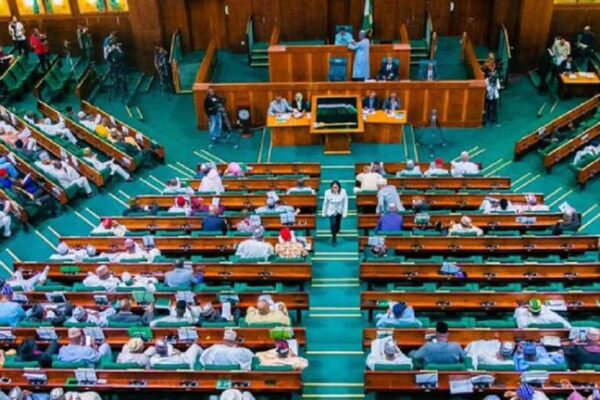
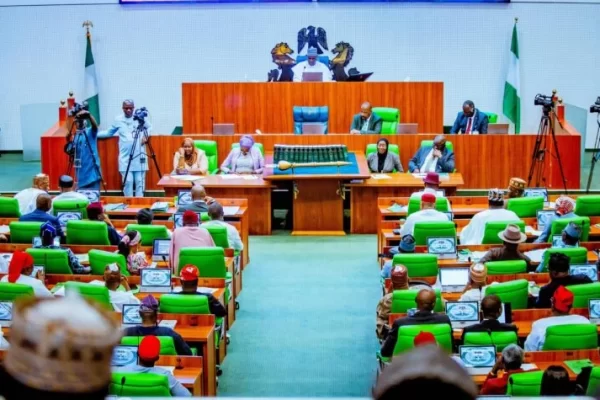
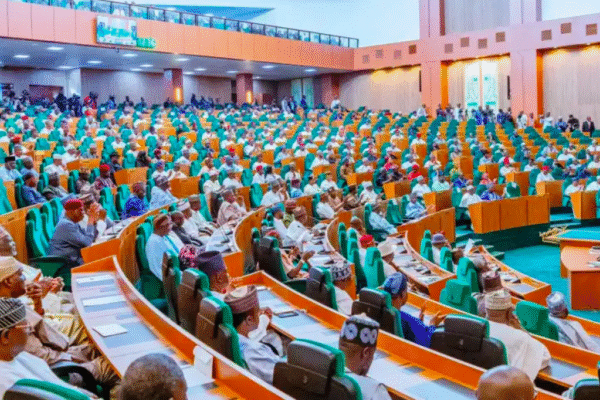
A bill seeking to carve out Ibadan State from the present Oyo State has advanced to the second reading stage in the House of Representatives. Sponsored by Abass Adigun, representing Ibadan North-East/Ibadan South-East Federal Constituency, the proposed legislation scaled through on Thursday after a heated plenary debate. Adigun argued that Ibadan’s population size, land area, and long-standing historical relevance justify its recognition as a state. He pointed out that former regional capitals like Enugu and Kaduna had already attained state status and that Ibadan deserved the same treatment. “This bill represents a monumental step toward equitable development through federalism and the realisation of the long-held aspiration of the people of Ibadan,” Adigun said. The session briefly turned tense when Adigun claimed that a single local government area in Ibadan was larger than three in Bayelsa State combined. His comment drew a sharp response from Obuku Ofurji (Yenagoa/Opokuma, Bayelsa), who described the comparison as “irrelevant and disrespectful.” Adigun later apologised but maintained that his figures were accurate. Deputy Speaker Benjamin Kalu, who presided over the session, referred the bill to the House Committee on Constitutional Review, which he chairs. He also reiterated that the ongoing amendment to the 1999 Constitution would be concluded by December 2025. The creation of a new state in Nigeria remains a complex process. Section 8(1) of the 1999 Constitution requires such a proposal to obtain two-thirds support from federal lawmakers representing the affected area, approval by the state assembly and local councils, endorsement by two-thirds of the residents in a referendum, majority consent from state assemblies nationwide, and final passage by two-thirds of both chambers of the National Assembly. Despite numerous similar efforts in the past, Nigeria has not created a new state since its return to democratic rule in 1999.  

Read More

House of Reps Rejects US Senate Claim Of Christian Genocide In Nigeria

The Nigerian House of Representatives has dismissed claims by the US Senate framing the country’s security challenges as a “genocide against Christians” or evidence of state-sponsored persecution. The response comes after US lawmaker Riley Moore called on Secretary of State Marco Rubio to act against what he described as the “systematic persecution and slaughter of Christians” in Nigeria, calling it the deadliest country in the world for the faith. Moore also urged that Nigeria be redesignated as a Country of Particular Concern (CPC) and that arms sales be suspended until the government demonstrates a “tangible commitment” to ending the violence. In a motion presented by Deputy Speaker Benjamin Kalu, the House directed relevant committees to collaborate with the Minister of Foreign Affairs, the Nigerian Embassy in Washington D.C., and security agencies to file a formal diplomatic protest against the sponsors of the US resolution within 21 days. The motion, titled “Need for a Coordinated Diplomatic and Domestic Response to the Proposed Nigerian Religious Freedom Accountability Act of 2025 (U.S. Senate Bill 2747),” received unanimous support. Speaking on National Assembly TV, Kalu said the measure was necessary to counter “the mischaracterisation of Nigeria’s security and religious freedom landscape.” “The House outrightly rejects narratives that frame Nigeria’s security crisis as a purely religious conflict or a state-sponsored persecution,” he said. “Our Constitution guarantees freedom of thought, conscience, and religion and bars the adoption of a state religion. Successive administrations, security agencies, and faith leaders have worked to protect all worshippers and prosecute offenders.” Kalu explained that US Senate Bill 2747, introduced on September 9, 2025, seeks to compel the US Secretary of State to designate Nigeria as a CPC and impose sanctions on Nigerian officials under the Global Magnitsky framework. He warned that such a move, based on “incomplete or decontextualised assessments,” could distort facts, strain diplomatic relations, and embolden violent actors. He further noted that Nigeria’s security crisis is complex and multi-dimensional, fueled by insurgency, banditry, farmer-herder clashes, separatist violence, and communal conflicts affecting citizens of all faiths. “International reporting attributes a significant portion of fatalities to terrorist groups and criminal gangs, not state policy or any single religious group,” Kalu said. The deputy speaker reaffirmed Nigeria’s commitment to human rights and religious freedom, emphasizing that violence against any person based on faith is condemned. “We commiserate with all victims, irrespective of religion,” he added. While underscoring Nigeria’s “longstanding partnership with the United States,” the House insisted that the country’s sovereignty must be respected in international discourse.  

Read More

Tinubu Requests House Approval For $2.35 Billion External Loan And $500 Million Sukuk To Fund Budget, Infrastructure

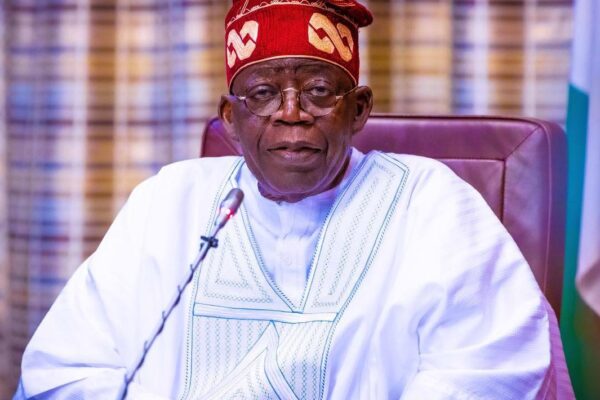
President Bola Tinubu has officially sought the House of Representatives’ approval to borrow $2.35 billion in external funds to partly finance the 2025 budget deficit and refinance Nigeria’s maturing Eurobonds. The request, contained in a letter to House Speaker Tajudeen Abbas, was read on the floor of the House on Tuesday. Tinubu is also seeking clearance to issue a $500 million debut sovereign sukuk in the International Capital Market (ICM) to support infrastructure projects and broaden Nigeria’s financing options. The borrowing plan complies with Sections 21(1) and 27(1) of the Debt Management Office (Establishment) Act, 2003, which require legislative approval for new loans and refinancing arrangements. The $2.35 billion proposal consists of $1.23 billion (N1.84 trillion) earmarked in the 2025 Appropriation Act to help close the budget gap, and $1.12 billion to refinance a Eurobond maturing on November 21. “The Federal Government has recorded significant success issuing Sukuk in the domestic capital market to fund key infrastructure projects,” the letter stated. “From September 2017 to May 2025, the DMO raised N1.39 trillion through domestic Sukuk for road infrastructure projects. Nevertheless, it is crucial to access external funds to complement domestic resources, bridge infrastructure gaps, diversify the investor base, and deepen the government securities market.” Tinubu explained that the funds could be raised through one or a combination of instruments such as Eurobonds, loan syndications, or bridge financing facilities, depending on market conditions. He added that pricing for the new Eurobonds is expected to mirror current yields on Nigeria’s international bonds, ranging from 6.8 percent to 9.3 percent depending on maturity. On the $500 million sovereign sukuk, the President said it would diversify Nigeria’s investor base, deepen the government securities market, and finance critical infrastructure projects across the country.  

Read More

House Of Representatives Considers Conducting Presidential, Governorship, And Legislative Elections On A Single Day

The House of Representatives is weighing a proposal that could see presidential, governorship, National Assembly, and State Assembly elections conducted on the same day across Nigeria. Speaker Tajudeen Abbas revealed this during a meeting with a European Union delegation in Abuja, explaining that the plan is part of broader electoral reforms aimed at cutting costs, boosting voter turnout, and reducing the tensions that often accompany Nigeria’s staggered polls. He stressed that a single-day election system would improve credibility and ease the logistical and security challenges that typically arise during prolonged election periods. “In our own thinking, it will help to reduce our electoral process, particularly on the turnout of voters,” Abbas said. The ongoing constitutional amendment process also covers other reforms such as reserved seats for women and persons with disabilities, financial autonomy for institutions, and clearer roles for traditional rulers. Abbas urged the EU to back the reform process through advocacy and awareness, noting that both chambers of the National Assembly and state assemblies will need to support the changes for them to take effect. Lawmakers are expected to vote on the amendment bills later this month as part of efforts to strengthen Nigeria’s electoral framework ahead of the 2027 general elections.  

Read More