
African Leaders Should Prioritize Younger Leaders Aged 25 To 50 – Goodluck Jonathan Says

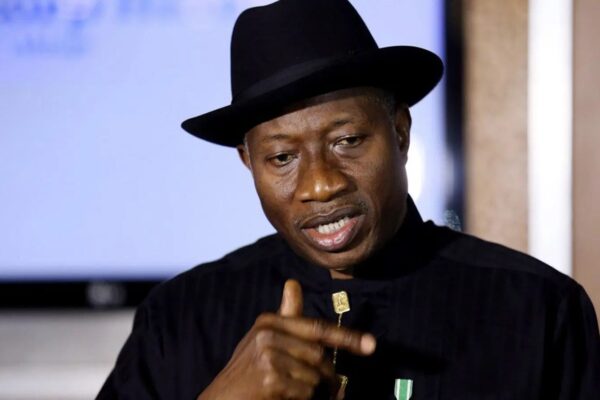
Former President Goodluck Jonathan has urged African nations to embrace a new generation of leaders, calling on countries to prioritize those aged 25 to 50, whom he described as better suited—both physically and mentally—for the demands of modern governance. Speaking on Thursday in Abuja at the International Memorial Lecture and Leadership Conference commemorating 50 years since the assassination of former Head of State General Murtala Ramat Muhammed, Jonathan stressed that age should not be a barrier to leadership. Reflecting on his own time in office, he recalled enduring days with barely two hours of sleep, highlighting how advanced age can limit a leader’s ability to cope with such pressures. “Why do we begin to think that you must be a hundred years old before you can rule your country?” he asked, emphasizing that younger leaders are more resilient and able to handle intense workloads. He cited the “Not Too Young To Run” movement in Nigeria, which aims to lower age restrictions for elective offices, as a model for encouraging youth participation in politics. “If we are looking for people who can run nations in Africa, we should look within the 25 to 50 age bracket. That is when you are vibrant, physically strong, and mentally sound,” Jonathan said. Jonathan also criticized public office holders who spend large portions of their time away from their duties. “In countries like the United States, some governors do not leave their states for four years. Yet here, some governors spend half their time abroad. Who then manages the state? Why would we not face security challenges? True maturity requires discipline, first and foremost,” he said. Highlighting the legacy of General Murtala Muhammed, Jonathan pointed out that decisive leadership is not about age. Muhammed became Head of State at 38 and, in just 200 days, made a lasting impact. “General Murtala Muhammed assumed office at 38. Despite his short tenure, his achievements were profound because he had a clear, unwavering vision. Leadership must serve the national interest, not personal ambition,” Jonathan said. He also recalled General Yakubu Gowon, who became Head of State at 32 and introduced the National Youth Service Corps, which continues to operate today. “A young man of 32 managed to lead the country through the civil war. Why do we now insist leadership comes only with old age?” he asked. Jonathan warned that youth alone is insufficient for effective governance without discipline, patriotism, and strong institutions. He stressed that democracy relies on systems and structures, not just individuals. “Democracy requires vision rather than decree. It relies on persuasion over command. It depends on institutions, not individuals. Above all, it requires respect for the rule of law and submission to the will of the people,” he said. He encouraged young people to view leadership as service, and leaders to see governance as stewardship. “Leadership is not entitlement. Young people must see it as service, and leaders must see governance as stewardship,” Jonathan said, recalling the age barriers he faced when contesting for deputy governor. He concluded by urging leaders to focus on the impact of their governance rather than the length of their tenure. “Leadership is measured by the courage to act decisively and the difference you make in society, not how long you hold office. While military leaders govern by command, democracy requires strong institutions, credible elections, an independent judiciary, and accountable governance,” he said. Jonathan emphasized that while General Murtala Muhammed exemplified decisive leadership, Africa’s democratic future depends on building and respecting institutions. “Democracy depends on vision, persuasion, institutions, and the rule of law. It demands restraint and accountability,” he added.
Read More

Turaki-Led PDP NEC Meets Jonathan Amid Party Leadership Crisis

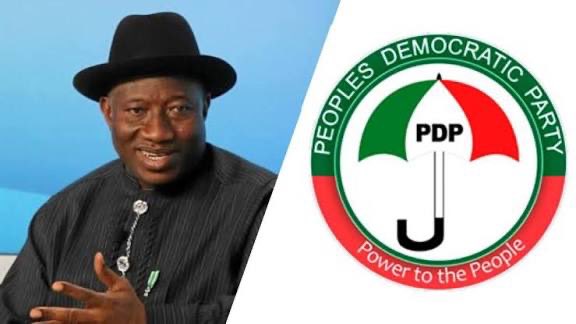
The Peoples Democratic Party’s national working committee, headed by Kabiru Turaki, is meeting with former President Goodluck Jonathan in Abuja. The meeting is taking place at Jonathan’s office in Maitama, the nation’s capital, and while the details of the discussion have not been disclosed, sources suggest it concerns the party’s leadership tussle and the broader state of the nation. The PDP has been embroiled in internal conflict since November, when a faction backed by governors, including Bauchi State’s Bala Mohammed and Oyo State’s Seyi Makinde, held a convention that elected a new national working committee with Turaki as chairman. During that convention, the party expelled FCT Minister Nyesom Wike and several of his allies, including former Oyo State governor Ayodele Fayose, ex-national secretary Samuel Anyanwu, former national organising secretary Umar Bature, former legal adviser Kamaldeen Ajibade, ex-lawmaker Mao Ohuabunwa, former Imo PDP chairman Austin Nwachukwu, former Abia PDP chairman Amah Nnanna Abraham, former national vice-chairman (south-south) Dan Orbih, and Turnah George. Rejecting the expulsion, Wike’s faction set up a parallel national working committee, board of trustees, and national executive committee. In retaliation, the Makinde-aligned faction also expelled members loyal to Wike, deepening the party’s leadership crisis.

Read More

MRA Announces Call for Entries for Goodluck Jonathan FOI Awards 2026

Media Rights Agenda (MRA) today announced the formal opening of its Call for Entries for the Dr. Goodluck Jonathan Freedom of Information Awards 2026, designed to recognize and celebrate journalistic excellence in promoting transparency and accountability through the effective use of the Freedom of Information (FOI) Act, 2011.   Named in honour of former President Goodluck Ebele Jonathan, GCFR, who signed the FOI Act into Law on May 28, 2011, the first category of the awards will celebrate a journalist who has made the highest number of information requests under the Act, while the second category will honour a journalist who has made the most outstanding contributions in promoting the Act since its enactment by raising awareness among citizens, government officials and the media about it, including its provisions, how to use it, its benefits, and the rights it grants as well as advocating for its effective implementation.   In a statement announcing the opening of the call, MRA called on all eligible Nigerian journalists working across print, broadcast, online, and multimedia platforms to submit their entries for consideration in two distinct categories as follows:   Category 1: Most Active User of the FOI Act. This award will be given to a journalist who has made the highest verifiable number of information requests under the FOI Act between May 28, 2011, and December 31, 2025. This category aims to celebrate and encourage the active and consistent use of the Act as a tool for journalistic investigation as well as for promoting and ensuring transparency and good governance.   Category 2: Most Outstanding Promoter of the FOI Act. This award will recognize a journalist who has made the most outstanding contributions in promoting the FOI Act since its enactment in 2011. This includes raising public awareness about the Act, its provisions, how to use it, its benefits, and the rights it confers on individuals, as well as advocating for its effective implementation through news stories, feature articles, opinion pieces, or other media outputs.   Applicants must be journalists of Nigerian nationality, working in any print, broadcast, online, or multimedia outlet, and should not be under any legal constraint and must not have been adjudged by an appropriate regulatory or judicial body to be guilty of professional misconduct.   All interested journalists are required to complete an application form and attach relevant, verifiable documentation for their claims, which may include acknowledged copies of FOI requests or copies of published media outputs, depending on the category.   The deadline for all submissions is 23.59 (WAT) on January 31, 2026.   According to MRA, the winner in each category will receive a plaque, a certificate, and a prize. The Awards will be formally presented at a public ceremony to be held in Abuja on May 28, 2026, coinciding with an event to commemorate the 15th anniversary of the enactment of the Act.

Read More