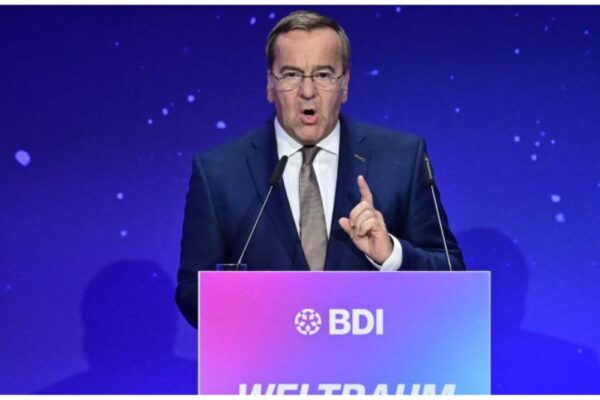
UK and Germany Accuse Russia of Threatening Their Satellites

The United Kingdom and Germany have accused Russia of threatening and interfering with Western satellites, warning that Moscow’s increasingly aggressive space activities pose a growing danger to global security. German Defence Minister Boris Pistorius and senior British defence officials have sounded the alarm over reports of Russian and Chinese satellites “stalking” or “jamming” Western assets in orbit — critical systems used for military communications, navigation, and broadband internet. “Russia’s actions, especially in space, pose a fundamental threat to us all — a threat we can no longer ignore,” Pistorius said during the BDI Space Congress in Berlin. According to Germany’s Defence Ministry, Russian reconnaissance satellites were recently detected tracking two IntelSat spacecraft used by the German Armed Forces and allied militaries. IntelSat operates a fleet of commercial satellites providing communications for governments and private companies across Europe and the United States. Pistorius announced a multibillion-euro boost for Germany’s space defence program, citing the growing capacity of both Russia and China to jam, blind, or destroy satellites. The UK’s Space Command raised similar concerns. Major General Paul Tedman told the BBC that Russian satellites have been “stalking and jamming British assets on a weekly basis,” adding that Moscow has developed advanced electronic warfare systems capable of disrupting orbital communications from the ground. Meanwhile, NATO Secretary General Mark Rutte reiterated warnings that Russia may be developing nuclear weapons for space deployment — devices capable of disabling or destroying multiple satellites. Moscow has denied the accusation but vetoed a 2024 UN resolution aimed at banning space-based nuclear arms. China abstained from the vote. How Russia’s Space Threat Works Experts say Russian satellites can approach and shadow Western spacecraft, potentially to intercept data or conduct reconnaissance. These satellites often linger near commercial or military communication systems — a pattern that signals espionage. According to Clayton Swope, deputy director of the Aerospace Security Project at the Center for Strategic and International Studies (CSIS), Russian satellites have previously tested projectiles in orbit, suggesting the capability to physically target other satellites. “It’s very hard to distinguish between a satellite designed for intelligence collection and one capable of attack,” Swope explained. “Sometimes you’re guessing both the intent and capability of the operator.” A Longstanding Concern The US and France first raised concerns about Russian space espionage over a decade ago. In 2015, a Russian military satellite positioned itself close to two IntelSat spacecraft, prompting Washington to demand explanations. Similar incidents occurred in 2017 when Russian satellites approached Franco-Italian intelligence satellites. Analysts say the current tensions must be viewed in the wider context of Russia’s war in Ukraine and its growing strategic alignment with China, including alleged Chinese satellite reconnaissance over Ukrainian territory. China’s Expanding Space Power Experts warn that China’s growing sophistication in space technology presents an equal — if not greater — threat. Chinese satellites have reportedly conducted high-speed, high-precision maneuvers near Western assets and tested spacecraft equipped with robotic arms capable of repositioning others in orbit. “China is the much bigger space power,” said Juliana Suess of the German Institute for International and Security Affairs. “They have far more funding and ambition in space compared to Russia, whose resources are stretched thin.” Europe’s Response Germany has pledged up to €35 billion ($40 billion) over five years to strengthen its space defence infrastructure. The UK has also increased military spending and begun testing laser threat detection systems for satellite protection. However, a recent Chatham House analysis warned that Britain and Europe may still be underprepared for the scale and urgency of space threats. France has called for “bodyguard satellites” — orbital systems designed to defend other satellites — while NATO has formally designated space as an operational domain since 2019. Despite Western efforts, experts say Russia remains less integrated and technologically advanced in space warfare than the United States or China. Still, the threat of interference, espionage, or direct attacks in orbit underscores the growing militarization of space.
Read More
Iran Recalls Ambassadors to UK, France, and Germany as UN Sanctions Snap Back

Iran Recalls Ambassadors to UK, France, and Germany as UN Sanctions Snap Back

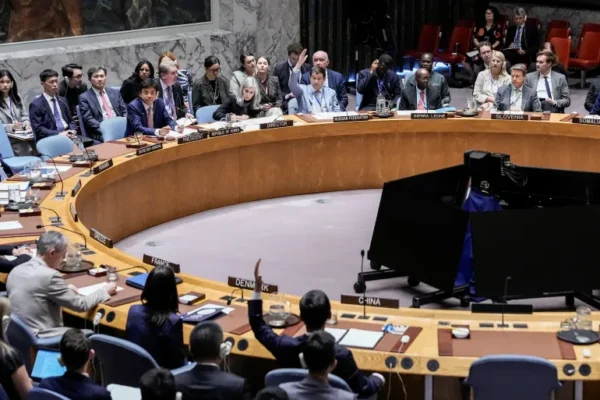
By Kamal Yalwa: Published September 27, 2025 Tehran – Iran has recalled its ambassadors from the United Kingdom, France, and Germany in response to the reimposition of United Nations sanctions, which come into effect on Sunday. State media reported Saturday that the Iranian envoys were summoned back to Tehran “for consultations,” following what the Iranian government described as “irresponsible” action by the three European nations—collectively known as the E3—to trigger the UN’s snapback mechanism. The E3 set the process in motion a month ago, accusing Tehran of non-compliance with nuclear obligations. The move follows a deadly 12-day conflict in June between Iran, Israel, and the United States, which left over 1,000 people dead, according to Iranian authorities. On Friday, efforts by Russia and China to delay the sanctions through a UN Security Council resolution failed, with only four countries backing their proposal. The snapback sanctions officially begin at 00:00 GMT on Sunday, reinstating global bans on cooperation with Iran’s nuclear, military, banking, and shipping sectors. The news triggered an immediate reaction in Iranian markets, with the rial plummeting to an all-time low—trading at over 1.1 million per US dollar on the open market in Tehran. The International Atomic Energy Agency (IAEA) confirmed this week that inspections had resumed at some Iranian sites, but did not specify whether this included facilities damaged in the June airstrikes. In Moscow, Iran’s nuclear chief Mohammad Eslami criticized the IAEA for not condemning the bombings of Iranian nuclear infrastructure by the U.S. and Israel. Despite diplomatic efforts at the recent UN General Assembly in New York, Western powers rejected Iranian proposals to delay the snapback, citing a lack of meaningful progress. Iranian President Masoud Pezeshkian said there was no reason to negotiate further, accusing the U.S. and Israel of attempting to destabilize Iran’s government. “If the goal had been to resolve concerns on the nuclear programme, we could easily do that,” Pezeshkian said, reiterating that Iran has no intention of pursuing nuclear weapons. U.S. envoy to the Middle East Steve Witkoff defended the sanctions, calling them “the right medicine,” but insisted Washington remains open to dialogue. However, global consensus remains fractured. Russia’s deputy UN ambassador Dmitry Polyansky dismissed the sanctions as “null and void,” and China has continued to import Iranian oil despite pressure from Washington. The U.S. has since imposed new penalties on Chinese firms linked to Iranian energy imports. The renewed sanctions mark a full reinstatement of measures previously lifted under the 2015 nuclear deal, which former U.S. President Donald Trump abandoned in 2018 in favor of a “maximum pressure” campaign. At the UN on Friday, Israeli Prime Minister Benjamin Netanyahu urged no delay in implementing the snapback and suggested Israel could again target Iranian nuclear facilities if necessary. Still, Iran’s leadership signaled restraint. Pezeshkian said Tehran would not quit the Nuclear Non-Proliferation Treaty, warning that adversaries were looking for “superficial pretexts to set the region ablaze.” Meanwhile, regional tensions remain high. The Islamic Revolutionary Guard Corps (IRGC) marked the first anniversary of the assassination of Hezbollah leader Hassan Nasrallah and senior Iranian commander Abbas Nilforoushan in Israeli airstrikes on Beirut. The IRGC vowed continued “smart resistance” against Israeli and American actions. In a related development, Iran’s judiciary announced that four individuals had been convicted for allegedly working with Israel’s Mossad and the outlawed MEK group. Two received death sentences; the other two were given life imprisonment. Iran’s top national security official, Ali Larijani, attended a memorial event in Lebanon on Saturday, declaring that “it is now clear Israel shows mercy to no country.” As sanctions take hold, Iran’s response—and how strictly the world enforces the measures—will shape the next chapter in the escalating standoff.

Read More

Berlin Says Germany, Oman Agree Middle East Escalation Should Be Avoided

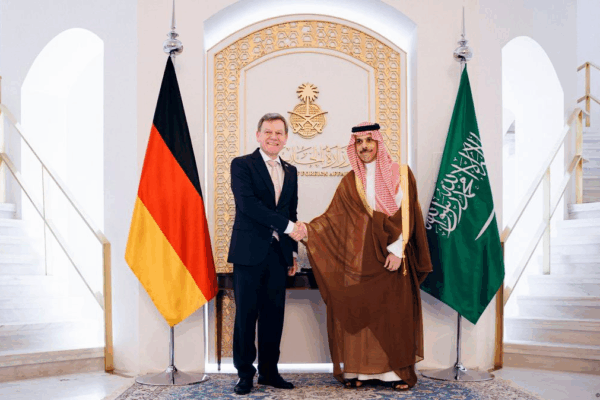
Germany’s Chancellor Friedrich Merz has spoken to Oman’s Sultan Haitham bin Tariq Al Said, according to a German government statement, as regional tensions rise following Israel’s attacks on Iran. They both agreed that the conflict should not escalate and expressed their willingness to help end it through diplomatic means, the statement said. “The chancellor thanked [the sultan] for Oman’s mediation efforts towards ending Iran’s nuclear programme. He emphasised that Iran must never have nuclear weapons,” it added. Iran has pursued a nuclear programme for decades but insists it only wishes to use nuclear power peacefully.

Read More

Bundesliga star, Karim Adeyemi visits Ooni of Ife

Borussia Dortmund forward Karim Adeyemi on Wednesday paid courtesy visit to the Imperial Majesty, Ooni of Ife Oba Adeyeye Enitan Ogunwusi at his palace in Ile Ife, Osun State. Reasons for his visit to the monarch is still sketchy as at press time but Adeyemi was born in Munich, Germany, to a Nigerian father and Romanian mother enjoying his holidays in Nigeria. The former Red Bull Salzburg player however eligible to star for Nigeria, having represented the Germany under-16s, under-17s and under-21s and made his debut for the Germany senior team in a 6–0 2022 FIFA World Cup qualification win over Armenia in 2021.

Read More

Nigeria to strenghten defence ties with Germany

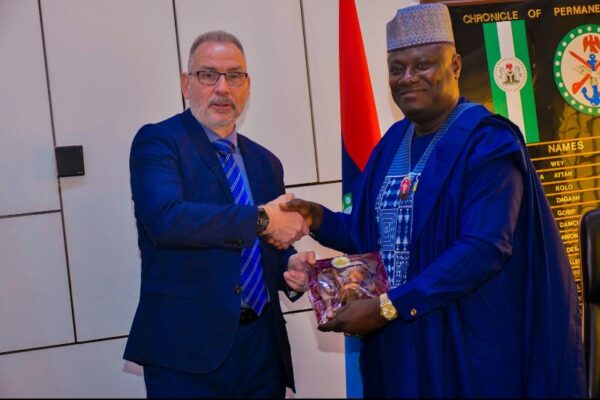
The Permanent Secretary Ministry of Defence Dr. Ibrahim Abubakar Kana has said that with the new circle of projects by the German Technical Advisory Group (GTAG), the Defence relationship between Nigeria and Germany will be strengthened. The Permanent Secretary stated this when he met with a high-level delegation from the German Technological Advisory Group, led by Mr. Marcus Ohm in Ship House, Abuja. He said: “ I am happy for accepting the new project circle and I promise we are going to sustain it.” Dr. Kana highlighted Nigeria government’s efforts since the last time the group visited the project. He said Nigeria government has developed a framework and the Defence Headquarters has been mandated to bring up projects within the framework for proper coordination, planning and execution. He emphasized the importance of modernizing the Nigerian Armed Forces through, enhanced security intelligence sharing, equipment upgrades and capacity building as well as the need for Nigerian personnel involvement in the project planning and execution for the purpose of sustainability. Mr. Ohm expressed satisfaction with Nigeria’s progress, stating: “The project is going in the right direction.” He therefore pledged Germany’s commitment to delivering successful projects. The meeting highlighted the mutual benefits of cooperation, with both nations committed to transparency, dedication and enhanced collaboration.

Read More

Boniface survives car crash in Germany

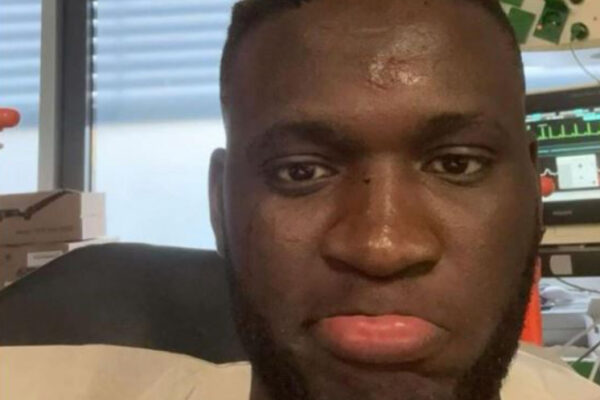
Super Eagles’ striker Victor Boniface has reportedly survived a ghastly car crash in Germany. The Bayer Leverkusen of Germany player posted a video of the damaged car on his Instagram Stories on Sunday. The unfortunate incident occurred after the striker, who has been in scintillating form since joining the German club in the summer of 2023, scored the winning goal for his team as the Bundesliga champions secured a hard-fought 2-1 victory over Eintracht Frankfurt at the BayArena on Saturday. The video showed one of Boniface’s hands dripping blood after the crash. In the video, the black car sustained significant damage to the right side, with the body severely affected.

Read More

Colombia 2024: Germany thrashes Falconets in Bogota

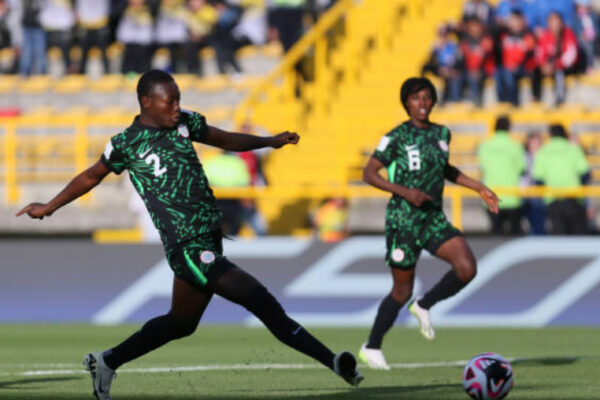
Two goals in the final half-hour steered three-time champions Germany to a 3-1 victory over Nigeria in their FIFA U20 Women’s World Cup Group D clash at the Estadio Metropolitano de Techo in Bogota on Wednesday night. Nigeria could have gone ahead in the second minute after they snatched the ball from an onslaught by the Germans, but Chiamaka Okwuchukwu failed to beat goalkeeper Rebecca Adamczyk, after shunning the option of passing to team- mates running on goal. After Germany came close in the 10th minute, Rofiat Imuran raced down the left but her cross failed to find Okwuchukwu. Schitler then put the Germans in front in the 17th minute, when she nodded home an inch-perfect cross from the right with goalkeeper Shukura Bakare in no man’s land. There were opportunities at both ends as the game wore on, but Nigeria wasted another great chance to pull level in added time of the first half, when Rofiat Imuran again raced down the left, only to see goalkeeper Adamczyk stop her weak effort with a right-handed smack. Five minutes into the second half, Nigeria were level when Jalla Veit and Adamczyk blundered at the rear to allow Okwuchukwu to race towards an open goal and notch her first strike of the tournament. Germany restored their lead in the 61st minute, with Zoebell poking the ball past Bakare from a teasing cross, in-between two Falconets’ defenders. Okwuchukwu thought she had secured the leveller two minutes later, when she lashed the ball past Adamczyk after cutting in from the right, only to be ruled off-side. The Germans would make it 3-1 in added time, through Ernst’s flying header off a cross from the right that left Bakare rooted to the spot. In the event, the Germans secured their slot in the Round of 16, having earlier defeated Venezuela 5-2 on Matchday 1. Next for the Falconets is a clash with Venezuela in Cali on Saturday evening.

Read More