
Nigerian Resident Doctors Launch Indefinite Strike Over Unmet Government Agreements

The Nigerian Association of Resident Doctors (NARD) has officially begun an indefinite strike to press for the fulfillment of their demands, the association’s president, Dr. Mohammad Suleiman, announced on Saturday via NARD’s official platform. The strike follows the expiration of a 30-day ultimatum previously issued to the Federal Government, which Suleiman says repeatedly failed to honour agreements reached after several rounds of dialogue. Suleiman acknowledged the disruption the strike would cause, stating that the decision was not made lightly. “Our demands are not for personal gain or political reasons,” he said. “They are essential for the survival of Nigeria’s health system and the welfare of every citizen who depends on it.” He explained that resident doctors face excessive workloads, inadequate pay, delayed arrears, poor working conditions, and insufficient medical infrastructure—factors that directly affect patient care. “Doctors who are overworked and underpaid cannot provide the quality care Nigerians deserve,” he said. Suleiman urged Nigerians, civil society organizations, labour unions, and community leaders to support the strike, emphasizing that it is a fight for a fair and functional healthcare system. “This is not a conflict between doctors and the government. It is about ensuring that doctors can work effectively, motivated, and with the tools necessary to save lives,” he said. He warned that the long-term consequences of inaction could be severe. “If doctors are demoralized or forced to seek opportunities abroad, patients will suffer. We appeal to the government to address our demands urgently so hospitals can reopen, doctors can return to duty, and Nigerians can access the care they need.” Earlier on Thursday, resident doctors in Abuja announced their participation in NARD’s strike due to unresolved issues with the Federal Capital Territory Administration. NARD had initially declared its intention to start the indefinite strike on Saturday, 1st November 2025.
Read More

NANS Calls For Compulsory Drug Testing And Drug-Free Campus Initiative Across Nigerian Tertiary Institutions

The National Association of Nigerian Students (NANS) has appealed to the Federal Government to introduce compulsory drug testing for students in all tertiary institutions across the country as part of a nationwide effort to curb substance abuse among youths. In a statement signed by its President, Comrade Olushola Oladoja, NANS said the initiative would help restore discipline, enhance academic performance, and protect the future of Nigeria’s young population. Oladoja urged the government to establish a Drug-Free Campus Initiative (DFCI) in partnership with relevant agencies to tackle the growing problem of drug addiction in universities, polytechnics, and colleges of education. He described the rate of drug abuse among students as alarming, calling it a “public health crisis” that undermines education, morality, and national productivity. “Drug abuse among students is no longer an isolated issue; it has become a full-blown crisis threatening learning, safety, and the nation’s development,” NANS said. The association listed marijuana, tramadol, codeine, and methamphetamine (popularly called “ice” or “mkpurummiri”) as the most abused substances on campuses, warning that they often contribute to cultism, violence, and other social ills. “Many cases of assault, cult clashes, and unrest on campuses are linked to substance abuse. Drugs fuel aggression and moral decay among students,” the statement read. To address the problem, NANS proposed mandatory drug testing for all new and graduating students, supervised by the National Drug Law Enforcement Agency (NDLEA) and institutional health units. “All newly admitted students should undergo compulsory drug testing as part of admission clearance, while every graduating student must be tested before final clearance to ensure they leave school clean and responsible,” the association recommended. NANS also called for the establishment of Drug-Free Clubs or committees on campuses to be supported by NDLEA and student unions for awareness campaigns, peer education, and counselling. It further urged that drug education be included in student orientation programmes and General Studies (GST) courses. The association stressed that students found using drugs should be guided towards rehabilitation, not stigmatised, to allow reintegration into academic life. Oladoja reaffirmed NANS’ commitment to promoting moral integrity and discipline among Nigerian students, warning that the country’s future depends on a generation free from addiction. “The dream of a prosperous Nigeria begins with a generation of mentally sound, morally upright, and drug-free students,” he said.

Read More

NLC Gives Federal Government Four-Week Ultimatum Over Tertiary Institutions Disputes

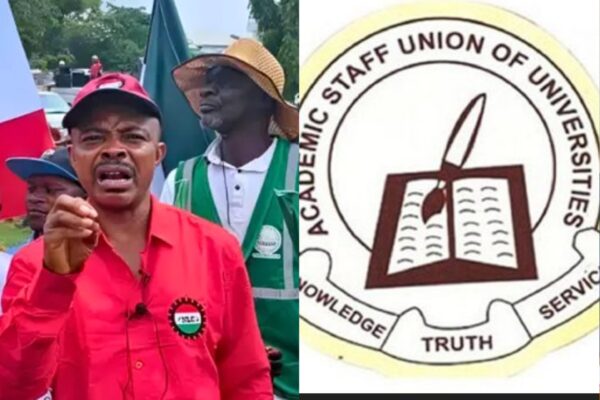
The Nigeria Labour Congress has set a four-week deadline for the Federal Government to resolve ongoing disputes with all unions representing tertiary institutions, warning that failure to do so will trigger nationwide industrial action. NLC President Joe Ajaero, speaking at an interactive session with labour correspondents in Abuja, criticized the government’s “no-work-no-pay” policy, calling it a punitive measure against members of the Academic Staff Union of Universities (ASUU) involved in the ongoing strike. “We are giving the federal government four weeks to conclude all negotiations in this sector. Talks have started with ASUU, but the issues extend beyond them,” Ajaero said. “If no resolution is reached within four weeks, the NEC will convene, and all unions across the country will mobilize to address this comprehensively. The era of threatening unions is over.” He emphasized the principle of “No Pay, No Work,” asserting that workers should not suffer due to unfulfilled agreements. “Most strike actions in this country arise from the government’s failure to honour commitments,” Ajaero added. The announcement comes as ASUU continues its nationwide strike, led by National President Professor Chris Piwuna, citing unresolved concerns over staff welfare, university infrastructure, salary arrears, and full implementation of the 2009 ASUU-FGN agreement. Although the government released N50 billion for earned academic allowances and allocated N150 billion in the 2025 budget for a needs assessment, ASUU rejected these measures as insufficient. The union is demanding full implementation of the 2009 agreement, release of withheld salaries, payment of outstanding arrears and cooperative deductions, as well as sustainable funding for universities. The NLC reaffirmed its solidarity with ASUU and other tertiary education unions, calling for collective action to defend workers’ rights and ensure the stability and quality of public tertiary education in Nigeria.

Read More

Education Ministry Denies Snubbing 15-Year-Old Nigerian Math Whiz Chosen For China Olympiad

The Federal Ministry of Education has dismissed reports that it failed to sponsor a 15-year-old Nigerian student who allegedly qualified to represent the country at the International Mathematics Olympiad in China. The clarification followed public outrage sparked by a post from Educare’s Chief Executive Officer, Alex Onyia, who accused the ministry of denying financial support to the student, identified as Agbo Adoga from Graceland International School, Port Harcourt. Onyia claimed the refusal prevented the teenager from attending the global mathematics competition. In his post on X, Onyia wrote, “Graceland International School, Port Harcourt, just informed me that Agbo Adoga qualified to represent Nigeria in the International Maths Olympiad in China. Nigerian Ministry of Education said they don’t have money to sponsor anybody. So he will not attend. Nigeria lost again!” However, in a press statement released on Sunday, the ministry’s Director of Press and Public Relations, Feo Folasade, denied receiving any official correspondence requesting sponsorship for the student. “The Federal Ministry of Education wishes to state clearly that it is not aware of the report circulating online regarding a supposed sponsorship request for a 15-year-old student said to have qualified to represent Nigeria at the International Mathematics Olympiad in China,” the statement said. It further explained that no document or communication from any recognised institution or body was found in the ministry’s records regarding the alleged sponsorship. The ministry also urged members of the public to disregard unverified information and ensure that all education-related matters are confirmed through its official channels. Reaffirming its dedication to promoting excellence, the ministry stated that it remains committed to encouraging and supporting outstanding students through proper and transparent procedures.

Read More

FG Launches National Job Centre Project to Tackle Unemployment, Boost Decent Work Opportunities

The Federal Government has unveiled the National Job Centre Project, a nationwide network of employability hubs designed to combat unemployment and promote dignified, inclusive, and transformative work for Nigerians. Minister of State for Labour and Employment, Nkeiruka Onyejeocha, announced the initiative during the Mastercard Foundation Annual Nigeria Partner Convening held in Lagos yesterday. According to her, the project is a key component of President Bola Tinubu’s Renewed Hope Agenda, aimed at connecting trained Nigerians to real job opportunities while strengthening the country’s labour market infrastructure. “The National Job Centres will integrate digital job matching, data tracking, and career advisory services to create a harmonised and inclusive system,” Onyejeocha said. She explained that the centres form part of a national labour framework intended to empower young Nigerians to contribute meaningfully to local industries and compete confidently on the global stage. The minister also introduced the Labour Employment and Empowerment Programme (LEEP) — a flagship initiative of the Ministry focused on improving youth employability and bridging the gap between training and employment. “Our goal is not just to create jobs but to build systems that protect workers’ rights, ensure fair wages, and strengthen labour market governance,” she added. Onyejeocha praised the Mastercard Foundation for its continued collaboration with Nigeria through the Young Africa Works strategy, which has supported job creation, entrepreneurship, and skills development for thousands of young Nigerians over the past six years. She noted that the Foundation’s approach aligns with the government’s effort to turn skills into sustainable employment, emphasizing the need for partnerships between the public and private sectors, development partners, and civil society. “Building an inclusive and sustainable ecosystem for work requires collective effort. We invite partners to collaborate with us in driving job access through these platforms and accelerating economic outcomes across Nigeria’s labour ecosystem,” she said. Reaffirming the government’s commitment to President Tinubu’s Renewed Hope vision, Onyejeocha assured that the Ministry will continue to advance policies that promote employment creation, social inclusion, and economic stability. “The Federal Ministry of Labour and Employment stands ready to continue working with the Mastercard Foundation and all stakeholders to build a future where work is dignified, inclusive, and transformative,” she concluded.  

Read More

FG Clarifies Tinubu’s Pardon List, Says No Inmate Released As Review Continues

The Federal Government has clarified that no inmate has been released yet under the recent Presidential Prerogative of Mercy granted by President Bola Tinubu, explaining that the process is still undergoing its final administrative review. The clarification follows reports that President Tinubu approved pardons for Sir Herbert Macaulay and 174 others, including late environmental activist Ken Saro-Wiwa and Major General Mamman Vatsa, who was executed in 1986 over an alleged coup plot. Also listed were Maryam Sanda, sentenced to death in 2020 for killing her husband, and several inmates whose sentences were either commuted or reduced. In a statement on Thursday, the Attorney-General of the Federation and Minister of Justice, Lateef Fagbemi (SAN), said that although the Council of State had approved the clemency recommendations, no release has been carried out. He noted that the verification and review process is still ongoing to ensure compliance with all legal and procedural standards. “The Office of the Attorney-General of the Federation and Minister of Justice wishes to clarify that no inmate approved for clemency under the recent exercise of the President’s power of prerogative of mercy has been released from custody,” the statement read. “The process remains at the final administrative stage, which includes a standard review to ensure that all names and recommendations fully comply with established legal and procedural requirements before any instrument of release is issued.” Fagbemi explained that the issuance of release instruments will mark the last step, after which the Controller-General of the Nigerian Correctional Service will be authorized to act. He stressed that the government is committed to transparency, due diligence, and the rule of law. “There is no delay in the process; it is simply following the law to the letter to ensure that only those duly qualified benefit from the President’s mercy,” he said. The minister added that the public will be informed once all necessary legal checks are concluded, noting, “The rule of law does not rush; it ensures fairness.”  

Read More

NLC Blasts FG Over “No Work, No Pay” Policy, Says ASUU Strike Is Justified

The Nigeria Labour Congress (NLC) has condemned the Federal Government’s decision to apply the “No Work, No Pay” policy against striking members of the Academic Staff Union of Universities (ASUU), describing the move as intimidation that will only worsen the crisis in the education sector. In a statement issued on Monday, NLC President Joe Ajaero said ASUU’s two-week warning strike was a legitimate response to the government’s persistent failure to implement agreements it voluntarily signed with unions in the education sector. “The two-week warning strike by ASUU is a direct result of the Federal Government’s refusal to honour collectively bargained agreements,” Ajaero said. “This action is a necessary response to the neglect of a vital pillar of national development.” Ajaero faulted the government’s justification for the “No Work, No Pay” policy, arguing that it distorts the real situation. “The breach of contract lies with the government, not the lecturers. The scholars are willing to work, but by failing to meet its commitments, the government has made it impossible for them to do so with dignity,” he stated. According to the NLC, the ongoing struggle goes beyond industrial action and exposes a deep-rooted inequality in the nation’s education system. It noted that while children of the elite attend private or foreign institutions, the children of average Nigerians are left to suffer in underfunded public universities. “This inequality widens the educational gap, limits opportunities for the poor, and perpetuates social imbalance,” the statement read. “A functional and well-funded public education system remains the foundation for national progress.” The NLC reaffirmed its solidarity with ASUU and other education unions, urging the Federal Government to address the lecturers’ grievances instead of resorting to punitive measures. “The struggle of ASUU is our struggle. The fight for quality public education is the fight for Nigeria’s future. We will not allow these unions to stand alone,” Ajaero declared. This came after the Federal Government, in a circular dated October 13, 2025, directed vice-chancellors of federal universities to implement the “No Work, No Pay” rule against striking lecturers. The memo, signed by Minister of Education Dr. Tunji Alausa, was copied to the Head of Civil Service, the Accountant-General of the Federation, and the National Universities Commission. The directive and subsequent response from the NLC have further intensified the long-standing dispute between ASUU and the government over funding, salaries, and unfulfilled agreements that continue to plague Nigeria’s public university system.  

Read More

FG Implements No-Work, No-Pay Policy for Striking ASUU Lecturers

The Federal Government has ordered that members of the Academic Staff Union of Universities (ASUU) engaged in the ongoing nationwide strike be denied pay for the period of work stoppage. The directive was issued in a circular dated October 13 and signed by Minister of Education, Tunji Alausa. Alausa expressed the government’s disappointment over ASUU’s decision to launch a two-week warning strike starting October 13, despite ongoing negotiations and repeated calls for dialogue. He instructed vice-chancellors of federal universities to apply the no-work, no-pay policy to all striking lecturers. “In line with labour laws, the Federal Government reiterates its position on enforcing the ‘no-work, no-pay’ policy for any employee who fails to carry out official duties during a strike,” the circular stated. Vice-chancellors have also been directed to conduct roll-calls and physical headcounts of all academic staff, reporting on those actively performing their duties. Lecturers who are members of the Congress of University Academics (CONUA) and the National Association of Medical and Dental Academics (NAMDA), and who are not participating in the strike, are exempt from the directive. The minister added that salaries of striking staff must be withheld, while the National Universities Commission (NUC) has been tasked with monitoring compliance and submitting a consolidated report to the Ministry of Education within seven days. ASUU’s strike arises from disputes over lecturers’ working conditions, the 2009 FGN-ASUU agreement, unpaid salaries, and funding for the revitalisation of public universities. The government, however, maintains that all demands have been addressed and remains open to further negotiations to resolve the dispute.

Read More