Cooking Gas Price Jumps to N25,000 as Supply Disruptions Hit

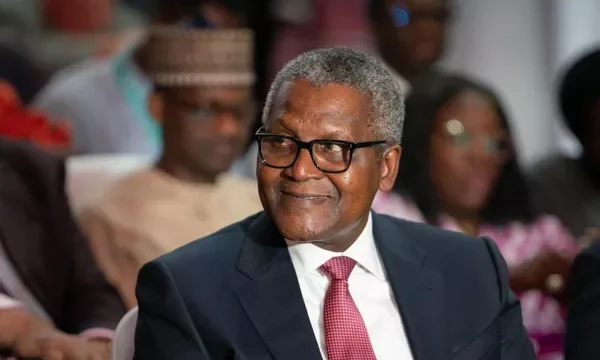
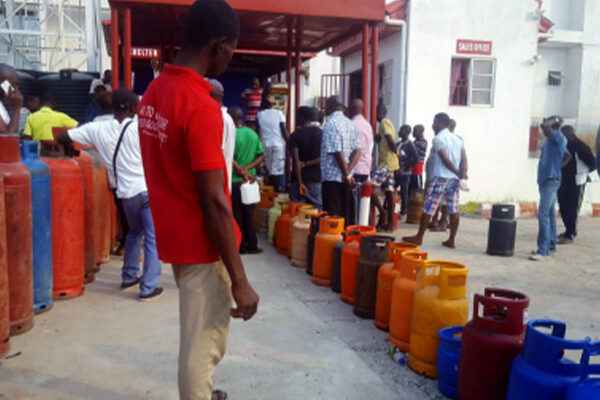
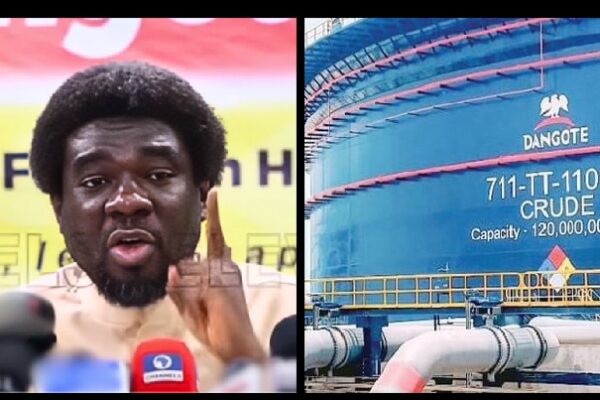
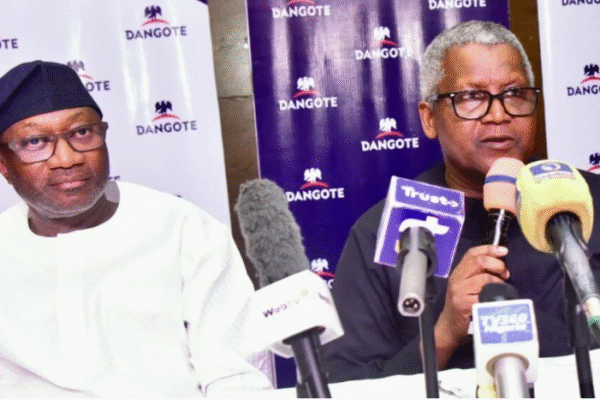
The cost of refilling a 12.5kg cylinder of Liquefied Petroleum Gas (LPG), also known as cooking gas, has surged to N25,000 this week, up from N17,500 last week. Mr. Bassey Essien, Executive Secretary of the Nigerian Association of Liquefied Petroleum Gas Marketers (NALPGAM), told Vanguard that the spike was due to supply disruptions caused by the recent industrial action by the Petroleum and Natural Gas Senior Staff Association of Nigeria (PENGASSAN). “Dangote Petroleum Refinery is currently the largest local supplier of cooking gas in Nigeria. The PENGASSAN strike disrupted distribution, leaving many dealers unable to replenish their stocks,” Essien explained. “What we are seeing is a result of demand exceeding supply, but supply should stabilize in the coming days now that the dispute is being resolved.” Vanguard checks revealed that several gas plants in Lagos and surrounding areas were shut down due to shortages, forcing consumers to move from one outlet to another in search of LPG. Recently, Aliko Dangote, President of the Dangote Group, disclosed that the refinery is currently producing 2,000 tonnes of LPG per day, with plans to further increase output to meet national demand. Dangote also emphasized the need to transition Nigerians from firewood and kerosene to LPG for cooking. “If distributors are not making LPG affordable and accessible, we’ll sell directly to consumers to ensure more households can switch to clean energy,” Dangote said, noting concerns over Nigeria’s energy poverty. Before the Dangote Refinery ramped up production, the nation’s LPG demand was primarily met by NLNG Limited. In a recent statement, NLNG reiterated its commitment to providing clean and reliable energy to Nigerian homes through its Domestic LPG (DLPG) scheme, which has been supplying cooking gas since 2007.  

Read More
PENGASSAN Signals Possible Strike If Dangote Refinery Workers Are Not Reinstated

PENGASSAN Signals Possible Strike If Dangote Refinery Workers Are Not Reinstated

The Petroleum and Natural Gas Senior Staff Association of Nigeria (PENGASSAN) has clarified that it did not sign the communiqué that ended its recent strike at Dangote Refinery, leaving the door open for possible further action if its demands are not met. PENGASSAN president Festus Osifo, speaking on Channels Television’s The Morning Brief on Thursday, said the document presented at the government-mediated meeting was not an agreement. “If you see that communiqué, we did not sign it. Normally, it is supposed to be signed by three parties. We did not sign because some provisions were not acceptable to us,” he explained, noting that the statement was simply a communication from the Minister of Labour and Employment, who acted as chief conciliator. Osifo emphasized that the union’s priorities were focused on ensuring the safe return of its members to work, countering claims that the strike was only about check-up dues. “Our main concern is how our members would return to the refinery and provide for their families,” he said. He also addressed Dangote’s refusal to immediately reinstate the affected workers, highlighting that government intervention was necessary to push for a compromise. The union president dismissed allegations that the sacked employees had sabotaged the refinery, calling such claims “totally incorrect” and warning that allowing such a label could have permanently harmed the 800 affected workers’ future employment prospects. “Clearing that stigma was a major victory,” Osifo said. “But if Dangote does not do the needful, our tools are always available. We will never tire in the struggle for what is right. PENGASSAN has been defending workers for over 50 years, long before the refinery came on stream.” The union’s statement underscores the possibility of renewed industrial action should Dangote Refinery fail to comply with its demands.

Read More

Dangote Refinery Denies Mass Sack Claims Cites Sabotage in Internal Shake-Up

The Dangote Petroleum Refinery has refuted reports of a “mass sack” following the circulation of a leaked internal memo, clarifying that the ongoing internal reorganisation is a strategic move to protect the facility from repeated acts of sabotage. In an official statement released on Friday, September 26, the refinery’s management described the restructuring as a necessary step to preserve the safety, integrity, and stability of what it called a “strategic national asset.” “The decision was taken in the best interest of the refinery,” the statement read, citing intermittent sabotage across operational units that had posed serious safety risks and disrupted critical operations. The management stressed that the action was not arbitrary or punitive but rather a targeted response to threats affecting operational efficiency. The company reaffirmed its commitment to the safety of its workforce and the continuation of its mission to meet Nigeria’s and Africa’s growing energy demands.

Read More

Dangote Refinery Appoints David Bird as CEO of Petroleum, Petrochemicals Division

By Kamal Yalwa: August 2, 2025 The Dangote Petroleum Refinery and Petrochemicals has appointed David Bird as the new Chief Executive Officer (CEO) of its petroleum and petrochemicals business. The appointment, which took effect in July 2025, was first reported by S&P Global on Friday. Bird’s arrival comes as the refinery seeks to scale up operations, resolve production challenges, and roll out an ambitious nationwide fuel distribution scheme already facing significant regulatory and logistical hurdles. A source at the company told TheCable that Bird is a mechanical engineer and an alumnus of Imperial College, London, with an MBA from Stanford University. He brings extensive global experience in the oil and gas industry. Prior to this appointment, Bird served as the head of Oman’s Duqm Refinery, and also held senior roles at Santos Ltd and Shell, including Vice President of Prelude FLNG, where he led operations on the world’s first floating LNG facility. He also chaired Shell Australia’s RAP board and headed operations at Shell’s largest refinery in Singapore — Pulau Bukom. Aliko Dangote, Chairman of Dangote Industries Limited, will continue to serve as chairman of the refining business while retaining his role as CEO of the broader Dangote Group, which spans cement, fertilizer, and sugar refining operations. In a LinkedIn post cited by S&P Global, Bird stated that his focus will be on driving maximum output, operational efficiency, and expanding Dangote’s market presence beyond Nigeria and into the wider African continent. His appointment marks a pivotal phase for the 650,000 barrels per day refinery, which has been gradually ramping up output since its commissioning by former President Muhammadu Buhari in May 2023. The refinery is expected to commence fuel distribution to end-users by August 15, 2025, using a fleet of 4,000 CNG-powered trucks, further positioning itself as a critical player in Africa’s energy landscape.

Read More
Africa’s Billionaire Boom Masks Rising Inequality – Oxfam Report Warns

Africa’s Billionaire Boom Masks Rising Inequality – Oxfam Report Warns

August 2, 2025 | By Trend Brio Despite a surge in African billionaires, a new Oxfam report has revealed stark inequality across the continent, warning that the growing concentration of wealth among elites is worsening poverty and undermining economic progress for millions. Titled Africa’s Inequality Crisis and the Rise of the Super-Rich, the report shows that just four of Africa’s wealthiest individuals – including Nigeria’s Aliko Dangote and South Africa’s Johann Rupert – now hold a combined $57.4 billion, surpassing the total wealth of nearly 750 million Africans. The top 5% of Africans now control about $4 trillion in assets, while more than half the population lives in poverty. Nigeria and South Africa, the continent’s largest economies, exemplify the trend, where politically connected tycoons have amassed fortunes through privatisation and state-backed reforms. Critics point to Nigeria’s Dangote Group and South Africa’s BEE-linked moguls as symbols of “crony capitalism” – where political ties, rather than innovation, drive business success. While intended to foster domestic enterprise and Black economic empowerment, such policies have often entrenched elite capture, sidelining ordinary citizens. Oxfam and policy analysts are calling for urgent reforms, including wealth and income taxes on the richest Africans. A 1% wealth tax and 10% high-income levy could raise $66 billion annually – funds that could help close critical gaps in public services like education, healthcare, and electricity access. With unemployment and inequality rising, especially among youth and women, the report urges African governments to dismantle oligarchic structures and adopt equity-driven economic policies. “We, the neglected and disenfranchised 95 percent, stand against oligarchy,” columnist Tafi Mhaka writes, echoing growing calls for systemic change across the continent.

Read More
Dangote Refinery Targets 100% Nigerian Crude Supply by End of 2025 — Bloomberg

Dangote Refinery Targets 100% Nigerian Crude Supply by End of 2025 — Bloomberg

Africa’s largest oil refinery, the 650,000-barrel-per-day Dangote Refinery, is poised to fully transition to sourcing its crude oil exclusively from Nigerian producers by the end of 2025, according to a report by Bloomberg. The refinery, which is already processing 550,000 barrels daily, received 53% of its crude from local sources in June, while the remaining 47% came from international suppliers including the U.S., Brazil, Angola, Ghana, and Equatorial Guinea. Devakumar Edwin, Vice President of Dangote Industries Ltd., told Bloomberg that the transition to 100% local sourcing is underway as several long-term foreign contracts are set to expire. “Personally, and as a company, we expect that before the end of the year we can transition 100% to local crude,” Edwin said during a recent interview at the Lagos-based facility. The $19 billion refinery, inaugurated in May 2023, is seen as a strategic solution to Nigeria’s long-standing reliance on fuel imports. Although Africa’s largest oil producer, Nigeria has historically exported crude for refining abroad and re-imported the finished products—a costly and corruption-prone cycle that the Dangote refinery aims to break. In July and August, Dangote is scheduled to receive five crude oil cargoes each month from the Nigerian National Petroleum Company (NNPC), with each shipment containing nearly one million barrels. Challenges and Outlook The road to full local sourcing has not been without obstacles. Nigeria’s oil sector has been hampered by crude theft, pipeline vandalism in the Niger Delta, and a shift in ownership of oil assets from international oil companies to under-resourced local firms. Despite these challenges, Edwin expressed confidence that improved cooperation between Dangote, local oil traders, and the Nigerian government will stabilize domestic supply chains. A Regional Beacon of Hope During a recent visit to the refinery, ECOWAS Commission President, Dr. Omar Alieu Touray, hailed the project as a “beacon of hope” for Africa, underscoring its significance in driving regional industrialisation and economic independence. The Dangote Refinery, when fully operational, is expected to drastically reduce Nigeria’s import bill, generate jobs, and cement Nigeria’s status as a net exporter of refined petroleum products.

Read More
Petrol Price Hits ₦945/Litre at NNPC Stations Amid Soaring Global Oil Prices Petrol Price Hits ₦945/Litre at NNPC Stations Amid Soaring Global Oil Prices

NNPCL Slashes Petrol Price to N910 per Litre in Abuja Following Dangote Refinery’s Adjustment

The Nigerian National Petroleum Company Limited (NNPCL) has reduced the pump price of Premium Motor Spirit (PMS), commonly known as petrol, across its retail outlets in Abuja. News360 Nigeria reports that NNPCL stations at locations such as Zone 6, Kubwa Expressway, and Wuse Zone 4, on Saturday, lowered their pump price from N945 to N910 per litre — a N35 decrease. The move brings significant relief to motorists grappling with high fuel costs in recent weeks. This reduction comes just four days after Dangote Refinery cut its petrol ex-depot price from N880 to N840 per litre, citing a drop in global crude oil prices. Independent marketers have also responded, adjusting their pump prices accordingly. In Abuja, prices have dropped to between N930 and N940 per litre, down from N945–N975, while Lagos motorists now pay around N890, a reduction from the previous N925 per litre. Industry watchers see the development as a potential signal of further fuel price stabilisation, depending on global market trends and domestic supply improvements.

Read More

NEPZA, Dangote Refinery and Stakeholders Pledge Compliance with Presidential Directive on Crude Sales in Naira

The Nigeria Export Processing Zones Authority (NEPZA), the One-Stop-Shop Committee on the Sale of Crude in Naira, and Dangote Refinery & Petrochemicals Free Zone Enterprises have jointly committed to implementing the presidential directive aimed at reducing domestic petroleum product prices by eliminating dollar-based crude sales in local transactions. According to The Bureau Newspaper, the resolution was reached during a courtesy visit by members of the committee to NEPZA’s Managing Director, Dr. Olufemi Ogunyemi, in Abuja. All parties agreed to align operations with the directive, which is intended to strengthen energy security and stimulate economic growth. Dr. Ogunyemi expressed NEPZA’s full support for the policy, emphasizing the Authority’s supervisory role in the Dangote Refinery project from inception to commissioning. He noted that the refinery, operating under the Free Trade Zone Scheme, has received 480 vessels to date and has commenced full-scale production of petrol, diesel, aviation fuel, and other petroleum products for domestic and export markets. “The sale of crude in naira will eliminate the local currency’s vulnerability to dollar fluctuations,” Ogunyemi stated, describing the refinery as a “shining star” in advancing the new energy policy. Ms. Maureen Ogbonna, the committee’s coordinator, described the initiative as a strategic intervention by President Bola Tinubu to reposition Nigeria’s economy. “It is only a matter of time before we move fully away from billing domestic crude in dollars,” she said, adding that the policy is already producing results due to strong political will and stakeholder collaboration. Also speaking, Mr. Akinsanya Mobolarin, General Manager of Engineering and Strategic Services at Dangote Refinery, reiterated the company’s commitment to supporting national development. “The policy, when fully implemented, will drive substantial growth in Nigeria’s energy and industrial sectors,” he said. All stakeholders pledged to maintain synergy in executing the directive and achieving sustainable energy affordability for Nigerians.

Read More