There’s No Christian Genocide in Nigeria, Tinubu Says, Blames Insecurity on Criminality and Extremism

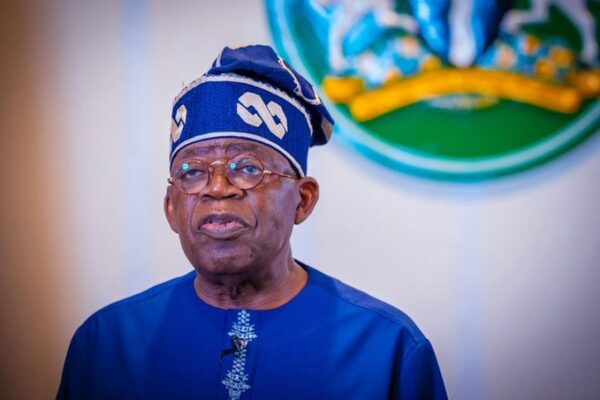
President Bola Tinubu has rejected claims that Christians are being specifically targeted in Nigeria, stressing that both Christians and Muslims face the same threats from terrorism. He made the remarks on Friday in Abuja while inaugurating the Nasrul-Lahi-l-Fatih Society 8th Biennial Conference and Annual General Meeting, themed “Building Resilience in a Changing World: The Role of Faith and Community.” Tinubu was represented at the event by Attorney General and Minister of Justice, Lateef Fagbemi. According to Tinubu, the country’s insecurity stems from historical, economic, and criminal factors, not religious persecution. He said terrorism in Nigeria is driven by criminality and extremism, affecting all citizens regardless of faith. His statement comes after former US President Donald Trump claimed that Christians in Nigeria were being persecuted and threatened military intervention if the government did not act. Trump had labeled Nigeria a “Country of Particular Concern,” prompting the government to send a delegation led by National Security Adviser Nuhu Ribadu to brief US lawmakers on the nation’s security challenges. Speaking at the NASFAT event, Tinubu said: “In recent times, the Federal Government and other persons of goodwill have had to address unfounded allegations. These allegations are not only false but harmful, and capable of inflaming passions and disrupting the peaceful coexistence we continue to build as a nation. Nigeria’s response was clear, firm and measured. We reaffirmed that our nation does not foster or tolerate policies or actions aimed at persecuting any religious group. Muslims and Christians alike have been victims of terrorism in Nigeria. Muslims and Christians alike stand shoulder to shoulder in condemning violence from any quarter. “As President, I reiterate with all sense of responsibility and fidelity to the Constitution that there is no Christian genocide in Nigeria, and there is no Muslim genocide in Nigeria. What we have is terrorism driven by criminality and extremism—challenges we are working tirelessly to overcome.” He emphasized the government’s commitment to promoting national unity, religious freedom, and the security of every citizen, warning against narratives that could sow division. “Nigeria’s strength lies in its diversity and the ability of its people to coexist peacefully while practicing different faiths,” he said. He also commended NASFAT for its work in fostering moderation, tolerance, and service to humanity as tools for national unity. Keynote speaker Dr Nurudeen Lemu urged Muslims to remain steadfast in faith and optimistic despite the country’s challenges.

Read More

Riley Moore to Brief President Trump After U.S. Visit to Nigeria Over Alleged Christian Genocide

U.S. Congressman Riley Moore has revealed that he will brief President Donald Trump following a fact-finding mission to Nigeria over alleged Christian genocide. Moore led a five-member congressional delegation that arrived in Nigeria on Sunday. During the visit, they met with survivors of terrorist attacks, Internally Displaced Persons (IDPs), Christian communities, leaders, and traditional rulers, particularly in Benue State. The delegation also held discussions with Nigeria’s National Security Adviser, Nuhu Ribadu, and Attorney General Lateef Fagbemi (SAN). Speaking on Fox News with Harris Faulkner, Moore described the accounts they heard as some of the most shocking of his career. He recounted the story of a woman who lost five children in front of her while pregnant, later giving birth in an IDP camp. He also shared another case of a woman who lost her husband, two daughters, and unborn child in an attack, highlighting a pattern of violence against Christians. Due to security risks, the delegation traveled in armored vehicles, meeting with Catholic and Protestant leaders, bishops, and community heads to gather what Moore called “ground truth.” “This is a fact-finding mission. Benue is one of the most dangerous states in Nigeria. This is where many Christians are being killed for their faith,” he said. Moore also noted that IDP camps were attacked, challenging claims that the violence is solely driven by climate or land disputes. President Trump has tasked Moore and House Appropriations Chairman Tom Cole to compile a full report on their findings and provide recommendations, which they are expected to deliver by the end of the month. In October, Trump designated Nigeria a “Country of Particular Concern” over alleged Christian genocide, a classification the Nigerian government has disputed, insisting the country’s security crisis is not religiously motivated.

Read More

Bishop Kukah Says Christians Are Not Persecuted In Nigeria

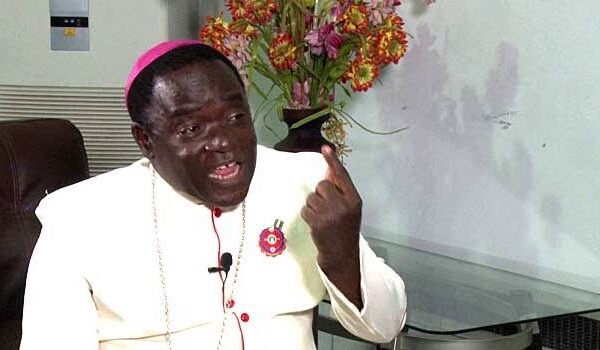
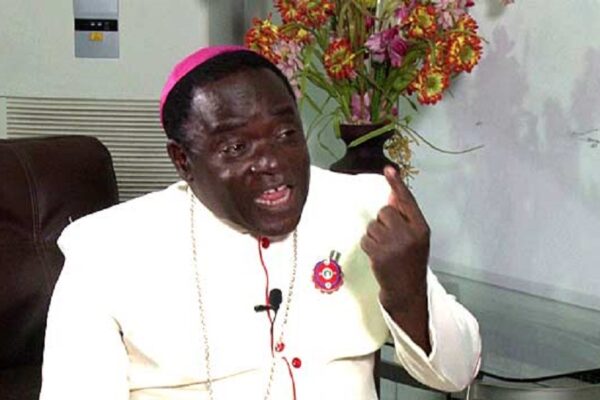
The Catholic Bishop of Sokoto Diocese and Convener of the National Peace Committee, Most Rev. Matthew Kukah, has said there is no persecution of Christians in Nigeria, stressing that genocide is determined by intent, not by the number of casualties. Bishop Kukah recently faced criticism after reportedly urging the international community not to designate Nigeria as a “country of particular concern,” warning that such a label could heighten tensions, foster suspicion, and be exploited by criminals, ultimately undermining interfaith dialogue and cooperation with the government. Speaking at the 46th Supreme Convention of the Knights of St. Mulumba (KSM) in Kaduna, Kukah aligned himself with the Vatican Secretary of State, the President of the Catholic Bishops’ Conference of Nigeria, and other Catholic bishops regarding the issue of alleged attacks on Christians. “They are saying that 1,200 churches are burnt in Nigeria every year, and I ask myself—in which Nigeria? Interestingly, nobody approached the Catholic Church to get accurate data. We do not know where these figures came from. All those talking about persecution—has anyone ever called to ask, ‘Bishop Kukah, what is the situation?’ The data being circulated cleverly avoids the Catholic Church because they know Catholics do not indulge in hearsay,” he said. On the misuse of the term genocide, he explained, “Genocide is not based on the number of people killed. You can kill 10 million people and it still won’t amount to genocide. The critical determinant is intent—whether the aim is to eliminate a group of people. So, you don’t determine genocide by numbers; you determine it by intention. We need to be more clinical in the issues we discuss.” Challenging claims of Christian persecution, Kukah said, “If you are a Christian in Nigeria and you say you are persecuted, my question is: how? At least 80% of educated Nigerians are Christians, and up to 85% of the Nigerian economy is controlled by Christians. With such figures, how can anyone say Christians are being persecuted?” He blamed many of the challenges faced by Christians on internal disunity, saying, “The main problem is that Christians succumb to bullies. The day we decide to stand together—believing that an injury to one is an injury to all—these things will stop.” Kukah also cautioned against loose claims of martyrdom: “Because someone is killed in a church, does that automatically make them a martyr? Whether you are killed while stealing someone’s yam or attacked by bandits, does that qualify as martyrdom? I am worried because we must think more deeply.” Clarifying misconceptions about his previous remarks, he added, “People say there is genocide in Nigeria. What I presented at the Vatican was a 1,270-page study on genocide in Nigeria and elsewhere. My argument is that it is not accurate to claim there is genocide or martyrdom in Nigeria.” He urged members of the Knights of St. Mulumba to defend the Church through example, saying, “We are no longer talking about wielding swords, but about living as true witnesses.”

Read More

Nicki Minaj Speaks At UN On Christian Persecution In Nigeria

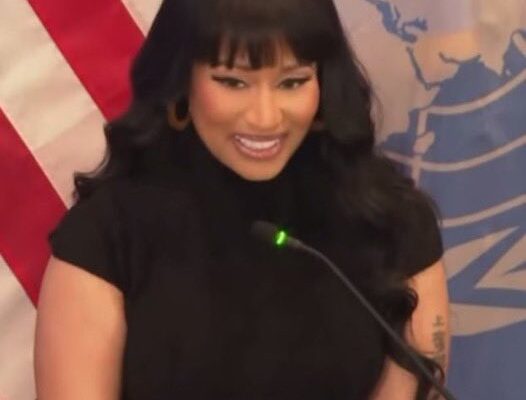
Rapper Nicki Minaj has used her platform at the United Nations to draw attention to the growing persecution of Christians in Nigeria, calling for urgent international intervention. Speaking from the UN podium, Minaj described the dire situation facing Nigerian Christians. “In Nigeria, Christians are being targeted, driven from their homes, and killed. Churches have been burned. Families have been torn apart. Entire communities live in fear simply because of how they pray,” she said. She noted that religious persecution is not unique to Nigeria, stressing that similar threats exist in many countries worldwide. “This problem is not only growing in Nigeria but in other parts of the world. It demands urgent action,” Minaj said. Making it clear that her call is about unity rather than division, she added, “Protecting Christians in Nigeria is not about taking sides. It is about uniting humanity.” Minaj also highlighted the responsibility of global institutions, saying, “When one’s church, mosque, or place of worship is destroyed, everyone’s heart should break a little. The foundation of the United Nations, with its core mandate to ensure peace and security, should shake.” She praised peacebuilders and faith leaders who have confronted intolerance and violence, saying their work inspires her to fight for the security and freedom of all who pray. She concluded: “I hope this encourages all of us to work together urgently so that every person can enjoy the right to believe, worship, and live in peace.” The speech was organized in collaboration with U.S. Ambassador to the UN Michael Waltz and adviser Alex Bruesewitz, highlighting growing international concern over religious violence in Nigeria. https://twitter.com/NigeriaStories/status/1990865568811921769?t=JOCWA4ueuQYTfIKofqUNEg&s=19

Read More

Nicki Minaj to Speak at UN on Alleged Christian Genocide in Nigeria

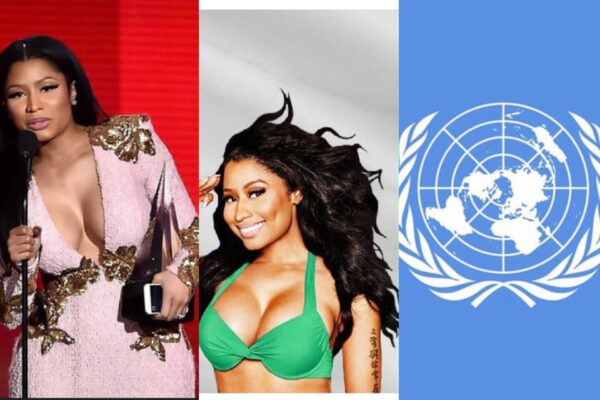
Popular American rapper Nicki Minaj is set to speak at a United Nations event in New York on Tuesday, November 18, where she will address what has been described as the ongoing Christian genocide in Nigeria. She is scheduled to appear alongside the United States ambassador to the UN, Michael Waltz, and Alex Bruesewitz, an adviser to President Donald Trump and the convener of the event. The session will spotlight the persecution of Christians in Nigeria and outline the efforts President Donald Trump is taking to confront the crisis. In the lead-up to the event, the Trump administration praised Minaj for using her platform to amplify concerns about the alleged atrocities, which both the Christian Association of Nigeria and the Pentecostal Fellowship of Nigeria have labelled a genocide. Waltz said: “NICKIMINAJ is not only arguably the greatest female recording artist, but also a principled individual who refuses to remain silent in the face of injustice. I’m grateful she’s leveraging her massive platform to spotlight the atrocities against Christians in Nigeria, and I look forward to standing with her as we discuss the steps the President and his administration are taking to end the persecution of our Christian brothers and sisters.” Minaj, in her response, expressed appreciation for the invitation to speak at the UN. “I am so grateful to be entrusted with an opportunity of this magnitude. I do not take it for granted. It means more than you know,” she said. “The Barbz and I will never stand down in the face of injustice. We’ve been given our influence by God. There must be a bigger purpose.”

Read More

Sheikh Ahmad Gumi Accuses Groups Of Burying Empty Coffins Amid Christian Genocide Claims

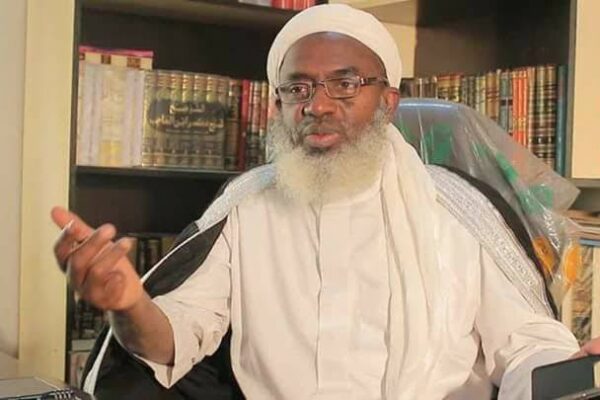
Controversial Islamic cleric Sheikh Ahmad Gumi has alleged that some groups in Nigeria’s Middle Belt are staging fake mass burials by “burying empty coffins” to push a false narrative of Christian genocide. Gumi shared the claim on his verified Facebook page while responding to criticism over his ongoing stay in Turkey amid rising global attention on alleged persecution of Christians in Nigeria. His statement comes shortly after former U.S. President Donald Trump suggested that Christians are being killed in the country. Quoting a message he said he received from a doctor, Gumi wrote: “Some Middle Belt Christian groups are now staging fake mass killings. They are burying empty coffins and recording the process as if real victims were killed, just to push the narrative of a Christian genocide. This is desperation at its peak. A disgrace. Manipulating information just to provoke hatred and international sympathy.” The Kaduna-based cleric dismissed claims that he fled the country to avoid possible U.S. military intervention, explaining that his trip to Turkey was planned weeks before Trump’s statement. “I got my Turkish visa on 16 October 2025, and Trump’s tweet claiming ‘Christian genocide’ in Nigeria was on 1 November 2025. Yet some people concoct lies and believe them. Trump has no power over us; it’s just your mind bowing down to him in worship,” Gumi wrote. He described the genocide allegations as a deliberate attempt to discredit Islam and undermine Sharia law in northern Nigeria. “After the fog has cleared, the alleged ‘Christian genocide’ is a well-planned attempt to attack Sharia law and stoke Islamophobia,” he added. Gumi also urged President Bola Tinubu to respond diplomatically, calling Trump’s statement a “direct affront” to Nigeria’s sovereignty. He recommended that the federal government summon the U.S. ambassador and demand an official retraction, warning that Nigeria should consider severing ties if no action is taken. “President Tinubu should summon the U.S. ambassador; they either retract their threats or we sever diplomatic ties with this irresponsible regime,” Gumi said. He further emphasized that Nigeria should diversify its foreign relations, noting that “the world is no longer unipolar” and the country “has friends elsewhere who respect our sovereignty.”

Read More

Nnamdi Kanu Appeals To Trump Over Alleged Christian Genocide In Nigeria

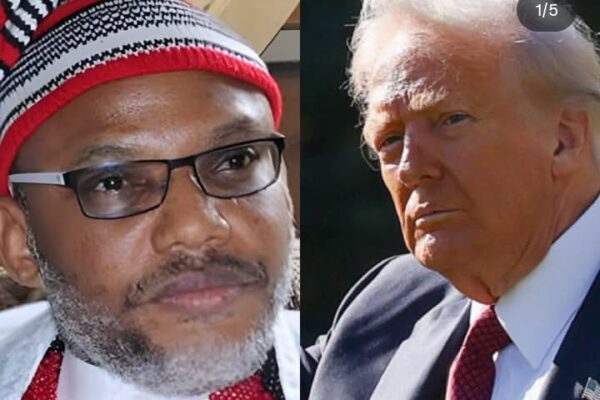
The leader of the Indigenous People of Biafra (IPOB), Mazi Nnamdi Kanu, has written to U.S. President Donald Trump, commending him for his stated willingness to act against what Kanu described as a “Christian genocide” in Nigeria. In the letter, Kanu said Trump’s remarks regarding the killings of Christians in Nigeria were “factual and verifiable” and applauded the former U.S. President for speaking out. He also noted that Jewish adherents in Nigeria are under attack and claimed to have documentary evidence to support his claims. Kanu cited numerous violent attacks against Judeo-Christian communities across the country, referencing media reports as proof. A copy of the letter, dated November 6 and shared via his lawyer Aloy Ejimakor, stated: “Your Excellency, I extend warm greetings to you in the name of the Judeo-Christian faith and values we both hold dear. Your bold declaration on October 31, 2025—that the United States is ‘prepared to act’ militarily and cut aid if Nigeria fails to protect its Christian population—has ignited hope in the hearts of millions who have been abandoned by the world. You have seen the truth: Christians in Nigeria face an existential threat.” Kanu emphasized that the violence is not limited to northern Nigeria, but has spread to the South-East and South-South. “This genocide is not confined to the North—it has metastasised into the Igbo heartland, where Judeo-Christians are being systematically exterminated under the guise of counter-terrorism,” he wrote. The IPOB leader also highlighted his own abduction from Kenya in June 2021, which he described as an extraordinary rendition that violated international law. He detailed surviving four assassination attempts by the Nigerian state and being held in solitary detention without charge. Kanu recalled that the Court of Appeal in Abuja discharged and acquitted him in October 2022, declaring his rendition illegal, yet he remains detained. He also cited the UN Working Group on Arbitrary Detention, which labeled his imprisonment “arbitrary, unlawful, and politically motivated.” Kanu accused the Nigerian government of using insecurity to demonize IPOB while granting amnesty to terrorists and bandits. He called for an internationally supervised commission of inquiry into the alleged “Judeo-Christian genocide” in Nigeria, highlighting massacres in the South-East and the killing of 20 IPOB members during a pro-Trump rally in Port Harcourt in 2017. He urged Trump to launch a U.S.-led investigation into the killings, impose targeted sanctions on Nigerian officials responsible for human rights abuses, and support an internationally supervised referendum for self-determination. “Mr President, history will judge us by what we do when genocide knocks. You have the power to stop a second Rwanda in Africa. One tweet, one sanction, one inquiry could save millions. I remain steadfast in peace, faith, and non-violence—even from a prison cell. IPOB rejects every form of violence. We seek only justice, truth, and freedom,” Kanu wrote, concluding with a prayer for Trump’s wisdom and courage to protect the persecuted.

Read More

US Military Drafts Nigeria Intervention Plans After Trump Order

The US military has prepared options for a possible intervention in Nigeria after President Donald Trump ordered action to protect Christians from targeted attacks by terrorist groups, according to media reports. US defense officials said that US Africa Command (AFRICOM) has drawn up three escalatory plans for Nigeria, including light, medium, and heavy options, and submitted them to the Joint Staff at the Pentagon, The New York Times reported on Wednesday. The latest development came after Trump wrote on his Truth Social platform on Saturday that if the Nigerian government “continues to allow the killing of Christians,” Washington would immediately cut all aid. Trump said the US could “go into that now disgraced country, ‘guns-a-blazing,’” and ordered the Pentagon to “prepare for possible action.” According to the officials, the light option would involve “partner-enabled” operations, with the US military and State Department supporting Nigerian forces against Boko Haram and other militant groups. The medium option envisions drone strikes on militant camps and convoys, though US forces no longer have nearby bases in neighboring Niger and would face logistical and diplomatic challenges. The heavy option would deploy an aircraft carrier group and long-range strike assets, but officials said such a move is not currently a US national security priority. Military officials said US forces are unlikely to end the West African country’s decades-long insurgency and would have a limited impact without an Iraq- or Afghanistan-style campaign, which they say is not seriously being considered. “It would be a fiasco,” retired Maj. Gen. Paul D. Eaton said, adding that neither the public nor President Trump, beyond social media posts, appears interested in a large-scale ground war in Nigeria, and any US airstrikes would likely cause little more than shock, which he likened to “pounding a pillow.” In Nigeria, security is threatened by a mix of terrorist groups, including Boko Haram and ISWAP, as well as armed gangs, ethnic militias like the Indigenous People of Biafra (IPOB), and herder-farmer conflicts often rooted in economic and social tensions. According to the US-based Armed Conflict Location and Event Data Project (ACLED), there have been 1,923 attacks on civilian targets in Nigeria this year, with only 50 directly linked to Christian identity. ACLED noted that, while insurgent groups often frame their campaigns as “anti-Christian,” the violence frequently makes no distinction and harms all communities.

Read More