Beijing moves to curb commercialization of faith and reassert Communist Party control over spiritual life

China Bans Online Preaching and AI in Major Crackdown on Digital Religion

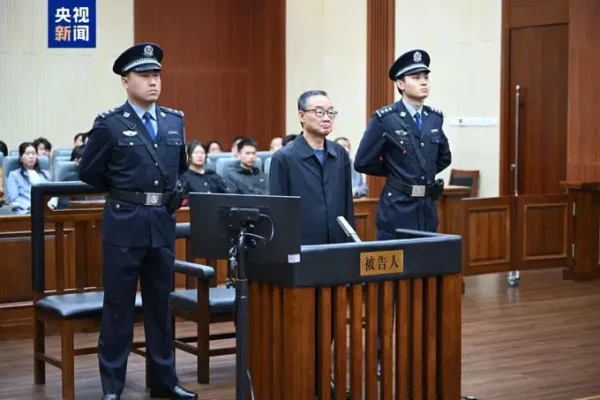
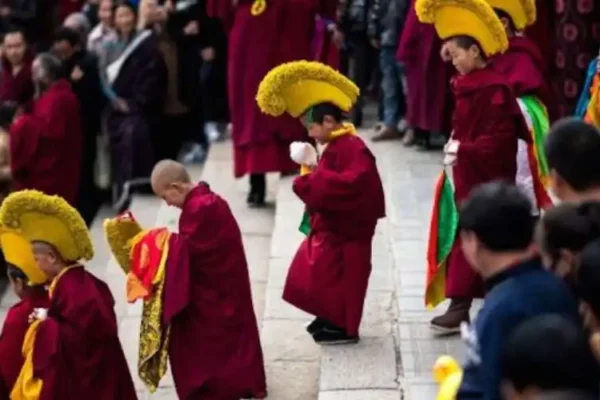
Beijing moves to curb commercialization of faith and reassert Communist Party control over spiritual life China has rolled out sweeping new restrictions on religious expression online, banning unlicensed digital preaching and the use of artificial intelligence to produce religious content. The move is part of a broader campaign by the Chinese Communist Party to clamp down on the commercialization of religion and ensure religious activities remain firmly under state control. The crackdown, introduced by the National Religious Affairs Administration, prohibits most forms of online religious engagement unless carried out by state-licensed religious institutions. This includes bans on livestreamed sermons, short religious videos, paid digital rituals such as online chanting or incense offerings, and AI-generated religious teachings. Authorities cited the need to combat the spread of “illegal information,” online fortune-telling, and “heretical cults” as key reasons for the policy. The tightening of online regulations comes amid rapid growth in what some analysts have dubbed China’s “temple economy,” estimated to be worth over $14 billion annually. Religious revival in the country—despite formal restrictions—has led to a boom in temple tourism, e-commerce sales of religious items, and digital spiritual services. While only about 10% of the population formally identifies with a religion, surveys suggest up to 40% of Chinese people believe in deities, spirits, or ghosts. The blending of faith and commerce has sparked criticism that religious practice is becoming overly commodified and detached from its spiritual roots. The timing of the new restrictions follows the public scandal surrounding Shi Yongxin, abbot of the iconic Shaolin Temple, who is currently under investigation for alleged financial misconduct and behavior deemed inconsistent with Buddhist teachings. Known as the “CEO monk” for his high-profile commercial ventures, Shi has been accused of turning the monastery into a profit-making enterprise. Several of his associates have reportedly been detained, and the case has become a flashpoint for debates about the blurred lines between religion, commerce, and state power in modern China. In response to the new measures, local religious bureaus across China have begun implementing compliance campaigns. In Sichuan province, officials have organized study sessions for Buddhist, Catholic, and Islamic leaders to reinforce the new rules. Religious organizations have been told to carry out internal “self-examinations,” and local authorities have pledged to “eliminate risks” posed by unregulated religious activity. Analysts view this as part of a broader ideological tightening under President Xi Jinping, whose administration has already conducted wide-ranging anti-corruption drives across government and the Communist Party. The current focus on religion reflects a desire to prevent religious leaders from accumulating social influence or wealth that might challenge the state’s authority. The new rules will significantly affect temples and clergy that have embraced digital platforms. At Mount Qingcheng, a Taoist sacred site in Sichuan, monks had begun livestreaming services and selling religious merchandise on Douyin (China’s TikTok), with some items priced over $1,400. Such practices have drawn both fascination and criticism on social media, where users mockingly described monks as luxury tourists. While the latest crackdown may curtail these ventures, observers expect some religious groups to find workarounds, noting that similar campaigns in the past have lost momentum after a few months. Ultimately, the latest restrictions highlight Beijing’s intent to keep religion subordinate to the state. According to Ian Johnson, author of The Souls of China, the policy is less about eliminating faith and more about controlling it. “Religion may flourish, temples may profit, and millions may worship,” he said. “But only on terms acceptable to the Communist Party.” As China balances economic development, political stability, and spiritual expression, the message remains clear: religious freedom exists—but only within limits drawn by the state.


Read More
India committed to improving ties with China, Modi tells Xi before SCO meet

Modi Signals Reset in China Ties Amid US Tariff Spat, Meets Xi Ahead of SCO Summit

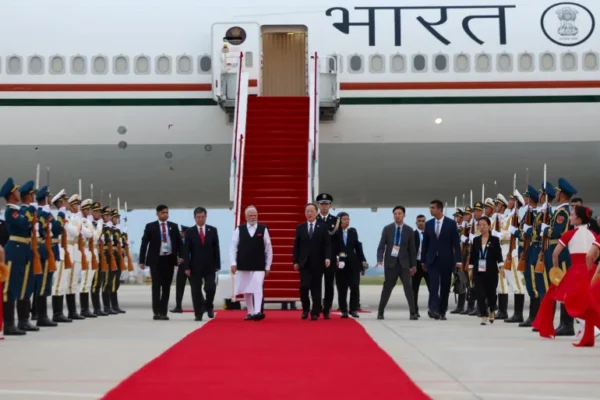
Tianjin, China – Indian Prime Minister Narendra Modi has expressed a strong commitment to strengthening ties with China, during a high-profile meeting with President Xi Jinping ahead of the Shanghai Cooperation Organisation (SCO) summit, signaling a potential strategic pivot following recent U.S. trade tensions. In remarks delivered during a sideline conversation on Saturday, Modi told Xi, “We are committed to progressing our relations based on mutual respect, trust, and sensitivities.” His statement comes just days after the United States, under President Donald Trump, imposed steep tariffs on a range of Indian exports — a move seen by analysts as straining Washington-New Delhi ties. This marks Modi’s first visit to China in seven years and comes as leaders from across Asia and the Middle East, including Russian President Vladimir Putin, gather in Tianjin for the two-day SCO summit — widely viewed as a show of Global South solidarity amid shifting global alliances. Chinese President Xi welcomed Modi’s overture and emphasized the importance of managing border tensions, which have long strained relations between the two Asian giants. “The two sides should not let the border issue define the overall China-India relationship,” Xi said, according to Chinese state broadcaster CCTV. He stressed that economic development should remain the central focus for both nations, adding, “As long as they remain committed to the overarching goal of being partners, not rivals… China-India relations will flourish.” Both leaders expressed hope that the Tianjin summit would mark a new chapter in bilateral cooperation and regional stability, even as broader geopolitical realignments take shape in response to shifting U.S. trade policy. Modi also shared a brief video of the meeting on his official X (formerly Twitter) account, highlighting the renewed diplomatic engagement. The SCO summit, which continues through Sunday, is expected to focus on regional security, trade, and multilateral cooperation, with growing attention on how India and China position themselves within a rebalancing global order.

Read More
Brazil hosts BRICS summit; Russia’s Putin, China’s Xi skip Rio trip

Brazil hosts BRICS summit; Russia’s Putin China’s Xi skip Rio trip

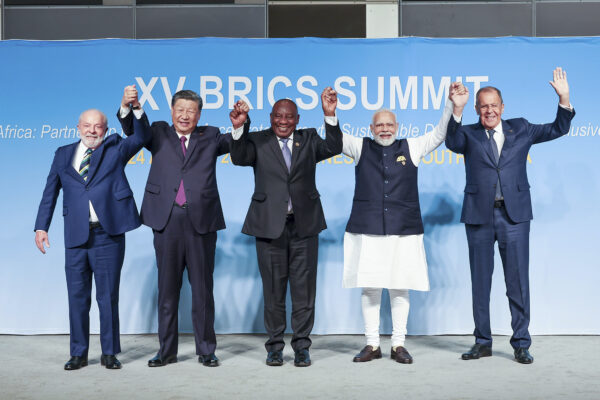
Leaders expected to decry US President Donald Trump’s trade tariffs while presenting the bloc as a defender of multilateralism. Brazilian President Luiz Inacio Lula da Silva, right, and Vietnamese Prime Minister Phạm Minh Chinh exchange gifts during a meeting at Fort Copacabana, in Rio deLeaders of the growing BRICS group are gathering in Brazil for a summit overshadowed by United States President Donald Trump’s new tariff policies while presenting the bloc as a defender of multilateralism. The leaders, mainly from the developing world, will be discussing ways to increase cooperation amid what they say are serious concerns over Western dominance at their two-day summit that begins in Rio de Janeiro on Sunday. The BRICS acronym is derived from the initial letters of the founding member countries: Brazil, Russia, India, China and South Africa. The bloc, which held its first summit in 2009, later added Egypt, Ethiopia, Indonesia, Iran, Saudi Arabia and the United Arab Emirates as full members. It also has 10 strategic partner countries, a category created last year, that includes Belarus, Cuba and Vietnam. But for the first time since taking power in 2012, Chinese President Xi Jinping will not be attending in person, instead sending Prime Minister Li Qiang. Russian President Vladimir Putin will also miss in-person attendance as he is wanted by the International Criminal Court (ICC) for his role in the 2022 invasion of Ukraine. Brazil, as a signatory to the Rome Statute, would be required to enforce the arrest warrant. The notable absences are raising questions over the group’s cohesion and global clout. Now chaired by Brazil, leaders at the BRICS summit are expected to decry the Trump administration’s “indiscriminate” trade tariffs, saying they are illegal and risk hurting the global economy. Global health policies, artificial intelligence and climate change will also be on the agenda. The BRICS countries say they represent almost half of the world’s population, 36 percent of global land area, and a quarter of the global economic output. The bloc sees itself as a forum for cooperation between countries of the Global South and a counterweight to the Group of Seven (G7), comprised of leading Western economic powers. However, behind the scenes, divisions are evident. According to a source quoted by The Associated Press news agency, some member states are calling for a firmer stance on Israel’s war in Gaza and its recent strikes on Iran. The source requested anonymity due to the sensitivity of the discussions. Iranian President Masoud Pezeshkian and Egypt’s Abdel Fattah el-Sisi will be attending the Rio summit. But Al Jazeera’s Lucia Newman, reporting from Rio, said the group’s aim remains clear. “The BRICS goal is to exert pressure for a multipolar world with inclusive global governance to give a meaningful voice to the Global South, especially in the trading system,” she said. “It’s not super organised, nor does it have a radical global impact,” Newman added. “The real question is, can an expanded BRICS whose members have very different political systems and priorities form a sufficiently unified bloc to have any significant impact?”

Read More
To Drive Electricity Reform

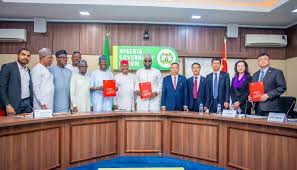
36 Govs Sign MoU With Energy China To Drive Electricity Reform

In a strategic move to enhance energy development at the sub-national level, Nigerian governors on Thursday signed a memorandum of understanding (MoU) with Energy China, a major Chinese firm renowned for its work in renewable energy and gas production. The agreement, which aims to deepen cooperation on clean energy, was formalized during a high-level meeting involving key stakeholders from Nigeria and China. Representing the Nigeria Governors’ Forum (NGF), Gombe State Governor and Chairman of the Northern Governors’ Forum, Alhaji Inuwa Yahaya, emphasized the importance of the partnership in strengthening energy governance, enhancing energy access, and fostering sustainable development across the states. Governor Yahaya highlighted the significance of the recently passed Electricity Act of 2023, describing it as a “pivotal moment” in Nigeria’s energy journey. He noted that the legislation has opened up opportunities for decentralized power solutions, encouraged private sector investment, and empowered states to design their own energy markets. However, he also acknowledged persistent challenges such as inadequate infrastructure, regulatory bottlenecks, and financing gaps. Yahaya stressed that the MoU with Energy China presents an opportunity to address these issues through collaboration, innovation, and international support. The Minister of Innovation, Science and Technology, Chief Uche Nnaji, also spoke at the event, aligning the partnership with President Bola Ahmed Tinubu’s Renewed Hope Agenda. He explained that the MoU covers key areas including the deployment of renewable energy infrastructure—solar, wind, and hydro—as well as the establishment of a Nigeria-China Renewable Energy Research Centre. The center will focus on technology transfer, innovation, and capacity-building. Nnaji noted that the initiative is designed to improve off-grid energy access, generate jobs, attract investment, and advance Nigeria’s climate commitments. Dr. Song Liang, Chairman of the China Energy Commission, reaffirmed China’s commitment to fully implementing the terms of the MoU. He emphasized the importance of intelligence-sharing and prioritizing renewable energy development, particularly in areas such as energy storage and green technology. Liang described the partnership as the beginning of a new phase of cooperation between Nigeria and China in the energy sector. His sentiments were echoed by the Director General of the Nigeria Governors’ Forum, Dr. Abdullateef Shittu, who outlined the Forum’s ongoing support for states as they implement the Electricity Act. Dr. Shittu noted that the NGF has established a Power Desk and a Forum of Commissioners of Power and Energy across all 36 states to coordinate energy reforms and promote best practices. He reaffirmed the NGF’s commitment to providing technical support, facilitating partnerships, and helping states navigate the responsibilities placed on them by the new electricity law. “There is no doubt that this relationship with the China Energy International Group will significantly accelerate energy access in the country,” he said. “The NGF stands ready to support its successful implementation.”

Read More