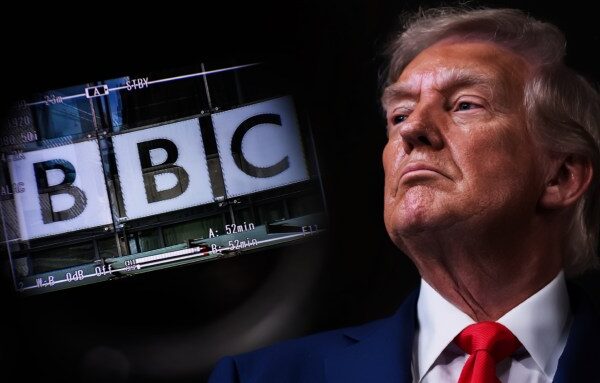
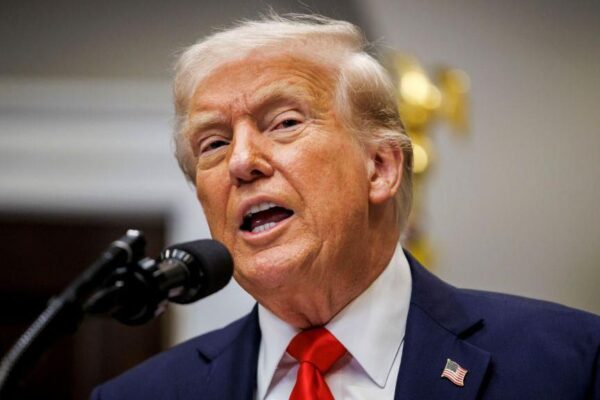
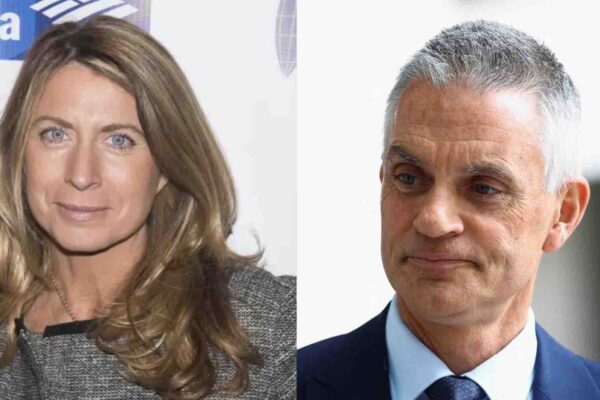
Two of the top executives of the BBC resigned abruptly on Sunday following a report suggesting the public service broadcaster had misleadingly edited a speech by President Trump that preceded the Jan. 6 Capitol riot. The surprise resignation of the director general, Tim Davie, and Deborah Turness, the chief executive of BBC News, came several days after The Daily Telegraph published details of a leaked internal memo arguing that a BBC Panorama documentary had juxtaposed comments by Mr. Trump in a way that made it appear that he had explicitly encouraged the attack on the Capitol on Jan. 6, 2021. “Like all public organizations, the BBC is not perfect, and we must always be open, transparent and accountable,” Mr. Davie said in a statement. “While not being the only reason, the current debate around BBC News has understandably contributed to my decision.” Mr. Davie added: “Overall the BBC is delivering well, but there have been some mistakes made and as director-general I have to take ultimate responsibility.” Ms. Turness, in her announcement, said, “The ongoing controversy around the Panorama on President Trump has reached a stage where it is causing damage to the BBC — an institution that I love.” She said that “the buck stops with me” and conceded that “mistakes have been made” but insisted that “recent allegations that BBC News is institutionally biased are wrong.” Mr. Trump welcomed the resignations in a post on his Truth Social account. With about 21,000 employees, the BBC calls itself the world’s leading public service broadcaster, and is funded primarily from a license fee paid by Britons who watch TV, supplemented by commercial revenue. It produces a huge range of material, from news to entertainment, and has reach outside Britain through its international broadcasting operations. Pressure had been building on Mr. Davie and senior management of the BBC after the White House press secretary, Karoline Leavitt, reacting to the leaked memo, accused the broadcaster of being “purposefully dishonest” over its depiction of the Capitol Hill insurrection. The leaked memo was written by Michael Prescott, a former journalist who, until June, was an independent external adviser to the broadcaster’s editorial standards committee. The documentary, called “Trump: A Second Chance?” was broadcast last year and, in one section, spliced together footage from comments Mr. Trump made about 50 minutes apart. Mr. Prescott’s critique also included claims that the broadcaster did not cover stories that raised difficult questions about transgender rights, and that BBC Arabic gave a platform to a journalist who had posted antisemitic comments. Mr. Davie was director general for five years and survived a number of other crises at the broadcaster, earning the nickname “Teflon Tim.” This year, the broadcaster was criticized for having failed to cut away during live coverage of the Glastonbury music festival when the performer Bob Vylan led the crowd in chants against the Israeli military. Ofcom, Britain’s media regulator, ruled this year that the BBC had committed a “serious breach” of broadcasting rules by failing to disclose that the narrator of a documentary about Gaza was the son of a Hamas official. And there were controversies over the behavior of several TV stars employed by the corporation. The BBC’s senior leadership was widely expected to issue an apology in front of a parliamentary committee on Monday over the documentary about President Trump, and Mr. Davie appears to have calculated that his position was becoming untenable. Some of the BBC’s senior staff have said they believe that the broadcaster is under attack from partisan opponents. “It’s clear that there is a genuine concern about editorial standards and mistakes,” wrote Nick Robinson, a presenter on Today, the flagship morning radio show, on social media. “There is also a political campaign by people who want to destroy the organization.” In a statement issued after Mr. Davie’s resignation, Lisa Nandy, the secretary of state for culture, media and sport, thanked him for his service, described the BBC as “one of our most important national institutions.” But earlier on Sunday Ms. Nandy, in an interview with the BBC, said that decisions about the broadcaster’s editorial standards and guidelines, and the sort of language used in reporting, was “not always well thought through.” She added: “Often it’s left to individual journalists or newsreaders to make decisions.” In a statement, Kemi Badenoch, leader of the main opposition Conservative Party, welcomed the resignations but added that Mr. Prescott’s report “exposed institutional bias that cannot be swept away with two resignations — strong action must be taken on all the issues it raised.” On social media, Ms. Leavitt reacted to Mr. Davie’s resignation by posting screenshots of two news articles, the first reading “Trump goes to war with ‘fake news’ BBC,” the second from the broadcaster’s own website on Sunday reporting “Tim Davie resigns as BBC director general over Trump edit.” Above the first article, Ms. Leavitt wrote: “Shot,” above the second, “Chaser.” In response, Ed Davey, leader of Britain’s centrist Liberal Democrat party wrote, also on social media: “To see Trump’s White House claiming credit for his downfall and attacking the BBC should worry us all.”