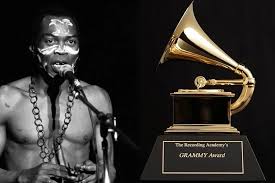
Fela Kuti Wins Grammys Lifetime Achievement Award

Long crowned by his legion of fans as the king of Afrobeat, the late Fela Kuti is finally being recognised by the global music industry. The Nigerian star will posthumously receive a Lifetime Achievement Award at the Grammys – almost three decades after his death at the age of 58. “Fela has been in the hearts of the people for such a long time. Now the Grammys have acknowledged it, and it’s a double victory,” his musician son Seun Kuti tells the BBC. “It’s bringing balance to a Fela story,” he added. Rikki Stein, a long-time friend and manager of the late musician, said the recognition by the Grammys is “better late than never”. “Africa hasn’t in the past rated very highly in their interests. I think that’s changing quite a bit of late,” Stein tells the BBC. Following the global success of Afrobeats, a genre inspired by Fela’s sound, the Grammys introduced the category of Best African Performance in 2024. This year, Nigerian superstar Burna Boy also has a nomination in the Best Global Music Album category. But Fela Kuti will be the first African to receive a Lifetime Achievement Award, albeit posthumously. The award was first presented in 1963, external to American singer and actor Bing Crosby. Other musicians who will receive the award this year include Mexican-American guitarist Carlos Santana, Chaka Khan, the American singer known as the Queen of Funk, and Paul Simon. Fela Kuti’s family, as well friends and colleagues, will be attending the Grammys to receive his award. “The global human tapestry needs this, not just because it’s my father,” Seun Kuti tells the BBC. A man walks in front of mural in Lagos of Fela Kuti in a red jumpsuit playing a saxophone, with the words ‘Lagos, Home For All’. Stein said it is important to recognise Fela as a man who championed the cause of people who had “drawn life’s short straw”, adding that he “castigated any form of social injustice, corruption [and] mismanagement” in government. “So it would be impossible to ignore that aspect of Fela’s legacy,” he tells the BBC. For Fela Anikulapo Kuti was not simply a musician, but also a cultural theorist, political agitator and the undisputed architect of Afrobeat – which is distinct from, but ultimately led to, the modern sound of Afrobeats. He pioneered the Afrobeat genre alongside drummer Tony Allen, blending West African rhythms, jazz, funk, highlife, extended improvisation, call-and-response vocals and politically charged lyricism. Across a career spanning roughly three decades until his death in 1997, Fela Kuti released more than 50 albums and built a body of work that fused music with ideology, rhythm with resistance, and performance with protest. His music incurred the wrath of Nigeria’s then-military regimes. In 1977, after the release of the album Zombie, which satirised government soldiers as obedient, brainless enforcers, his compound in the main city, Lagos, was raided. Black and white shot of Fela Kuti with his back to the audience and facing his back-up singers and band. He is singing with one hand up and finger pointing and the other hand behind his back in a pose like a torero. Known as Kalakuta Republic, the property was burned, residents were brutalised, and his mother, Funmilayo Ransome-Kuti, later died from injuries sustained during the assault. Rather than retreat, Fela Kuti responded through music and defiance. He took his mother’s coffin to government offices and released the song Coffin for Head of State, turning grief into protest. The musician’s ideology was a blend of pan-Africanism, anti-imperialism, and African-rooted socialism. Fela Kuti’s mother was hugely influential in his life, helping shape his political consciousness, while the US-born singer and activist Sandra Izsadore helped sharpen his revolutionary outlook He was born Olufela Olusegun Oludotun Ransome-Kuti, but dropped Ransome because of its Western roots. In 1978, he married 27 women in a highly publicised ceremony, bringing together partners, performers, organisers and co-architects of the cultural and communal vision of Kalakuta Republic. Fela Kuti endured repeated arrests, beatings, censorship and surveillance by the security forces. Yet repression only amplified his influence. “He wasn’t doing what he was doing to win awards. He was interested in liberation. Freeing the mind,” Stein tells the BBC. “He was fearless. He was determined.” Fela Kuti’s musical evolution was shaped not only by Nigeria but also by Ghana. During the 1950s and 1960s, highlife music, pioneered by Ghanaian musicians such as ET Mensah, Ebo Taylor and Pat Thomas, became a defining sound across West Africa. Its melodic guitar lines, horn sections, dance rhythms, and cosmopolitan identity deeply influenced Fela Kuti’s early musical direction. He spent time in Ghana absorbing highlife’s structure, horn phrasing, and dance-oriented arrangements before fusing it with jazz, funk, the rhythms of his own Yoruba people, and political storytelling. The DNA of highlife can be heard in Afrobeat’s melodic sensibility and its balance between groove and sophistication. In this sense, Afrobeat is not only Nigerian. It is West African, pan-African, and diasporic in origin, carrying Ghana’s musical imprint at its foundation. On stage, Fela Kuti cut an unmistakable figure. Often bare-chested or draped in the wax-printed fabric popular across West Africa, hair shaped into a crisp Afro, saxophone in hand, eyes alert with intensity, he commanded a large band of more than 20 musicians. His performances at the Afrika Shrine in Lagos were legendary, part concert, part political rally, part spiritual ceremony. Stein recalls that performances at the Shrine were immersive rather than conventional. “When Fela played, nobody applauded,” he tells the BBC. “The audience wasn’t separate. They were part of it.” Music was not spectacle. It was communion. Nigerian singer Fela Kuti, in a pale blue long-sleeved shirt with bits of yellow and pink embroidery, smiles and holds up his hands towards the audience at Vredenburg in Utrecht, Netherlands on 3 November 1988 Fela Kuti’s visual identity was shaped in part by artist and designer Lemi Ghariokwu, who created 26 of his album covers between 1974 and 1993. “Fela has been…
Read More

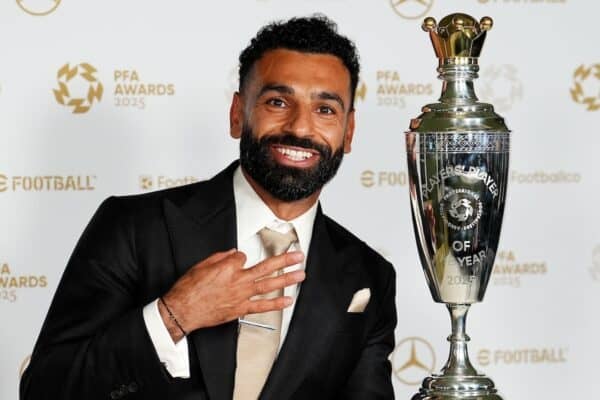
Salah Wins Record Third PFA Player of The Year Award

Mohamed Salah has become the first three-time winner of the Professional Footballers’ Association (PFA) Player of the Year award with the Liverpool forward eclipsing two-time winners Cristiano Ronaldo, Thierry Henry and Gareth Bale by claiming the 2025 award. Salah, who was previously voted the Player of the Year in 2018 and 2022, emerged as the winner from a six-player shortlist including Liverpool teammate Alexis Mac Allister, Chelsea’s Cole Palmer, Manchester United captain Bruno Fernandes, Arsenal midfielder Declan Rice and Newcastle striker Alexander Isak. Salah received the PFA trophy at a gala presentation in Manchester on Tuesday, with the Egypt international winning the award, as voted by his fellow players, after scoring 29 goals in Liverpool’s Premier League title winning campaign last season. The 33-year-old’s goal in Liverpool’s 4-2 win against Bournemouth in the opening game of the 2025-26 league season last Friday took him to 187 Premier League goals, moving him into joint fourth position in the all-time standings alongside former Newcastle and Manchester United forward Andy Cole. Salah had previously been one of seven players to have won the PFA Player of the Year award on two occasions. Alongside Salah, Henry (2003 & 2004), Ronaldo (2007 & 2008) and Bale (2011 & 2013) were joined by Kevin De Bruyne ( 2020 & 2021), Alan Shearer (1995 & 1997) and former Manchester United striker Mark Hughes (1989 & 1991) on the list of double winners. Liverpool also dominated the PFA Premier League Team of the Year with four players — Salah, Mac Allister, Virgil van Dijk and Ryan Gravenberch earning selection. For the first time since 2017, no Manchester City player was selected for the team of the year.

Read More

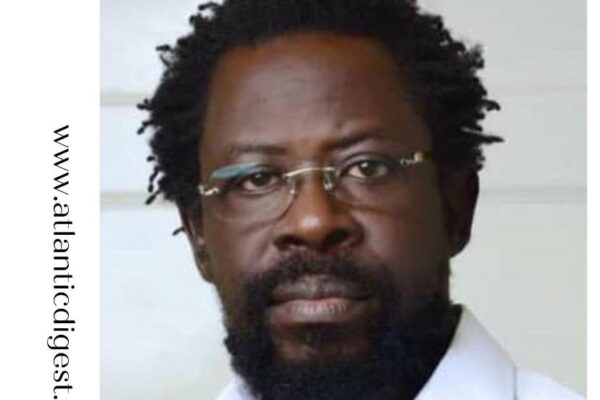
Dele Farotimi wins Man of The Year award

Nigerian Lawyer and Human Rights activist, Dele Farotimi has been named Man of the Year. The Editorial Board of Atlantic Digest, an online media publication on Thursday, adjudged the frontline legal luminary as their Man of the Year. “Dear Mr. Farotimi, we cherish you and all you do for public advocacy. “You remain a towering inferno against oppression and the primus inter pares amongst patriots who intend to liberate Nigeria,” the Editorial board Atlantic Digest stated. Farotimi was arrested in Lagos State on December 3, 2024, and extradited to Ekiti State by the Nigerian Police Force in connection with his book, Nigeria and Its Criminal Justice System. The arrest followed allegations of defamation brought against him by Senior Advocate of Nigeria (SAN) Afe Babalola. Farotimi’s detention sparked widespread outrage, with activists, legal practitioners, and civil society organisations condemning the action as an attempt to stifle free speech and dissent.

Read More

Marrakech to host 2024 CAF award 

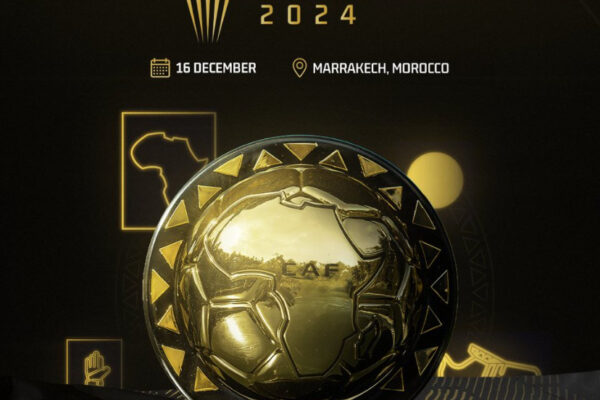
The CAF award will be hosted in the tourist city of Marrakech, Morocco, on 16 December 2024, the Confederation of African Football (CAF) has announced. This is the third time in a row Morocco is hosting the ceremony, after a glittering star-studded African fanfare last year. CAF will confirm the starting time of the CAFAwards24 in due course. The reigning African Footballer of the Year is Nigerian forward, Victor Osimhen (men category), with his compatriot Asisat Oshoala also claiming the honours in the women’s category. The CAF Awards recognize exceptional performances in both club and national competitions, culminating in the prestigious titles of CAF African Player of the Year in both men’s and women’s categories.

Read More

Ademola Lookman makes African Footballer of the Year final shortlist

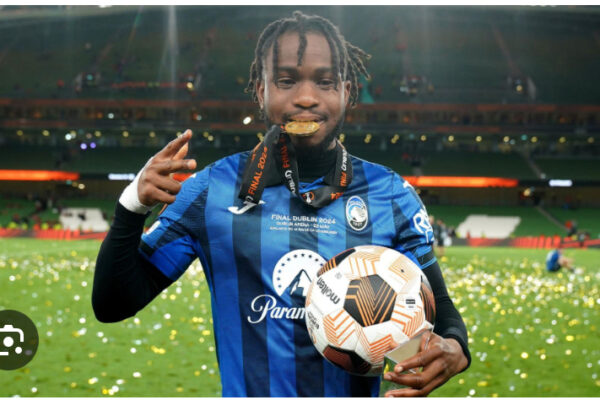
The Confederation of African Football (CAF) has officially revealed the final three-man shortlist for the highly anticipated CAF Player of the Year award. Ahead of the grand ceremony in Marrakesh, the original ten-man list has been narrowed down to just three players, recognized for their outstanding contributions to both their clubs and national teams. These players were shortlisted due to their stellar contributions on the field, making them top contenders for Africa’s most prestigious football award. The following players made the final cut: Ademola Lookman (Nigeria): The Super Eagles and Atalanta winger, Ademola Lookman, earned his place on the shortlist due to his exceptional performances for both club and country. In the 2023/2024 season, the 26-year-old helped his team win the UEFA Europa League and was also named Atalanta’s Player of the Year. Victor Boniface (Nigeria): The Super Eagles and Bayer Leverkusen striker, Victor Boniface, played a crucial role for both his club and national team. During the 2023/2024 season, the highly regarded forward secured victories in the Bundesliga, the German Cup, and the German Super Cup. Brahim Diaz (Morocco): Moroccan and Real Madrid playmaker Brahim Diaz was equally instrumental in his club’s and country’s successes. The 25-year-old enjoyed a stellar 2023/2024 season, winning the Spanish La Liga title, the UEFA Champions League, the Spanish Super Cup, and the UEFA Super Cup.

Read More

Butler-Oyedeji wins PL2 Player of the Month for August

Nathan Butler-Oyedeji has been named the Premier League 2 Player of the Month for August. The 21-year-old Arsenal forward won the award after he contributed to six of his side’s 11 goals, scoring four times and assisting twice in his three PL2 matches to take the Gunners top of the table. “It feels good. It feels like an honour,” Butler-Oyedeji told the club’s official website. “I’m happy to win the award and, most importantly, help my team-mates through the month of August. “I just try to get my head down and I have good players playing the chances through to me. My focus from the start of the season has been to be a bit more productive and deadly in front of goal.  “Everyone’s on the same page. Everyone knows what they’re doing, like one vehicle, selfless and playing for the team and that shows in the results.” Butler-Oyedeji’s impressive month began with a goal against Manchester United, before netting twice at Wolverhampton Wanderers and then ending the month with another versus Aston Villa.  His form not only enabled Arsenal to win all three matches in August, but means he is the current leading PL2 scorer. Butler-Oyedeji topped an eight-man shortlist that was selected by the Premier League’s Football Development Panel.

Read More

Haaland nets Premier League player award for August

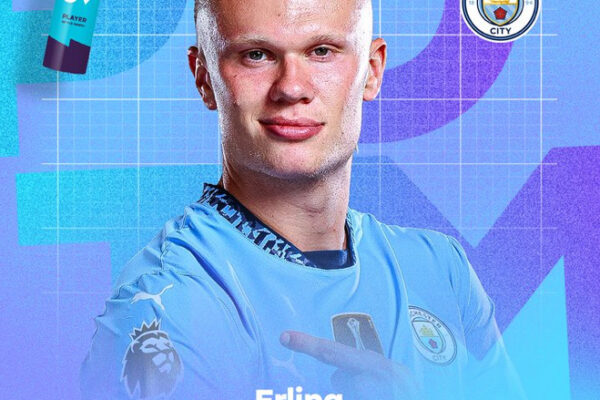
Erling Haaland has won the Premier League Player of the Month award for August following his electric start to the season for Manchester City, while Brighton boss Fabian Hurzeler has snared the Manager of the Month gong.Haaland, after a summer of rest, roared into life at the outset of the domestic league season, banging in consecutive hat-tricks to sit on seven goals after just three games.The Norwegian – if he can stay fit – already appears the early favourite to win the Premier League Golden Boot with his nearest current challengers – Mo Salah, Noni Madueke, Bryan Mbeumo and Luis Diaz – already four back, on three goals each.Haaland – as part of a City team that have made an ominous, 100% start to their 2024/25 Premier League campaign – scored in the opening-day win over Chelsea, before grabbing trebles against first Ipswich, and then West Ham.While on Norway duty in the recent UEFA Nations League international break, Haaland added another strike to his already bulging season tally against Austria.The other nominees on the list had been Salah, Mbeumo, Amadou Onana, Cole Palmer, David Raya, Bukayo Saka and Danny Welbeck.City’s next test is a home meeting with Brentford on Saturday, before they host Inter in their opening UEFA Champions League tie of the season, a mouthwatering repeat of the 2023 final, which City memorably won in Istanbul.The Citizens then play Arsenal at the Etihad on September 22 in a match that could already hold big implications for the title race.

Read More