
Daniel Bwala Accuses Al Jazeera Of ‘Opposition-Style Journalism’ After Viral Head To Head Interview

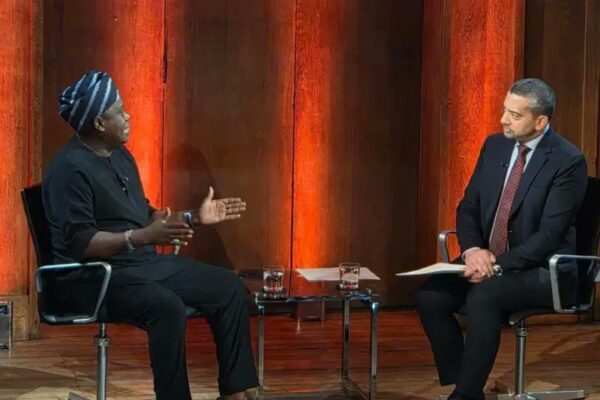
Daniel Bwala, Special Adviser to President Bola Tinubu on Policy Communication, has criticised Al Jazeera following his appearance on the programme Head to Head, accusing the international broadcaster of conducting what he described as “opposition-style journalism.” Bwala was interviewed by Mehdi Hasan on the show, which examined the performance of Tinubu’s administration under the theme “Nigeria: ‘Renewed Hope’ or ‘Hopelessness’?” During the discussion, Hasan confronted him with old video clips and statements he made while he was in the opposition camp and supporting former Vice-President Atiku Abubakar. The interview quickly went viral on social media, prompting Bwala to respond with a statement defending his position. He insisted that he remains ready to defend the Tinubu administration anywhere in the world. “I remain prepared to appear before any interviewer, anywhere in the world, any day and at any time, to defend this government and its policies.” Bwala explained that the producers of Head to Head initially approached him to discuss issues affecting the country, including security, corruption and the economy. According to him, the focus later shifted unexpectedly to his past criticisms of Tinubu. “Nowhere in our almost six months of communication did they mention that they were going to challenge my past. If that had been their plan, ethically and professionally, they were supposed to inform me so I could prepare my response.” He added that he rejected what he described as the host’s approach during the interview. “But that’s okay, ethically, that is on them, not on me. I refused to swallow the pill of Mehdi’s ‘opposition research-style journalism,’ and even today, if you carefully compare what he read as quotes from organisations and groups, you will see that many were inaccurate and some were outright fake news.” Addressing questions about his previous remarks about Tinubu, Bwala said those comments were made when he was in opposition politics. “But I will leave that for another day. As for what I said about President Tinubu in the past, I am glad those were things I said when I was in the opposition saddle with such zeal. It is all politics.” He also referenced political developments in the United States to make his point. “Half of Donald Trump’s cabinet is made up of people who once spoke against him, and quite a number of people in our own cabinet also spoke against President Tinubu in the past. Those things do not bother him if you care to know.” Bwala dismissed the reactions to the interview, describing them as temporary excitement from opposition supporters. “The majority of the naysayers are members of the opposition and their sympathisers. It does not bother me one bit.” “Their temporary excitement over the interview has not lasted and will not last, because it does not take away their obvious problem of lack of vision, mission in conducting and managing a political party; yet they seek to manage Nigeria.” He concluded by challenging opposition parties to present their ideas and face similar questioning. “Clearly they have no path to victory and no alternative policies or program for the Nigerian people. And if they say they do, they can as well go to head to head and be interrogated on that; as the saying in Hausa goes ‘Ga fili Ga doki’.”
Read More

Presidential Aide, Daniel Bwala Faces Backlash After Tense Al Jazeera Interview With Mehdi Hasan

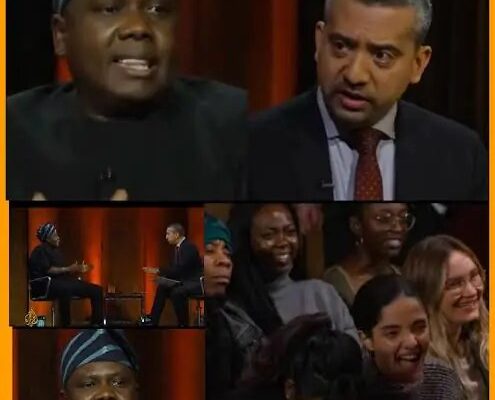
A presidential aide has come under intense criticism after his appearance on Al Jazeera’s Head to Head programme hosted by Mehdi Hasan. During the interview, the aide repeatedly denied making previous critical remarks about President Bola Tinubu before he assumed office. However, the host confronted him with the exact statements and the dates they were made, creating a tense exchange during the programme. The interview quickly generated strong reactions on social media, with many Nigerians describing the outing as embarrassing for both the administration and the country. One social media user wrote, “This is what happens when you speak from both sides of your mouth. This is so embarrassing. He shouldn’t have gone for this Head to Head with Mehdi Hasan, or at the very least, allowed him to air the recorded interview.” Another user expressed disappointment, writing, “Anyone defending this government should cover themselves in shame after this interview. I feel ashamed and embarrassed for real.” Some observers pointed out the difficulty of defending the government in such a setting, suggesting the aide may have underestimated the nature of the programme. One post read, “He had to call Al Jazeera western media. Defending Tinubu is hard.” Another user reflected on the nature of the interview, writing, “The interview was a clash of power, culture, and structure. He came with reckless and broad political talking points, but Hasan demanded precision and evidence. He should have known he was not going to Channels or Arise TV, but a Western media platform built for accountability, where evasion exposes weakness and foolishness on a global stage.” Others went further by calling for consequences, with one user stating, “Tinubu must sack him to avoid further embarrassment. This is unbelievable.” The interview has since sparked widespread discussion online about political accountability and the challenges government representatives face when appearing on international media platforms.

Read More

Funerals held for five Al Jazeera journalists killed in Israeli strike on Gaza City media tent

Gaza City – August 11, 2025 – Hundreds of mourners gathered in Gaza City today for the funeral of five Al Jazeera journalists killed in what the network and rights groups are calling a deliberate targeted assassination by Israeli forces. The attack, which took place late Sunday night outside al-Shifa Hospital, also claimed the lives of two other people and injured at least three more journalists. The strike hit a media tent where reporters had been sheltering and working, according to Al Jazeera’s Hani al-Shaer, who said the attack occurred at around 11:35pm local time. Footage from the funeral showed grieving crowds carrying the bodies through the streets, chanting in tribute to the slain reporters, and holding “PRESS” flak jackets aloft. Those killed included: Two freelance journalists, Mohammed al-Khaldi and one unnamed reporter, were also killed in the strike. Relatives of al-Sharif, already in mourning after an earlier Israeli air strike in 2024 killed his father, carried his 15-month-old son Salah and 4-year-old daughter Sham during the funeral procession to Sheikh Radwan Cemetery. Israel admits killing but labels journalists as militantsThe Israeli military confirmed it carried out the strike, accusing al-Sharif of leading a Hamas cell – an allegation Al Jazeera and rights groups say is unfounded and part of a pattern of smearing Palestinian journalists posthumously. A deadly patternThis is the latest in a long list of targeted killings of Al Jazeera staff since the war began in October 2023. Previous victims include: Since the war began, nearly 270 journalists and media workers have been killed in Gaza – an average of 13 every month – making it the deadliest conflict for journalists in recorded history. Rights groups, including the Committee to Protect Journalists (CPJ) and Reporters Without Borders (RSF), say Israel’s actions are creating a “news void” by wiping out the very reporters documenting the war’s impact. Condemnation and calls for accountabilityAl Jazeera condemned the killings as a “premeditated attack on press freedom.” RSF described al-Sharif as “the voice of the suffering Israel has imposed on Palestinians in Gaza” and compared the attack to the killing of journalist Ismail al-Ghoul in 2024. Amnesty International called the killings a war crime and part of an Israeli strategy to “attack journalism itself by preventing the documentation of genocide.” The Palestinian mission to the UN accused Israel of systematically targeting reporters “to silence witnesses” to its military campaign. UN Secretary-General António Guterres’s spokesperson called for a full investigation, stressing that journalists must be able to work without fear of being targeted. Ongoing blockade and humanitarian crisisThe killings come just days after Israel’s security cabinet approved a plan to seize Gaza City and forcibly displace nearly one million residents. Gaza remains under a total blockade, with all goods and people controlled by Israel. Since March 2, the siege has caused a starvation crisis, killing over 200 people – more than half of them children – in recent weeks. As one mourner said during the funeral: “They wanted to silence their voices, but the whole world will hear them now.”

Read More